
Reviewed · HISTORICAL TOURS
Walking Tour of the Historic Center of Mexico City
Mexico City reveals its secrets on foot. This three-hour walk links Aztec ruins and colonial landmarks with Diego Rivera murals, grand civic buildings, and busy streets where the old city still feels close at hand. I like the small group size, capped at 10, and the guides’ ability to make complicated Mexican history easy to follow. The main drawback is the amount of walking on cobblestones, often with limited places to sit.
I also like the thoughtful pacing and broad subject range. You move from pre-Hispanic Mexico to the Spanish viceroyalty, independence, revolution, and modern city life without getting trapped in one period. Guides such as Fernanda, Luis, Alexia, Nat, and Benjamin have been praised for clear English, humor, patience, and useful local suggestions. Give yourself shade, water, and comfortable shoes, especially if you are still adjusting to Mexico City’s altitude.
In This Review
- Key points at a glance
- Why this walk is a smart first look at Mexico City
- The Zócalo: Mexico City’s grand opening scene
- The Cathedral and Templo Mayor: two faiths, one city center
- Diego Rivera inside the Ministry of Education
- Santo Domingo and the long reach of New Spain
- Plaza Tolsá: a shaded pause with local context
- The Ventana Arqueológica: a small opening into the past
- Bellas Artes: art, architecture, and a grand finale in view
- Palacio Postal and the House of Tiles
- What the three-hour pace feels like
- English, guide quality, and group atmosphere
- Value, admissions, and what you pay for
- Who should book this walking tour
- Should you book it?
- FAQ
- How long is the walking tour?
- Where does the tour begin?
- Where does the tour end?
- How many people can join the tour?
- Is the tour offered in English?
- Are admission tickets included?
- Can I cancel for a refund?
Key points at a glance
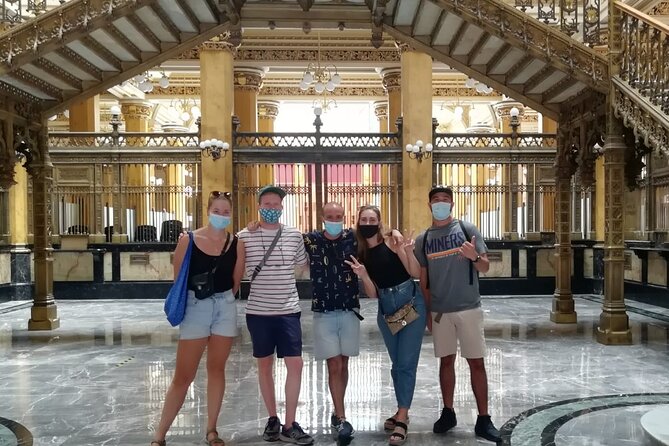
- A true small-group walk: The group can have no more than 10 people, making it easier to hear the guide and ask questions.
- Nine major sights in about three hours: The route covers the Zócalo, Cathedral, Templo Mayor, Rivera murals, Bellas Artes, Palacio Postal, and the House of Tiles.
- History told in layers: You connect Mexica religion, Spanish rule, Asian trade, French intervention, political change, and present-day culture.
- Diego Rivera murals are a highlight: The Ministry of Education provides an included look at a large body of Rivera’s work.
- Mostly exterior viewing: Several stops are explained from outside, and admission to the Cathedral, Palacio Postal, and major museums is not included.
- A useful first-day orientation: The walk ends beside the Palace of Fine Arts and House of Tiles, leaving you well placed to explore more on your own.
Why this walk is a smart first look at Mexico City
Mexico City’s Historic Center can feel like several cities layered on top of one another. A Mexica ceremonial capital lies below Spanish colonial streets. Nineteenth-century monuments share blocks with government offices, shops, museums, and food stalls. Without a guide, you can see the buildings but miss the connections.
This tour gives you those connections in a compact format. You hear how religion shaped the original city, how Spanish rule changed its center, how trade with Asia affected New Spain, and how murals later turned public buildings into political classrooms.
I especially value the small group. A maximum of 10 people is large enough for a social walk but small enough for questions. The strongest guide comments describe a calm pace, clear explanations, careful street crossings, and attention to shade. Fernanda, Luis, Alexia, Nat, Sarah, Thomas, Oscar, and Benjamin have all been singled out for warmth and strong storytelling.
The format is an overview rather than a series of long museum visits. You will not spend an hour inside one monument. Instead, you get short stops that help you decide where to return later.
More History Tours in Mexico City
- Historic Downtown Walking Tour
★ 5.0 · 1,289 reviews - Historic Center Food Tour in Mexico City
★ 5.0 · 1,263 reviews - Mexico City: Historic Downtown Walking Tour
★ 4.8 · 1,039 reviews
The Zócalo: Mexico City’s grand opening scene
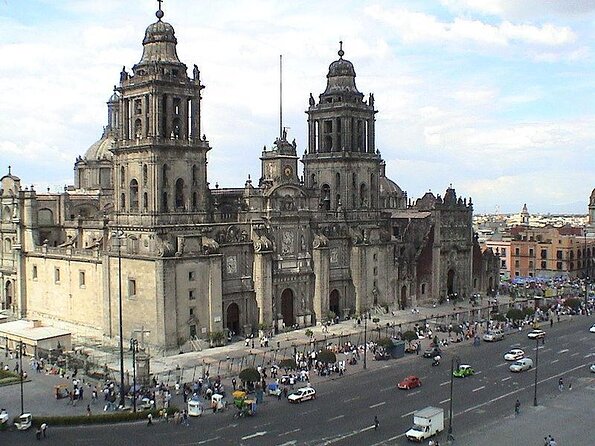
The walk begins at Plaza de la Constitución, usually called the Zócalo. This enormous square gives you a useful sense of Mexico City’s scale and power before the route narrows into historic streets.
From here, you see the National Palace, the Supreme Court of Justice, and the shops associated with silverwork. The guide uses the square to explain how political and religious authority gathered in one place. It is also the first clear example of the city’s layered past, with modern Mexico occupying ground that was once central to the Mexica capital.
The stop lasts about 15 minutes and is free. Expect an open public space rather than a quiet plaza. Conditions can change with events, crowds, weather, or demonstrations, so stay close enough to hear the guide.
This is a strong starting point because the guide can orient you before the buildings and streets become more complex. If you arrive early, check the meeting point carefully: the tour begins at Plaza de la Constitución in Centro Histórico.
The Cathedral and Templo Mayor: two faiths, one city center
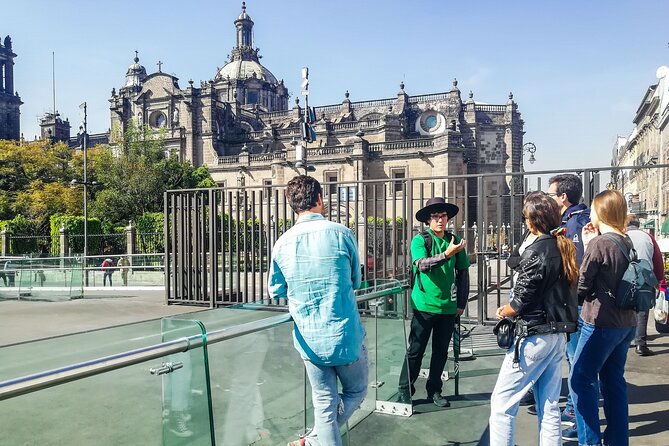
The Metropolitan Cathedral is explained from the outside during a short stop of about 10 minutes. The guide covers its construction, origins, and mix of Baroque and neoclassical design.
The exterior discussion is useful, but admission is not included. If you want to see the interior, you will need to return on your own. That is not a flaw in a three-hour overview, but you should know that this is a quick architectural introduction rather than a full cathedral visit.
Nearby, the route turns to the archaeological remains of Templo Mayor. You see the ruins from outside and learn why the site mattered to the Mexica, including its connection to the rain god and sun god. The guide also explains the site’s geographical placement, helping you understand that the original ceremonial center was not random. It was tied to the structure of the city and its religious world.
This is one of the most important transitions on the walk. The Cathedral represents the Spanish Catholic order imposed after conquest. Templo Mayor points to the Mexica capital that came before it. Seeing both in the same short stretch gives the history physical force.
Do not expect a full archaeological museum visit here. The value comes from interpretation and location. If Templo Mayor interests you, plan a separate visit later, since the walking tour only provides an exterior look.
Diego Rivera inside the Ministry of Education
The Museo Vivo del Muralismo is the route’s main included interior visit. You enter the Ministry of Education and spend about 25 minutes with murals by Diego Rivera.
This is a meaningful stop because the murals are not simply decorative. They present festivals, traditions, work, politics, and social struggle from early twentieth-century Mexico. The public building itself becomes part of the story, showing how art was used to reach ordinary people rather than remain inside a private gallery.
A guide can help you read the scenes instead of merely photographing them. Look for the way daily labor and political ideas share the same walls. The short visit will not cover everything, but it gives you a solid reason to return for a longer look if the murals catch your attention.
Fernanda was praised for allowing extra time in the courtyard when the group wanted to study Rivera’s work. That detail matters. A flexible guide can make the stop feel less like a timed march and more like a shared exploration.
More Walking Tours in Mexico City
- Frida Kahlo VIP [Museum Tickets Included] Walk, Markets & Churros
★ 5.0 · 982 reviews - Anthropology Museum Private Experience Walking Tour
★ 5.0 · 355 reviews - Walking Tour in Mexico City for Exploring their Cultural Heritage
★ 5.0 · 245 reviews - Walking Tour – Impressive murals in Historical Center of Mexico City
★ 5.0 · 224 reviews
Santo Domingo and the long reach of New Spain
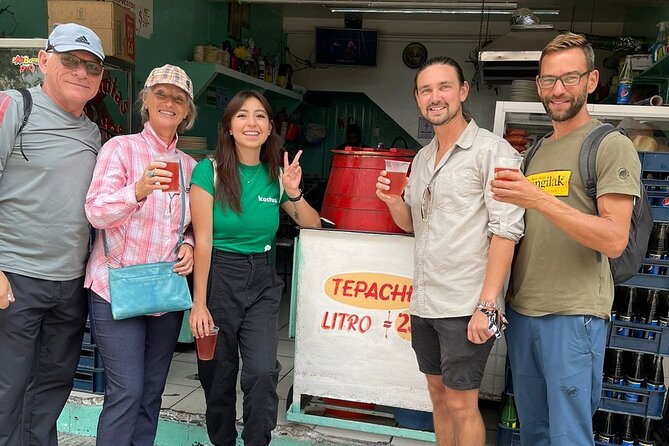
Plaza de Santo Domingo shifts the story toward the Spanish viceroyalty. The square witnessed major events during New Spain and became connected to commerce involving spices and products from Asia.
That Asian connection is easy to miss when you focus only on Spanish architecture. Mexico City was part of a much wider trading system, and goods moved across the Pacific as well as the Atlantic. The guide also discusses the Holy Inquisition and France’s attempts to conquer Mexico, adding political pressure to the commercial story.
The stop lasts about 15 minutes and is free. It is another exterior-focused visit, so listen for the historical links rather than expecting formal access to every building around the square.
I find this part especially useful for first-time visitors because it widens the picture. Mexican history is not only a contest between the Mexica and Spain. It also includes global trade, religious institutions, European power struggles, and the daily business of a colonial capital.
Plaza Tolsá: a shaded pause with local context
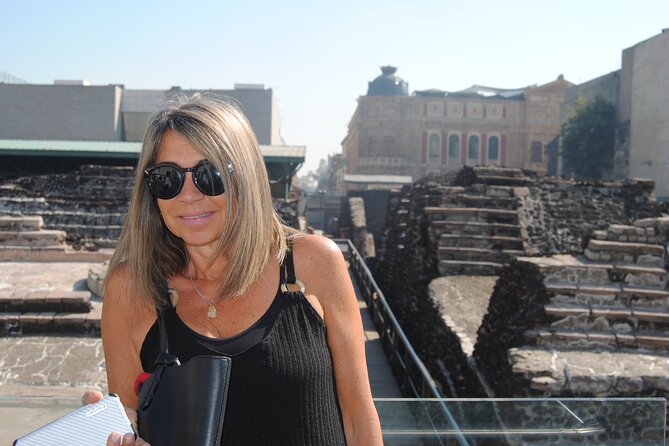
After several historical stops, Plaza Tolsá offers a place to rest in the shade for about 20 minutes. The guide uses this pause to talk about indigenous languages, Day of the Dead traditions, music, politics, and gastronomy.
This is where the experience moves beyond monuments. You get a chance to ask about modern Mexico and hear the guide’s own perspective. The exact discussion will vary by guide, which is part of the appeal. Luis, for example, was praised for sharing useful recommendations, while Alexia was appreciated for connecting historic buildings with present-day life.
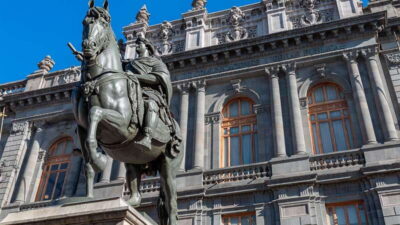
The square also contains the equestrian statue of Charles IV, known locally as El Caballito, or the little horse. You see the exterior of the National Museum of Art and the Mining Palace as well.
The shaded break is welcome, but do not mistake it for a long seated rest. The tour continues through hard streets and open public areas. If you have trouble walking, tell the guide early. One group moved slowly because several people struggled with cobblestones and did not reach every planned point.
The Ventana Arqueológica: a small opening into the past
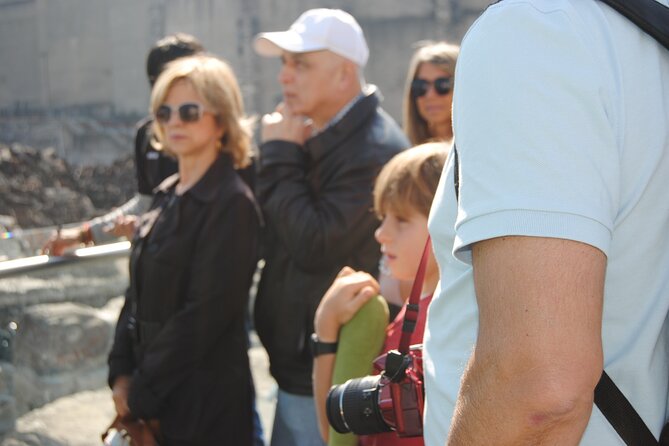
The Ventana Arqueológica is a brief five-minute stop, but it offers one of the route’s most memorable ideas: the past can sit directly below your feet.
You look through an archaeological window beside the main temple and learn how the remains were found. The guide also explains the hidden layers beneath many buildings in the Historic Center.
This stop is short by design. It will not satisfy someone seeking a full excavation visit, but it reinforces the central lesson of the day. Mexico City was built, rebuilt, and expanded over earlier foundations. What looks like an ordinary street may conceal another period of the city below it.
Bellas Artes: art, architecture, and a grand finale in view
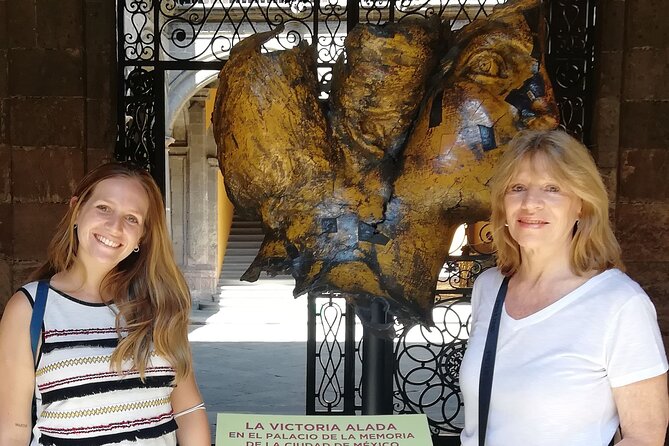
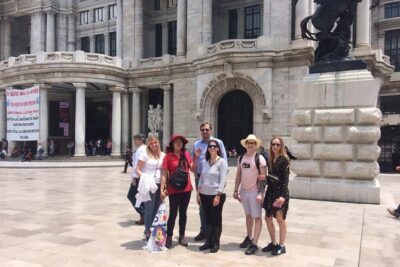
The Palace of Fine Arts is one of the tour’s essential photo stops. The guide discusses the building’s exterior and its role as one of Mexico City’s major art landmarks.
The building rewards a slow look. Its exterior is ornate, and the interior is also devoted to art, though this walking tour does not provide an extended interior visit. The scheduled stop lasts about 15 minutes, and admission to the building is not included.
This is a place where the tour’s broad approach works well. You learn what makes the palace important, take in the design, and then decide if you want to come back for a performance, exhibition, or longer visit. The route finishes nearby, so returning later is easy.
Palacio Postal and the House of Tiles
The Palacio Postal is still in operation, which gives the building a practical life beyond its decoration. The guide explains the economic and political consequences of creating such a grand palace for communication and public business.
The stop lasts about 10 minutes. Admission is not included, so treat it as an exterior introduction unless you plan to return independently.
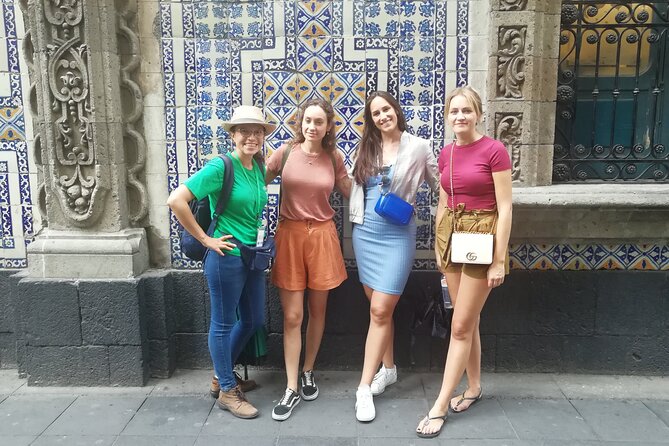
The final stop is the House of Tiles, one of the city’s most photographed buildings. Its tile-covered exterior has become an icon of the Historic Center, but the guide gives it context rather than leaving it as a quick picture stop.
The tour ends at Edificio Guardiola on Avenida 5 de Mayo, beside the Palace of Fine Arts and the House of Tiles. This is a useful finish. You can continue exploring, find food nearby, or return to any building that deserves more time.
What the three-hour pace feels like
The route contains many stops, but the total length is listed as approximately three hours. That means each location receives a short explanation rather than a full tour.
You should be ready to walk continuously between stops. Cobblestones, city crowds, heat, and limited seating can affect the pace. Guides have been praised for finding shade, handling street crossings, answering questions, and making bathroom breaks possible, but your comfort will still depend on the group’s needs and the day’s conditions.
Wear supportive shoes and bring water. Mexico City’s altitude can make a normal walk feel harder if you have just arrived. A morning or late-afternoon departure may feel more comfortable than the hottest part of the day, though exact conditions vary.
The green shirts and umbrellas used by guides make them easier to spot. That small visual detail is handy in a large square.
English, guide quality, and group atmosphere
The tour is offered in English. English quality has been praised across several guide teams, with Luis specifically noted for clear, easy-to-understand explanations.
The individual guide matters here because the walk depends on storytelling. Fernanda brings humor and personal warmth. Alexia adds thoughtful comments about both history and current life. Benjamin mixes information with jokes, while Nat has been praised for answering questions and sharing personal experiences. These differences mean the tone can vary, but the repeated strengths are patience, enthusiasm, and a willingness to explain.
A small group also changes the experience. You can ask why a building matters, pause over a mural, or request a recommendation without trying to speak over a crowd. Group discounts are available, and the mobile ticket makes the booking simple.
Value, admissions, and what you pay for
No tour price is provided here, so I cannot judge the exact cost against similar walks. The practical value is clear, though: your payment covers a three-hour guided orientation, not a package of museum admissions or transportation.
Most stops are free public spaces. The included interior visit is the Ministry of Education mural collection. Cathedral, Palacio Postal, and other paid interiors are not included, and several sites are explained from outside.
That makes this a good purchase if you want context, route planning, and an English-speaking guide who can connect the city’s periods. It is less useful if you mainly want long interior visits or a detailed archaeological tour.
Tips are not included. Transportation to the meeting point, food, and sweets bought during the walk are also your responsibility. The tour is near public transportation, but you must arrange your own way to Plaza de la Constitución.
Who should book this walking tour
I would choose this tour for a first visit to Mexico City, especially if you want to understand the Historic Center before exploring it alone. It suits solo visitors, couples, friends, and families with most members able to manage a three-hour city walk.
It is also a good fit for English speakers who want history explained in plain language rather than a lecture packed with dates. The mix of buildings, archaeology, murals, politics, religion, art, and food culture keeps the route moving.
I would think twice if you have limited mobility, dislike uneven streets, or need frequent seating. The guide can be considerate, but the route itself remains a walking route with cobblestones and a fair amount of standing.
The tour requires good weather and a minimum number of people. If poor weather or low enrollment cancels it, you are offered another date, another experience, or a full refund. You can cancel for a full refund up to 24 hours before the start time. Inside that window, changes and refunds are not accepted.
Should you book it?
Book this walk if you want a lively first chapter to Mexico City. The strongest reasons are the small group, the clear English explanations, the Diego Rivera murals, and the way the route links Mexica, colonial, and modern Mexico.
Do not book it expecting full entry to every landmark. Think of it as a well-shaped introduction that helps you choose where to return. Bring good shoes, water, patience for city streets, and a little curiosity. If that sounds right, this is a practical and worthwhile way to get your bearings in the Historic Center.
FAQ
How long is the walking tour?
The tour lasts approximately three hours.
Where does the tour begin?
It begins at Plaza de la Constitución in Centro Histórico, Mexico City.
Where does the tour end?
It ends at Edificio Guardiola on Avenida 5 de Mayo, beside the Palace of Fine Arts and the House of Tiles.
How many people can join the tour?
The group has a maximum of 10 travelers.
Is the tour offered in English?
Yes, the tour is offered in English.
Are admission tickets included?
Admission is included for the Museo Vivo del Muralismo and the Ventana Arqueológica. The Cathedral, Palacio Postal, and other paid attractions are not included. Several locations are viewed from outside.
Can I cancel for a refund?
Yes. You can cancel at least 24 hours before the local start time for a full refund. Cancellations or changes made less than 24 hours before the start time are not refunded, and poor weather or failure to reach the minimum group size may lead to an alternative date, another experience, or a full refund.
More Guided Walks
- Muralist Art Semi Private Walking Tour in Mexico City Downtown
★ 5.0 · 188 reviews - Coyoacán Walking Tour: Access to Frida Kahlo Museum & Tacos
★ 5.0 · 181 reviews - Mexico City: Lucha Libre Show, Walking Tour & Tequila
★ 4.6 · 156 reviews - Teotihuacan Hot Air Balloon Ride with Optional Bike or Walking Tour
★ 5.0 · 144 reviews
More Ruins and Heritage Sites
- Mexico City Historical Centre Food Tour with 7 Authentic Tastings
★ 5.0 · 723 reviews - Mexico City: Guided walking tour through the most historic parts of the city.
★ 4.5 · 172 reviews - Historical and Cultural Walking Tour of San Miguel de Allende
★ 5.0 · 641 reviews - Historical and Cultural Walking Tour of San José del Cabo
★ 5.0 · 576 reviews
Just added around Mexico City
- Teotihuacan & Anthropology Museum, Templo Mayor & City Tour★ 4.5 · 109 reviews
- Mexico Private Food Tour With Locals Including 10 Tastings★ 4.5 · 109 reviews
- THE REAL CDMX: Under the skin of the city★ 5.0 · 111 reviews
- Mexico City: Mexican Folklore Ballet★ 4.5 · 111 reviews
- Teotihuacán plus Bike Tour★ 5.0 · 114 reviews
- Bike to taste the world’s best tacos – Mexico City★ 5.0 · 116 reviews
- EXCLUSIVE TOUR Chapultepec Castle – Small Groups★ 5.0 · 117 reviews
- Balloon flight with private transportation and guided tour to Teotihuacán★ 5.0 · 118 reviews
Historical Tours, compared.

Mexico City Historical Centre Food Tour with 7 Authentic Tastings
Read our review →
Historical and Cultural Walking Tour of San Miguel de Allende
Read our review →
Historical and Cultural Walking Tour of San José del Cabo
Read our review →
Walking Tour in Mexico City for Exploring their Cultural Heritage
Read our review →
Browse the lists this tour appears in