
Reviewed · HISTORICAL TOURS
Walking Tour in Mexico City for Exploring their Cultural Heritage
Mexico City reveals its past one plaza at a time. This $25 walking tour gives you a useful first look at the Historic Center, linking Aztec ruins, Spanish-era buildings, government offices, murals, and grand civic spaces in one compact route. I especially like the way it moves from the Zócalo to the Templo Mayor, then onward through Santo Domingo and toward the Palace of Fine Arts.
I also like the small maximum group of 20 and the English-speaking guide who stays with you throughout. Guides such as Sofía, Carmina, Jesus, Diana, David, Marco, and Ulysses have been praised for clear explanations, good energy, patience with questions, and helpful food or sightseeing tips. The main drawback is simple: you must be comfortable walking for up to three hours, often while standing in open plazas.
In This Review
- Key points at a glance
- Why this tour works well on your first morning
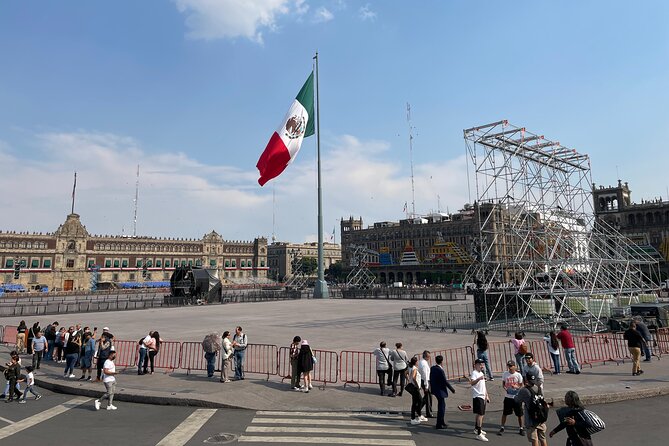
- Starting in the Zócalo at 9:00 a.m.
- At the Templo Mayor, ancient Tenochtitlan underfoot
- Plaza de Santo Domingo and Mexico’s changing identity
- Museo Nacional de Arte and the move into modern Mexico
- Tiles, murals, and the final approach to Bellas Artes
- What $25 buys you
- Guide style and the human side of the walk
- Who should book it, and who should skip it
- My recommendation for your Mexico City plans
- FAQ
- How long does the walking tour last?
- What time does the tour start?
- Where does the tour begin?
- Where does the tour finish?
- Is the tour offered in English?
- How much does the tour cost?
- How many people can join the tour?
Key points at a glance
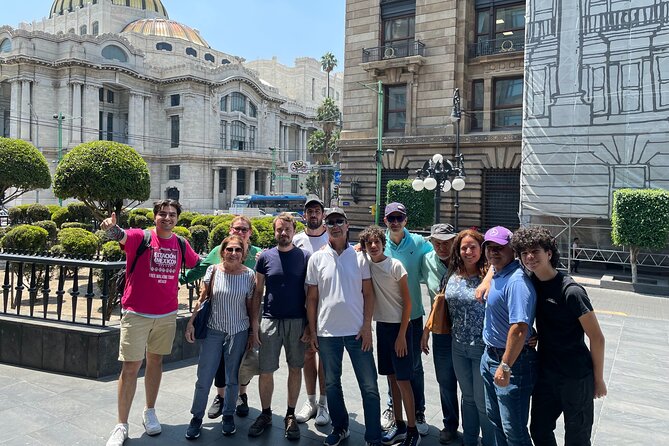
- The Zócalo sets the stage: Begin at Mexico City’s main square, where politics, public celebrations, social movements, and daily city life meet.
- Aztec and Spanish history share the same blocks: The Templo Mayor ruins sit beside the colonial center, making the city’s layered past easy to see.
- Murals are part of the lesson: The route includes a mural-filled place and time at the Palace of Fine Arts, where art helps explain Mexican history.
- The route ends near a major landmark: Finish close to the Palace of Fine Arts, a convenient spot for continuing your day.
- Strong value for first-time visitors: For $25, you get a guided introduction to several major sights without paying museum entry fees for the listed stops.
- Plan for a morning on foot: The tour starts at 9:00 a.m., lasts about two to three hours, and is capped at 20 people.
Why this tour works well on your first morning
Mexico City’s Historic Center can feel like several cities pressed into one. Aztec remains, Spanish churches, government buildings, art institutions, street life, and modern Mexico all occupy a fairly tight area. Without context, you may see impressive facades but miss how one era replaced, covered, or adapted another.
This tour gives you that framework early in your stay. You begin at the Zócalo, walk through the ancient Mexica heart of the city, examine the ruins of the Templo Mayor, and then follow the route into colonial and modern Mexico. That sequence makes sense. You are not simply collecting photo stops. You are watching the city change over time.
The guide is the key part of the experience. A good guide can point out the political importance of the square, explain why the cathedral and government offices face the Zócalo, and help you read murals rather than treating them as colorful decoration. The strongest guide reports describe an engaging style, plenty of answers, and explanations that make art and history feel connected.
I would book this early in a Mexico City visit. The tour ends near the Palace of Fine Arts, so you can continue exploring on your own afterward with a better sense of direction and a short list of places to revisit.
More History Tours in Mexico City
- Historic Downtown Walking Tour
★ 5.0 · 1,289 reviews - Historic Center Food Tour in Mexico City
★ 5.0 · 1,263 reviews - Mexico City: Historic Downtown Walking Tour
★ 4.8 · 1,039 reviews
Starting in the Zócalo at 9:00 a.m.
The meeting point is at Plaza de la Constitución 463 in Centro Histórico, close to the center of the Zócalo. The start time is 9:00 a.m., which is useful for anyone who wants cooler walking conditions and a full afternoon for museums, food, or neighborhoods beyond the Historic Center.
The Zócalo is not just a large square to cross on the way to somewhere else. It is the place where Mexico City’s political life, public demonstrations, festivals, and major traditions gather. Your guide uses the square to explain the city’s origin and its continuing role in national life.
This opening is one of the tour’s best features because it gives every later building a purpose. You learn why this particular space matters before moving to the monuments around it. Look around as you listen. The scale of the plaza helps you understand how much power and public attention have been concentrated here.
The tour also introduces the Metropolitan Cathedral, described as the largest cathedral on the continent. Its size and position make it hard to miss, but the guide adds the meaning that architecture alone cannot provide. The stop is especially useful if you want to understand the Spanish colonial imprint on the center.
Nearby, you see the most important federal government office in Mexico. Together, the cathedral and government building show the older pairing of religious authority and political authority around the central square. The tour does not treat the Zócalo as a single monument. It reads the entire setting.
One practical point: the square is open and exposed. You will be standing while the guide talks, so comfortable shoes, water, and sun protection make sense. Food and drinks are not included, so carry what you need for the morning.
At the Templo Mayor, ancient Tenochtitlan underfoot
The second major stop is the Museo del Templo Mayor, where you see the remains of the most important temple of ancient Tenochtitlan. This is where the tour’s story shifts from colonial Mexico to the Mexica world that came before it.
The listed visit is about 20 minutes. That is enough for an introduction, but not enough for a full museum visit or a detailed study of every object and ruin. Think of this as a strong orientation stop. If the ancient city interests you, you may want to return later with more time.
The value here comes from seeing the remains in place. You are not only hearing about the Aztecs and Mexica culture in an abstract way. You are looking at physical evidence within the same central district that later became the colonial and modern capital.
A guide can help you connect the ruins to the surrounding city, which is the real advantage of including Templo Mayor on a walking route. The stop shows that Mexico City was not simply built from scratch by the Spanish. The modern center sits on the site of an older capital, and that fact changes how you read every nearby street.
Because the formal time is short, listen for the main ideas rather than expecting an exhaustive museum visit. Ask questions if the group pace allows. Guides such as David and Marco have been praised for welcoming questions and adjusting the pace when possible, which is useful at a stop where many details compete for attention.
The itinerary lists admission as free for this stop. Still, the experience includes only the guided visit described, not food or drinks. If you wish to spend longer inside, confirm what is possible with the guide on the day.
Plaza de Santo Domingo and Mexico’s changing identity
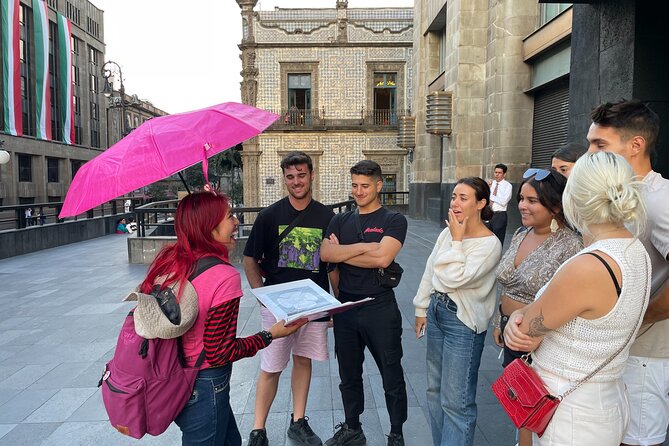
The route continues to Plaza de Santo Domingo, with about 30 minutes here. This stop brings together two themes: Mexico’s Spanish past and the beginning of the Mexican muralist movement.
That pairing gives the plaza more depth than a quick architectural glance. You see how colonial forms and later Mexican artistic ideas occupy the same historic center. The guide’s job is to explain the tension and connection between those eras, not simply name the buildings.
This is likely to appeal most to you if you enjoy cultural history told through public spaces. The walking route keeps the subject grounded. Instead of moving from one isolated museum room to another, you see how history appears in plazas, facades, institutions, and streets still used today.
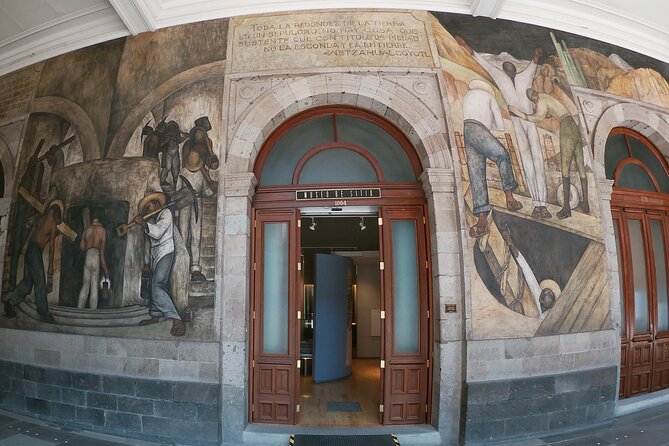
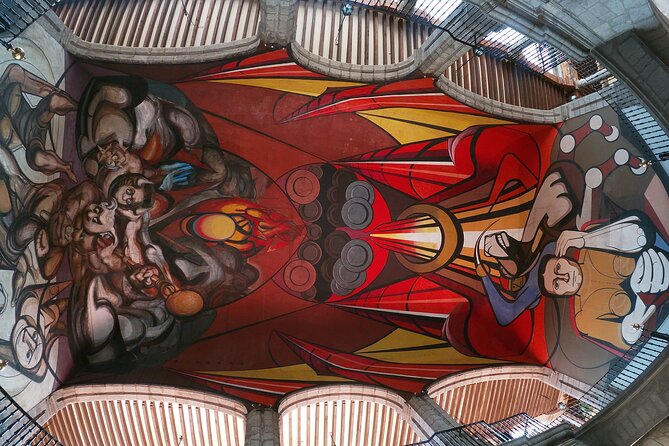
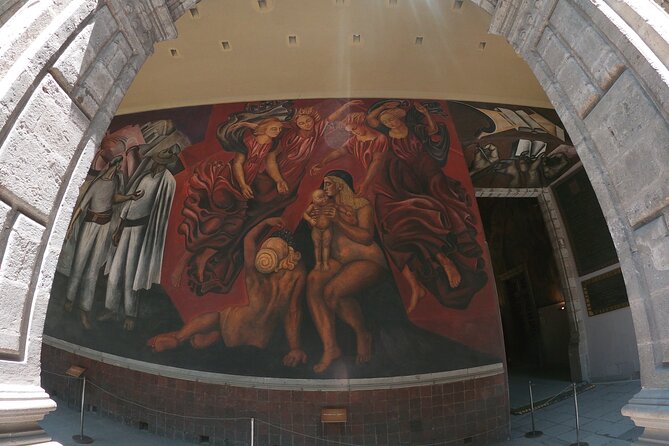
The tour includes a place with murals as part of the activity. That matters because mural art is one of the clearest ways to encounter Mexican public history through images. The best explanations, including those praised for guides such as Diana, connect the paintings to the country’s political and social story.
Still, keep your expectations measured. This is not a dedicated mural tour, and the entire experience lasts only two to three hours. You get an informed introduction, not a complete survey of Mexican muralism. If murals become the highlight for you, the tour should help you decide where to spend extra time later.
More Walking Tours in Mexico City
- Frida Kahlo VIP [Museum Tickets Included] Walk, Markets & Churros
★ 5.0 · 982 reviews - Walking Tour of the Historic Center of Mexico City
★ 5.0 · 870 reviews - Anthropology Museum Private Experience Walking Tour
★ 5.0 · 355 reviews - Walking Tour – Impressive murals in Historical Center of Mexico City
★ 5.0 · 224 reviews
Museo Nacional de Arte and the move into modern Mexico
At the Museo Nacional de Arte, the focus turns toward twentieth-century architecture and the modern city. The stop lasts about 30 minutes, giving you time to appreciate the building and hear how it fits into Mexico City’s changing identity.
This transition is important. A route that stopped with colonial churches and Aztec ruins would leave out the Mexico that emerged after independence and developed through the twentieth century. The National Museum of Art helps bridge that gap.
The building itself is part of the lesson. The tour uses modern architecture to show how Mexico City continued to reshape its center rather than preserving it as a frozen colonial district. You get a look at the city’s artistic and civic ambitions as well as its older foundations.
The stop should suit you if you like architecture but do not want a tour limited to technical terms. A good guide explains what you are seeing in plain language, then links it to the broader story of Mexico. Several guides associated with this experience have been praised for making complicated material lively and easy to follow.
The 30-minute visit is again an overview. You will not have time to explore every gallery or examine the museum at your own pace. If you want a full museum visit, return separately. The walking tour is better understood as a guided introduction that helps you decide what deserves a longer visit.
Tiles, murals, and the final approach to Bellas Artes
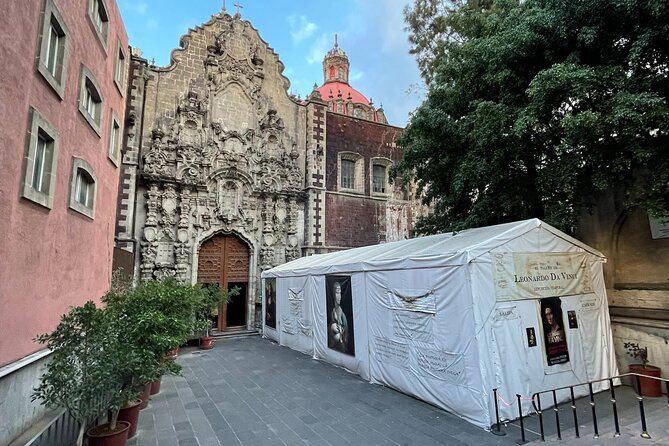
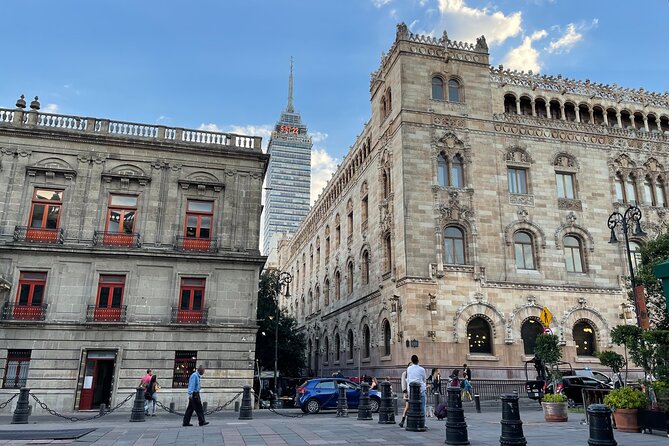
The route also includes a beautiful palace known for its tiles. This is an appealing visual pause, particularly for anyone who enjoys the details of historic urban design. The supplied information does not name the palace, so you should treat it as a guided exterior or brief sightseeing stop rather than plan around a specific interior visit.
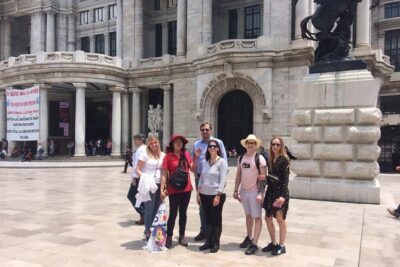
The final destination is the Palace of Fine Arts, one of Mexico City’s best-known icons. The tour finishes at Avenida Juárez 39, close to this magnificent building. That ending works well because it leaves you near major cultural sights and gives the route a clear visual finish.
The Palace of Fine Arts is also where the art discussion can become most memorable. One guide was praised for explaining the murals inside the palace and showing how art and history connect. Another guide made the paintings accessible even to someone who did not usually consider themselves an art person.
That kind of guidance is valuable. Murals can look impressive while remaining hard to interpret. With the right explanation, you begin to notice who is represented, what events are being remembered, and how art can carry arguments about national identity.
The provided details do not promise a full interior visit or specify which palace rooms you will enter. Ask the guide what is included on the day. The route definitely finishes nearby, and the experience includes a mural-related visit, but the exact time inside may vary.
What $25 buys you
At $25 per person, this is a good-value introduction to Mexico City’s central district. You receive a guide for the full experience, an English-language walking route, and a sequence of major cultural sites. The listed stops do not add admission charges, which keeps the cost easy to understand.
The value is strongest for first-time visitors. You could walk around the Zócalo and see the cathedral, government buildings, Templo Mayor, Santo Domingo, the National Museum of Art, and Bellas Artes on your own. You would not necessarily understand how they connect, though. The guide saves you time and gives the city a clear order.
The price also compares well with the amount of ground covered. In two to three hours, you get an introduction to ancient Mexico, colonial rule, modern government, architecture, and mural art. That is a lot of ground, so the experience favors broad understanding over long visits at any one site.
It is less suitable if you want quiet time for photography or detailed museum exploration. A group of up to 20 can also feel less personal than a private tour, although smaller departures have occurred. Some bookings may even be very small, but you should not count on having a private guide.
Guide style and the human side of the walk
The most consistently praised part of this experience is the guide. The strongest descriptions focus on enthusiasm, clear storytelling, patience, and the ability to answer questions. That matters in Mexico City, where a building can carry several centuries of meaning.
Sofía was praised for sharing broad information and welcoming questions. Carmina was singled out for enthusiasm and careful answers. Jesus was described as both entertaining and well informed, while Ulysses was noted for being polite, friendly, and educational.
Diana’s strength was making the murals at the Palace of Fine Arts easier to understand. David made a small group feel special by explaining the city from a local point of view. Marco was praised for allowing a flexible pace and adding practical suggestions at the end.
Guide quality can vary because the person leading your group may not be known in advance. The best way to get more from the walk is to ask questions as you go, especially at the Zócalo, Templo Mayor, and Bellas Artes. If you want restaurant or sightseeing tips, ask before the tour ends, since guides have provided that sort of help.
Who should book it, and who should skip it
I would recommend this walk to first-time visitors, solo visitors, couples, families with older children, and anyone who wants a history-focused introduction without spending a full day indoors. It also suits people who like to orient themselves early, then return to the places that caught their attention.
The tour has a maximum of 20 participants, and most people can take part if they can walk for about three hours. Service animals are allowed, and the starting point is near public transportation. You still need to be ready for sustained walking and standing.
You might skip it if you have already spent several days studying the Historic Center or if you prefer private, slow-paced visits to museums. You might also want a different format if your main interest is food, shopping, or a single art collection, since this route spreads its attention across several subjects.
The tour is offered in English and uses a mobile ticket. Confirmation arrives when you book. Free cancellation is available until 24 hours before the 9:00 a.m. start time. Within 24 hours, the payment is not refunded, so leave room in your plans.
My recommendation for your Mexico City plans
Book this tour if you want a clear, affordable introduction to the Historic Center on your first morning. The combination of Zócalo politics, Templo Mayor archaeology, Spanish-era architecture, Mexican murals, and the Palace of Fine Arts gives you a useful map of the city’s past and present.
I would not book it as a replacement for the museums themselves. Book it as the explanation that makes later visits better. At $25, with a full-time guide and no listed admission fees for the stops, it offers solid value, especially if you ask questions and use the final stop near Bellas Artes to plan the rest of your day.
FAQ
How long does the walking tour last?
The experience lasts approximately two to three hours.
What time does the tour start?
The tour starts at 9:00 a.m.
Where does the tour begin?
It begins at Plaza de la Constitución 463 in Centro Histórico, Mexico City.
Where does the tour finish?
It finishes at Avenida Juárez 39, near the Palace of Fine Arts.
Is the tour offered in English?
Yes. The tour is offered in English.
How much does the tour cost?
The price is $25 per person.
How many people can join the tour?
The maximum group size is 20 participants.
More Guided Walks
- Muralist Art Semi Private Walking Tour in Mexico City Downtown
★ 5.0 · 188 reviews - Coyoacán Walking Tour: Access to Frida Kahlo Museum & Tacos
★ 5.0 · 181 reviews - Mexico City: Lucha Libre Show, Walking Tour & Tequila
★ 4.6 · 156 reviews - Teotihuacan Hot Air Balloon Ride with Optional Bike or Walking Tour
★ 5.0 · 144 reviews
More Ruins and Heritage Sites
- Mexico City Historical Centre Food Tour with 7 Authentic Tastings
★ 5.0 · 723 reviews - Mexico City: Guided walking tour through the most historic parts of the city.
★ 4.5 · 172 reviews - Historical and Cultural Walking Tour of San Miguel de Allende
★ 5.0 · 641 reviews - Historical and Cultural Walking Tour of San José del Cabo
★ 5.0 · 576 reviews
Just added around Mexico City
- Teotihuacan & Anthropology Museum, Templo Mayor & City Tour★ 4.5 · 109 reviews
- Mexico Private Food Tour With Locals Including 10 Tastings★ 4.5 · 109 reviews
- THE REAL CDMX: Under the skin of the city★ 5.0 · 111 reviews
- Mexico City: Mexican Folklore Ballet★ 4.5 · 111 reviews
- Teotihuacán plus Bike Tour★ 5.0 · 114 reviews
- Bike to taste the world’s best tacos – Mexico City★ 5.0 · 116 reviews
- EXCLUSIVE TOUR Chapultepec Castle – Small Groups★ 5.0 · 117 reviews
- Balloon flight with private transportation and guided tour to Teotihuacán★ 5.0 · 118 reviews
Historical Tours, compared.

Mexico City Historical Centre Food Tour with 7 Authentic Tastings
Read our review →
Historical and Cultural Walking Tour of San Miguel de Allende
Read our review →
Historical and Cultural Walking Tour of San José del Cabo
Read our review →
Browse the lists this tour appears in