
Reviewed · HISTORICAL TOURS
Walking Tour – Impressive murals in Historical Center of Mexico City
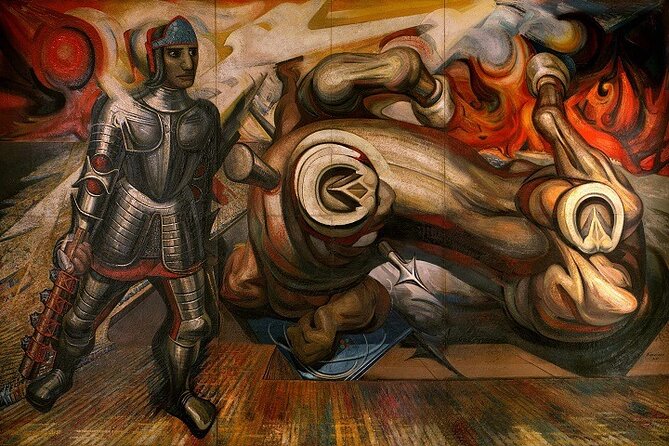
Murals turn Mexico City history into public theater. This walking tour links three major art sites with the political stories behind Mexico’s mural movement. I especially like the close look at Diego Rivera’s first mural and the thoughtful historical context provided by guides such as Balaam and Miguel. I also like the choice of morning or afternoon departures. The main drawback is that the route can take close to three hours, with plenty of time on your feet.
The tour costs $51 per person, which is fair if you want interpretation rather than a quick museum visit. You get guide service and admission to the included museums, but Palacio de Bellas Artes admission is not included. Check the day carefully: the Ministry of Public Education is closed on Tuesdays, and the substitute route may not match the advertised stops exactly.
In This Review
- Key Points Before You Book
- Why These Murals Matter More With a Guide
- San Ildefonso and Rivera’s La Creación
- The Ministry of Public Education’s Courtyards
- Walking Through the Historic Center
- Palacio de Bellas Artes and the Mural Finale
- What the Guides Do Best
- Is $51 a Fair Price?
- Who Will Enjoy This Tour Most?
- Timing, Tickets, and Cancellation
- Should You Book It?
- FAQ
- Where does the walking tour begin?
- Where does the tour end?
- How long does the experience last?
- Is the tour offered in English?
- Are museum tickets included?
- Is the Ministry of Public Education open every day?
- How large can the group be?
- Is transportation included?
- Can I cancel for a full refund?
Key Points Before You Book
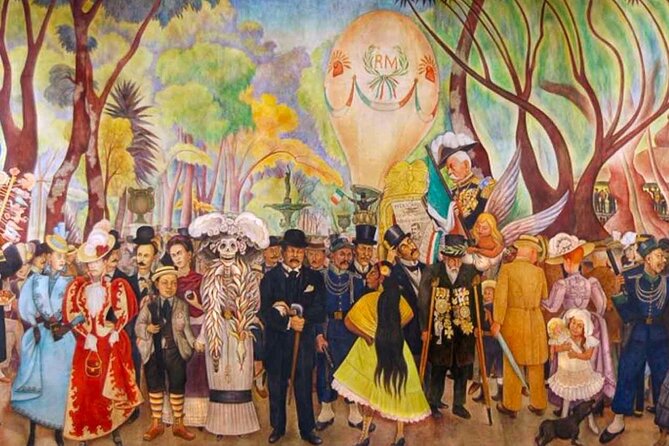
- See Diego Rivera’s first mural: La Creación fills the amphitheater at the former College of San Ildefonso, where Rivera later met Frida Kahlo.
- Walk through 3,000 square meters of murals: The Ministry of Public Education contains courtyards filled with work by Rivera, Jean Charlot, Amado de la Cueva, and Roberto Montenegro.
- Learn how politics shaped the art: Guides explain symbols, Indigenous traditions, the Mexican Revolution, and the social debates behind the paintings.
- Finish at Palacio de Bellas Artes: The final stop brings together major Mexican muralists inside Mexico City’s grand cultural center.
- Plan for a serious walk: The route lasts from one to three hours, often closer to three, and comfortable shoes are essential.
- Expect a small to medium group: The tour is capped at 25 people, though some groups have been around a dozen.
Why These Murals Matter More With a Guide
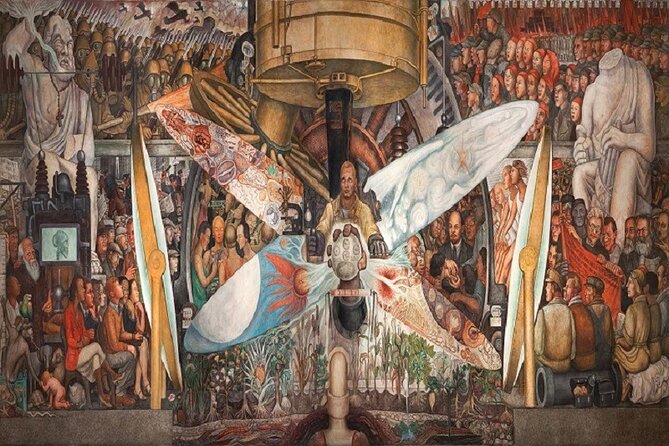
Mexico City’s murals are not simply large paintings on old walls. They are public arguments about conquest, class, Indigenous identity, religion, labor, education, and revolution. Without context, you can admire the color and scale while missing the people and ideas packed into each scene.
That is where this tour earns its price. Guides explain how the mural movement developed from the 1920s through the 1960s, when artists used public buildings to reach ordinary citizens rather than only museum patrons. You learn how to read recurring symbols and how Rivera, José Clemente Orozco, David Alfaro Siqueiros, and other artists approached Mexico’s past in very different ways.
The strongest part of the guiding seems to be the connection between art and daily life. Balaam, one of the frequently praised guides, is described as passionate about Mexican art, politics, and Indigenous traditions. Miguel is also praised for linking murals to architecture, archaeological remains, local food, and the city streets between the museums.
That wider view matters. You are not just moving from painting to painting. You are walking through the Historic Center while learning why these works belong in government schools, ministries, and national cultural buildings.
More History Tours in Mexico City
- Historic Downtown Walking Tour
★ 5.0 · 1,289 reviews - Historic Center Food Tour in Mexico City
★ 5.0 · 1,263 reviews - Mexico City: Historic Downtown Walking Tour
★ 4.8 · 1,039 reviews
San Ildefonso and Rivera’s La Creación
The tour begins at the former College of San Ildefonso, at Justo Sierra 16 in the Historic Center. The building was once Mexico’s National Preparatory School and is closely tied to the birth of Mexican muralism.
The key work here is Diego Rivera’s La Creación, painted for the amphitheater. It was Rivera’s first mural, making this an important starting point for anyone interested in his later public works. The setting also carries a personal connection: Rivera met a teenage Frida Kahlo at the school.
You have about 30 minutes at this stop, with admission included. That is enough time for a guide to introduce the mural’s imagery and explain why the school became such an important place in Mexico’s artistic story.
I like the order of this visit. Beginning with Rivera’s first major mural gives you a useful reference point before you see the much larger collection at the Ministry of Public Education. You can watch his ideas develop rather than meeting them without preparation.
This is also a good stop for visitors who care about the human stories behind famous artists. The Rivera and Kahlo connection is not the only reason to visit, but it gives the building a memorable link to two of Mexico’s best-known painters.
The Ministry of Public Education’s Courtyards
The second stop is the Ministry of Public Education, where murals cover more than 3,000 square meters in the Fiestas and Trabajo courtyards. This is likely the largest and most sustained portion of the tour.
The courtyards contain work by Diego Rivera, Jean Charlot, Amado de la Cueva, and Roberto Montenegro. Instead of seeing one famous painting in isolation, you move through an extended visual program. The sheer amount of work lets you compare styles, subjects, and ideas across several artists.
A guide is particularly useful here because the walls can feel overwhelming. Rivera’s scenes include workers, festivals, political figures, and references to Mexican traditions. With help, you can sort out the figures and symbols instead of simply taking in a wall of color.
The complex also includes two rooms devoted to muralism, a multisensory hall with artistic and historical pieces, a library, a children’s reading room, an FCE bookstore, and a café. The tour will not necessarily spend equal time in every area, but these features make the building more than a mural stop.
There is one major scheduling issue. The Ministry is closed on Tuesdays. On that day, the tour substitutes other murals, including works at the Diego Rivera Mural Museum and murals in Alameda Park. The alternative can still be worthwhile, but you should not book a Tuesday expecting the same sequence or the same collection.
The Tuesday substitution has caused disappointment for at least one participant, so I would choose another day if the Ministry is your main reason for booking. If Tuesday is your only option, ask at booking what buildings are planned for that date.
Walking Through the Historic Center
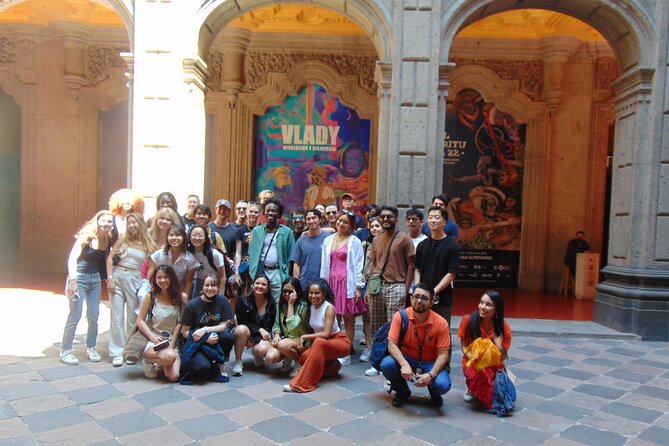
The distance between the sites is part of the experience, not just a way to get from one ticket desk to another. The route passes through Mexico City’s Historic Center, where churches, public buildings, squares, archaeological remains, and later architectural additions sit close together.
Guides may point out more than murals along the way. Miguel is praised for explaining the city’s architecture, identifying archaeological digs, and recommending street food. Balaam has also helped with bathroom breaks and a quick street-food stop when needed.
That local commentary adds value, especially if this is your first activity in Mexico City. The tour can help you understand the city’s central district before you explore it on your own. Several people described it as a strong way to begin a Mexico City visit because the art lessons also provide background for later sightseeing.
Still, do not treat this as a light stroll. The route includes several buildings and museum interiors, and much of the time is spent standing while looking closely at walls. One participant found the walking ambitious and appreciated taking an e-bike taxi to Bellas Artes. Another noted that slower walkers had trouble keeping up.
If you walk at a slower pace, tell the guide early. The route may be adjusted, and a short break can make the difference between enjoying the final museum and reaching it worn out.
More Walking Tours in Mexico City
- Frida Kahlo VIP [Museum Tickets Included] Walk, Markets & Churros
★ 5.0 · 982 reviews - Walking Tour of the Historic Center of Mexico City
★ 5.0 · 870 reviews - Anthropology Museum Private Experience Walking Tour
★ 5.0 · 355 reviews - Walking Tour in Mexico City for Exploring their Cultural Heritage
★ 5.0 · 245 reviews
Palacio de Bellas Artes and the Mural Finale
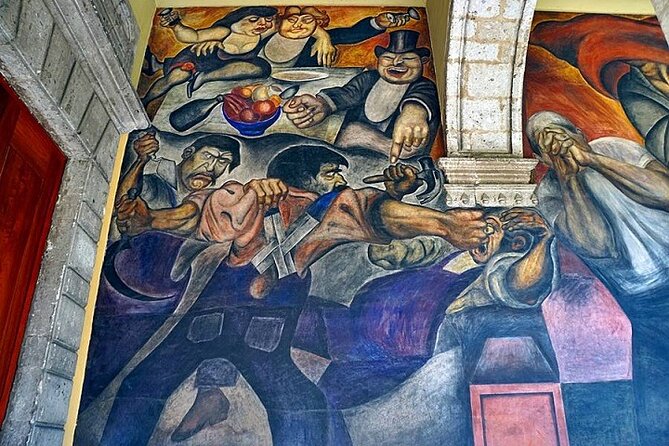
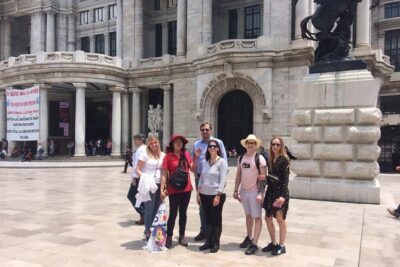
The tour ends at Palacio de Bellas Artes on Juárez Avenue, one of Mexico City’s most important cultural buildings. The structure houses exhibitions, dance, theater, and other performances, along with a museum that opened at the same time as the building.
The mural collection is the focus here. Several Mexican artists with international reputations received official commissions for the building shortly before its 1934 inauguration. You may see works connected to Rivera, Orozco, Siqueiros, and other major figures of the movement.
This final stop works well because Bellas Artes gives the tour a grand finish. After seeing Rivera’s first mural at San Ildefonso and the broad courtyard program at the ministry, you arrive at a building where mural art shares space with Mexico’s national cultural life.
Admission to Bellas Artes is not included, so allow for an extra ticket cost. The supplied details do not state the current admission amount, and access can depend on the day’s museum schedule. The tour description also lists a Rivera mural associated with the Rockefeller Center project, which is one reason the interior collection deserves careful attention.
You may find the 40-minute visit brief if you want to examine every mural closely. It is enough for a guided introduction, but art lovers who want extended viewing should plan a separate return visit if the schedule allows.
What the Guides Do Best
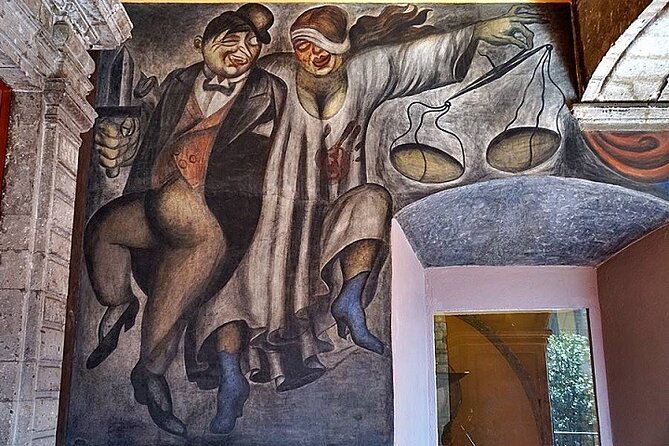
The guides are the heart of this experience. Balaam receives especially strong praise for explaining Aztec origin stories, Indigenous religious ideas, revolutionary politics, and the meaning of individual symbols. He is also described as generous with time and willing to answer questions.
Miguel is praised for his warmth, energy, and ability to adjust the discussion to a group’s interests. That flexibility matters because mural tours can easily become a lecture. The best moments seem to come when the guide connects a question from the group to a specific figure or symbol on the wall.
The tour is offered in English. Most feedback describes the guides as clear and effective English speakers, but one person found an accent difficult to follow and had trouble getting questions understood. That is a fair caution for anyone who needs very precise verbal explanation.
Group size is capped at 25. That is not a private tour, and a full group may make it harder to hear in a courtyard or gather around a popular mural. Smaller departures can feel much more personal. One Sunday afternoon departure had only one participant, while another group had about a dozen people.
If you care strongly about a private experience, do not assume the cap means a tiny group. The experience can vary by date.
Is $51 a Fair Price?
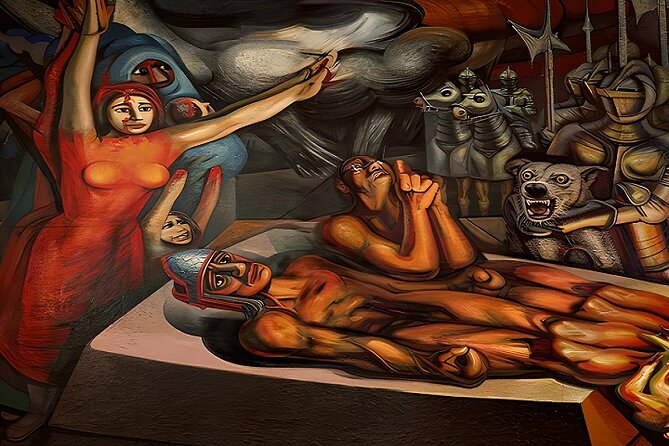
At $51, this is not the cheapest way to see murals in Mexico City. You could visit some public buildings independently for less, provided you manage opening hours, tickets, directions, and interpretation yourself.
The price makes more sense if you want the art explained in English. The tour covers three major locations, includes museum entrance tickets where specified, and adds context that is difficult to gather from wall labels alone. It also saves you from planning a route through the Historic Center.
I see the best value for visitors who have limited time. In roughly three hours, you can encounter Rivera’s first mural, the Ministry’s enormous collection, and Bellas Artes, along with street-level history between the buildings.
The value is weaker if you prefer to linger alone. Forty minutes at both the Ministry and Bellas Artes may feel rushed, especially if you want to sketch, photograph, or study each scene carefully. In that case, use the tour as an introduction and return to your favorite museum later.
Group discounts are available, though the exact savings are not stated. The mobile ticket makes arrival simple, and the meeting point is near public transportation. Transportation between sites is not included, so you walk or arrange your own ride.
Who Will Enjoy This Tour Most?
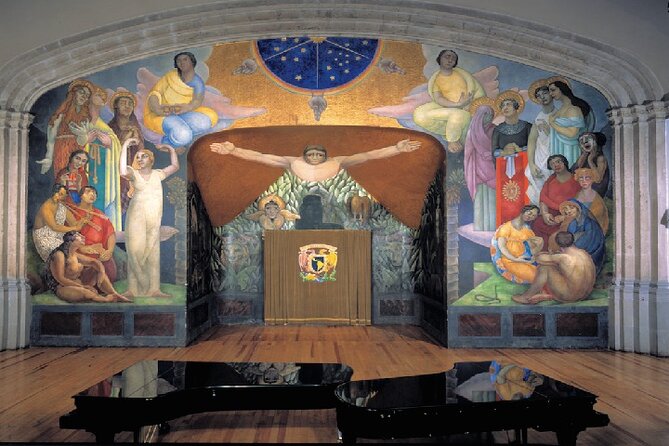
I would recommend it first to art lovers who want more than names and dates. You will get the most from it if you enjoy asking why a mural looks the way it does and how the artist’s politics shaped the image.
It also suits first-time visitors to Mexico City. The route gives you a strong introduction to the Historic Center, and the discussion extends beyond museum walls into the city’s buildings, public spaces, and food culture.
Families can enjoy it, but the three-hour pace and standing may test younger children. The Ministry does have a children’s reading room, yet the tour is designed around art and history rather than children’s activities.
Solo visitors and couples should find the format easy to join. Business groups can also benefit, especially if members want a focused cultural activity near central Mexico City.
I would be more cautious if you have mobility limits, tire easily, or dislike large groups. Most people can participate, but the route involves sustained walking and standing. Ask about the exact route on your date, especially on Tuesday.
Timing, Tickets, and Cancellation
You can choose a morning or afternoon start, which makes it easier to fit the tour around meals, flights, or another museum visit. The experience usually lasts from one to three hours, but the strongest feedback points to close to three hours when the guide takes time with questions.
The meeting point is the former College of San Ildefonso, Justo Sierra 16, in Centro Histórico. The tour ends at Palacio de Bellas Artes, Av. Juárez, so you do not return to the starting point. That one-way route is useful if you plan to continue sightseeing around Alameda Park or Bellas Artes.
Wear comfortable shoes and bring water. The guide service is included, along with specified museum tickets, but gratuity and transportation are not. Confirmation arrives when you book, and free cancellation is available up to 24 hours before the start time. Cancellations within 24 hours are not refunded.
Should You Book It?
Book this tour if you want Mexican muralism explained through politics, Indigenous culture, and city history, rather than simply photographed. Balaam and Miguel receive the strongest praise, and their passion appears to turn a good museum route into a memorable lesson.
Choose a non-Tuesday date if the Ministry of Public Education is a priority. If you want private, slow museum time, the group format and walking pace may frustrate you. For everyone else, especially first-time visitors and Rivera fans, $51 is a reasonable price for three important sites and the stories that bring their walls to life.
FAQ
Where does the walking tour begin?
It begins at the former College of San Ildefonso, Justo Sierra 16, Centro Histórico de la Ciudad de México.
Where does the tour end?
The tour ends at Palacio de Bellas Artes on Juárez Avenue in Mexico City’s Historic Center.
How long does the experience last?
The stated duration is approximately one to three hours. Several descriptions indicate that the full experience can last close to three hours.
Is the tour offered in English?
Yes. The tour is offered in English.
Are museum tickets included?
Guide service and museum entrance tickets are included as specified. Admission to Palacio de Bellas Artes is not included.
Is the Ministry of Public Education open every day?
No. The Ministry of Public Education is closed on Tuesdays. On Tuesdays, the tour visits alternative mural sites, including the Diego Rivera Mural Museum.
How large can the group be?
The tour has a maximum of 25 participants.
Is transportation included?
No. Transportation is not included. The tour is primarily a walking experience.
Can I cancel for a full refund?
Yes, if you cancel at least 24 hours before the start time. Cancellations made within 24 hours are not refunded.
More Guided Walks
- Muralist Art Semi Private Walking Tour in Mexico City Downtown
★ 5.0 · 188 reviews - Coyoacán Walking Tour: Access to Frida Kahlo Museum & Tacos
★ 5.0 · 181 reviews - Mexico City: Lucha Libre Show, Walking Tour & Tequila
★ 4.6 · 156 reviews - Teotihuacan Hot Air Balloon Ride with Optional Bike or Walking Tour
★ 5.0 · 144 reviews
More Ruins and Heritage Sites
- Mexico City Historical Centre Food Tour with 7 Authentic Tastings
★ 5.0 · 723 reviews - Mexico City: Guided walking tour through the most historic parts of the city.
★ 4.5 · 172 reviews - Historical and Cultural Walking Tour of San Miguel de Allende
★ 5.0 · 641 reviews - Historical and Cultural Walking Tour of San José del Cabo
★ 5.0 · 576 reviews
Just added around Mexico City
- Teotihuacan & Anthropology Museum, Templo Mayor & City Tour★ 4.5 · 109 reviews
- Mexico Private Food Tour With Locals Including 10 Tastings★ 4.5 · 109 reviews
- THE REAL CDMX: Under the skin of the city★ 5.0 · 111 reviews
- Mexico City: Mexican Folklore Ballet★ 4.5 · 111 reviews
- Teotihuacán plus Bike Tour★ 5.0 · 114 reviews
- Bike to taste the world’s best tacos – Mexico City★ 5.0 · 116 reviews
- Balloon flight with private transportation and guided tour to Teotihuacán★ 5.0 · 118 reviews
- EXCLUSIVE TOUR Chapultepec Castle – Small Groups★ 5.0 · 117 reviews
Historical Tours, compared.

Mexico City Historical Centre Food Tour with 7 Authentic Tastings
Read our review →
Historical and Cultural Walking Tour of San Miguel de Allende
Read our review →
Historical and Cultural Walking Tour of San José del Cabo
Read our review →
Walking Tour in Mexico City for Exploring their Cultural Heritage
Read our review →Browse the lists this tour appears in