
Reviewed · HISTORICAL TOURS
Private Walking Tour Gems of the Historic Center of Mexico City
Mexico City’s story begins under your feet. This private, four-hour walk links Aztec ruins, Spanish colonial churches, grand public squares, and Mexico’s great mural tradition in one clear route through Centro Histórico. I especially like the one-group-only format and the way a private guide can adjust the pace, explain details, and answer questions without a crowd setting the rhythm. Complimentary entry to the Palacio de Bellas Artes is another strong point.
The main caution is the price: $156 per person is a serious outlay for a walking tour, especially if you are traveling alone or as a couple. Several major sites are viewed from outside, including the National Palace and Templo Mayor’s archaeological area, so the value depends on how much you want expert context rather than full museum access.
In This Review
- Key points to know before booking
- Why this route works for a first day in Mexico City
- Templo Mayor: beginning with Tenochtitlan
- The Zócalo and the National Palace from outside
- Metropolitan Cathedral: many styles in one building
- Madero Street: the city becomes a living museum
- Iturbide Palace and La Profesa
- Casa de los Azulejos and the remains of San Francisco
- Tolsá Square and the Postal Palace
- Palacio de Bellas Artes and Mexico’s mural story
- Pace, distance, and comfort
- Is $156 per person a fair price?
- Who will get the most from this tour?
- Should you book it?
- FAQ
- How long does the private walking tour last?
- What language is the tour offered in?
- Is admission to Palacio de Bellas Artes included?
- Can I enter the Templo Mayor Museum?
- Can I visit the National Palace interior?
- Are food and drinks included?
- Where does the tour start and finish?
Key points to know before booking
- A four-hour history walk covers Aztec, colonial, and modern Mexico in one route.
- The private guide can shape the day around your interests, pace, and questions.
- Palacio de Bellas Artes admission is included, with access to its lobby, upper floors, and major murals when open.
- Templo Mayor is explained from the exterior, but the museum is not part of the tour.
- The National Palace interior is not available, so you see it from the Zócalo.
- A coffee or tea break is included, while lunch, other drinks, and transportation are not.
Why this route works for a first day in Mexico City
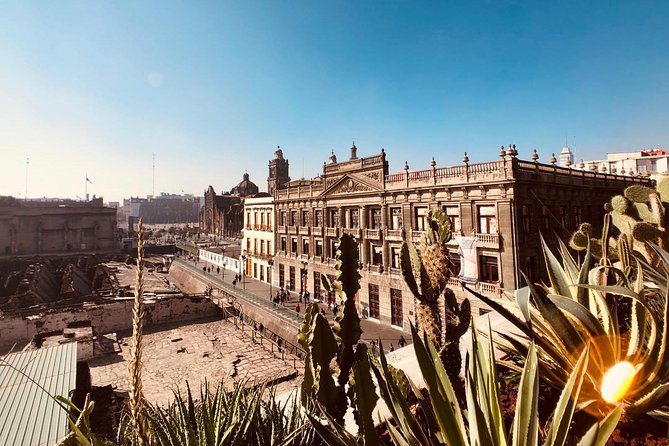
Centro Histórico can feel like several cities placed on top of one another. Aztec foundations sit below Spanish churches. Nineteenth-century mansions share streets with modern shops. Political power, religious authority, art, and daily life all crowd into a relatively compact area.
That is why I like the structure of this walk. You begin at Mexico City’s earliest major chapter, move through the colonial center, then finish with the cultural force of twentieth-century Mexican art. The route gives you a useful framework for the rest of your stay. After four hours, you should better understand why the Zócalo matters, why Madero Street is lined with ornate buildings, and why Mexican muralism is more than decoration.
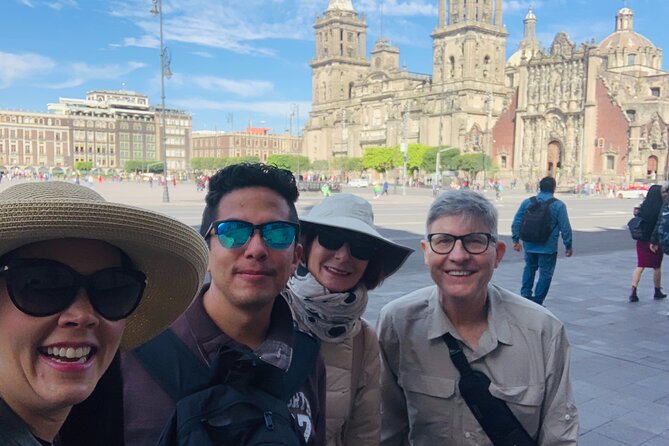
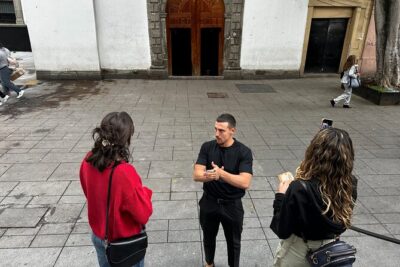
The tour is private, so you are not tied to a fixed group pace. Guides have adjusted stops for families, rested with older participants, made room for coffee and food breaks, and spent extra time on art or pre-Hispanic culture when that was the group’s priority. Guides named in past experiences include Alejo, Hermes, Isaias, Hilary, Silvia, Alicia, Julio, Hector, Fabio, Ari, Francisco, and Carla. The assigned guide can vary, but the experience clearly depends heavily on the person leading it.
More History Tours in Mexico City
- Historic Downtown Walking Tour
★ 5.0 · 1,289 reviews - Historic Center Food Tour in Mexico City
★ 5.0 · 1,263 reviews - Mexico City: Historic Downtown Walking Tour
★ 4.8 · 1,039 reviews
Templo Mayor: beginning with Tenochtitlan
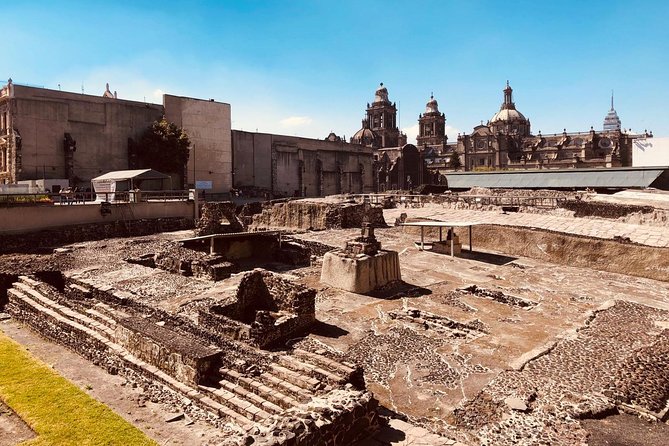
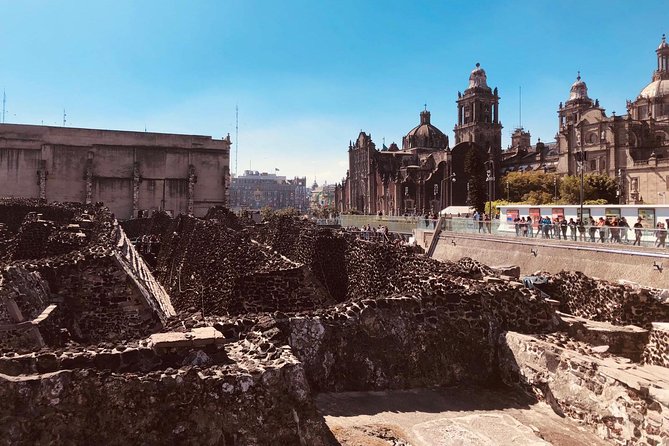
The first stop is the archaeological site of Museo del Templo Mayor, but this experience focuses on the exterior ruins, not the museum interior. From a panoramic point outside, your guide explains the former center of Mexico-Tenochtitlan and the role Templo Mayor played in Aztec religious and political life.
This is an important opening. Without context, the exposed stone platforms can look like a quick photo stop among modern buildings. With a guide, the site becomes a starting point for understanding how a powerful city developed, organized itself, and later became the foundation beneath today’s capital.
Allow about 20 minutes here. Admission to the archaeological site is not included, and the guided visit does not enter the Templo Mayor Museum. If you want the museum’s artifacts and indoor displays, plan a separate visit.
The Zócalo and the National Palace from outside
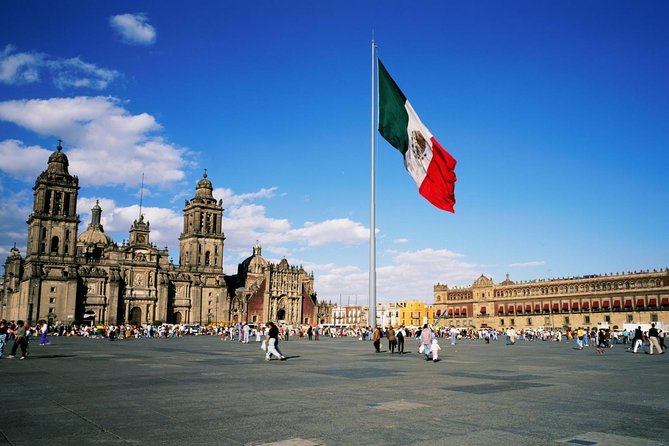
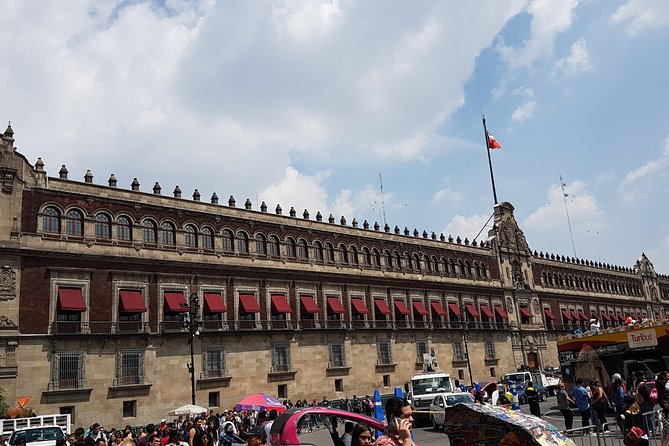
From Templo Mayor, the walk continues to Plaza de la Constitución, better known as the Zócalo. This enormous square is the political and symbolic center of Mexico City. Your guide discusses the buildings around it and the square’s changing role through colonial rule, independence, national ceremonies, protests, and public celebrations.
You will also get a panoramic view of the National Palace. The building occupies the site associated with Moctezuma’s palace and has served as a center of political power for centuries. The exterior view is worthwhile, but be clear about the limitation: the National Palace interior is not allowed on this tour.
The Zócalo can also be affected by public events. A large political march once forced changes to a planned route, blocked access to landmarks, and made some participants feel unsafe. That does not describe every tour day, but city-center demonstrations and barricades can change the experience. If you see major event closures during your visit, ask the operator about rescheduling or route changes.
Metropolitan Cathedral: many styles in one building
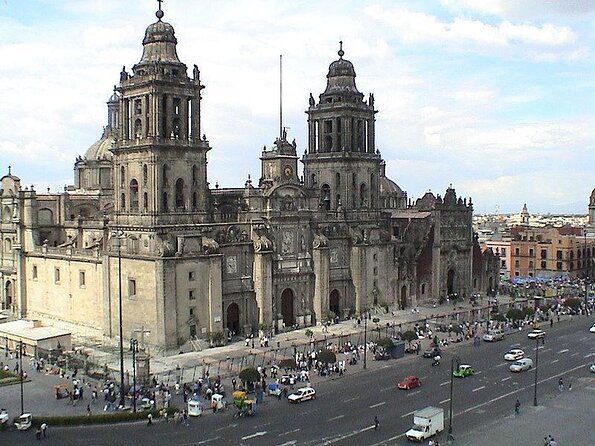
The Metropolitan Cathedral offers one of the strongest architectural stops. Its exterior brings together Gothic, Herrerian, Mexican Baroque, and Neoclassical elements, reflecting the long period over which the building developed.
Inside, you can expect a short visit through the main church and its chapels. The tour allows about 20 minutes, enough for an introduction to the interior rather than a slow study of every chapel. Depending on timing and access, your guide may be able to show you the sacristy, sometimes called the Mexican Sistine Chapel, or the church organ up close. Treat these as possible extras, not guaranteed features.
This is a good place to ask questions about how religious buildings changed over time. The cathedral is not a single, neatly planned style. Its mixed appearance is part of what makes it useful for reading Mexico City’s architectural past.
More Walking Tours in Mexico City
- Frida Kahlo VIP [Museum Tickets Included] Walk, Markets & Churros
★ 5.0 · 982 reviews - Walking Tour of the Historic Center of Mexico City
★ 5.0 · 870 reviews - Anthropology Museum Private Experience Walking Tour
★ 5.0 · 355 reviews - Walking Tour in Mexico City for Exploring their Cultural Heritage
★ 5.0 · 245 reviews
Madero Street: the city becomes a living museum
The route then follows Francisco I. Madero Avenue, a pedestrian street connecting the Zócalo with the area around Bellas Artes. The walk takes about an hour, making this the longest portion of the day.
Madero is more than a passage between two attractions. Colonial buildings, churches, shops, former mansions, and detailed façades line the route. A good guide points out things you might pass without noticing, then links them to the city’s changing social and political life.
The private format is especially useful here. You can stop for photographs, ask about a building, or slow down rather than being pulled along by a large group. The tour includes a complimentary coffee or tea break, which gives you a chance to rest during the longest walking section. Lunch and additional drinks are not included.
Iturbide Palace and La Profesa
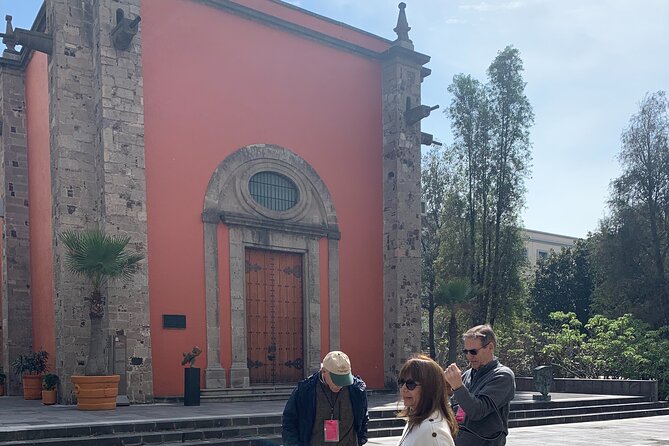
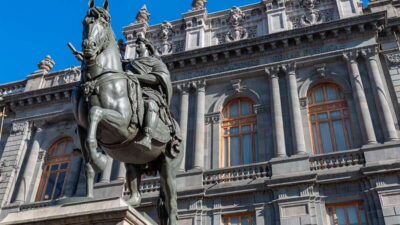
Museo Antiguo Palacio de Iturbide is a brief exterior stop, lasting about 10 minutes. Your guide explains its Mexican Baroque architecture and the role of Agustín de Iturbide, who became Mexico’s first emperor after independence.
You will not spend much time inside, so this stop works best as part of the street-level story. Look closely at the façade and listen for the connection between European Baroque ideas and their Mexican expression.
Nearby, the Temple of San Felipe Neri, known as La Profesa, offers another short stop. Its Baroque altarpiece and religious art provide a contrast to the political and commercial buildings along Madero. The church also opens a window onto the power and influence of religious institutions in Mexico’s past.
These stops are brief, but they help break up the route. The tour is not simply a march toward Bellas Artes. It keeps returning to the way architecture reveals who had money, authority, and public influence.
Casa de los Azulejos and the remains of San Francisco
Casa de los Azulejos, or the House of Tiles, is one of the most recognizable buildings on the walk. Its blue-and-white tile exterior makes it easy to spot, but the interior is also worth attention. You may see murals and architectural details that are easy to miss from the street.
The stop lasts about 10 minutes, so do not expect a long indoor visit. Still, it is a useful pause to consider how elite homes and commercial buildings shaped the look of central Mexico City.
Across the street, you can view the Chapel of Aranzazú and surviving sections of the former Church and Convent of San Francisco. The remains are a reminder that the modern city has been built around, over, and sometimes through older religious complexes.
Tolsá Square and the Postal Palace
Manuel Tolsá Square provides a short pause before the final indoor attractions. The tour includes an exterior look at the Mining Palace, a notable building associated with the square and its formal design.
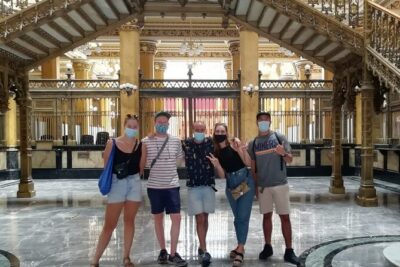
The next stop is the Postal Palace, where entry to the interior courtyard is included. This is one of the tour’s smaller but more rewarding inclusions. The ornate courtyard and stained glass provide a change of mood after the open streets and heavy stone churches.
You will spend about 10 minutes here. That is enough to appreciate the decorative work and take photographs, but not enough for a detailed architectural study. If you enjoy historic interiors, this stop adds real value to the walk because it is more than an exterior explanation.
Palacio de Bellas Artes and Mexico’s mural story
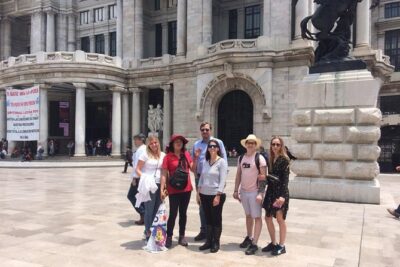
The final stop is Palacio de Bellas Artes, and it is the tour’s strongest finish. Admission is included, and the visit covers the lobby, second floor, and third floor when access is available.
The building itself is an early twentieth-century cultural landmark, designed as a major venue for concerts, exhibitions, and artistic events. Inside, the decoration is as important as the structure. Your guide can point out major murals by Diego Rivera, David Alfaro Siqueiros, Rufino Tamayo, and other important Mexican artists.
This is where the tour shifts from seeing buildings to reading ideas. The murals explore Mexico’s past, social struggles, political movements, and sense of national identity. A guide adds real value because the paintings can be visually overwhelming. It helps to have someone explain who is depicted, what events are being referenced, and how the works fit into Mexico’s modern story.
Past guides such as Alicia, Hilary, Silvia, Julio, and Isaias have been praised for their explanations of the murals and for adapting the art discussion to the group. If muralism is a major reason you are visiting Mexico City, tell the operator when booking and remind your guide at the start.
Allow about 50 minutes here. The tour ends outside Palacio de Bellas Artes on Avenida Juárez, so you can continue into the surrounding cultural district, return to your hotel, or pause for a drink with a view of the building.
Pace, distance, and comfort
This is a walking tour in a dense city center, not a gentle stroll with frequent transport. One detailed account measured close to 10,000 steps, or roughly four miles, though a private guide can shorten or adjust the route.
Wear comfortable shoes and bring water. The tour includes a coffee or tea break, but not lunch. Since much of the route is outdoors, weather matters. The operator requires good weather and offers another date or a full refund if poor conditions force cancellation.
Most people can participate, and the area is near public transportation. Still, tell the guide about mobility limits at the start. The private setup makes it easier to pause or cut a section than it would be on a large group tour.
Is $156 per person a fair price?
The cost is easiest to justify for a small private group that wants a guide’s full attention. You are paying for a certified bilingual guide, a flexible route, a complimentary drink, and admission to Palacio de Bellas Artes and the Postal Palace. You are also paying for interpretation, not simply access to places you could photograph on your own.
The value is less clear if you mainly want to see the exteriors quickly. Templo Mayor’s museum is not included, the National Palace cannot be entered, and several stops last only 10 minutes. Lunch, other beverages, and private transportation also cost extra.
Group discounts may improve the price for a larger party. For couples, the decision comes down to priorities. If you love history, architecture, or Mexican art, the guide’s explanations can make the expense worthwhile. If you prefer museums at your own speed, book the walk as an introduction and schedule separate visits afterward.
Who will get the most from this tour?
I would choose this experience for a first visit to Mexico City, especially if you want the historic center to make sense before exploring it independently. It also suits people who enjoy art and architecture but do not want to spend half a day researching every building in advance.
Families can benefit from the private format. Guides have kept children engaged, adjusted the pace, and answered questions beyond the formal route. Couples and solo visitors also gain from being able to shape the conversation.
You may want another plan if you need wheelchair-friendly certainty, extensive museum time, or a slow, unhurried pace. The route covers a lot of ground, and the most important indoor visit, Bellas Artes, is saved for the end.
Should you book it?
Book this tour if you want a strong four-hour introduction to central Mexico City, especially with a focus on Aztec origins, colonial architecture, and mural art. The best reason to pay the private-tour price is the guide’s ability to turn a long list of buildings into one connected story.
Skip it if you want full entry to Templo Mayor and the National Palace, or if you are comfortable exploring the center without explanation. For most first-time visitors who value context, flexible pacing, and a personal guide, this is a worthwhile way to get your bearings before setting out on your own.
Free cancellation is available up to 24 hours before the start time. Confirmation is sent within 48 hours, subject to availability.
FAQ
How long does the private walking tour last?
The tour lasts approximately four hours.
What language is the tour offered in?
The tour is offered in English with a private certified bilingual guide.
Is admission to Palacio de Bellas Artes included?
Yes. Admission to Palacio de Bellas Artes is included, with a visit to the lobby and upper floors to see major murals when access is available.
Can I enter the Templo Mayor Museum?
No. The tour explains the exterior archaeological site, but a guided visit to the Templo Mayor Museum is not included.
Can I visit the National Palace interior?
No. The National Palace is viewed from the Zócalo, and the interior is not available on this experience.
Are food and drinks included?
A complimentary coffee or tea break is included. Lunch and other beverages are not included.
Where does the tour start and finish?
The tour starts at Zócalo Central Hotel, Avenida 5 de Mayo 61, and ends at Palacio de Bellas Artes on Avenida Juárez.
More Guided Walks
- Muralist Art Semi Private Walking Tour in Mexico City Downtown
★ 5.0 · 188 reviews - Coyoacán Walking Tour: Access to Frida Kahlo Museum & Tacos
★ 5.0 · 181 reviews - Mexico City: Lucha Libre Show, Walking Tour & Tequila
★ 4.6 · 156 reviews - Teotihuacan Hot Air Balloon Ride with Optional Bike or Walking Tour
★ 5.0 · 144 reviews
More Ruins and Heritage Sites
- Mexico City Historical Centre Food Tour with 7 Authentic Tastings
★ 5.0 · 723 reviews - Walking Tour – Impressive murals in Historical Center of Mexico City
★ 5.0 · 224 reviews - Mexico City: Guided walking tour through the most historic parts of the city.
★ 4.5 · 172 reviews - Mexico City: Historical walking tour of Tenochtitlan
★ 4.9 · 69 reviews
Just added around Mexico City
- Neon Bike Party – Private Bike Tour★ 4.5 · 34 reviews
- Private Tour with Archaeologist and VR Experience at Teotihuacan★ 5.0 · 34 reviews
- Mexico City: Full-Day Taxco and Cuernavaca Tour★ 4.1 · 34 reviews
- Food and Historic Walking Tour: Private Tortilla Crawl in Mexico City Downtown★ 5.0 · 35 reviews
- Guided tour EN Teotihuacan – Breakfast EN cave-round transport★ 5.0 · 35 reviews
- Xochimilco, Coyoacan and Frida Kahlo Museum Tour★ 3.5 · 35 reviews
- Xochimilco: amanecer en kayak Ciudad de México★ 5.0 · 35 reviews
- Full-Day Private Tour of Mexico City: Teotihuacan and Xochimilco★ 5.0 · 35 reviews
Historical Tours, compared.

Mexico City Historical Centre Food Tour with 7 Authentic Tastings
Read our review →
Historical and Cultural Walking Tour of San Miguel de Allende
Read our review →
Historical and Cultural Walking Tour of San José del Cabo
Read our review →
Walking Tour in Mexico City for Exploring their Cultural Heritage
Read our review →Browse the lists this tour appears in