
Reviewed · HISTORICAL TOURS
History and Murals: Walking Tour Guadalajara
Guadalajara tells its story in stone and paint. This half-day walk links the city’s grandest churches, civic buildings, plazas, and the remarkable José Clemente Orozco murals at Cabañas Museum. I especially like the mix of architecture and Mexican history, plus the chance to finish with traditional food and shopping at Mercado Libertad.
I also like that the small group is capped at 15 people and that the tour is conducted in English. Fernando, the guide most often named in the feedback, brings strong knowledge of Guadalajara, Jalisco, Mexican politics, art, and food to the walk. The main point to consider is that this is mostly standing and walking, with no headsets or microphones, so you need to stay close enough to hear.
In This Review
- Key things to know before you book
- Why this Guadalajara walk works so well
- Plaza de Armas and the first look at Guadalajara
- The Sagrario and Guadalajara Cathedral
- Rotonda, City Hall, and the political heart
- Plaza de la Liberación and Teatro Degollado
- Founders’ Plaza and Plaza Tapatía
- Cabañas Museum and Orozco’s great murals
- Mercado Libertad: food, crafts, and the final stop
- Group size, walking effort, and guide style
- Who should book this tour?
- Should you book History and Murals: Walking Tour Guadalajara?
- FAQ
- How much does the tour cost?
- How long does the walking tour last?
- What time and where does the tour begin?
- Where does the tour end?
- Is the tour offered in English?
- How many people can join the group?
- Is admission to Cabañas Museum included?
- Are Palacio de Gobierno and Teatro Degollado guaranteed to be open?
- Can I cancel for a refund?
Key things to know before you book
- Orozco’s Cabañas murals are the star: One hour is set aside for 57 frescoes in the former hospice’s main chapel.
- The route covers Guadalajara’s historic core: You see the cathedral, government buildings, theaters, monuments, and major plazas in one morning.
- Fernando adds useful local context: His talks connect architecture with religion, politics, social change, and present-day Guadalajara.
- The finish is practical and tasty: The walk ends at Mercado Libertad, where you can eat, browse crafts, and buy souvenirs.
- The group stays fairly small: A maximum of 15 people makes questions and conversation easier than on a large coach tour.
- Government access can change: Palacio de Gobierno and Teatro Degollado may be closed according to state or local authorities.
Why this Guadalajara walk works so well
This is a good first look at Guadalajara because the route does not treat the city as a string of unrelated monuments. You move from colonial power to religious authority, independence, modern civic identity, mural art, and everyday commerce.
That range matters. You see how Guadalajara presents itself in polished stone, but you also reach a market where the city eats, bargains, and shops. The result is more useful than a church-by-church march through the center.
The tour begins at 10:00 a.m. in Plaza de Armas, right in the historic center. It lasts about three to four hours, depending on access at certain buildings and the pace of the group. At $53.05 per person, the price is fair if you want a guide who explains the setting rather than simply points out buildings.
The included entrance to Cabañas Museum helps the value. The museum is the one major paid sight on the route, and the Orozco murals can be difficult to understand without some guidance. You are also getting an English-speaking local guide for a compact city orientation, rather than paying for several separate admissions and tours.
More ruins and heritage sites:
- Charreria heritage tour be a charro for a day
★ 5.0 · 188 reviews - Tequila/Guachimontones Tour-cultural heritage route
★ 5.0 · 136 reviews - Historic Downtown Walking Tour
★ 5.0 · 1,289 reviews
Plaza de Armas and the first look at Guadalajara
Plaza de Armas is a sensible starting point. Founded in the 16th century, it is the oldest square in Guadalajara and sits among many of the historic center’s key buildings.
Allow yourself time to look around before the explanation begins. The square helps you understand the city’s traditional layout, with religious, political, and civic buildings gathered close together. From here, the cathedral and government buildings give the opening scene real weight.
The scheduled stop lasts about 20 minutes and costs nothing to enter. Since this is an outdoor beginning, sun and heat can matter. A hat, water, and comfortable shoes are practical choices, especially because the tour involves repeated stops on foot.
The Sagrario and Guadalajara Cathedral
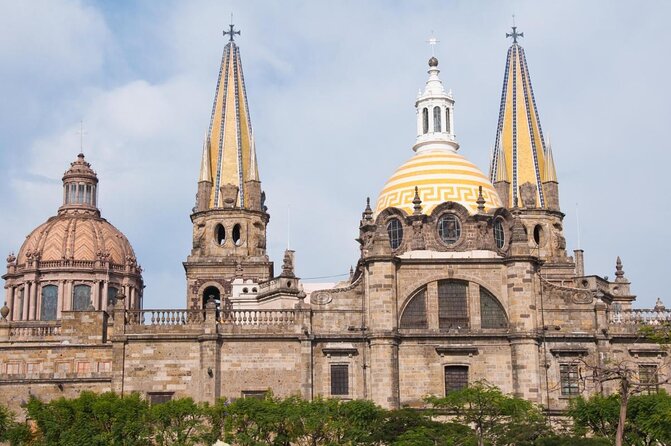
The Parroquia El Sagrario Metropolitano follows with a short visit of about 10 minutes. Inaugurated in 1839, it is built from golden quarry stone and uses a neoclassical style.
That brief stop works best as an architectural pause. The church is not given the same amount of time as the cathedral, but it adds another layer to the religious center and shows how Guadalajara’s building styles changed over time.
The cathedral receives about 20 minutes. Its construction began in the 16th century, and it remains the seat of the bishopric and one of the most important churches in Jalisco.
You can see both the exterior and interior. This is where a guide earns his keep, since the building’s importance is not only visual. Fernando’s talks are often praised for putting the sites into wider Mexican and local context, including the political and social forces that shaped the city.
Do not expect a silent, extended church visit. The cathedral is part of a moving walking route, and the stop is designed to give you the essentials before continuing through the center.
Rotonda, City Hall, and the political heart
At the Rotonda de Los Jaliscienses Ilustres, the focus shifts from church leaders and colonial institutions to notable men and women from Jalisco’s past. The neoclassical monument is a useful place to consider how the state chooses to remember its important figures.
The stop lasts around 10 minutes and is free. It is also an outdoor stop, so your experience depends somewhat on shade, crowds, and city activity that day.
The route then passes the Guadalajara Municipal Palace, a neocolonial building constructed between 1949 and 1952. It serves as the headquarters of the city’s municipal council. Although the itinerary does not assign a separate timed admission here, the building adds a modern civic note to the older surroundings.
Next comes Palacio de Gobierno del Estado de Jalisco. Inaugurated in 1790, it has served as a court, military barracks, and the seat of the Jalisco congress. Its main staircase contains a mural by José Clemente Orozco, making it an important link between the political story of Guadalajara and the artistic focus later at Cabañas Museum.
Access is not guaranteed. State authorities determine whether the building can be entered, and access has been limited during preparations connected with the 2026 FIFA World Cup. If the doors are closed, you may still hear about the building and its Orozco work, but the indoor visit is not a sure part of the day.
That uncertainty is the clearest weakness in the route. A closed government building can leave a short gap in the schedule. The operator has added Cabañas Museum as the reliable major mural stop, and that is a strong substitute, but it does not fully replace seeing Orozco’s staircase mural in its original setting.
More guided walks:
- Walk Guadalajara!
★ 5.0 · 474 reviews - Guadalajara City Center Walking Tour
★ 5.0 · 225 reviews - Guadalajara Private Walking Tour
★ 5.0 · 167 reviews - Playa del Carmen Walking Food Tour
★ 5.0 · 1,274 reviews
Plaza de la Liberación and Teatro Degollado
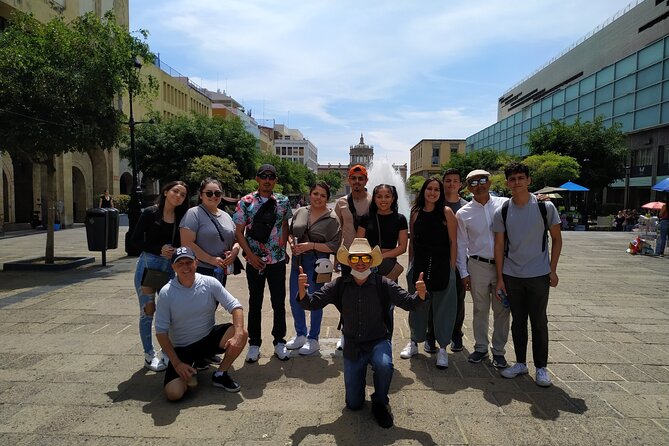
Plaza de la Liberación is dedicated to Mexican independence and was built in the 1950s. The 10-minute stop gives the walk a broad public setting after the tighter streets around the cathedral and government buildings.
The guide can connect the plaza’s name with Mexico’s independence story and Guadalajara’s place within the state of Jalisco. You are not simply seeing an open square. You are seeing how national events are presented in the city center.
Teatro Degollado is one of Guadalajara’s finest landmarks. Opened in 1866 during the Reform War, it is known for its beauty and acoustics. The tour allows about 10 minutes here.
Interior access depends on local conditions. If the theater is closed, you will mainly appreciate the outside and hear about its role in the city’s cultural life. When access is available, the inside adds much more than a quick photograph, but you should book with the understanding that entry is not guaranteed.
A short rest break at Café Degollado is an especially useful practical detail. The pause lasts about 15 to 20 minutes and gives you time to use the restroom, drink water, and sit down. Since the tour has no audio equipment, this is also a natural chance to regroup before the next section.
Founders’ Plaza and Plaza Tapatía
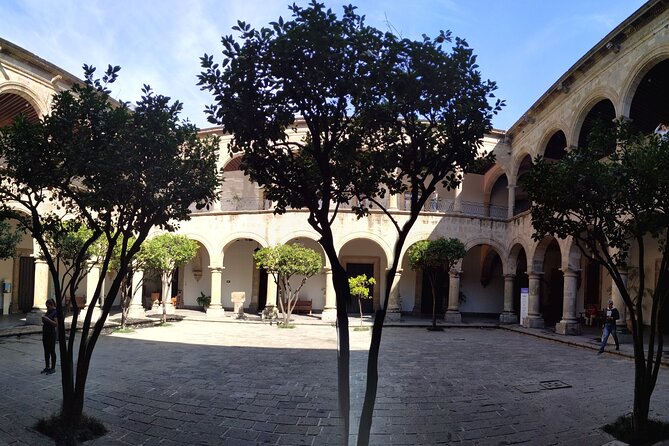
Plaza Fundadores marks the foundation of Guadalajara in 1542. A bronze sculpture by local artisan Rafael Zamarripa honors the city’s founders.
This is a small stop, around 10 minutes, but it gives the city’s origin story a physical marker. The square also helps explain that Guadalajara was founded more than once before settling in its present location, a point the guide can place within the city’s early development.
Plaza Tapatía follows. Built in the 1970s, it is the largest and newest square in the historic center, with a strong focus on commerce and handicrafts.
The contrast is useful. Earlier plazas were shaped by church, government, and ceremony. Plaza Tapatía points toward shopping and public movement. It prepares you for the final two stops, where art and commerce take over from official monuments.
Cabañas Museum and Orozco’s great murals
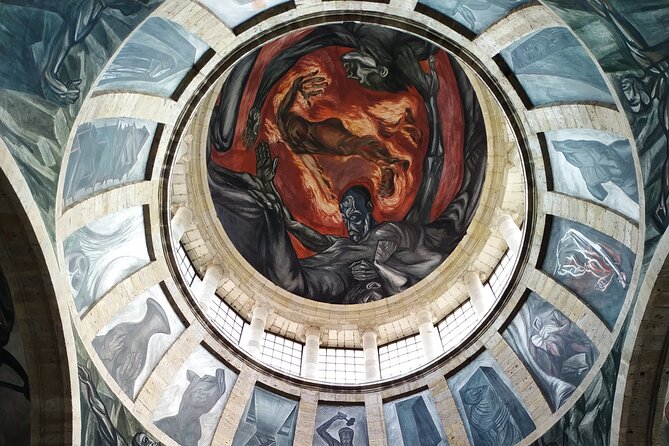
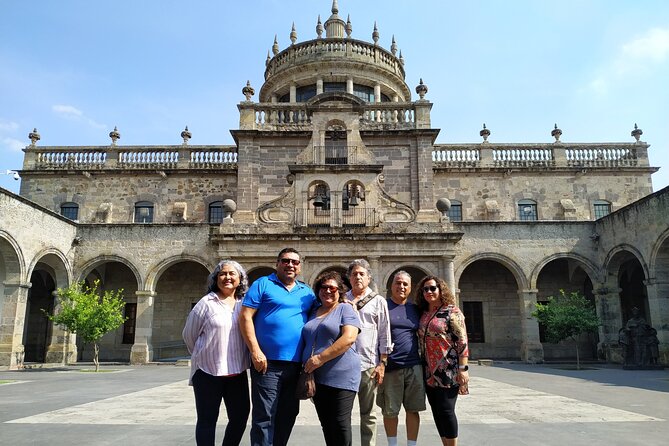
Cabañas Museum is the heart of the tour. You receive an entrance ticket, and the visit lasts about one hour.
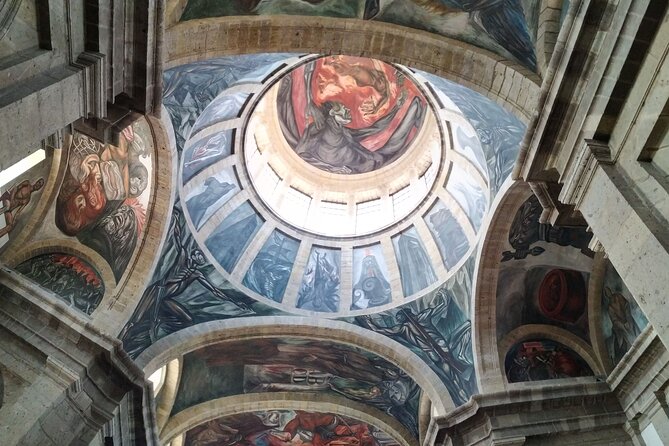
The former hospice contains José Clemente Orozco’s major mural cycle: 57 frescoes painted on the walls and domes of the main chapel. Orozco is one of Mexico’s three most important muralists, and this work is recognized as a UNESCO World Heritage Site.
Give the murals time before trying to organize every detail. One of the best features of Fernando’s approach is that he allows you to look first, form your own response, and then explains the imagery and historical setting. That order matters. You get a personal reaction before the facts begin to direct your eyes.
The main chapel’s scale also changes how you see the art. These are not small paintings in a quiet gallery. The frescoes surround you overhead and across the walls, so the building itself becomes part of the experience.
Fernando is particularly strong here. His explanations connect Orozco’s work with Mexican history, social conflict, and difficult political realities without reducing the murals to a simple good-versus-bad story. You can ask questions, and the guide’s English is described as clear and easy to follow.
If you care about art, this stop alone may justify the $53.05 cost. If you mainly want casual sightseeing, one hour inside the museum may feel long. The tour gives the murals serious attention, so this is not the right choice for someone who wants only quick exterior views.
Mercado Libertad: food, crafts, and the final stop
The walk ends at Mercado Libertad, also called San Juan de Dios Market. It is described as the largest traditional market in Guadalajara and the largest of its kind in Latin America.
This ending is smart. You finish away from formal monuments and in a place where you can continue exploring at your own pace. The market sells traditional food, regional crafts, and souvenirs, and it is a useful place to put the morning’s history into a present-day setting.
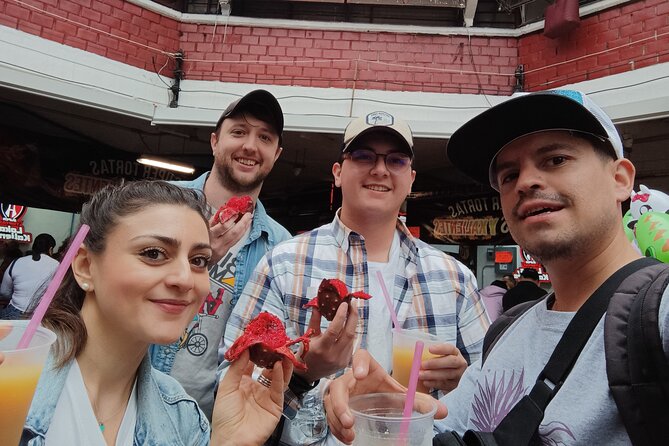
Food is part of the appeal. The tour includes a traditional market tasting, and Fernando has pointed people toward local specialties such as birria, tortas ahogadas, and tejuino. Tejuino is a particularly fun introduction if you have not tried it before.
The planned market stop is about 15 minutes, but you may want more time afterward. Since the official tour ends here, you can remain to eat or shop without needing to return to the starting point.
Mercado Libertad can feel crowded and hectic. Keep your belongings secure and agree on where to meet if your group separates. The market is not polished or carefully arranged for sightseeing, and that is part of its value. You are seeing working commerce, not a staged cultural display.
Group size, walking effort, and guide style
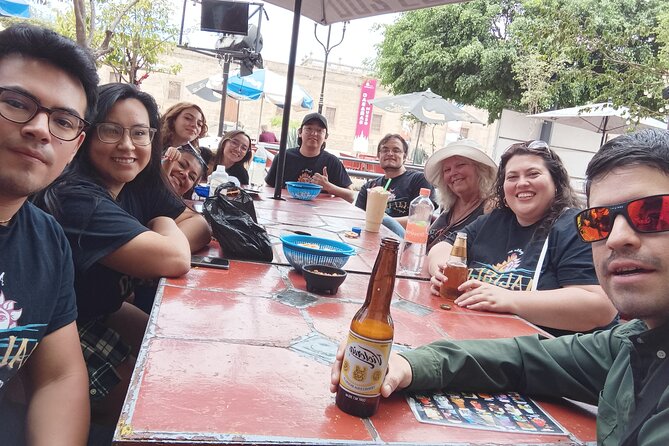
The maximum group size is 15 people. That is small enough for questions, though you still need to stand near Fernando because the tour does not use headsets or microphones.
The pace is described as an easy short walk, but the day is not physically effortless. Much of the time is spent standing in plazas, churches, and museum spaces. Wear supportive shoes and bring water. Shade breaks are used when possible, and the Café Degollado pause helps, but you should not expect a seated tour.
Fernando receives the strongest praise for his storytelling, patience, punctuality, and ability to handle questions. His interests extend beyond dates and building styles. He brings in sociology, current viewpoints, food recommendations, protests, and uncomfortable parts of Mexican history without presenting only one approved version.
For the meeting, look for the guide at the Plaza de Armas kiosk at 10:00 a.m. One practical improvement would be clearer identification, such as a logo on a shirt, hat, or backpack. If you are new to the square, contact details from your booking confirmation can help you connect quickly.
Who should book this tour?
I would choose this tour if you are visiting Guadalajara for the first time, have limited time in the center, or want a strong introduction before exploring on your own. It suits people who enjoy architecture, Mexican history, political context, and serious mural art.
Families can benefit from the variety, since the route changes setting often. Solo visitors and couples may especially enjoy the small-group format and the chance to ask questions. Food-minded visitors also get a useful finish at the market.
I would think twice if you dislike walking, need a fully seated experience, or want guaranteed entry to every building. Palacio de Gobierno and Teatro Degollado depend on official access, and the absence of audio devices means you must stay close to the guide.
The cancellation terms are simple: cancel at least 24 hours before the 10:00 a.m. start for a full refund. Poor weather or failure to reach the minimum group size can lead to a new date or a full refund.
Should you book History and Murals: Walking Tour Guadalajara?
Yes, if you want substance in a compact format. The best reason to book is the combination of Fernando’s clear local storytelling and the hour devoted to Orozco’s Cabañas murals. You also finish at Mercado Libertad, where lunch and souvenirs are close at hand.
The route has a few limits, especially the standing time, lack of headsets, and uncertain access to government buildings. Still, the included museum entry, small group, English service, and broad sweep through Guadalajara’s historic center make $53.05 a reasonable price for a first full morning in the city.
FAQ
How much does the tour cost?
The listed price is $53.05 per person.
How long does the walking tour last?
The tour lasts approximately three to four hours.
What time and where does the tour begin?
It starts at 10:00 a.m. at Plaza de Armas in Guadalajara’s historic center.
Where does the tour end?
The tour ends at Mercado Libertad, also known as San Juan de Dios Market, at C. Dionisio Rodríguez 52.
Is the tour offered in English?
Yes. The tour is offered in English.
How many people can join the group?
The tour has a maximum of 15 participants.
Is admission to Cabañas Museum included?
Yes. Entrance to Cabañas Museum is included, with about one hour allotted to see Orozco’s murals.
Are Palacio de Gobierno and Teatro Degollado guaranteed to be open?
No. Entry to both locations depends on access allowed by local or state authorities.
Can I cancel for a refund?
Yes. You can receive a full refund by canceling at least 24 hours before the start time. Cancellations within 24 hours are not refunded.
Just added around Guadalajara
- Tequila Express★ 4.5 · 110 reviews
- Downtown Guadalajara and Tlaquepaque Tour★ 4.5 · 111 reviews
- From Guadalajara: Tequila Trail Tour with Tasting★ 4.9 · 114 reviews
- José Cuervo Tequila Day Experience from Guadalajara★ 5.0 · 126 reviews
- Tequila/Guachimontones Tour-cultural heritage route★ 5.0 · 136 reviews
- Tequila Tour★ 4.5 · 139 reviews
- Premium Tequila Route with professional tasting★ 4.9 · 139 reviews
- Guadalajara: Premium Tequila Tour with Tastings and Pairings★ 4.8 · 144 reviews
Historical Tours, compared.
Mexico City Historical Centre Food Tour with 7 Authentic Tastings
Read our review →
Historical and Cultural Walking Tour of San Miguel de Allende
Read our review →
Historical and Cultural Walking Tour of San José del Cabo
Read our review →
Walking Tour in Mexico City for Exploring their Cultural Heritage
Read our review →Browse the lists this tour appears in