
Reviewed · WALKING TOURS
Guadalajara Private Walking Tour
Guadalajara reveals itself on foot. This private walk with Diego links Colonia Americana, the old center, San Juan de Dios Market, and Museo Cabañas in one well-shaped route. I like the personal storytelling, especially when Diego connects architecture and politics to everyday life, and I like the flexible pace that lets you stop for photos, questions, coffee, or a rest.
The main tradeoff is simple: this is a real walking tour in a warm, sunny city. Museo Cabañas charges its own admission, Teatro Degollado’s interior is not guaranteed, and the route is not suited to people with mobility challenges. Book early if you want a morning start, since the most comfortable hours are generally 7 to 9 am.
In This Review
- Key points about this Guadalajara walk
- Why this route works as a first look at Guadalajara
- Colonia Americana and the Glorieta de Los Niños Héroes
- Templo Expiatorio and the city’s religious conflicts
- Guadalajara Cathedral and the surrounding plazas
- Teatro Degollado and Guadalajara’s artistic center
- Plaza Fundadores and the difficult colonial past
- Mercado Libertad and the everyday city
- Museo Cabañas and Orozco’s powerful murals
- Pace, distance, heat, and comfort
- What the $42 price delivers
- Who will enjoy this tour most
- Should you book the Guadalajara private walking tour?
- FAQ
- How much does the Guadalajara private walking tour cost?
- How long does the tour last?
- Is this a private experience?
- Is the tour offered in English?
- Where does the tour start?
- Where does the tour end?
- Is Museo Cabañas admission included?
- Is Museo Cabañas open every day?
- Is the tour suitable for people with mobility challenges?
Key points about this Guadalajara walk
- From Colonia Americana to the old center: You cross several parts of Guadalajara rather than seeing one compact plaza.
- Diego’s local perspective: He brings a master’s degree in tourism, strong English, local experience, and an easy manner to the walk.
- San Juan de Dios is part of the route: The tour ends at Mercado Libertad, giving you help in a market you might otherwise skip.
- Museo Cabañas requires extra payment: Admission is not included, but Diego explains the building and Orozco’s murals before you explore independently.
- Private means flexible: Only your group joins, so you can ask questions, pause for pictures, and adjust the pace.
- Plan for sun and distance: Comfortable shoes, a hat, and water matter more here than fancy sightseeing gear.
Why this route works as a first look at Guadalajara
Guadalajara can feel scattered at first. Colonia Americana has leafy streets and restored 19th-century buildings, while Centro Histórico brings you to churches, plazas, colonial-era foundations, and major civic buildings. San Juan de Dios then shifts the mood again, from monumental architecture to commerce, food, and daily city life.
I like that this tour makes those contrasts the point. You do not simply collect a church, a theater, and a market as separate photo stops. Diego explains how the city changed from the era of Spanish settlement through the 19th century and into modern Guadalajara. His strongest subjects are architecture, social history, religion, and the way local life still uses these old spaces.
The experience lasts about three to four hours and is private. That matters. You can ask why one façade looks French, how a church fits into Mexico’s religious conflicts, or what you should eat at the market without waiting for a group of strangers to catch up.
The tour begins at La Central Hamburguesería Libertad on Libertad 1878 in Colonia Americana. It ends outside Museo Cabañas on C. Cabañas 8 in San Juan de Dios. Taxis and transportation apps are available at the end, and Diego can help if you need a hand arranging your next move.
More guided walks:
- Walk Guadalajara!
★ 5.0 · 474 reviews - History and Murals: Walking Tour Guadalajara
★ 5.0 · 237 reviews - Guadalajara City Center Walking Tour
★ 5.0 · 225 reviews
Colonia Americana and the Glorieta de Los Niños Héroes
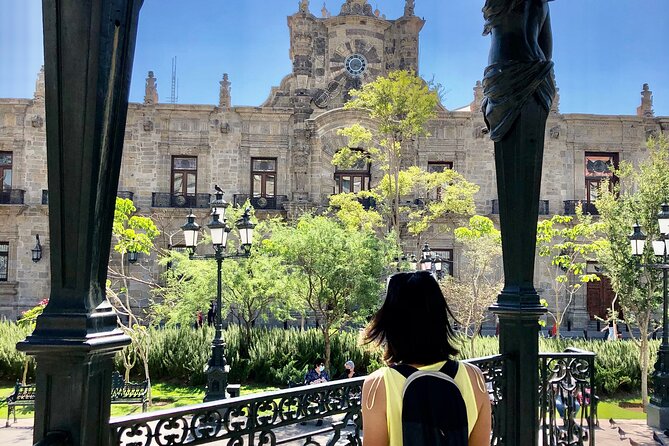
The first stop, Glorieta de Los Niños Héroes, puts you in Colonia Americana, one of Guadalajara’s most appealing areas for architecture and street life. The neighborhood grew through the work of American, European, and Mexican industrialists in the 19th century. Its streets are lined with eclectic buildings and shaded by mature trees.
You get about 45 minutes here, enough time to understand the area rather than simply pass through it. Diego explains how the neighborhood developed and how it later became a favorite part of the city for galleries, restaurants, and bars.
This is a useful opening because it gives you a modern reference point before the route moves toward older Guadalajara. The area has youthful energy, but the buildings carry older stories. Look up as you walk. Details around doors, windows, and façades are part of the lesson.
The free admission is welcome, although the tour does not appear to include a scheduled visit inside individual galleries or restaurants. Think of Colonia Americana as an outdoor introduction to Guadalajara’s changing identity.
Templo Expiatorio and the city’s religious conflicts
The Templo Expiatorio del Santísimo Sacramento is a short but memorable stop, scheduled for about 20 minutes. Its neo-Gothic design gives you a sharp change from the mixed architecture of Colonia Americana.
Here, Diego adds political and religious context. The church is not treated as decoration alone. You hear about conflicts that shaped Guadalajara and about the cultural and economic influence of the United States in Mexico. That context helps explain why churches in Mexico can carry stories of power, division, and national identity along with their religious purpose.
The stop is free and brief, so do not expect an extended interior visit or a long architectural study. Still, the building works well in the route because it prepares you for the older churches and plazas ahead.
If church architecture interests you, this is one place to ask questions. Diego is particularly good at explaining how buildings fit into wider events, rather than burying you in dates.
Guadalajara Cathedral and the surrounding plazas
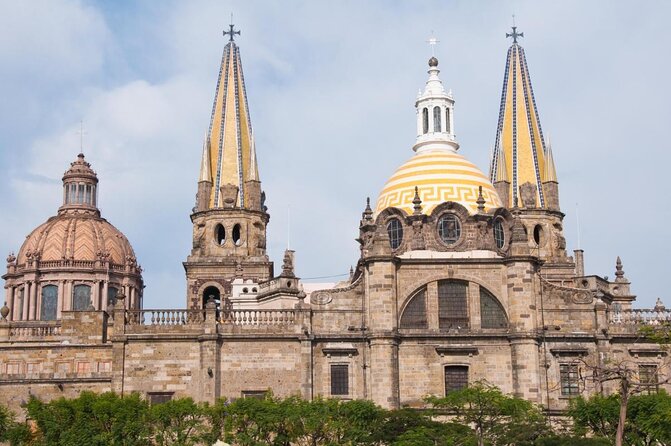
Guadalajara Cathedral brings you into the city’s central story. The 16th-century Renaissance cathedral is one of the route’s major architectural anchors, and you spend about 30 minutes around it and the nearby plazas.
This part of the walk is less about one building than about layers. Around the cathedral, you encounter Novo-Hispanic, Baroque, Art Nouveau, and neoclassical design. Those styles reflect different periods and changing tastes, and the close grouping makes comparison easy.
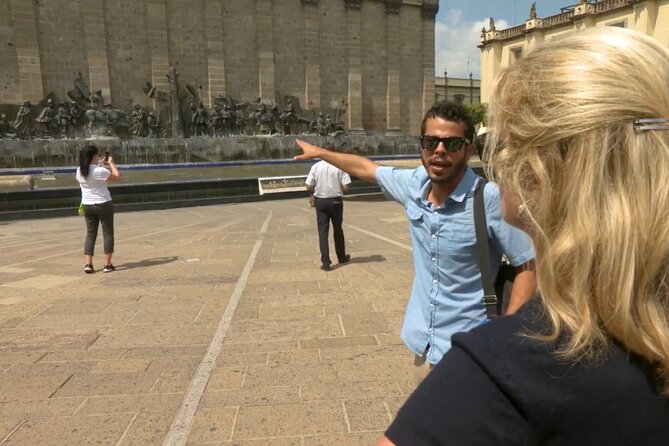
I appreciate the way the tour uses the surrounding plazas as an open-air classroom. You can stop looking at one façade and notice how the whole center is arranged around public, religious, and civic spaces. Diego’s explanations cover architecture, city history, and culture, with room for questions.
The cathedral stop is also a good point for photographs and a short pause. The route has already begun to cover distance, so use the opportunity to rest rather than rushing to the next site.
A few more reviews worth comparing before you book
- Full Day Tour to Tequila and Amatitán with Fun and Culture
★ 5.0 · 681 reviews - The Agave Experience Tequila Tour in Jalisco
★ 5.0 · 520 reviews - Tour to Lake Chapala, MAGIC TOWN of Ajijic from Guadalajara
★ 4.5 · 476 reviews - Full Day in Tequila with Tasting and party in Cantaritos
★ 5.0 · 356 reviews
Teatro Degollado and Guadalajara’s artistic center
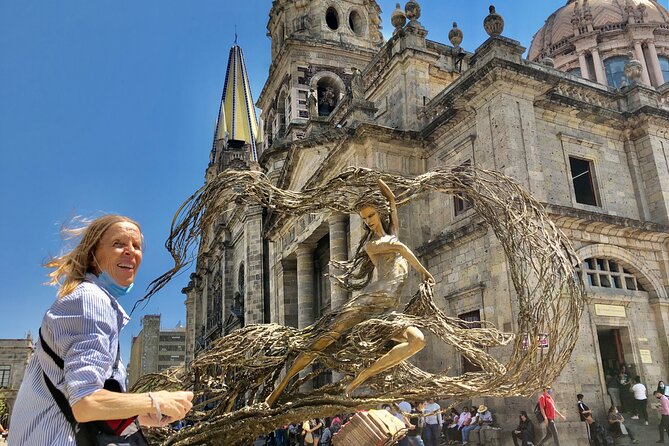
The 19th-century Teatro Degollado is a quick stop of about 10 minutes. Its neoclassical exterior and nearby plazas and churches provide another view of Guadalajara’s artistic life.
The short timing is important. You should not book this tour expecting a full theater performance or a guaranteed interior visit. Access depends on the schedule, and the tour clearly allows for the possibility that you will only see the exterior.
That is not a major flaw if you understand the format. The theater and surrounding buildings still help explain how Guadalajara presented itself as a cultured regional capital in the 19th century. Diego’s architectural background adds value here, especially if you enjoy hearing why civic buildings were designed in a particular style.
I would treat this as a focused exterior stop, not the central attraction of the day. If seeing inside Teatro Degollado is essential to you, check separately for an available visit.
Plaza Fundadores and the difficult colonial past
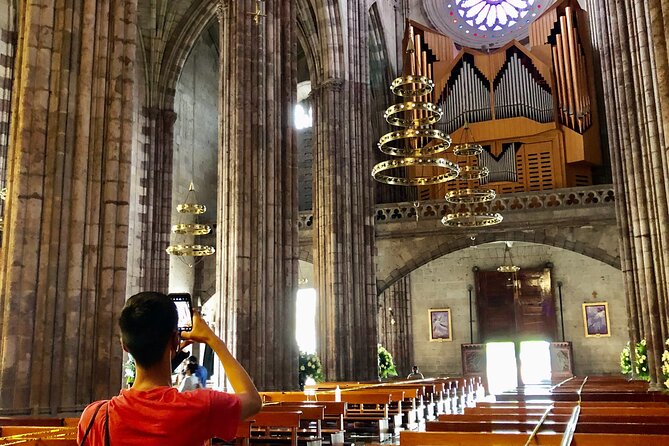
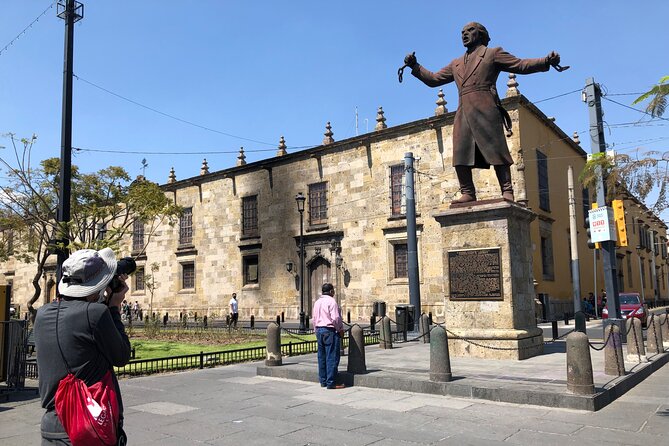
Plaza Fundadores is a small stop with a larger subject. You spend roughly 20 minutes here learning about Spanish colonization in Western Mexico, the origins of Guadalajara’s name, and the way Mexican society views that legacy today.
This is one of the most useful parts of the route because it avoids presenting colonization as a simple founding tale. Guadalajara’s name and Spanish beginnings are part of the city’s identity, but they also involve conflict, displacement, and unequal power. Diego brings that wider social view into the conversation.
You will not get a university lecture. The tour keeps moving, and the explanation is designed for a visitor trying to understand the city. Still, this stop gives the central area more meaning than a quick photograph would.
For me, this is where the route moves beyond architecture. You begin with streets and façades, then learn how the city’s public memory has been shaped by conquest and the country’s later debates about that past.
Mercado Libertad and the everyday city
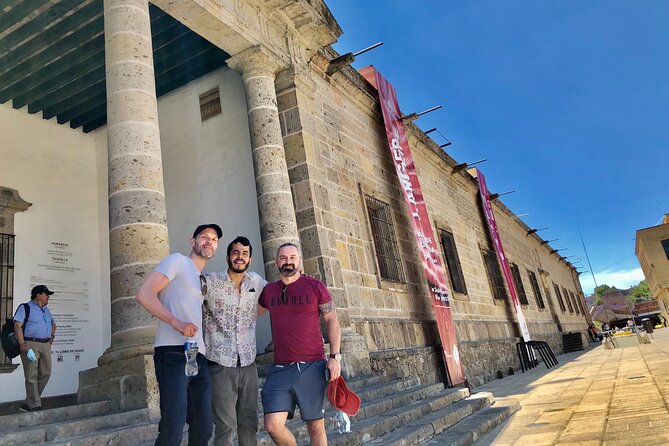
Mercado Libertad, better known as San Juan de Dios, receives about 40 minutes and is one of the tour’s most practical stops. It is described as the largest indoor market in Latin America, with stalls selling souvenirs, handicrafts, local food, and everyday goods.
A market can be easy to avoid when you are on your own. It may feel crowded, confusing, or hard to judge at first. Having Diego guide you through it makes the experience less intimidating and gives you a better chance to notice what is being sold and how the market functions.
This is also where the tour can become more personal. Diego has taken people to a torta ahogada place tied to his childhood, and to a market food stall serving quesabirria that had been operating in the same location for more than 50 years. Those food stops are not listed as fixed promises, so you should not assume every tasting is included. Ask Diego what is possible on your date, and plan to pay for any food yourself.
The market is a good place to buy souvenirs, but I would not make shopping the only goal. Watch the vendors, listen to the calls across the aisles, and ask Diego about dishes or products you do not recognize. Snacks and water are not included, so this is a sensible place to purchase a drink or a small bite if you need one.
The route ends near the market and Museo Cabañas. That makes the market particularly useful for orientation. You can return later on your own after Diego has shown you how to approach it.
Museo Cabañas and Orozco’s powerful murals
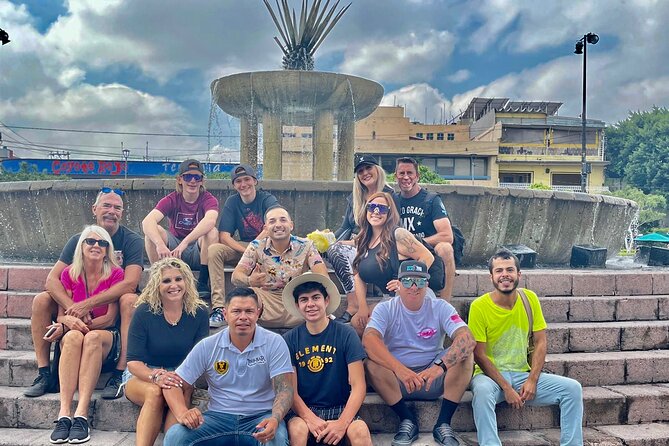
The final stop is Instituto Cultural Cabañas, usually called Museo Cabañas. You have about 45 minutes, but the museum requires separate admission. It is closed on Mondays, so check the day before booking.
The building is a UNESCO World Heritage Site, and its main artistic draw is a group of 57 murals by José Clemente Orozco. Orozco is one of Mexico’s three great muralists, and his work here can be intense, political, and difficult to absorb without context.
Diego provides background on the building and Orozco’s art, but outside guides face strict museum rules. In practical terms, he can prepare you with useful explanations, then you explore the museum at your own pace. That arrangement is not a weakness. It gives you time to look carefully instead of trying to keep up with a running lecture inside every room.
Set aside enough energy for this final stop. After several hours on foot, you may be tempted to glance around and leave. I would slow down here. The murals reward patience, and the building itself is as important to the visit as the paintings.
Because admission is not included, add the museum ticket to the tour price. If you are watching your budget, you can still enjoy the outside and the guide’s explanation, but the full point of this final stop is inside.
Pace, distance, heat, and comfort
The walk covers a broad slice of Guadalajara, from Colonia Americana to Centro Histórico and San Juan de Dios. One family described covering about two miles, while the advertised duration is three to four hours. The exact distance and timing can vary with pauses, questions, food stops, and the group’s pace.
You need moderate physical fitness. The experience is not suitable for people with mobility challenges, and you should expect extended time on your feet. Wear comfortable shoes. A hat and water are sensible, especially because Guadalajara has warm temperatures and abundant sunshine through the year.
I would choose an early start if you can. The recommended 7 to 9 am window offers more pleasant conditions than the hotter part of the day. Morning also gives you time afterward to revisit the market, return to a plaza, or explore another neighborhood.
The private format helps with comfort. Diego has adjusted the pace for older couples, allowed sitting breaks, and stopped for coffee. Still, private does not mean effortless. Tell him early if you need more rest or want to reduce the pace.
What the $42 price delivers
At $42 per person, this tour sits above a basic free walk but below the cost of many private half-day experiences. The value comes from the one-to-one attention, the route between several neighborhoods, and Diego’s ability to connect buildings with local life.
You are paying for his guiding service, not for food, water, museum admission, or guaranteed theater entry. That makes the final cost higher than the advertised price if you buy lunch, snacks, drinks, or the Cabañas ticket.
For a solo visitor, $42 is a reasonable price if you want help navigating the market and prefer to ask plenty of questions. For a couple or family, the private setup becomes more attractive because you are not sharing the guide’s attention with a large group. Group discounts may also be available.
I especially like the value for a first day in Guadalajara. Diego can point out places to eat and areas to revisit, so the tour may save you time during the rest of your stay. It also offers more than a checklist of monuments, which is where a private guide earns the extra cost.
Who will enjoy this tour most
I would recommend this walk to first-time visitors who want a clear introduction to Guadalajara’s architecture, history, churches, market culture, and local neighborhoods. It also suits solo visitors who want company and practical help without joining a large group.
It is a strong fit for people who ask questions. Diego’s style allows room for detailed explanations, and his background in tourism and local experience give him useful range. His English is excellent, and the tour is offered in English.
Families can enjoy it, provided everyone is ready to walk. Older adults may do well because the pace can be adjusted, but the route still requires moderate fitness and does not suit mobility challenges.
I would choose another plan if your priority is a long interior visit at Teatro Degollado, a food tour with guaranteed tastings, or a short route with little walking. Those are not the main promises here.
Should you book the Guadalajara private walking tour?
I would book this tour, especially for the first morning of your Guadalajara stay. You get a broad introduction, a private guide, a manageable route, and a final stop at San Juan de Dios that can make the market feel far easier to approach.
Book it if you value history, architecture, local food suggestions, and the freedom to stop for pictures or questions. Skip it if you dislike walking in warm weather or want every admission and meal included.
The best plan is to wear good shoes, bring water and sun protection, budget separately for Museo Cabañas and food, and reserve ahead if you want an early start. With those expectations in place, Diego’s tour offers a thoughtful and friendly way to get your bearings in Guadalajara.
FAQ
How much does the Guadalajara private walking tour cost?
The tour costs $42 per person. Group discounts are available.
How long does the tour last?
The tour lasts approximately three to four hours.
Is this a private experience?
Yes. Only your group participates in the tour.
Is the tour offered in English?
Yes. The tour is offered in English, and Diego speaks excellent English.
Where does the tour start?
The tour starts at La Central Hamburguesería Libertad, Libertad 1878, Colonia Americana, Guadalajara.
Where does the tour end?
The tour ends outside Museo Cabañas at C. Cabañas 8 in San Juan de Dios. Taxis and transportation apps are available nearby.
Is Museo Cabañas admission included?
No. Admission to Museo Cabañas is not included in the tour price.
Is Museo Cabañas open every day?
Museo Cabañas is closed on Mondays.
Is the tour suitable for people with mobility challenges?
No. The tour requires a moderate level of physical fitness and is not suitable for people with mobility challenges. Comfortable shoes, a hat, and water are recommended.
Just added around Guadalajara
- Tequila Express★ 4.5 · 110 reviews
- Downtown Guadalajara and Tlaquepaque Tour★ 4.5 · 111 reviews
- From Guadalajara: Tequila Trail Tour with Tasting★ 4.9 · 114 reviews
- José Cuervo Tequila Day Experience from Guadalajara★ 5.0 · 126 reviews
- Tequila/Guachimontones Tour-cultural heritage route★ 5.0 · 136 reviews
- Tequila Tour★ 4.5 · 139 reviews
- Premium Tequila Route with professional tasting★ 4.9 · 139 reviews
- Guadalajara: Premium Tequila Tour with Tastings and Pairings★ 4.8 · 144 reviews
Walking Tours, compared.
![Frida Kahlo VIP [Museum Tickets Included] Walk, Markets & Churros](https://assets.mexicanguides.com/wp-content/uploads/frida-kahlo-vip-museum-tickets-included-walk-markets-churros-400x267.jpg)
Frida Kahlo VIP [Museum Tickets Included] Walk, Markets & Churros
Read our review →

Puerto Vallarta’s Best Canopy Zipline + Jorullo Bridge walk!
Read our review →
Historical and Cultural Walking Tour of San Miguel de Allende
Read our review →
Tacos and Tequila Walking Tour with Taste of Miguel
Read our review →Browse the lists this tour appears in