
Reviewed · HISTORICAL TOURS
Walking Tour in Historic Center CDMX
Mexico City tells its story in layers. This walking tour moves from Diego Rivera’s political mural to Aztec Tenochtitlan, linking art, power, religion, and daily life across the historic center. I especially like the clear historical progression and the chance to see grand landmarks alongside less familiar stories, such as Esperanza Iris and the former asylum for women.
I also like that the tour is led by a certified English-speaking guide, with past guides including Delta, Diego, Jorge, and Jaime. The main drawback is the pace: nine stops in roughly three hours means you get strong introductions, not full museum visits. At $83.64 per person, the value depends on how much you want interpretation and orientation rather than time inside each site.
In This Review
- Key points at a glance
- Why this CDMX walking tour works
- Diego Rivera’s mural sets the historical tone
- Alameda Central: Mexico City’s public living room
- Palacio de Bellas Artes, the grand centerpiece
- Palacio Postal and Palacio de Minería show Porfirian ambition
- Museo Nacional de Arte and the remarkable one-handed sculpture
- Teatro de la Ciudad and Esperanza Iris
- Centro Cultural España reveals the city below
- Templo Mayor brings the Aztec story into focus
- What the guides add to the experience
- Price, pace, and practical value
- Who should book this walk?
- Final call: a strong orientation with a brisk rhythm
- FAQ
- How long does the walking tour last?
- What language is the tour offered in?
- Where does the tour begin?
- Where does the tour end?
- Is admission included?
- How many people can join the group?
- Can I cancel for a full refund?
Key points at a glance
- Nine stops in about three hours: The route covers museums, palaces, a theater, a cultural center, and the Templo Mayor area.
- A smart timeline of Mexican history: You begin with colonial and modern Mexico, then work backward to the Aztec capital and Spanish conquest.
- The guide makes the difference: Delta, Diego, Jorge, and Jaime have all been praised for clear English, warmth, flexibility, and strong local knowledge.
- Several landmark interiors are included: The route includes the Diego Rivera Mural Museum, Palacio de Bellas Artes, Palacio Postal, Palacio de Minería, and Museo Nacional de Arte.
- The final Templo Mayor stop is explained from outside: You see models and hear how Tenochtitlan was built, but this experience does not promise an interior museum visit.
- Book early in the day if possible: One useful tip is to avoid the heavier crowds around the historic center later in the day.
Why this CDMX walking tour works
Mexico City’s Centro Histórico can feel like several cities stacked on top of one another. Aztec foundations lie beneath Spanish buildings. Nineteenth-century ambition appears in grand civic architecture. Modern Mexican politics and art cover walls in bold color.
This tour gives you a guide to those layers without asking you to spend an entire day in one museum. The route begins at the Diego Rivera Mural Museum and ends near Templo Mayor, creating a useful backward journey through time.
That order is one of the tour’s best ideas. You first get a picture of colonial and modern Mexico through Rivera’s mural, then see how Mexico City was planned, decorated, and rebuilt. Only at the end do you reach the Aztec world and the Spanish conquest. I find that approach helpful because the later ruins make more sense after you have seen the city that grew above them.
The tour is offered in English and takes about two hours and 30 minutes to three hours and 10 minutes. A maximum of 25 people is allowed, so this is not a private stroll, but it is also not designed as a huge coach-group outing. The actual pace may vary with the guide, group questions, and time spent at each location.
More History Tours in Mexico City
- Historic Downtown Walking Tour
★ 5.0 · 1,289 reviews - Historic Center Food Tour in Mexico City
★ 5.0 · 1,263 reviews - Mexico City: Historic Downtown Walking Tour
★ 4.8 · 1,039 reviews
Diego Rivera’s mural sets the historical tone
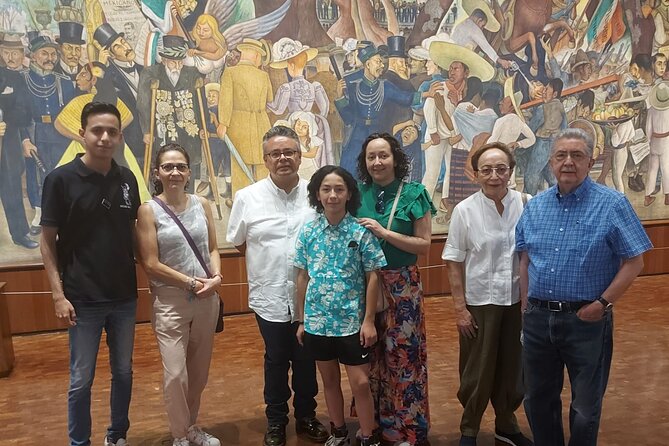
The Diego Rivera Mural Museum is the starting point, and it is a strong choice. The main attraction is Rivera’s famous mural, Dream of a Sunday Afternoon in Alameda Central Park. Rather than treating it as a pretty wall of famous faces, the guide uses the painting to explain political, cultural, and ideological changes in Mexico.
A particularly striking detail is the controversy around the phrase God does not exist, which led to censorship of the mural. That episode gives you a quick sense of the tension between church, state, artists, and public opinion in Mexican history.
The tour also explains the many figures represented in the mural and the forces they symbolize. This opening stop reportedly provides a useful framework for the rest of the walk, especially for understanding the colonial period and the political changes that followed.
You should expect about 25 minutes here, with admission included. That is enough time for a guided reading of the mural, but not enough for a slow, independent museum visit. If Rivera is a major reason for your trip, plan to return on your own.
Alameda Central: Mexico City’s public living room
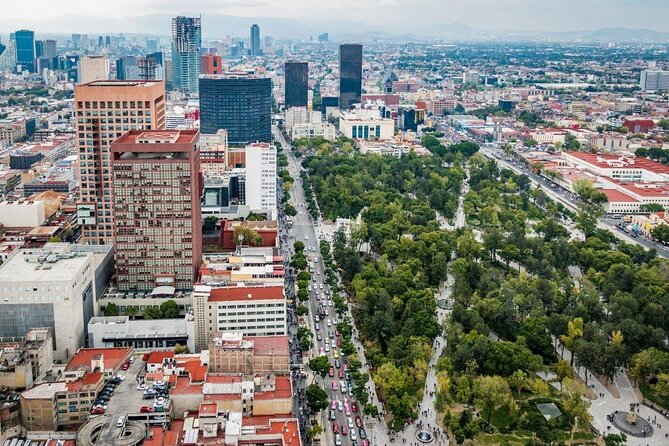
From the mural museum, the route continues to Alameda Central, described as the first public park in the Americas. The stop lasts around 10 minutes, so the focus is on the park’s classical sculptures and its role in city life.
This is less about checking off a garden and more about watching how Mexico City uses public space. The park links major cultural buildings and gives you a pause between indoor sites. Your guide can also explain how the city’s residents relate to this long-standing gathering place.
Ten minutes is brief, but that may be enough here. The important point is to connect the park with the surrounding buildings and understand that the historic center is not just a collection of monuments. It is still part of everyday city life.
Palacio de Bellas Artes, the grand centerpiece
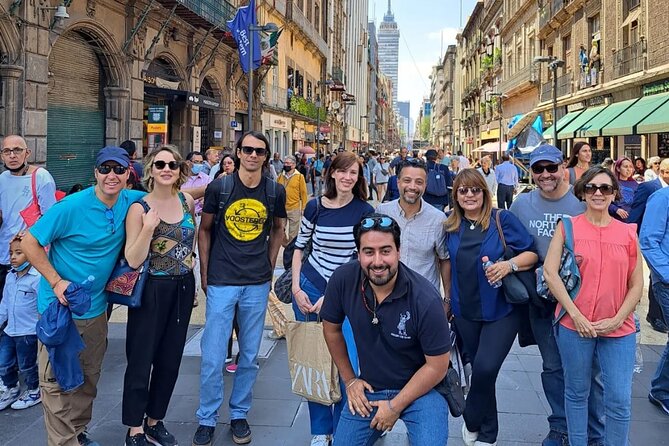
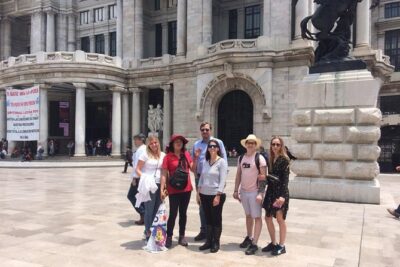
Palacio de Bellas Artes receives about 20 minutes, making it one of the tour’s main stops. The building is among Mexico City’s best-known symbols, and the guide explains its history, design, and role in the city.
The appeal here is the contrast between the building’s grand public image and the complicated changes that shaped it. The tour presents Bellas Artes as a place tied to Mexico City’s changing streets, institutions, and cultural ambitions.
Admission is included according to the tour details, but do not read that as unlimited museum time. Twenty minutes gives you a guided introduction and a look at key architectural details. It does not allow a full visit to every exhibit, mural, or performance-related space.
This is a recurring pattern throughout the experience. I like it if you want a map in your head and a strong explanation from a guide. I would not choose it as your only visit to Bellas Artes if you want to study the art at length.
More Walking Tours in Mexico City
- Frida Kahlo VIP [Museum Tickets Included] Walk, Markets & Churros
★ 5.0 · 982 reviews - Walking Tour of the Historic Center of Mexico City
★ 5.0 · 870 reviews - Anthropology Museum Private Experience Walking Tour
★ 5.0 · 355 reviews - Walking Tour in Mexico City for Exploring their Cultural Heritage
★ 5.0 · 245 reviews
Palacio Postal and Palacio de Minería show Porfirian ambition
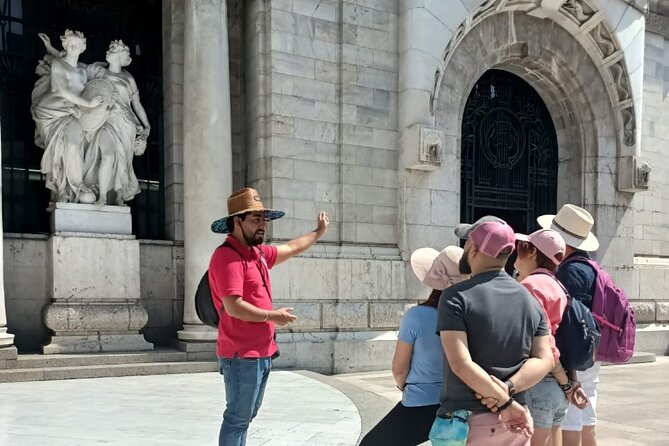
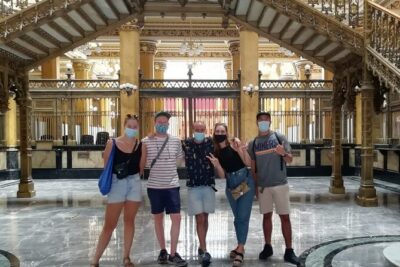
The Palacio Postal stop lasts around 15 minutes. This ornate building is tied to Porfirio Díaz’s effort to beautify and modernize Mexico City. The guide uses it to explain how the city’s leaders wanted the capital to look more modern, orderly, and internationally important.
For you, the value is in noticing the details instead of simply walking past the building. The tour places the architecture in its political setting, showing how public buildings can express a government’s goals.
Next comes Palacio de Minería for roughly 10 minutes. The explanation connects the building and Mexico’s economy to silver exports, with Mexico still identified as the world’s leading silver-exporting country in the tour’s presentation.
This short stop gives the route an economic thread. You are not only seeing beautiful facades. You are also hearing how mining wealth helped shape institutions and the capital’s public buildings.
Museo Nacional de Arte and the remarkable one-handed sculpture
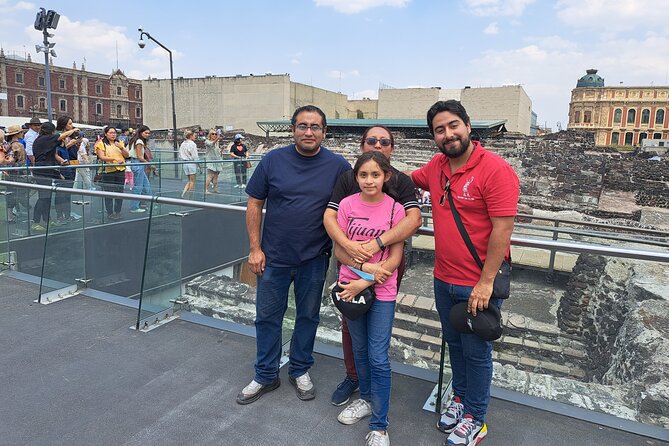
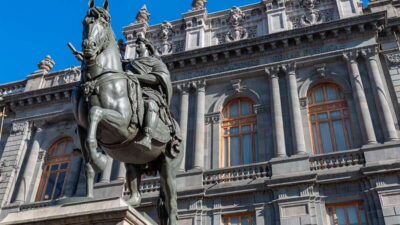
At Museo Nacional de Arte, the group spends about 10 minutes. The guide points out architectural details and a sculpture made by an artist with one hand.
That detail gives the stop a human focus. It is the sort of fact that can turn a quick look into a lasting memory, especially when you are moving through several grand buildings in one morning or afternoon.
The tour details indicate admission is included. Still, the short timing means this is a sampler. If you have a strong interest in Mexican painting or sculpture, you will probably want to return separately. The tour’s purpose here is to help you notice the building and one notable work, then keep moving.
Teatro de la Ciudad and Esperanza Iris
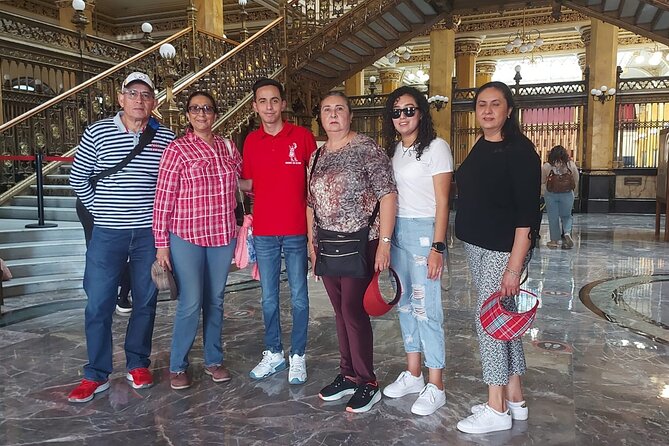
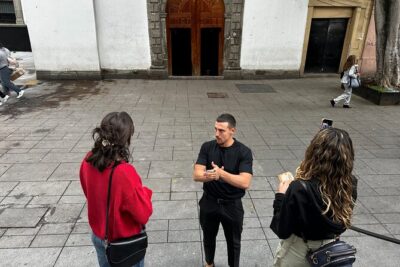
The Teatro de la Ciudad stop lasts about 15 minutes and shifts the subject from government buildings and visual art to performance. You hear about the history of theater in Mexico and the tragic life of Esperanza Iris.
Across from the theater, the guide points out a building that served as an asylum for women described in the eighteenth century as insane. This is one of the route’s darker stories, and it adds social history to the architectural tour.
I like this change of tone. The historic center is not only about celebrated artists, wealthy officials, and monumental buildings. It also reflects how earlier societies treated people with little power. The stop is outside and admission is free, so the emphasis is on storytelling and seeing the location.
Centro Cultural España reveals the city below
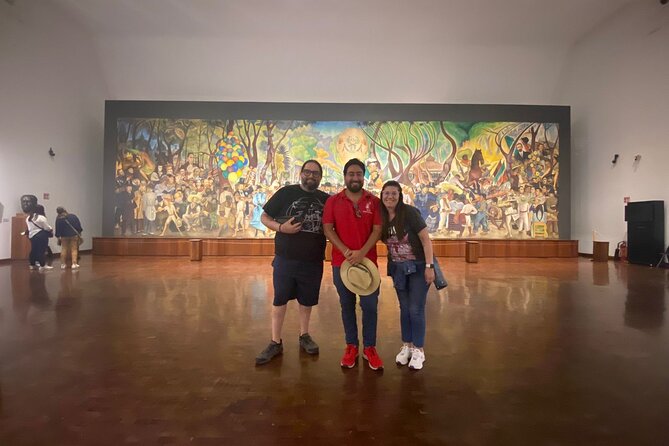
At Centro Cultural España en México, the group goes below street level to see ruins connected with the school for the sons of Aztec nobles. The stop takes about 20 minutes and provides a physical reminder that Mexico City was built over older cities.
This is one of the most useful parts of the route for understanding the center’s layered past. You are not just told that Spanish Mexico replaced Tenochtitlan. You are shown remains beneath the modern city and given a sense of how institutions existed before the conquest.
The phrase underworld is used in the tour description, but the practical point is simple: you go below the current street level to view archaeological remains. Since this is a short guided visit, do not expect a long archaeological museum session. You are there to connect the ruins with the larger story.
Templo Mayor brings the Aztec story into focus
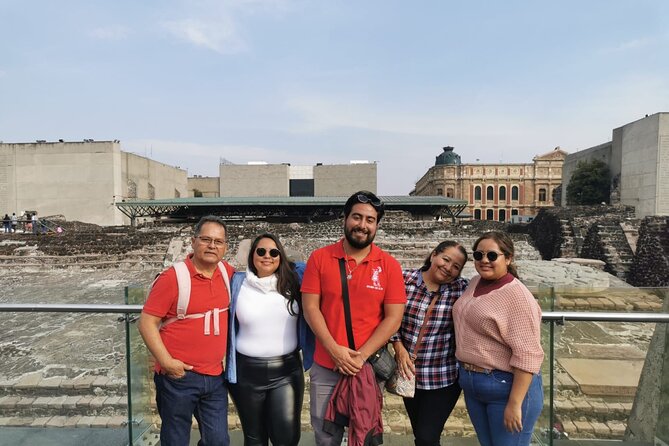
The final stop is the Museo del Templo Mayor area. Here the guide explains, using models, how the Aztecs built Tenochtitlan, how they understood the world, the role of sacrifices, and how the conquest unfolded.
Pay close attention to the ending details. The experience concludes by explaining the main temple from outside, along with models showing how Tenochtitlan was built. The information supplied for the tour does not promise entry into the Templo Mayor Museum itself, even though the stop is described alongside the museum.
That arrangement can be a plus if you want a clear orientation before exploring the archaeological site on your own. It can be a drawback if you expect a complete museum visit to be included in the $83.64 price.
Ending here is historically satisfying. The route has moved from Rivera’s modern interpretation of Mexico to the ancient city beneath the capital. You finish with a clearer idea of why the center feels so layered and why the conquest remains central to Mexico City’s story.
What the guides add to the experience
The strongest part of this tour is the guide. Delta has been praised for being personable, friendly, organized, and good at managing time. Diego has been described as easy to understand in English, willing to answer unusual questions, and helpful with lunch and transport suggestions after the walk.
Jorge has received praise for his English and command of the subject. Jaime is noted for kindness, flexibility, and a willingness to adapt the route to the group’s needs. These comments point to an important benefit: the tour is not just a fixed march between buildings.
The guide may adjust time when the group is small or when questions take the discussion in an interesting direction. One solo booking was handled flexibly, while another guide adapted the pace for a group of Americans in their sixties and seventies.
That does not guarantee a particular guide or identical experience. It does show that the human element matters here. A good guide can turn nine quick stops into a connected story. A less effective guide would leave you with a blur of names and facades.
Price, pace, and practical value
At $83.64 per person, this is not a cheap orientation walk. The price makes the most sense if you value a certified English-speaking guide, included admission at several listed sites, and a tightly planned route through the center.
The route covers a lot in a short time. You visit nine locations, with stops ranging from 10 to 25 minutes. That is efficient, but it also sets a clear limit. You will not have time to read every museum label, linger over every sculpture, or explore each palace at leisure.
I would compare the price with your own priorities:
- If you have only one day in the historic center, the guided structure can save time and help you understand what you are seeing.
- If you like museums and want long, quiet visits, you may get better value by choosing fewer sites and visiting them independently.
- If you are traveling with older family members, the guide’s ability to adjust timing may be especially useful, though this remains a walking tour.
- If you enjoy asking questions, the strongest guides appear to make that part of the experience worthwhile.
Tips, lunch, food, and drinks are not included. The tour ends near Templo Mayor, a useful area for continuing your sightseeing or finding a meal. One guide also gave practical advice about lunch and where to catch an Uber toward Roma, which can be helpful after the walk.
The tour is close to public transportation, service animals are allowed, and most people can participate. Wear comfortable shoes and bring water, since you will be on foot across the historic center. Confirmation arrives when you book, and cancellation is free up to 24 hours before the start time. Cancellations or changes inside that window are not refunded or accepted.
One serious caution deserves a brief mention. Alongside the very strong overall rating, there is one recent complaint alleging a scam and an unresolved booking problem. The details are not clear enough to judge what happened, but I would save your confirmation, check the meeting instructions carefully, and contact the provider promptly if anything looks wrong.
Who should book this walk?
I would recommend it to first-time visitors who want a historical framework before exploring the center alone. It also suits families, solo visitors, and couples who prefer a guide to explain the meaning behind buildings rather than simply name them.
The tour is especially good for people who enjoy connections. Rivera’s mural leads to the colonial period, the palaces show later modernization, the theater introduces social history, and the final stops return you to Tenochtitlan.
I would be more cautious if you are booking mainly for museum interiors. The short visits are introductions. You will need extra time afterward for Bellas Artes, the Mural Museum, Museo Nacional de Arte, or Templo Mayor if those are high priorities.
Final call: a strong orientation with a brisk rhythm
Book this tour if you want a guided story of Mexico City’s center, clear English, and a wide range of sights in a single morning or afternoon. The repeated praise for Delta, Diego, Jorge, and Jaime suggests that the guides are the main reason the experience works so well.
Skip it if you prefer slow museum visits or if $83.64 feels high for a fast survey. For the right person, the value is not in the number of buildings alone. It is in having someone explain why the mural was censored, how Porfirian buildings changed the capital, what happened beneath the streets, and how Tenochtitlan shaped the city you see today.
FAQ
How long does the walking tour last?
The tour lasts approximately two hours and 30 minutes to three hours and 10 minutes.
What language is the tour offered in?
The experience is offered in English.
Where does the tour begin?
It begins at the Diego Rivera Mural Museum on Calle Colón Balderas, in Colonia Centro, Mexico City.
Where does the tour end?
It ends at the Templo Mayor Museum area on Seminario 8, in Mexico City’s Centro Histórico. The final explanation of the main temple and the models of Tenochtitlan are given from outside.
Is admission included?
Admission is listed as included for the Diego Rivera Mural Museum, Alameda Central, Palacio de Bellas Artes, Palacio Postal, Palacio de Minería, and Museo Nacional de Arte. The Teatro de la Ciudad, Centro Cultural España en México, and Museo del Templo Mayor stops are listed as free, with the Templo Mayor explanation taking place outside.
How many people can join the group?
The tour has a maximum of 25 participants.
Can I cancel for a full refund?
Yes. You can cancel at least 24 hours before the experience start time for a full refund. Cancellations or changes made less than 24 hours before the start time are not accepted and are not refunded.
More Guided Walks
- Muralist Art Semi Private Walking Tour in Mexico City Downtown
★ 5.0 · 188 reviews - Coyoacán Walking Tour: Access to Frida Kahlo Museum & Tacos
★ 5.0 · 181 reviews - Mexico City: Lucha Libre Show, Walking Tour & Tequila
★ 4.6 · 156 reviews - Teotihuacan Hot Air Balloon Ride with Optional Bike or Walking Tour
★ 5.0 · 144 reviews
More Ruins and Heritage Sites
- Mexico City Historical Centre Food Tour with 7 Authentic Tastings
★ 5.0 · 723 reviews - Walking Tour – Impressive murals in Historical Center of Mexico City
★ 5.0 · 224 reviews - Mexico City: Guided walking tour through the most historic parts of the city.
★ 4.5 · 172 reviews - Private Walking Tour Gems of the Historic Center of Mexico City
★ 5.0 · 87 reviews
Just added around Mexico City
- Neon Bike Party – Private Bike Tour★ 4.5 · 34 reviews
- Private Tour with Archaeologist and VR Experience at Teotihuacan★ 5.0 · 34 reviews
- Mexico City: Full-Day Taxco and Cuernavaca Tour★ 4.1 · 34 reviews
- Food and Historic Walking Tour: Private Tortilla Crawl in Mexico City Downtown★ 5.0 · 35 reviews
- Guided tour EN Teotihuacan – Breakfast EN cave-round transport★ 5.0 · 35 reviews
- Xochimilco, Coyoacan and Frida Kahlo Museum Tour★ 3.5 · 35 reviews
- Xochimilco: amanecer en kayak Ciudad de México★ 5.0 · 35 reviews
- Full-Day Private Tour of Mexico City: Teotihuacan and Xochimilco★ 5.0 · 35 reviews
Historical Tours, compared.

Mexico City Historical Centre Food Tour with 7 Authentic Tastings
Read our review →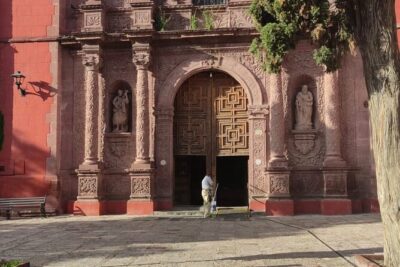
Historical and Cultural Walking Tour of San Miguel de Allende
Read our review →
Historical and Cultural Walking Tour of San José del Cabo
Read our review →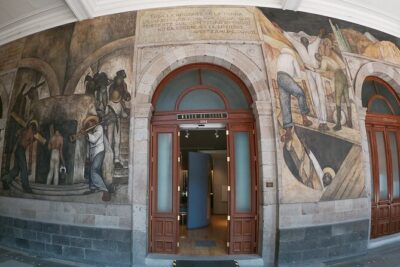
Walking Tour in Mexico City for Exploring their Cultural Heritage
Read our review →Browse the lists this tour appears in