
Reviewed · CITY TOURS
City walking tour in Puebla (private tour)
Puebla rewards slow walking. This private tour links grand colonial landmarks with sweets, crafts, and neighborhood character, giving you a useful first look at the city in about three hours. I especially like the access to the Palafoxiana Library and Chapel of the Rosary, plus the freedom to shape the route around your interests. The main thing to consider is the pace: eight stops in roughly three hours leaves limited time at each site.
The tour costs $69 per person and is offered in English, with only your group taking part. I also like that the route ends at La Pasita, a traditional spot for Puebla drinks, after passing through the city’s historic core. Guide quality matters here, since the experience depends heavily on the live commentary, and one review found the tour low-energy despite praising the guide’s pleasant manner.
In This Review
- Key things to know before booking
- Why a private walk works well in Puebla
- Starting among old books at the Palafoxiana Library
- Reading Puebla Cathedral in the Zócalo
- Taking the measure of the Zócalo
- Inside the Chapel of the Rosary
- Sampling Puebla along Calle de los Dulces
- A short look at the Barrio del Artista
- Shopping for Talavera and local crafts at El Parián
- Antiques and atmosphere at Callejón de los Sapos
- Ending at La Pasita
- What the guide can make or break
- Timing, comfort, and practical value
- Should you book this Puebla walking tour?
- FAQ
- How long is the Puebla private walking tour?
- How much does the tour cost?
- Is the tour private?
- What language is the tour offered in?
- Where does the tour begin?
- Where does the tour end?
- Is hotel pickup available?
- What admissions are included?
- What food and drink tastings are included?
Key things to know before booking
- The Palafoxiana Library is the cultural centerpiece: You get admission to a 17th-century library with more than 45,000 books and manuscripts.
- The private format gives you room to customize: You can ask to spend more time on architecture, religious art, local food, or shopping.
- The Chapel of the Rosary is a major visual payoff: Gold decoration, Talavera pottery, stucco, angels, and symbolic details fill this celebrated Baroque chapel.
- Puebla’s food traditions are built into the walk: Tastings include a tortita de Santa Clara, camote poblano, typical sweets, Puebla wines, and liquors.
- The route finishes in the historic center: You begin at the Palafoxiana Library and end at La Pasita, close to several other central sights.
- The tour earns strong overall marks: It has a 4.8 rating from 40 reviews, with 95 percent of customers recommending it.
Why a private walk works well in Puebla
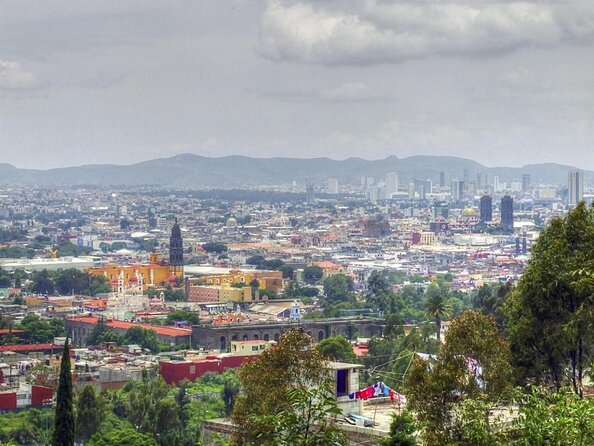
Puebla’s center is compact enough to explore on foot, but its buildings can blur together if you do not know what you are seeing. A private guide gives you a human thread through the city: colonial power at the cathedral, religious art at Santo Domingo, handmade goods at El Parián, and everyday food traditions along 6 Oriente.
I like the private setup because it removes the usual group-tour problem. You do not have to wait for strangers at every doorway, and you can ask for more explanation when a place catches your attention. If you are more interested in Baroque design than shopping, say so. If sweets and crafts are your priority, the guide can give those stops more weight, subject to the timing of the tour.
The tradeoff is that private does not mean leisurely by default. The planned route includes eight stops, and the scheduled visits add up to nearly three hours before allowing for walking between them. You should expect a brisk introduction rather than a slow study of every church, market stall, and historic building.
The tour is offered in English and costs $69 per person. That is fair value if you want paid entry to the library and Chapel of the Rosary, a guide dedicated to your group, and several tastings. It is less compelling if you only want to wander around the free public spaces, since many of the stops can be seen without admission.
More Walking Tours in Mexico City
- Historic Downtown Walking Tour
★ 5.0 · 1,289 reviews - Mexico City: Historic Downtown Walking Tour
★ 4.8 · 1,039 reviews - Frida Kahlo VIP [Museum Tickets Included] Walk, Markets & Churros
★ 5.0 · 982 reviews
Starting among old books at the Palafoxiana Library
The tour begins at Biblioteca Palafoxiana on Avenida 5 Oriente. This is the most distinctive first stop because it offers something you cannot get from simply walking around the Zócalo: access to an historic interior built around books and learning.
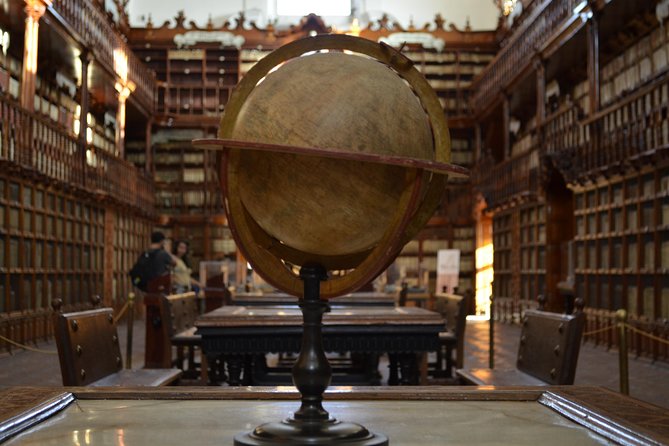
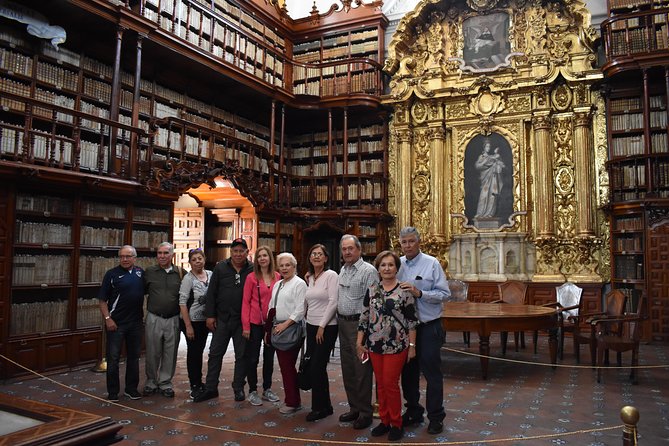
Founded in 1646 by Bishop Juan de Palafox y Mendoza, the library is considered the first public library in the Americas. Its collection includes more than 45,000 books and ancient manuscripts, with some dating back more than five centuries.
You have about 20 minutes inside, and admission is included. That time is enough for a focused introduction, but do not expect to read your way through the collection. The appeal is visual and historical: carved wooden shelves, Baroque design, and the altar dedicated to the Virgin of Wisdom.
The library has UNESCO Memory of the World recognition, which helps explain why this is more than a quick photo stop. Ask your guide about the books, the library’s founding, and how public access to knowledge worked in the colonial period. A strong guide can turn the room from an impressive old interior into a place with a clear story.
Reading Puebla Cathedral in the Zócalo
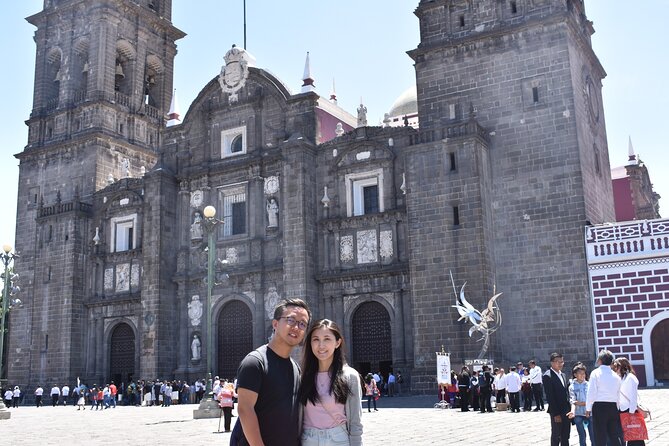
From the library, the route moves to Puebla Cathedral, located beside the Zócalo. You get about 30 minutes here, the longest scheduled stop, and admission is free.
The cathedral was built between the 16th and 17th centuries and combines Renaissance and Baroque styles. Its towers are described as the tallest in Latin America, making the exterior easy to spot as you approach the main square.
Inside, look for the main altar designed by Manuel Tolsá, along with the sculptures and paintings in the side chapels. The building is part of Puebla’s UNESCO World Heritage setting, and a guide can help you notice the difference between the cathedral’s grand overall plan and the smaller details tucked into its chapels.
The cathedral is also a useful place to understand Puebla’s position as a major colonial city. I would listen closely here rather than simply take photographs. A private tour lets you stop and ask questions about the artwork, religious symbols, and changing architectural styles without holding up a large group.
Taking the measure of the Zócalo
The Zócalo gets its own 20-minute stop, and that is sensible. This square is the city’s main reference point, surrounded by colonial buildings, arcades, gardens, fountains, and benches.
You will see the cathedral and City Hall from here, but the value of the stop is broader than the view. The Zócalo helps you understand how Puebla’s historic center is arranged. It is also a good place to hear how public space, food, commerce, and civic life fit together in the city.
The timing is short, so use it to orient yourself. Notice the arcades and the way the square connects with nearby streets. If you plan to explore Puebla on your own later, this is where the city begins to make practical sense.
The surrounding cafés and restaurants also make the Zócalo useful for planning a later meal. The tour includes small tastings, not lunch, so you should not count on leaving the walk fully fed.
More guided walks:
- Walking Tour of the Historic Center of Mexico City
★ 5.0 · 870 reviews - Anthropology Museum Private Experience Walking Tour
★ 5.0 · 355 reviews - Walking Tour in Mexico City for Exploring their Cultural Heritage
★ 5.0 · 245 reviews - Walking Tour – Impressive murals in Historical Center of Mexico City
★ 5.0 · 224 reviews
Inside the Chapel of the Rosary
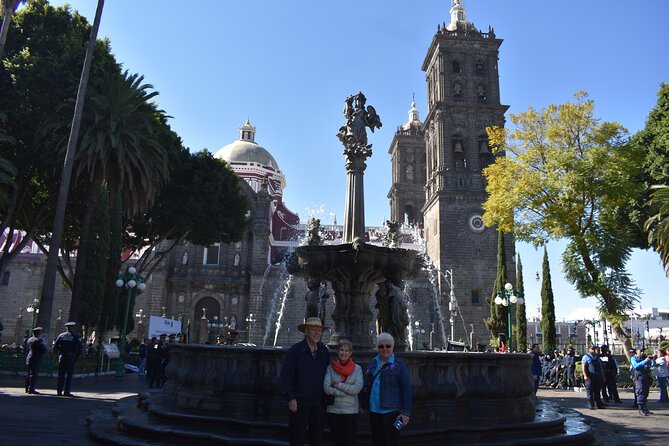
The Chapel of the Rosary at Santo Domingo receives 30 minutes and includes admission. For many people, this will be the most visually intense stop of the morning or afternoon.
Built in the 17th century, the chapel is known for its extraordinary Baroque decoration. Gold, Talavera pottery, and stucco cover the interior, while angels, flowers, and religious motifs fill the walls and dome. The dome represents the celestial heavens, adding a strong symbolic layer to the decoration.
This is a place where a guide earns the fee. Without explanation, you may simply see a dazzling room covered in ornament. With good commentary, you can begin to understand how the chapel’s images and materials express religious ideas and colonial wealth.
The route calls it one of Mexico’s great Baroque achievements and gives it a full half hour. That is enough time to look carefully, though art lovers may wish they had longer. I would ask your guide to point out specific symbols rather than offer only a general description.
Sampling Puebla along Calle de los Dulces
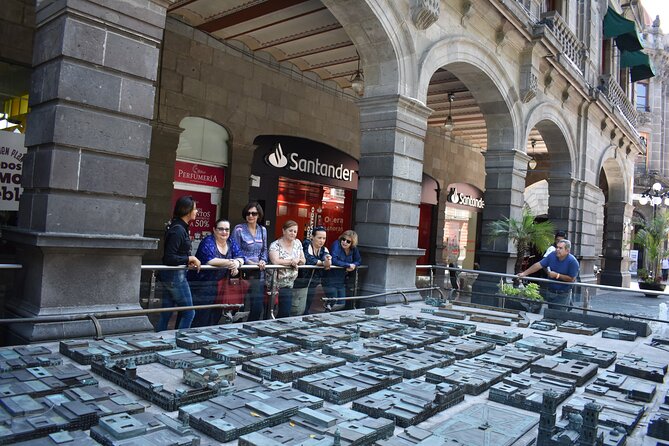
The walk then turns toward Calle de los Dulces, officially 6 Oriente. You have 20 minutes to browse and taste, with admission included as part of the experience.
This street is lined with traditional sweet shops selling camotes, tortitas de Santa Clara, muéganos, and macarrones poblanos. These are not just generic treats for tourists. They represent recipes passed down through local families and shops, making the stop a simple way to connect food with Puebla’s identity.
The included tasting features typical sweets, a traditional tortita de Santa Clara, and a camote poblano. You also receive tastings of Puebla wines and liquors. Since the tour includes both food and alcoholic drinks, mention any concerns or preferences to your guide before accepting a sample.
I like this part of the route because it gives the walking tour a sense of daily culture. Churches and libraries tell you how Puebla was built, while food tells you how its traditions continue. You can also buy sweets to take home, though the tour does not promise a specific shop or amount of shopping time.
A short look at the Barrio del Artista
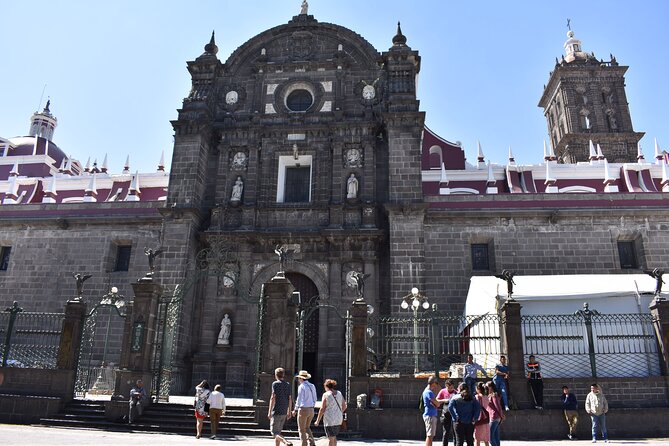
The Barrio del Artista is scheduled for only 15 minutes, making it the quickest stop. It is a picturesque part of the Historic Center with cobblestone streets, open-air workshops, and local artists creating and displaying their work.
You may see paintings, sculptures, and other forms of art, with cafés and restaurants nearby. The neighborhood has an informal, bohemian feel that contrasts nicely with the formal cathedral and ornate Chapel of the Rosary.
Fifteen minutes is enough to get a taste, not enough to study the art or settle into a café. If you want to browse carefully, ask whether this is one of the places where the itinerary can be adjusted. The private format gives you a better chance of making that request than a fixed group excursion.
Shopping for Talavera and local crafts at El Parián
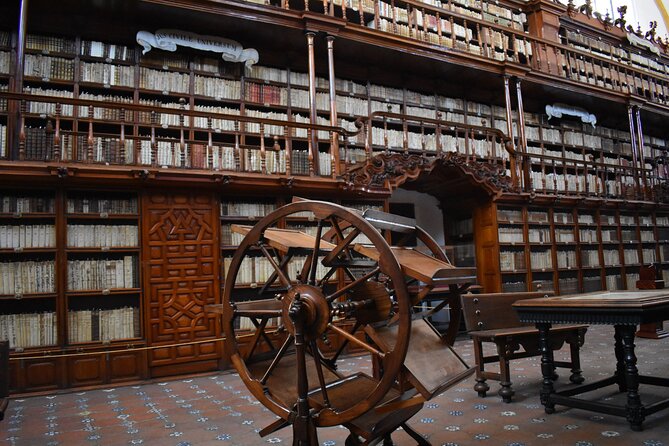
Mercado El Parián receives 20 minutes and is one of the best stops for practical souvenirs. The market carries Talavera pottery, embroidered textiles, wooden toys, clay items, and other handmade goods.
Puebla is closely associated with Talavera, so this is a good place to connect the craft with the city rather than encounter it only in a shop window. You can look for something small to carry home or simply observe the range of local work.
The market is described as a meeting place for culture and commerce, but you should keep the time limit in mind. Twenty minutes may be enough for a quick look and a purchase, not for comparing every stall. If shopping is important to you, tell the guide early so you can avoid spending too much time at earlier stops.
Antiques and atmosphere at Callejón de los Sapos
The final sightseeing stop is Callejón de los Sapos, another 20-minute visit. This cobblestone alley is known for colorful façades, antique shops, art galleries, live music, and restaurants.
The antique market can include vintage furniture and collectible items. You may find something unusual here, but the tour is not presented as a dedicated shopping excursion, so the time is better used to absorb the setting and learn what makes the alley different from El Parián.
These two markets serve different purposes. El Parián focuses more directly on traditional crafts and souvenirs, while Callejón de los Sapos has a more eclectic antique and gallery atmosphere. Seeing both gives you a wider view of Puebla’s creative side.
Ending at La Pasita
The tour ends at La Pasita on Avenida 5 Oriente 602. This is a practical finish because you remain in the Historic Center, rather than being left far outside the area you have just explored.
The inclusion of Puebla wine and liquor tastings gives the ending a local flavor. The experience also begins and ends close to central sights, cafés, restaurants, shops, and public transportation.
Hotel pickup and drop-off are provided only from select hotels. Do not assume this applies to your accommodation. The listed meeting point is the Palafoxiana Library, so confirm the pickup arrangement when booking if you are staying outside the eligible hotel area.
What the guide can make or break
The strongest praise goes to the guides who combine warmth with clear explanations. Alexa is singled out for being patient, answering questions fully, and not rushing the group. Andrea is praised for her English, friendly manner, and ability to explain what makes Puebla unique.
Those details matter because this route includes places that need context. A guide who only points out the buildings will leave value on the table. The best version of this walk should explain why the library matters, help you read the Chapel of the Rosary, and connect sweets and crafts to Puebla’s local culture.
The feedback is not uniformly glowing. One person found Giovanni pleasant but felt the tour lacked energy and needed stronger guide training. That is a useful warning for a private experience: your guide’s style can shape the whole morning. If the commentary feels too general, ask direct questions and state what you want to learn.
The overall rating is 4.8 from 40 reviews, and 95 percent of customers recommend the experience. That is a strong record, but it does not erase the importance of guide assignment and communication.
Timing, comfort, and practical value
Most people can participate, and the tour is near public transportation. It is a walking experience through the Historic Center, with stops inside churches, a library, markets, and public squares. Comfortable shoes are a sensible choice, though the tour information does not specify the exact walking distance or accessibility features.
The private format is especially useful for couples, families, and small groups with different interests. Group discounts are available, which may improve the per-person value for larger parties. A mobile ticket is provided, and confirmation arrives at booking.
The tour is generally booked about 16 days in advance, so I would not leave it until the last moment if your schedule is fixed. Free cancellation is available up to 24 hours before the start time. Cancellations or changes made less than 24 hours before the start are not accepted for a refund.
Should you book this Puebla walking tour?
Book it if you want a compact, English-language introduction to Puebla that mixes major sights with food and crafts. The library and Chapel of the Rosary admissions add real value, while the private format lets you ask questions and adjust the emphasis.
I would especially recommend it for a first visit, a short stay, or anyone who wants historical context before exploring alone. It also suits people who prefer an organized route through the center and enjoy small tastings along the way.
Think twice if you want long visits inside each building or an unhurried shopping afternoon. The itinerary is full, and the experience depends on receiving an engaged guide. Ask about guide arrangements and tell the company your interests in advance. With a strong guide, this is an efficient and enjoyable introduction to Puebla. With a low-energy guide, the same route can feel rushed and ordinary.
FAQ
How long is the Puebla private walking tour?
The tour lasts approximately three hours.
How much does the tour cost?
The listed price is $69 per person. Group discounts are available.
Is the tour private?
Yes. Only your group participates in the tour.
What language is the tour offered in?
The tour is offered in English.
Where does the tour begin?
It begins at Biblioteca Palafoxiana, Av 5 Oriente 5, Centro Histórico de Puebla.
Where does the tour end?
It ends at La Pasita, Av 5 Oriente 602, Centro Histórico de Puebla.
Is hotel pickup available?
Hotel pickup and drop-off are available from select hotels only.
What admissions are included?
Admission to the Palafoxiana Library and the Chapel of the Rosary is included. Admission to Puebla Cathedral, the Zócalo, Barrio del Artista, El Parián, and Callejón de los Sapos is free.
What food and drink tastings are included?
The tour includes typical sweets, a tortita de Santa Clara, a camote poblano, and tastings of Puebla wines and liquors.
Just added around Mexico City
- Neon Bike Party – Private Bike Tour★ 4.5 · 34 reviews
- Private Tour with Archaeologist and VR Experience at Teotihuacan★ 5.0 · 34 reviews
- Mexico City: Full-Day Taxco and Cuernavaca Tour★ 4.1 · 34 reviews
- Food and Historic Walking Tour: Private Tortilla Crawl in Mexico City Downtown★ 5.0 · 35 reviews
- Guided tour EN Teotihuacan – Breakfast EN cave-round transport★ 5.0 · 35 reviews
- Xochimilco, Coyoacan and Frida Kahlo Museum Tour★ 3.5 · 35 reviews
- Xochimilco: amanecer en kayak Ciudad de México★ 5.0 · 35 reviews
- Full-Day Private Tour of Mexico City: Teotihuacan and Xochimilco★ 5.0 · 35 reviews
City Tours, compared.
Teotihuacan, Tlatelolco & Guadalupe Shrine Tour
Read our review →
Teotihuacan Hot Air Balloon Flight from Mexico City / Volare
Read our review →

The best tour to Teotihuacán from Mexico City
Read our review →

Browse the lists this tour appears in