
Reviewed · CITY TOURS
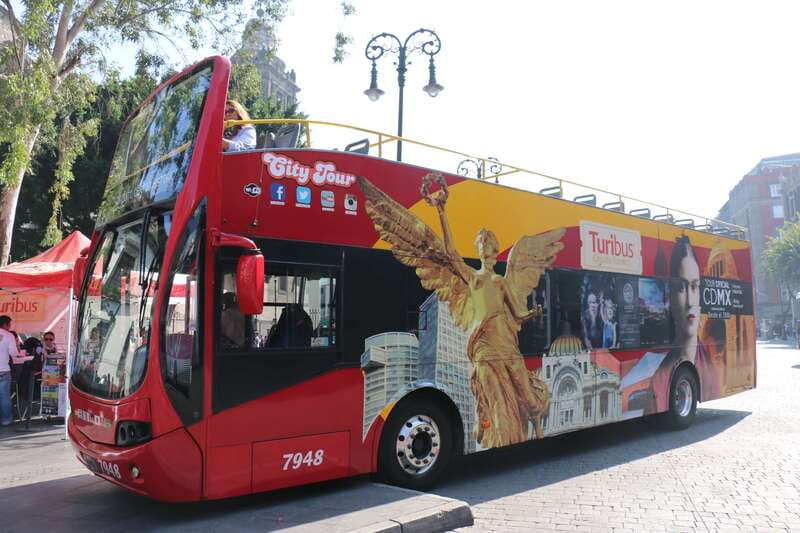
Mexico City: Hop-on Hop-off Bus Tour
See Mexico City before choosing where to linger. This Turibus pass is a smart way to cover a huge city, and I especially like the four-route network and the freedom to hop off for museums, markets, plazas, and neighborhoods. At $21 per person, it also works as both sightseeing and transport. The main catch is traffic, plus a sometimes-too-loud Spanish announcement that can drown out the audio guide.
The Historic Downtown route is the best first ride for most people, while the South route gives you access to Coyoacán, the Frida Kahlo Museum, UNAM, and other southern sights. I would choose the two-day pass if you want to use all four routes without spending half your holiday watching traffic crawl past.
In This Review
- Key points to know before boarding
- Why the Turibus works well in Mexico City
- Historic Downtown route: the best introduction
- Polanco route: shopping, design, and museums
- South route: Coyoacán, Frida Kahlo, and UNAM
- Basilica route: a short ride with a strong focus
- The audio guide and the sound-system problem
- Open-top seating, weather, and comfort
- How to plan one day or two
- Meeting points, tickets, and accessibility
- Who should book this bus tour?
- FAQ
- How much does the Mexico City Turibus tour cost?
- How many routes are included?
- Can I hop on and off as often as I want?
- What are the operating hours?
- Is an audio guide included?
- Are the buses wheelchair accessible?
- Do children ride free?
Key points to know before boarding
- Four very different routes: Travel through the Historic Downtown, Polanco, South, and Basilica circuits using one bracelet.
- Best first ride: The Historic Downtown route links Zócalo, Reforma, museums, monuments, and major central sights.
- Strong value at $21: You get transportation, open-top views, and commentary for one or two days.
- Traffic shapes the day: A route can take much longer than expected, especially toward Coyoacán and during busy hours.
- Bring your own earphones: The supplied earbuds may be poor, and the Spanish announcements can overpower other language channels.
- The two-day option makes sense: Completing four routes in one day is difficult, even if you stay on the bus.
Why the Turibus works well in Mexico City
Mexico City is too large to understand from one neighborhood. Its historic center, museum district, elegant Reforma boulevard, fashionable Polanco, and southern university and Coyoacán districts each feel like separate cities.
That is where the Turibus helps. You can ride above street level, get a broad view of the city, and mark places to revisit later. I like using a city bus tour as an orientation tool rather than trying to treat it as a complete guided visit.
The ticket costs about $21 per person and covers one or two days, depending on the option you choose. You can use all four routes with a single bracelet, which makes the pass more useful than a basic one-loop bus ride.
It is also practical when you are tired of walking. The city’s museums and neighborhoods are spread far apart, and a ride between them can save money compared with repeated taxis or ride-hailing trips. Still, the Turibus is not a magic traffic bypass. Mexico City traffic can delay buses, stretch a route, and make a planned museum stop harder to time.
More hop-on hop-off passes:
- Mexico City: Hop-on Hop-off City Tour by Turibus 1-Day Pass
★ 4.1 · 691 reviews - Turibus Hop On Hop Off Mexico City Tour
★ 3.0 · 347 reviews - Mexico City: Hop-On Hop-Off Bus City Tour
★ 3.9 · 183 reviews
Historic Downtown route: the best introduction
I would begin with the Historic Downtown route. It is the most useful circuit for a first look at Mexico City, with 19 stops and service listed from about 9 a.m. to 7 p.m. Buses run roughly every 30 minutes, though traffic can change that rhythm.
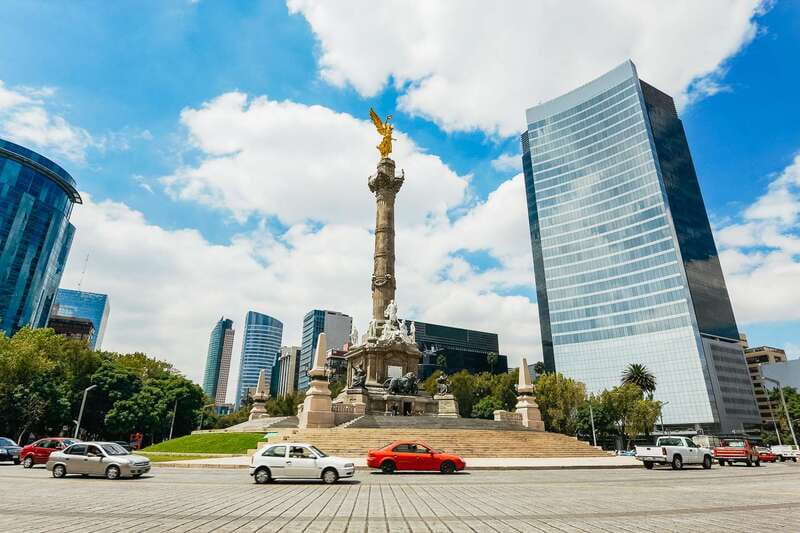
The route begins near Auditorio and moves through the city’s grand central corridor. You pass the Museo de Arte Moderno, Condesa, Plaza Madrid at Cibeles, Casa Lamm, the Angel area, Reforma 222, and the Museo de Cera and Ripley’s.
These stops help you see how Mexico City shifts from museums and leafy residential districts to commercial streets and major monuments. The route also includes Reforma and several points near the city center, making it useful for deciding where to return on foot.
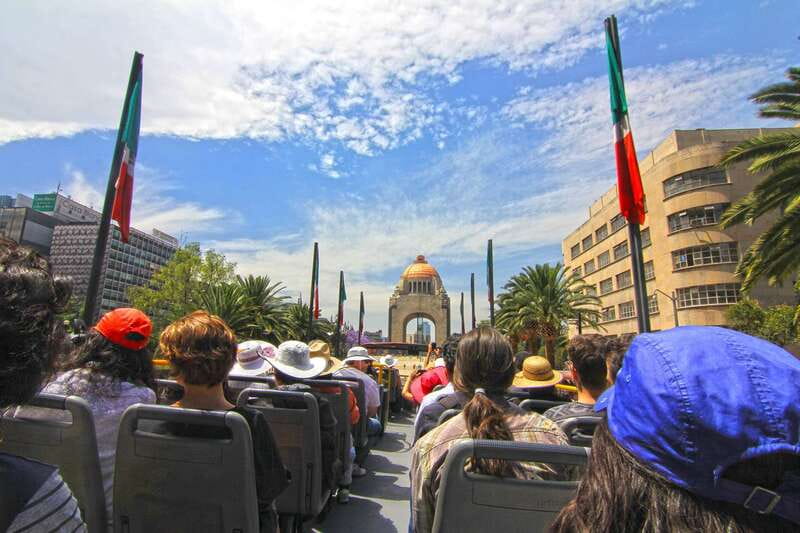
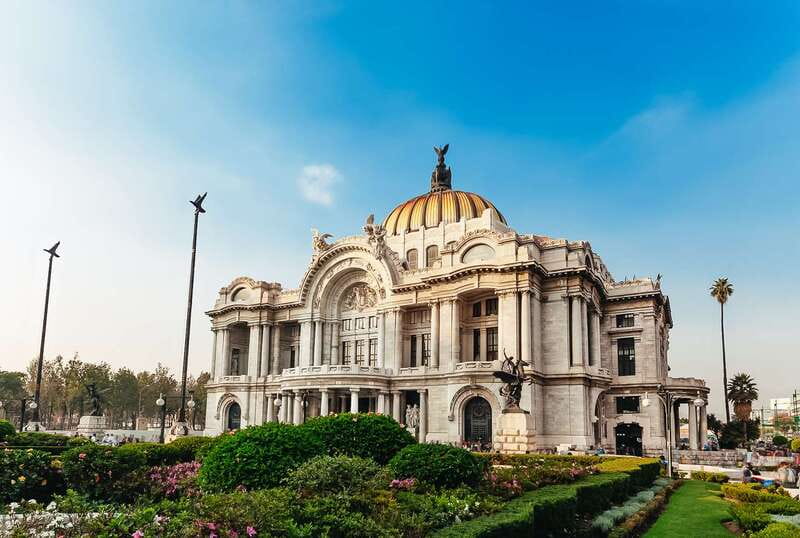
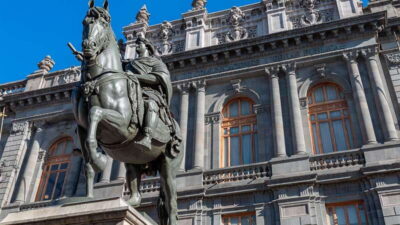
The central section is the main event. At Zócalo, you can get off at Mexico City’s most important civic square and explore the surrounding streets and food options. The route also reaches Plaza Manuel Tolsá, Museo Franz Mayer, the Monumento a la Revolución, and Museo de San Carlos.
I like this circuit because it gives you several kinds of Mexico City in one ride: pre-Hispanic and colonial references in the center, 19th and 20th-century monuments, museums, and the modern commercial side of Reforma. The audio system adds context while you watch the city pass by.
The route lists both Monumento a la Independencia and Reforma stops, so check the stop map carefully before getting off. Stop names are useful, but some points are not directly beside the attraction they represent. The Frida Kahlo stop on the South route, for example, has been reported as roughly 75 meters from the museum.
If you have just one day, I would stay on the Historic Downtown route for the first full loop, then hop off at Zócalo or a museum that matches your interests. It is a much better use of your first hours than trying to squeeze in every circuit.
Polanco route: shopping, design, and museums

The Polanco route is shorter, with seven stops, but it covers a very different side of the capital. Departures from Auditorio are listed at 10 a.m., 11:30 a.m., 1 p.m., 2:30 p.m., 4 p.m., and 5:30 p.m.
The circuit runs through Auditorio, Arquímedes and Campos Elíseos, Masaryk and Moliere, Centro Comercial Antara, Museo Soumaya, Hipódromo and Granja Las Américas, and Museo del Papalote.
This is the route to choose for fashionable Polanco, high-end shopping, modern buildings, and major museums. Museo Soumaya is the obvious cultural stop on the list, while the Masaryk and Moliere area is aimed more at shopping and architecture.
The smaller route is easy to underestimate. Because departures are scheduled rather than listed as frequent continuous service, you need to plan your hop-off carefully. If you get off at Museo Soumaya, for instance, check the next departure before beginning your visit.
I would pair Polanco with the Historic Downtown route over two days. Polanco is also handy if you are staying near Reforma or the Polanco hotel area, since several pickup points are within walking distance of those districts.
South route: Coyoacán, Frida Kahlo, and UNAM
The South route is the most rewarding choice for visitors who want neighborhoods and cultural stops beyond the center. It has 19 stops and runs daily from about 11 a.m. to 7 p.m., with service described as roughly every hour to every half-hour.
Its stops include Fuente de Cibeles, Mercado Roma, the World Trade Center, Torre Manacar, Museo Frida Kahlo, Centro Histórico de Coyoacán, Avenida de la Paz, Centro Cultural San Ángel, Estadio de C.U., the botanical garden, Centro Comercial Perisur, KidZania Cuicuilco, the UNAM Rectoría, Plaza Oasis Coyoacán, Mercado Roma Coyoacán, Fonart, and return points around Coyoacán and Torre Manacar.
This route is not just another central sightseeing loop. It gives you a look at the city’s more bohemian districts, university spaces, markets, architecture, and areas that retain a quieter old-town or semi-rural feel.
The Museo Frida Kahlo stop is a major reason to ride this circuit. The bus does not place you inside the museum, of course, and the stop is not exactly at the entrance, so allow walking time. If you plan to visit the museum, buy or arrange admission separately and leave enough time for the bus connection afterward.
Coyoacán is another good place to hop off. The route includes several Coyoacán stops, including the historic center and Plaza Oasis, so study the map rather than assuming every stop serves the same part of the neighborhood.
The South route can consume much of a day. One reported journey toward the Frida Kahlo Museum took close to two hours in traffic. I would ride this circuit in the morning, especially on a weekday, then use the Historic Downtown route later if time remains.
Do not judge the South route only by how many famous attractions you can enter. Its value is in connecting parts of southern Mexico City that are awkward to combine on foot. If you have time, get off and spend a proper block of hours in Coyoacán rather than trying to make several rushed stops.
A few more reviews worth comparing before you book
- Teotihuacan, Guadalupe Shrine & Tlatelolco Day Tour with Lunch
★ 5.0 · 11,603 reviews - Xochimilco, Coyoacan and Frida Kahlo with Optional Lunch
★ 4.5 · 7,320 reviews - Balloon flight + Breakfast in cave + Pyramids + Pick up CDMX.
★ 5.0 · 6,335 reviews - Teotihuacan pyramids morning or afternoon without tourist traps
★ 5.0 · 6,186 reviews
Basilica route: a short ride with a strong focus
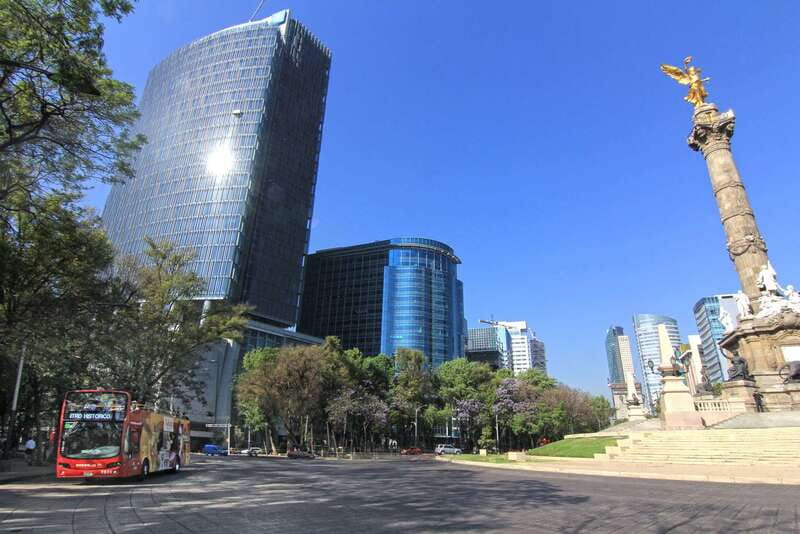
The Basilica route is the smallest of the four. Departures from Zócalo are listed at 10 a.m., 11:30 a.m., 1 p.m., 2:30 p.m., 4 p.m., and 5:30 p.m.
The four listed stops are Zócalo, Garibaldi, Basílica de Guadalupe, and Palacio de los Condes de Miravalle. The route connects the civic center with one of Mexico City’s best-known religious destinations, along with a stop associated with mariachi culture.
If the Basilica of Guadalupe is a priority, this route gives you a simple way to reach it without arranging separate transport. It also adds a religious and cultural angle that the other routes do not emphasize.
The limited number of stops makes this circuit easier to understand, but the scheduled departures mean you should not treat it like the Historic Downtown route. Check the departure time before getting off, particularly if you plan to spend time at the Basilica.
The audio guide and the sound-system problem
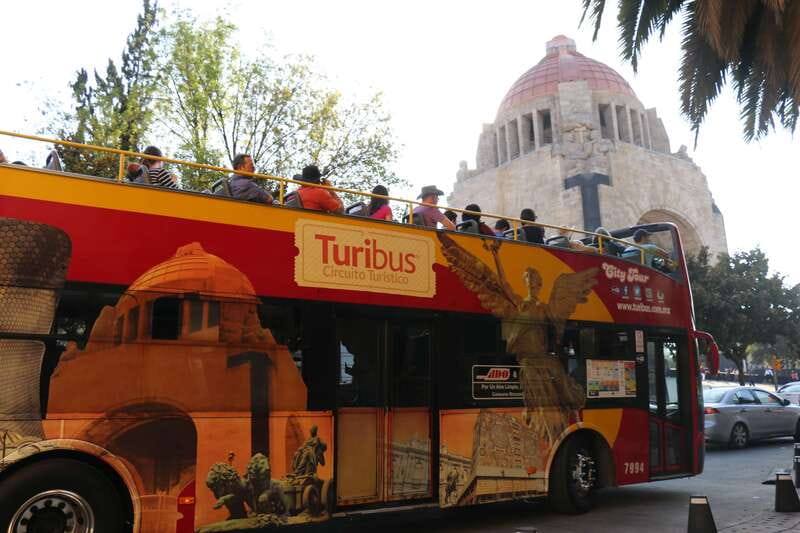
The digital audio guide is available in Spanish, English, German, French, Italian, Chinese, Japanese, Portuguese, and Russian. There is also a special audio channel for children, which makes the ride more useful for families.
The commentary covers pre-Hispanic, colonial, and modern Mexico City. That broad scope is helpful when you are seeing a monument or neighborhood for the first time and want a little context before deciding if it deserves a longer visit.
You should bring your own earphones. The supplied earbuds have been described as poor, and some buses have had faulty headphone jacks. On certain rides, the Spanish commentary over the bus speakers is loud enough to make English or another language difficult to hear through the headset.
Street noise adds another problem on the open-top deck. The recording can also stop before an explanation is finished. I would test the audio before leaving the first stop and move away from the main speakers if the Spanish announcements overpower your channel.
The system is still useful, but it is not the same as having a guide beside you. Some departures may have staff or guides who add live help. Names such as Estefania, Cristian, Diane, Lillie, and Ellie have been associated with especially friendly service, but the exact staff member depends on the departure.
Open-top seating, weather, and comfort
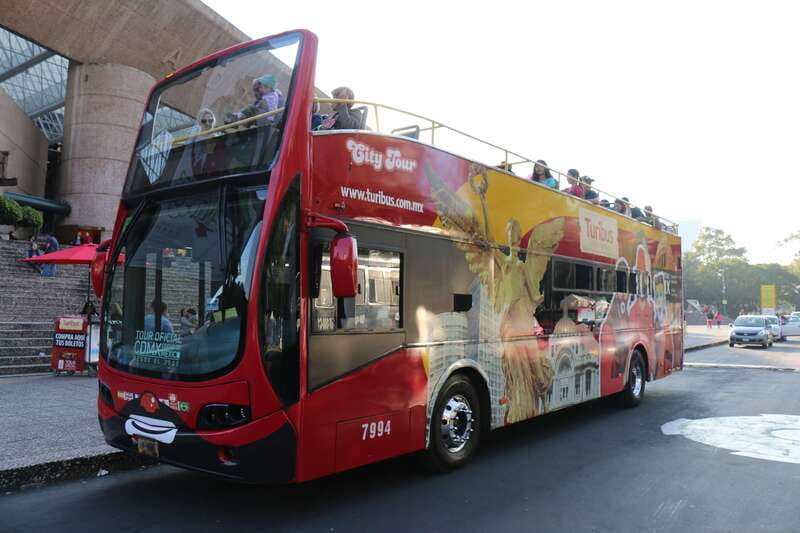
The double-decker buses are open-top, so the upper deck gives you the best views and a pleasant breeze in mild weather. It is a fun way to see Reforma, monuments, and broad city streets without being sealed inside a vehicle.
The afternoon sun is another matter. Metal seats can become painfully hot, especially in warm months, and the upper deck offers limited protection. I would carry water, use sun protection, and choose a lower seat when the heat becomes too much.
There are no restrooms on the buses. Plan bathroom stops around museums, restaurants, markets, or major attractions rather than expecting to stay aboard for hours without a break.
The buses have generally been described as clean and in good condition. Wi-Fi has not always worked, so do not depend on it for route planning or online tickets.
How to plan one day or two
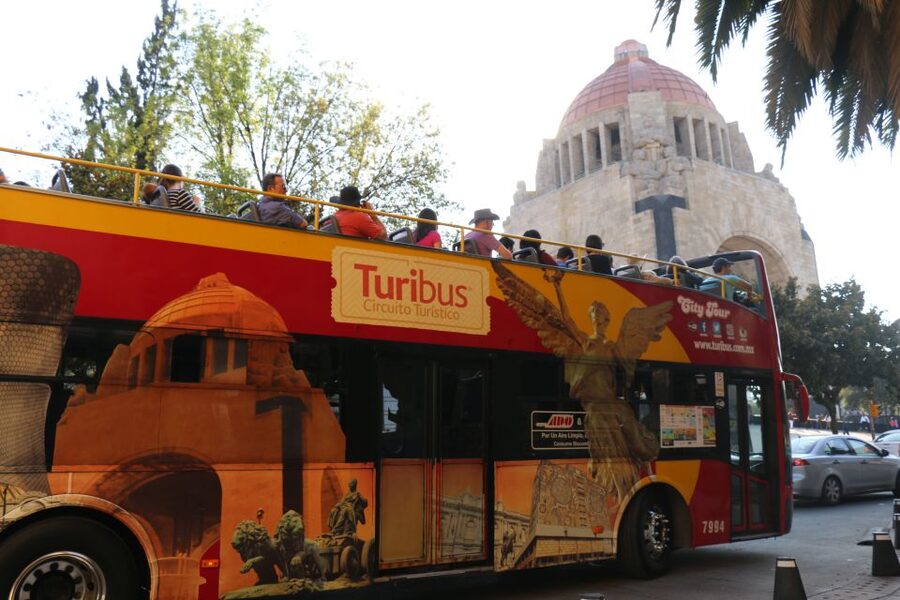
A one-day pass is best for a focused plan. Start with the Historic Downtown route, then choose either Polanco or the Basilica route based on your interests.
A workable one-day outline is:
- Morning: Ride the Historic Downtown route and note the museums and monuments you want to revisit.
- Late morning or midday: Get off at Zócalo, Plaza Manuel Tolsá, or the Monumento a la Revolución.
- Afternoon: Take the Polanco route if museums and shopping appeal to you, or use the Basilica route for Guadalupe and Garibaldi.
- Evening: Finish before the listed 7 p.m. operating end.
For two days, give the Historic Downtown route its own block of time, then use the second day for the South and Polanco routes. Add the Basilica route when its scheduled departures fit your plans.
I would not try to complete all four routes in one day. One person managed several circuits, but the city’s traffic and the less frequent departures on some lines make that plan fragile.
Start early when possible and avoid peak traffic hours. Keep your itinerary flexible, especially for the South route. If you hop off, ask the staff when the next bus is expected, but treat the estimate as approximate.
Meeting points, tickets, and accessibility
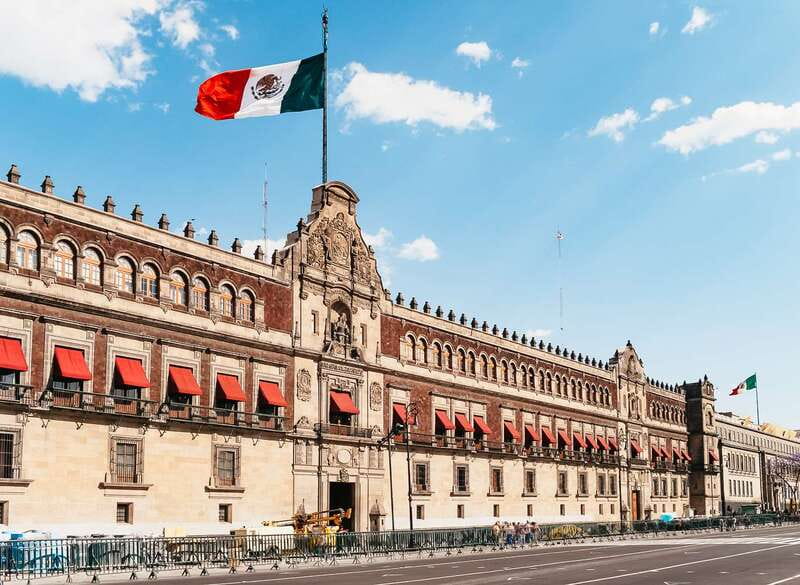
You can begin at any listed stop by showing a printed or electronic voucher when boarding. Pickup points may be marked by banners on light posts, but signs are not always clear, and some stops are not exactly where you expect them.
Before paying for a taxi to a supposed meeting point, check the full stop list and map. One person found that a nearby stop was only a short walk from the hotel, despite receiving unclear meeting information.
The activity is wheelchair accessible. Children up to age three ride free but must sit on a parent’s lap. English and Spanish support is available, while the audio system covers the wider list of languages.
Cancellation is free up to 24 hours before the activity for a full refund, and you can reserve now and pay later. Those terms are helpful if your Mexico City schedule is still shifting.
Who should book this bus tour?
I recommend the Turibus most strongly for a first visit, a short stay, families, and anyone who wants a broad look at Mexico City before committing to individual museums and neighborhoods.
It is also a good choice if walking all day is not appealing. For $21, the combination of transport, views, and commentary is hard to fault, especially when a taxi between several districts would cost more.
I would hesitate if you need precise departure times, quiet audio, or a fast way across town. Traffic can be severe, the Spanish speaker may be too loud, and service on the Polanco, South, and Basilica routes is less frequent than the main circuit.
Choose the two-day pass if your goal is to use all four routes. Choose one day if you mainly want the Historic Downtown circuit and one extra area. For the best result, treat the bus as a moving introduction to the capital, then hop off only where you have enough time to enjoy the place.
FAQ
How much does the Mexico City Turibus tour cost?
The tour costs $21 per person. The ticket is available for one or two days, depending on the option selected.
How many routes are included?
One bracelet provides access to all four routes: Historic Downtown, Polanco, South, and Basilica.
Can I hop on and off as often as I want?
Yes. You can get off and rejoin the bus as many times as you wish during the valid one or two-day period.
What are the operating hours?
The Historic Downtown route generally operates daily from 9 a.m. to 7 p.m. The South route runs from about 11 a.m. to 7 p.m. Polanco and Basilica use scheduled departures, generally beginning at 10 a.m. and ending with a 5:30 p.m. departure.
Is an audio guide included?
Yes. A multilingual digital audio system is included, with Spanish, English, German, French, Italian, Chinese, Japanese, Portuguese, and Russian channels. There is also a children’s channel.
Are the buses wheelchair accessible?
Yes, the activity is wheelchair accessible.
Do children ride free?
Children up to age three ride free, but they must sit on a parent’s lap.
Just added around Mexico City
- Teotihuacan & Anthropology Museum, Templo Mayor & City Tour★ 4.5 · 109 reviews
- Mexico Private Food Tour With Locals Including 10 Tastings★ 4.5 · 109 reviews
- THE REAL CDMX: Under the skin of the city★ 5.0 · 111 reviews
- Mexico City: Mexican Folklore Ballet★ 4.5 · 111 reviews
- Teotihuacán plus Bike Tour★ 5.0 · 114 reviews
- Bike to taste the world’s best tacos – Mexico City★ 5.0 · 116 reviews
- EXCLUSIVE TOUR Chapultepec Castle – Small Groups★ 5.0 · 117 reviews
- Balloon flight with private transportation and guided tour to Teotihuacán★ 5.0 · 118 reviews
City Tours, compared.
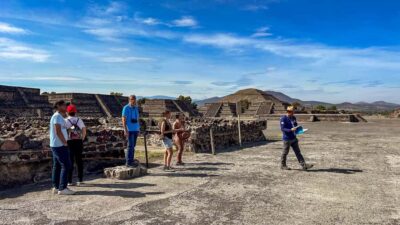
Teotihuacan, Tlatelolco & Guadalupe Shrine Tour
Read our review →
Teotihuacan Hot Air Balloon Flight from Mexico City / Volare
Read our review →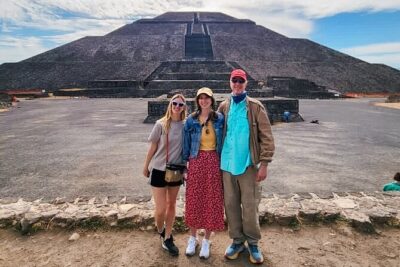


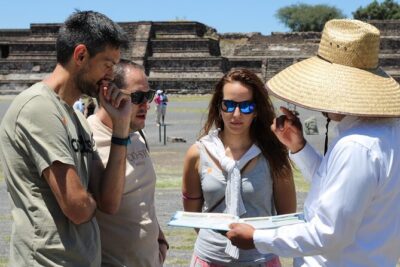
The best tour to Teotihuacán from Mexico City
Read our review →
Browse the lists this tour appears in