
Reviewed · HISTORICAL TOURS
Gay Side of History through Plazas & Temples
History gets personal here. Gay Side of History through Plazas & Temples connects Mexico City’s grandest sights with stories often left out of standard tours. I like the rooftop start at Librería Porrúa, and I like the way guide Carlos places LGBTQ+ lives inside the wider story of Mexico.
The small group, capped at 10 people, should make questions easy. The main consideration is the tour’s recent reliability record, with one reported cancellation only an hour before departure and no clear explanation. You also need moderate fitness for about one mile of walking over three and a half hours.
In This Review
- Key points to know before booking
- What makes this Mexico City tour different
- Starting above the Templo Mayor at Librería Porrúa
- Templo Mayor and the layers beneath the city
- The Metropolitan Cathedral and colonial power
- The Zócalo, Mexico City’s great meeting place
- Centro Cultural de España and a restored colonial mansion
- Santo Domingo Plaza and the old customs district
- Carlos turns a history walk into a conversation
- Is $99 a good value?
- Practical details that affect your day
- Who should book Gay Side of History through Plazas & Temples?
- Should you book it?
- FAQ
- How long does the tour last?
- Where does the tour begin?
- Where does the tour end?
- What is included in the price?
- How many people can join the tour?
- Can I cancel for a full refund?
Key points to know before booking
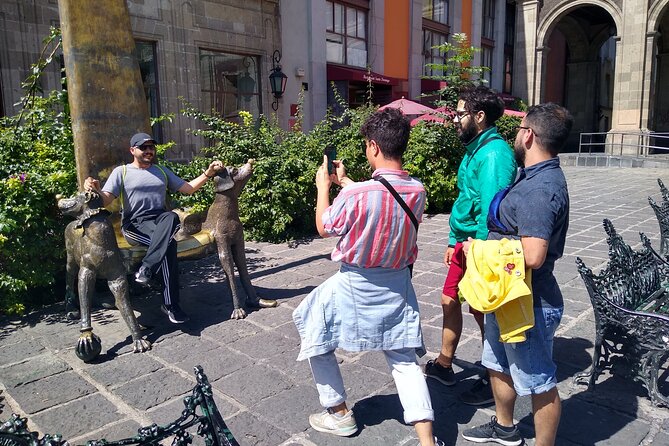
- Begin with a rooftop view: Coffee or tea at Librería Porrúa comes with a useful look across the Templo Mayor ruins, the cathedral area, and nearby historic buildings.
- History comes through an LGBTQ+ lens: The tour covers Mexica society, Spanish rule, the Inquisition, independence-era Mexico, and later political change.
- Carlos is the main draw: His engaging storytelling and ability to answer questions receive the strongest praise.
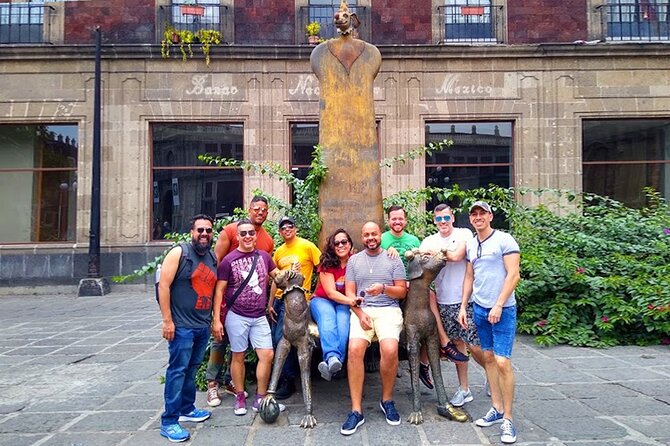
- The group stays small: A maximum of 10 people gives the experience a more personal feel than a large city walking tour.
- Useful take-home material is included: You receive a digital LGBTQ+ map of the Historic Center, extra resources, and a PDF copy of RAINBOW MEXICO: Bridging Forgotten Pasts and Vibrant Futures.
- Plan for a slow, thoughtful walk: The route covers about one mile, but frequent explanations and stops stretch it to roughly three and a half hours.
What makes this Mexico City tour different
Mexico City’s Historic Center already offers enough famous sights to fill a day. The Templo Mayor, Metropolitan Cathedral, Zócalo, National Palace, Santo Domingo Plaza, and old customs buildings form a classic route. What changes here is the question being asked: where do LGBTQ+ lives, relationships, persecution, and influence fit into this official story?
That question gives familiar places a new purpose. You are not simply shown a cathedral and told its construction date. You hear how religious authority, colonial law, public morality, and sexual identity shaped life in Mexico across several centuries.
I like this approach because it does not treat LGBTQ+ history as a small side note. The tour uses it as a way to examine power, religion, conquest, family life, and politics. At the same time, it still gives you a solid introduction to central Mexico City.
This is not a bar crawl or a tour of modern nightlife. It focuses on history, architecture, public spaces, and overlooked stories. You should book it if you enjoy asking why a city developed as it did, not just taking photographs of its biggest buildings.
More History Tours in Mexico City
- Historic Downtown Walking Tour
★ 5.0 · 1,289 reviews - Historic Center Food Tour in Mexico City
★ 5.0 · 1,263 reviews - Mexico City: Historic Downtown Walking Tour
★ 4.8 · 1,039 reviews
Starting above the Templo Mayor at Librería Porrúa
The meeting point is República de Argentina 15 in the Historic Center. The tour begins at 10 a.m. inside or around Librería Porrúa, where the opening hour includes coffee or tea and a rooftop balcony view.
That start matters. Instead of launching straight into a noisy street walk, Carlos can establish the shape of the area from above. You look toward the ruins of the Templo Mayor, the Metropolitan Cathedral, the National Palace area, and historic buildings connected with Spanish colonial rule.
The elevated view also helps you understand that Mexico City was built in layers. The modern city sits over the former Mexica capital, while churches, government buildings, shops, and archaeological remains occupy the same central zone. A first look from the balcony gives the later walk a useful map in your head.
The supplied details describe views toward the Palace of the Royal Duty, the Hideaway Rooms of Frida Kahl, and the Great Aztec Temple ruins. Some names may appear differently on local signs or maps, so treat this first stop mainly as a viewpoint and orientation session.
This is also where the tour’s teaching style seems to matter most. Carlos is described as beginning with broad context, from the peopling of the Americas through the rise of the Mexica and the Spanish conquest. That can make the later stops easier to follow, especially if Mexican history is new to you.
The drawback is time. One hour at a bookstore balcony may feel long if you want a fast sightseeing circuit. If you prefer careful explanation, though, this opening gives the tour its intellectual foundation.
Templo Mayor and the layers beneath the city
The Templo Mayor was the principal temple of the Mexica capital, Tenochtitlan. Today, its ruins sit beside the colonial center, making this one of Mexico City’s clearest examples of history stacked on top of itself.
The tour uses this setting to discuss the Mexica world before Spanish rule and the dramatic changes that followed. You should expect context rather than a full archaeological museum visit. The supplied information does not include a separate museum admission or extended indoor visit, so do not book this expecting a complete Templo Mayor museum tour.
The LGBTQ+ angle here is less about finding a single famous person and more about understanding how societies define gender, sexuality, authority, and acceptable behavior. Carlos’s strength, according to the available descriptions, is linking those larger questions to the physical places around you.
That makes this stop useful even if you already know the basic Aztec conquest story. You may have seen the ruins before, but hearing the site discussed through social and sexual history can change what you notice.
The Metropolitan Cathedral and colonial power
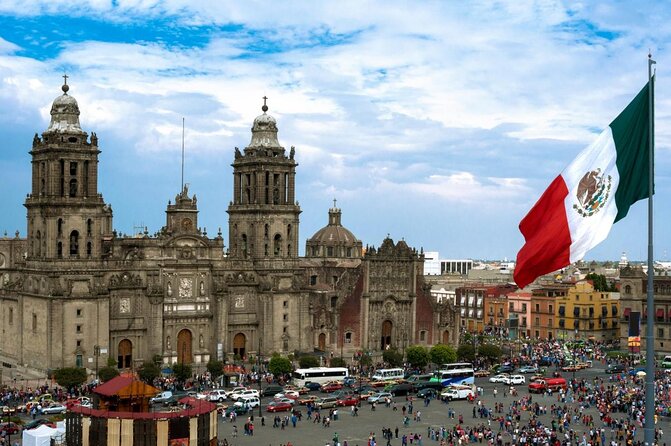
The Metropolitan Cathedral of the Assumption of the Most Blessed Virgin Mary into Heaven occupies a major place beside the Zócalo. Its size and position tell you a great deal about the role of the Catholic Church in colonial Mexico and later national life.
Here, the tour turns toward the institutions that shaped public morality and law. The experience addresses the Spanish Inquisition and its treatment of convicted homosexuals between 1521 and 1821, presenting that history as part of the wider colonial system.
This is one of the tour’s more serious sections. The subject is not decorative or sensational. It shows how religious institutions and civil authorities could affect intimate life, public reputation, and personal safety.
You may find the cathedral area crowded and loud, especially around the main plaza. That can make long explanations harder to hear, so stay close to the guide and expect to pause in places where the group can gather.
The cathedral is also an important reminder that LGBTQ+ history is not separate from the history of the state. Religious power, Spanish law, local customs, and social class all overlapped. That connection is one reason this tour offers more than a standard point-and-walk introduction.
More ruins and heritage sites:
- Walking Tour of the Historic Center of Mexico City
★ 5.0 · 870 reviews - Mexico City Historical Centre Food Tour with 7 Authentic Tastings
★ 5.0 · 723 reviews - Walking Tour in Mexico City for Exploring their Cultural Heritage
★ 5.0 · 245 reviews - Walking Tour – Impressive murals in Historical Center of Mexico City
★ 5.0 · 224 reviews
The Zócalo, Mexico City’s great meeting place
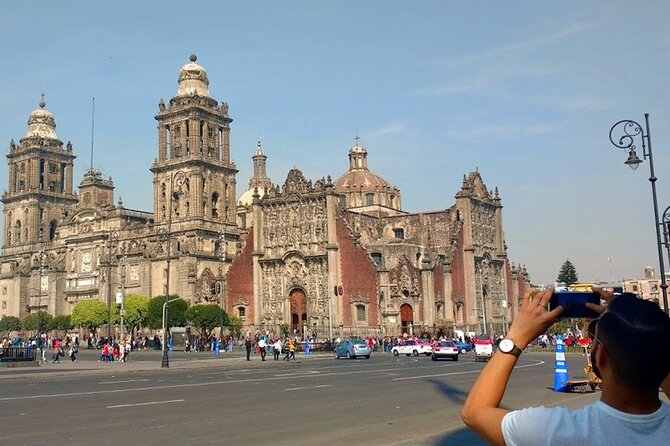
The Zócalo is the central plaza and the symbolic heart of Mexico City. The route allows about 30 minutes here, with no admission charge.
This broad public square has served as a meeting place since the sixteenth century. It is an ideal setting for discussing who gets to occupy public space, who is accepted in public, and how political and religious authority are displayed.
You will see the National Palace on one side. It is the seat of Mexico’s federal executive and has served as the president’s official residence since 2018. The tour uses the building and plaza to connect colonial government with the modern Mexican state.
I like the Zócalo stop because it gives the tour room to widen its focus. The LGBTQ+ story is placed beside independence, government, revolution, and changing ideas of citizenship. You are not asked to view gay history as an isolated subject. You see it as part of the country’s political development.
The plaza can also be the least intimate part of the walk. Its scale makes a small group feel less private, and events or temporary installations may change the atmosphere. Wear comfortable shoes and keep water handy, even though bottled water is provided.
Centro Cultural de España and a restored colonial mansion
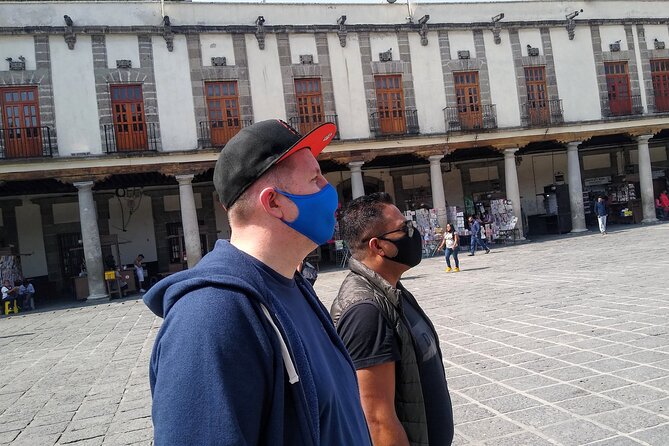
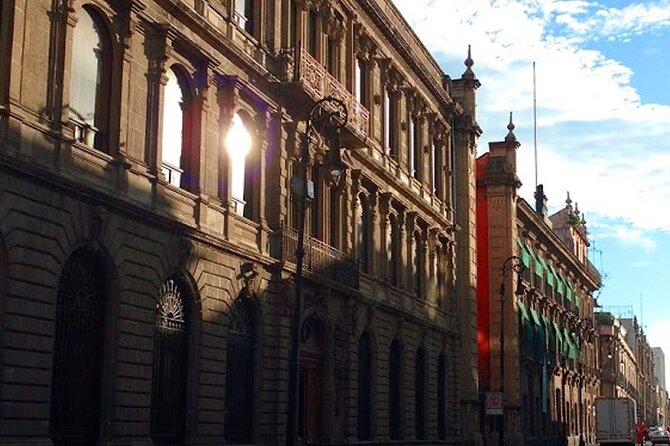
The Centro Cultural de España sits at 18 Guatemala Street, just behind the cathedral. This former mansion was reportedly in ruins in the late 1990s before Mexico City transferred it to the Spanish government for restoration. The restored center opened in 2002 with the King of Spain and Mexico’s president present.
The stop lasts about 30 minutes and does not include an admission charge. Its value is partly architectural and partly political. The building shows how an old colonial property can be repaired and given a new public role, while the surrounding area reveals the close physical relationship between church, government, archaeology, and cultural institutions.
This stop may appeal to you if you like buildings with several chapters in their story. It is not just an old house. It reflects Spanish influence, Mexico City’s preservation efforts, and the changing use of historic buildings.
The tour’s downloadable material adds value here. A digital LGBTQ+ map of the Historic Center and extra resources can help you continue exploring after the walk. The PDF of RAINBOW MEXICO also gives you something more lasting than a guide’s spoken commentary.
Santo Domingo Plaza and the old customs district
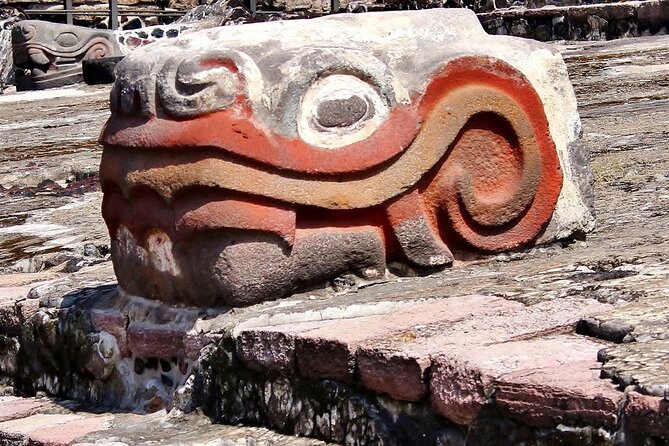
The route ends at Plaza de Santo Domingo, the Historic Center’s second-largest plaza. It takes roughly 30 minutes to reach and discuss, with the tour finishing near the Antiguo Palacio de la Santa Inquisición at República de Brasil 33.
The plaza is flanked on its western side by the Portal de Evangelistas, a Tuscan colonnade with round arches. Scribes once worked there with typewriters and older printing machines. That detail makes the square feel practical and human, rather than simply monumental.
Nearby is the Old Customs Building, on the east side of the plaza between República de Venezuela and Luis González Obregón streets. Customs offices remind you that Mexico City was not only a religious and political center. It was also a place of trade, paperwork, migration, and control.
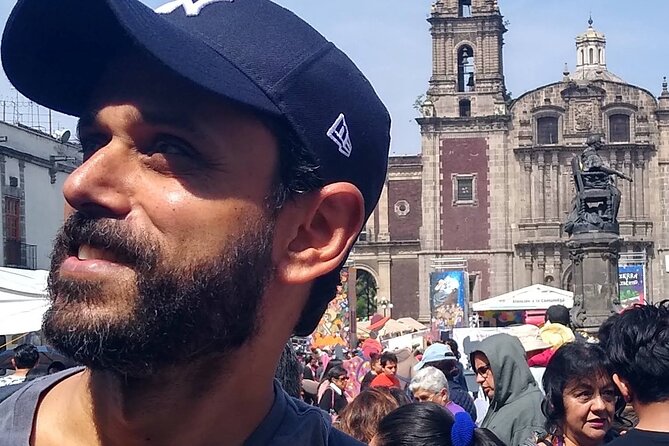
The Church of Santo Domingo faces the north side of the plaza. The tour connects it with El Camino Real, the trading route running from Old Mexico toward New Mexico. The supplied material also presents the route as a safe haven for gay male couples, which adds a striking personal angle to a place many visitors might otherwise see only as colonial architecture.
This is a strong ending because the plaza brings several themes together: commerce, religion, travel, law, secrecy, and relationships. It also leaves you in a useful part of the Historic Center, close to other sights and places to eat.
One practical note: the end point is not the same as the starting point. You walk from República de Argentina to Santo Domingo Plaza, covering about one mile in total. The tour does not provide return transport, but the route remains within the central district and is near public transportation.
Carlos turns a history walk into a conversation
The clearest strength of this experience is Carlos. He is repeatedly praised for being personable, entertaining, serious about the subject, and able to answer difficult questions without making the tour feel like a classroom lecture.
That balance matters. Mexican history can involve conquest, colonial violence, the Inquisition, revolution, dictatorship, and social change. An overly light presentation would feel careless. An overly academic one could lose you after the first plaza. Carlos appears to keep the tone human, with stories and humor alongside the harder material.
He also asks about personal interests and adjusts the conversation. That is a real benefit in a group of no more than 10 people. If you are already familiar with the Aztecs, he can spend more time on LGBTQ+ history. If Mexico City is new to you, he can build the wider background first.
One particularly useful feature is the guide’s willingness to sit down and give context before moving on. That slows the pace, but it helps you understand what you are seeing instead of collecting disconnected facts.
The experience can also run longer than the advertised three and a half hours if the group asks many questions. One small group reportedly spent about four hours because the discussion continued. That is a benefit if you enjoy conversation, but you should avoid booking a tight lunch or museum reservation immediately afterward.
Is $99 a good value?
At $99 per person, this is not the cheapest way to see the Historic Center. You are paying for a specialized subject, a small group, a local guide, refreshments, and prepared digital material rather than simply paying for access to major sights.
The value improves if you would otherwise book both a general historic-center tour and a separate LGBTQ+ history experience. This tour combines those subjects in one route and adds the digital map and RAINBOW MEXICO PDF for later reading.
Coffee or tea, bottled water, and a maximum group size of 10 are modest inclusions, but they matter over a three-and-a-half-hour walk. The biggest part of the price is Carlos’s research, storytelling, and ability to respond to questions.
I would see the tour as good value for history lovers, LGBTQ+ visitors, allies, and repeat visitors who want a new way to read the city. It is less useful for you if you want entry into several museums or a rapid checklist of famous sights. Most stops are viewed from public spaces, and the listed itinerary does not promise extensive indoor admissions.
Practical details that affect your day
The tour is offered in English and begins at 10 a.m. Confirmation is provided when you book. The minimum age is 18, and service animals are allowed.
You should wear shoes suited to walking on city streets and dress for the weather. The tour operates in all weather conditions, so rain or heat will not automatically change the plan. Bring sun protection and a light layer, even with bottled water supplied.
The route covers about one mile, but the duration is long because the guide pauses for explanation and discussion. A moderate level of physical fitness is recommended. You may spend time standing, walking, and gathering in busy public areas.
The tour has a strong overall rating of 4.6 from 53 ratings, with especially high praise for Carlos’s teaching and personal approach. There is also an important caution: one booking was cancelled about an hour before the scheduled start, and the operator was difficult to reach afterward. That appears to be an isolated but serious service problem, so avoid putting an irreplaceable event directly after the tour.
Free cancellation is available up to 24 hours before the start time for a full refund. Changes or cancellations inside that window are not accepted for a refund.
Who should book Gay Side of History through Plazas & Temples?
I would choose this tour if you want Mexico City history explained through questions of identity, law, religion, and public life. It suits LGBTQ+ visitors particularly well, but you do not need to identify as LGBTQ+ to benefit. An ally who enjoys history can gain a fresh view of the city, as one enthusiastic participant did.
It is also a smart first-day activity if you want to understand the Historic Center before exploring it alone. The rooftop orientation, central plazas, cathedral, temple ruins, government buildings, and Santo Domingo district give you a strong geographic base.
You should skip it if your priority is nightlife, shopping, or extended museum time. You should also think twice if you dislike long explanations or need a strict timetable.
Should you book it?
Yes, if the history matters as much as the sights. The route is short in distance but wide in subject, moving from the Mexica capital to Spanish rule, the Inquisition, government, trade, and present-day cultural memory.
The biggest reason to book is Carlos’s storytelling and the personal scale of the group. The best practical tip is to leave room after the tour for lunch or a drink in the Zócalo area, rather than rushing to your next reservation.
For an LGBTQ+ visitor, an ally, or anyone tired of official history told from only one angle, this is a thoughtful and unusually focused way to meet Mexico City.
FAQ
How long does the tour last?
The tour lasts approximately 3 hours and 30 minutes. It covers about one mile on foot, with time for explanations and discussion at each stop.
Where does the tour begin?
It begins at República de Argentina 15 in Mexico City’s Historic Center, at Librería Porrúa. The start time is 10 a.m.
Where does the tour end?
It ends at the Antiguo Palacio de la Santa Inquisición at República de Brasil 33, near the corner of República de Venezuela and República de Brasil in Plaza de Santo Domingo.
What is included in the price?
The price includes a local guide, coffee or tea, bottled water, a digital LGBTQ+ map of the Historic Center with extra resources, and a downloadable PDF copy of RAINBOW MEXICO: Bridging Forgotten Pasts and Vibrant Futures.
How many people can join the tour?
The tour has a maximum of 10 participants, creating a small-group experience.
Can I cancel for a full refund?
Yes. You can cancel at least 24 hours before the experience begins for a full refund. Cancellations and changes made less than 24 hours before the start time are not accepted for a refund.
Just added around Mexico City
- Neon Bike Party – Private Bike Tour★ 4.5 · 34 reviews
- Private Tour with Archaeologist and VR Experience at Teotihuacan★ 5.0 · 34 reviews
- Mexico City: Full-Day Taxco and Cuernavaca Tour★ 4.1 · 34 reviews
- Food and Historic Walking Tour: Private Tortilla Crawl in Mexico City Downtown★ 5.0 · 35 reviews
- Guided tour EN Teotihuacan – Breakfast EN cave-round transport★ 5.0 · 35 reviews
- Xochimilco, Coyoacan and Frida Kahlo Museum Tour★ 3.5 · 35 reviews
- Xochimilco: amanecer en kayak Ciudad de México★ 5.0 · 35 reviews
- Full-Day Private Tour of Mexico City: Teotihuacan and Xochimilco★ 5.0 · 35 reviews
Historical Tours, compared.

Mexico City Historical Centre Food Tour with 7 Authentic Tastings
Read our review →
Historical and Cultural Walking Tour of San Miguel de Allende
Read our review →
Historical and Cultural Walking Tour of San José del Cabo
Read our review →
Walking Tour in Mexico City for Exploring their Cultural Heritage
Read our review →Browse the lists this tour appears in