
Reviewed · MUSEUMS
Museum of Anthropology: a look at Mexico’s past
Mexico’s greatest museum needs a guide. This three-hour visit to the National Museum of Anthropology gives you a clear path through Mexico’s pre-Spanish cultures, with museum admission and a federally licensed English-speaking guide included. I especially like the small maximum group of six and the way guides such as Hector and Edith turn objects, symbols, myths, and political stories into an understandable account of Mexico’s past.
I also like that the tour begins and ends at the same point in Chapultepec, so you do not have to arrange a separate ride between stops. The main limitation is its fixed focus and pace: three hours can introduce the museum’s major rooms, but it cannot cover everything. The museum is large enough to occupy several days, and the tour is not available to children under 18.
In This Review
- Key points at a glance
- Why this museum is worth three hours
- Entering through Chapultepec
- The first rooms: making sense of ancient Mexico
- Symbols, gods, and beliefs
- Artifacts with a human story
- Hector and Edith: what their styles add
- Why the small group matters
- The three-hour pace and physical effort
- Who will get the most from this visit
- Value, inclusions, and what you still pay for
- Booking, cancellations, and practical cautions
- Should you book the Anthropology Museum tour?
- FAQ
- How long does the Museum of Anthropology tour last?
- Is museum admission included?
- Is the tour offered in English?
- Where does the tour begin and end?
- How many people can join the tour?
- Is transportation included?
- Can children join the tour?
Key points at a glance
- Three hours in Mexico’s essential museum: The visit focuses on the most important rooms rather than trying to cover every display.
- A guide who connects the pieces: Hector and Edith have been praised for explaining mythology, religion, politics, symbols, and daily life in a way that sticks.
- Small group, capped at six: This allows room for questions and a more personal experience than a large coach tour.
- Admission is included: You do not need to arrange a separate museum ticket for the guided visit.
- Audio equipment for six or more: An audiobox system is provided when the group reaches six clients, useful in busy galleries.
- A strong first-day activity: The guide’s explanation of symbols and themes can help you recognize ideas throughout the rest of your time in Mexico City.
Why this museum is worth three hours
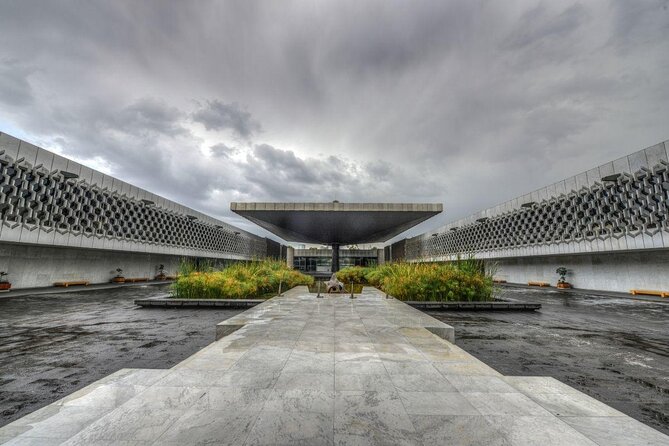
Mexico City’s National Museum of Anthropology is not a quick stop for a single famous object. Its rooms present the cultures and villages that inhabited Mexico before the arrival of the Spaniards, and the material covers thousands of years. One review describes the story as reaching across 3,500 years, which gives you an idea of the scale.
That scale is the reason I recommend a guided visit for a first trip. On your own, you can admire stone figures, masks, tools, jewelry, and other artifacts without knowing how they fit together. A good guide gives you the dates, places, beliefs, and connections that turn a room full of objects into a story.
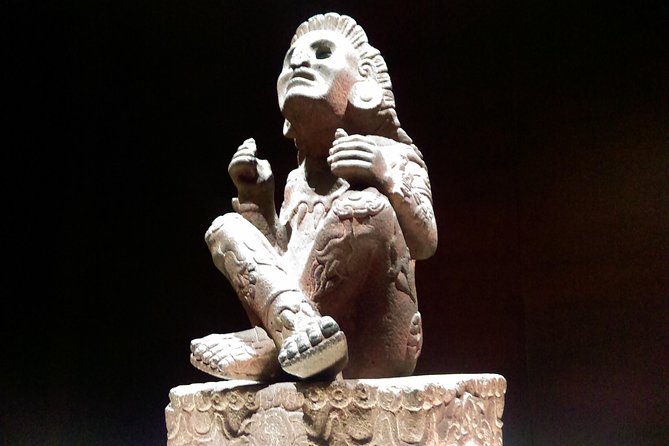
The strongest part of this experience is the interpretation. Hector has been praised for explaining mystery, mythology, and history through the symbols on the objects. Edith has been praised for making pre-colonial life, politics, geography, conflict, religion, and later religious practices easy to follow.
You are not simply shown the biggest artifact in each room. You are encouraged to notice repeated symbols and themes. A figure that first looks strange or decorative may reveal something about power, worship, death, nature, or the way a society understood its place in the world.
More Museum Tours in Mexico City
- CDMX: Xochimilco, Coyoacan, Frida Kahlo Museum & Murals Tour
★ 4.4 · 3,025 reviews - Chapultepec Castle & Anthropology Museum Tour
★ 4.5 · 1,348 reviews - Frida Kahlo VIP [Museum Tickets Included] Bike, Markets & Churros
★ 5.0 · 1,072 reviews
Entering through Chapultepec
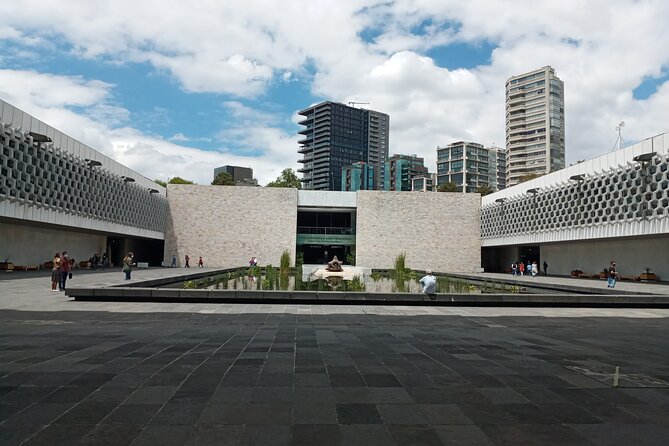
The meeting point is on Paseo de la Reforma in Bosque de Chapultepec, in the Polanco area of Mexico City. The tour ends at the same meeting point, which keeps the logistics simple. It is also near public transportation, useful if you are building the museum into a day around Chapultepec.
Since private transportation is not included, you need to make your own way to the starting point. That is not a serious weakness in this location, but you should allow time to reach the museum and find the meeting area. The tour does not include lunch or bottled water, so bring what you need for several hours.
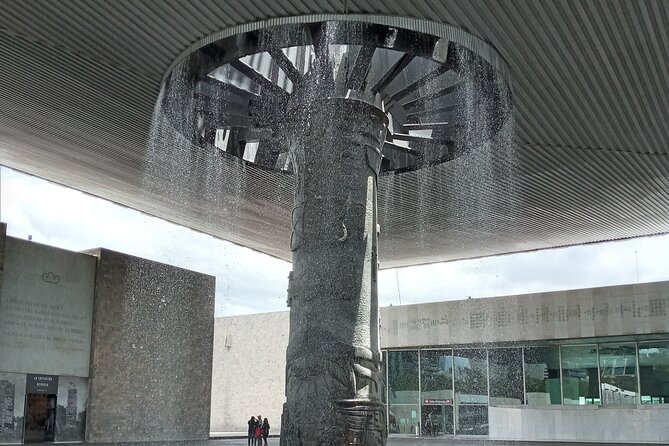
The first sight may be the museum’s famous inverted fountain. One person described it as a welcome on a hot summer day. It sets the tone nicely: this is a major cultural institution, but the setting is not merely a box of display cases. Give yourself a few minutes to get oriented before the guide begins.
The first rooms: making sense of ancient Mexico
The exact order of rooms may depend on the guide and museum conditions, but the stated purpose is clear. You will visit the museum’s most emblematic rooms and learn about the cultures and communities that lived in Mexico before Spanish arrival.
This matters because Mexico was never one single ancient culture. A three-hour introduction should help you separate the major traditions rather than blending them into one vague picture of the Aztecs. Guides such as Hector and Edith have been praised for explaining chronology and the connections among different civilizations.
I like this approach because it gives you a mental map. You may not remember every date, but you can better understand how cultures developed in different places, how they interacted, and how their beliefs appear in the objects on display.
Hector’s style, according to the descriptions of his tours, is to build a narrative around the artifacts. He uses parables, technology, and clear explanations to bring the ancient material closer to the present. Edith’s style is described as warm, grounded, and easy to follow, with special attention to the museum’s purpose and the stories behind indigenous beliefs.
These are not small differences. In a museum this large, your guide’s storytelling style can determine whether three hours feels focused or exhausting.
Symbols, gods, and beliefs
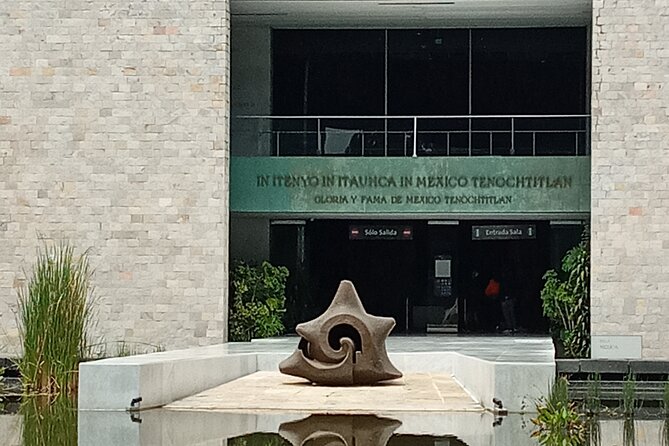
The religious material is one of the most rewarding parts of this visit. The guides explain the stories and legends of gods, how indigenous communities honored them, and how some ideas connect with religious practices in Mexico today.
You should not expect a simple list of gods and dates. The value is in seeing how belief shaped objects, ceremonies, political authority, and everyday life. A guide can point out details that you might otherwise pass without a second look.
I especially like the way this subject can connect the museum to the rest of Mexico City. Once you understand a few recurring symbols, you may begin noticing them in public art, historic buildings, churches, and other museums. One couple said the symbols introduced by Hector helped them understand things they encountered throughout the rest of the week.
That is a useful test for any museum tour. The best guide does not trap the experience inside the building. Instead, the information gives you a better lens for the city outside.
More galleries and collections:
- Anthropology Museum Guided Tour
★ 4.5 · 1,035 reviews - Frida Kahlo VIP [Museum Tickets Included] Walk, Markets & Churros
★ 5.0 · 982 reviews - EXCLUSIVE TOUR Frida Kahlo Museum – SMALL GROUPS
★ 5.0 · 901 reviews - Mexico City: Anthropology Museum Guided Visit
★ 4.4 · 708 reviews
Artifacts with a human story
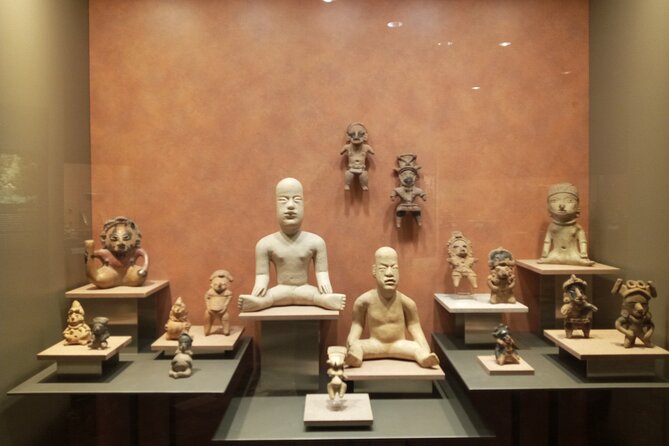
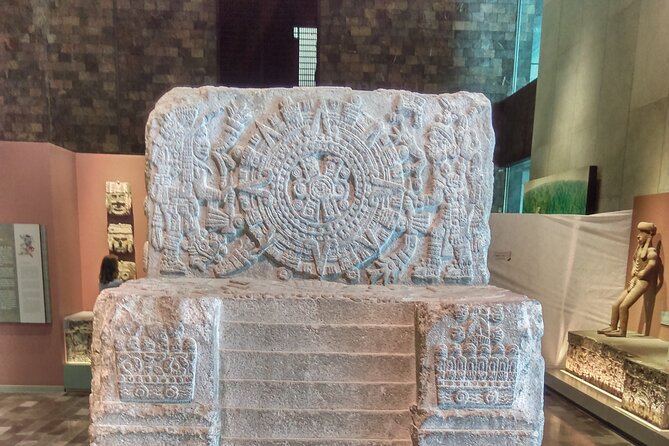
Large stone objects often get the most attention, but the tour should help you look beyond size and fame. The museum’s rooms hold beautiful pieces from many cultures, and your guide explains what the objects reveal about the people who made and used them.
You might learn about craftsmanship, ritual purpose, trade, conflict, political power, or the relationship between religion and government. The supplied information does not identify every artifact on the route, so I would not book this expecting a fixed checklist of specific treasures. Book it for the broader guided story.
This is also where questions matter. A small group of no more than six gives you a better chance to ask why a symbol appears repeatedly, how a culture differed from another, or what happened to a belief after Spanish arrival.
The tour includes a federally licensed guide certified by SECTUR. That certification does not guarantee that every guide will suit every personality, but it is a useful sign that the person leading the visit has formal authorization to guide in Mexico.
Hector and Edith: what their styles add
Hector receives especially strong praise for his warmth, enthusiasm, detail, and ability to teach. His approach appears to work best for adults and older teenagers who enjoy a story with layers. He has been described as a gifted teacher who makes ancient cultures feel alive and ties symbols together across the museum.
He also seems attentive to physical comfort. One account describes him stopping to let the group sit several times, which can make a real difference during a long museum visit. He was also gracious when a group arrived a few minutes late, though you should still aim to arrive on time.
Edith is praised for a warm presentation and for making difficult material easy to understand. Her background in history has helped her explain pre-colonial life, politics, geography, conflict, and religion without losing the human side of the subject.
If you have a choice of guide at booking, Hector and Edith are the names most strongly associated with this experience. If you are assigned someone else, the official structure remains the same: an English-speaking, SECTUR-certified guide and included museum admission.
Why the small group matters
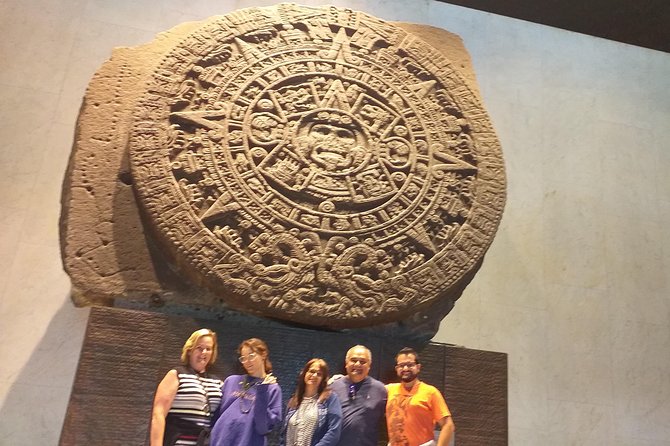
A group limit of six is one of the best features here. In a vast museum, a large group can turn a guide’s explanation into a distant voice and a line of people waiting for the next stop. Six people allow a more natural exchange.
The audiobox equipment is listed for six clients or more. If your group reaches six, this system should make the guide easier to hear in the galleries. It is a practical touch, particularly when other museum visitors are nearby.
Small does not mean private, however. The tour is not described as an exclusive private visit, and the maximum is six rather than one booking party. If you need complete control over the pace or want to spend a long time at one object, a private arrangement would be a different product.
For most people, though, six is a good compromise. You get personal access without the cost or formality that often comes with a fully private guide.
The three-hour pace and physical effort
The published duration is about two to three hours, with the itinerary describing three hours. That is long enough to establish the museum’s main story, but not long enough to see everything in detail.
One person spent more than four hours in the museum and still felt there was enough for several days. I would take that seriously when planning your day. The guided tour is an introduction, not a final visit.
The museum requires a moderate level of physical fitness. You should be prepared to walk through multiple rooms and remain standing for portions of the explanation. The fact that a guide may pause for sitting helps, but it does not turn the experience into a low-mobility visit.
Wear comfortable shoes and carry water, since bottled water is not included. You may also want to plan a quiet break afterward rather than scheduling another demanding activity immediately.
Who will get the most from this visit
This tour suits first-time visitors who want context before exploring Mexico City on their own. It is especially useful if you find large museums overwhelming or if you want to understand symbols and beliefs rather than simply photograph objects.
It also suits adults and interested older teenagers. One account found that the guide answered a 13-year-old’s questions well, but did not engage an 11-year-old as much. Since the activity is officially unavailable to children under 18, families with younger children will need to choose another museum option.
Couples, friends, and families with adult children can all fit comfortably into the format. History fans will appreciate the chronology, while casual museumgoers may prefer the storytelling and mythology.
You should think twice if you want a relaxed, self-guided visit with no fixed pace. You should also reconsider it if you expect a complete survey of every room. The museum is simply too large for that in three hours.
Value, inclusions, and what you still pay for
No tour price is provided here, so I cannot judge the exact cost. The value depends on how much you would otherwise spend on museum admission and an independent guide, plus how much you value a small group and an English presentation.
Museum access is included, as is the federally licensed SECTUR-certified guide. Audiobox equipment is included for groups of six or more. Those inclusions remove several common add-on costs, but transportation, lunch, and bottled water are yours to arrange.
For me, the strongest value is not just avoiding a ticket line or paying for entry. It is the time saved from wandering without a plan. If the guide helps you understand the symbols and cultural connections that continue through the rest of your visit, the fee can be worthwhile even if you later return to the museum independently.
The smartest plan is to use the tour as your first visit, then return on your own if the museum captures your interest. A second visit gives you time with rooms the guide could not include and lets you revisit the objects that mattered most.
Booking, cancellations, and practical cautions
Confirmation is provided when you book. The activity requires a minimum number of participants, so it can be canceled if that minimum is not reached. In that case, you are offered another date or experience, or a full refund.
You can cancel for a full refund up to 24 hours before the start time. Changes or cancellations made less than 24 hours before the start time are not accepted for a refund, and the cut-off follows local Mexico City time.
I would book early if the small group is important to you, then check the meeting point carefully. Since you arrange your own transportation, allow extra time for getting across Mexico City and finding the exact starting area on Paseo de la Reforma.
Should you book the Anthropology Museum tour?
Book it if you want the museum to make sense, not just look impressive. The small group, included admission, English guide, and strong teaching styles associated with Hector and Edith make this a useful first introduction to Mexico’s ancient cultures.
I would especially recommend it for adults, interested older teenagers, and anyone who wants to connect museum symbols with the wider culture of Mexico City. I would skip it if you prefer to wander alone, need a child-friendly activity, or want to see every room in one visit.
The best strategy is simple: take the guided tour early in your stay, keep the rest of the day light, and return later if you have time. Three hours can give you the story. The museum itself invites you to keep looking.
FAQ
How long does the Museum of Anthropology tour last?
The experience lasts approximately two to three hours, with the itinerary describing a three-hour guided visit.
Is museum admission included?
Yes. The museum access ticket is included in the tour.
Is the tour offered in English?
Yes. The experience is offered in English.
Where does the tour begin and end?
It begins at Av. Paseo de la Reforma in Bosque de Chapultepec, in the Polanco area of Mexico City. The activity ends back at the meeting point.
How many people can join the tour?
The activity has a maximum of six travelers.
Is transportation included?
No. Private transportation is not included. The meeting point is near public transportation, so you need to arrange your own way there.
Can children join the tour?
No. The activity is not available for children under 18 years of age.
Just added around Mexico City
- Neon Bike Party – Private Bike Tour★ 4.5 · 34 reviews
- Private Tour with Archaeologist and VR Experience at Teotihuacan★ 5.0 · 34 reviews
- Mexico City: Full-Day Taxco and Cuernavaca Tour★ 4.1 · 34 reviews
- Food and Historic Walking Tour: Private Tortilla Crawl in Mexico City Downtown★ 5.0 · 35 reviews
- Guided tour EN Teotihuacan – Breakfast EN cave-round transport★ 5.0 · 35 reviews
- Xochimilco, Coyoacan and Frida Kahlo Museum Tour★ 3.5 · 35 reviews
- Xochimilco: amanecer en kayak Ciudad de México★ 5.0 · 35 reviews
- Full-Day Private Tour of Mexico City: Teotihuacan and Xochimilco★ 5.0 · 35 reviews
Museums, compared.
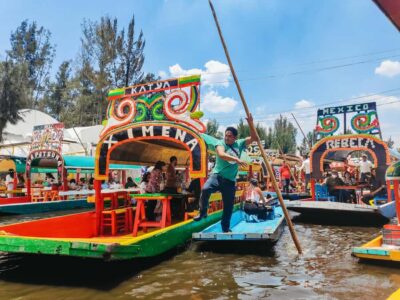
Xochimilco, Coyoacan, Frida Kahlo Museum & Murals Tour
Read our review →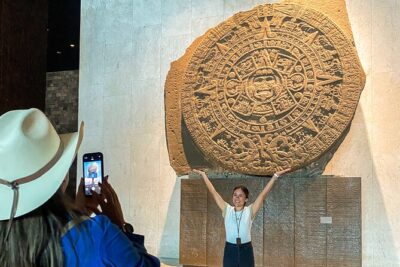
Chapultepec Castle & Anthropology Museum Tour
Read our review →
Frida Kahlo VIP [Museum Tickets Included] Bike, Markets & Churros
Read our review →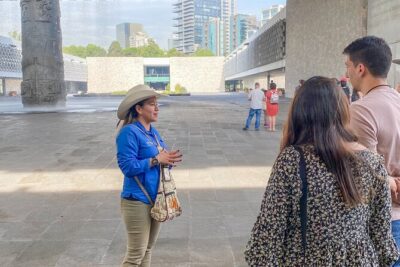

Frida Kahlo VIP [Museum Tickets Included] Walk, Markets & Churros
Read our review →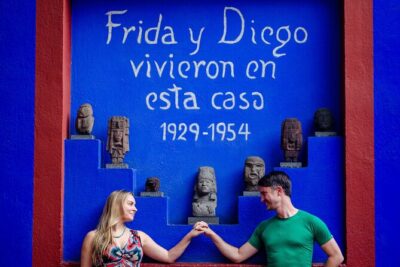
EXCLUSIVE TOUR Frida Kahlo Museum – SMALL GROUPS
Read our review →
Coba Multun-Ha Cenote Tulum and Mayan Museum Small Group
Read our review →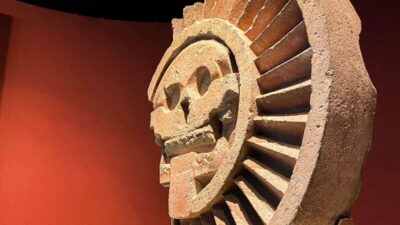
Browse the lists this tour appears in