
Reviewed · MUSEUMS
Anthropology Museum Guided Tour
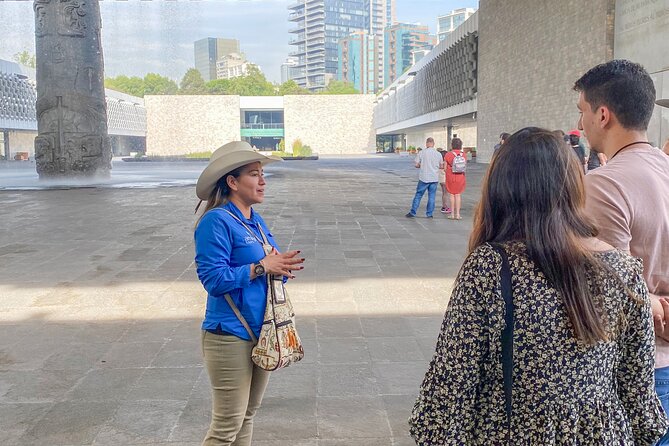
The museum is too big for a casual wander. This 2.5-hour guided visit gives you a useful path through Mexico’s major pre-Columbian cultures, and I especially like the historical context around famous objects such as the Stone of the Sun and Olmec heads. I also like that admission is included in the $39 price. The main concern is guide consistency: some guides are excellent, while others have been hard to understand or poorly organized.
I’d book this for a first visit, especially if you do not read Spanish comfortably. The museum has limited English explanation beside some objects, so a good guide can turn a grand but confusing collection into a story you can follow. Guides such as Alexa, Alan, Ligia, Antonio, Leonardo, Hector, Lili, and Gibran have been praised for clear explanations and personal warmth.
Arrive early and arrive exactly on time. The group can include up to 25 people, and once it leaves, catching up may not be possible. You also cannot enter with food, drinks, or a backpack, so plan for a small handbag only.
In This Review
- Key points to know before you book
- Why Mexico City’s Anthropology Museum needs a guide
- The Stone of the Sun and the Aztec galleries
- Olmec heads and the museum’s oldest stories
- Maya tombs, cenote treasures, and regional variety
- What the 2.5-hour route feels like
- Guide quality is the deciding factor
- Arrival, entry, and the group experience
- Is $39 a fair price?
- Who should book this museum tour?
- Should you book it?
- FAQ
- How long does the Anthropology Museum Guided Tour last?
- What does the $39 price include?
- Is the tour offered in English?
- Can I bring a backpack or food into the museum?
- How large is the tour group?
- What happens if I arrive late?
Key points to know before you book
- The Stone of the Sun is a major highlight: This famous Aztec monument gives the visit an immediate sense of scale and importance.
- The tour connects many cultures: Expect coverage of the Olmec, Maya, Teotihuacan, Toltec, and Aztec worlds, along with the Spanish conquest.
- A strong guide makes a huge difference: Excellent guides use maps, drawings, photographs, and clear timelines to explain difficult material.
- The museum is enormous: Two and a half hours works well for an introduction, but not for seeing every gallery in detail.
- The morning departure is useful: You finish with the afternoon free for Chapultepec, the castle, or other Mexico City sights.
- The group may feel larger than expected: The stated maximum is 25 people, and headphones or audio equipment may be used when needed.
Why Mexico City’s Anthropology Museum needs a guide
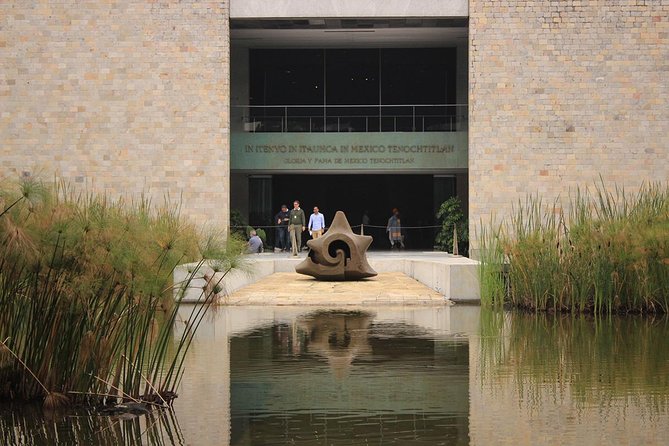
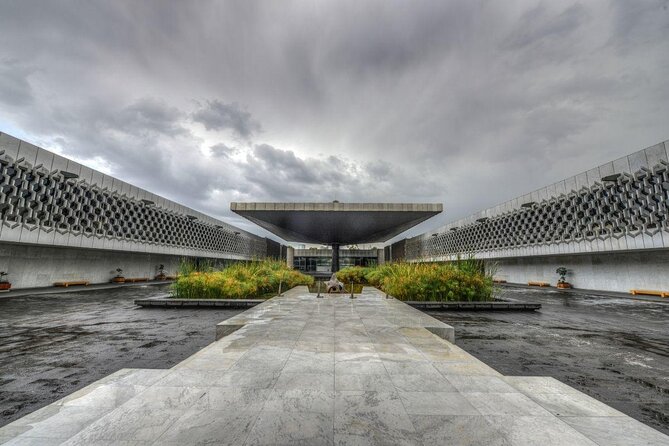
Mexico City’s National Museum of Anthropology is not a small collection that you can understand in a quick hour. Its permanent ground-floor galleries cover Indigenous civilizations from the territory of present-day Mexico and from former Mexican territory now located in the southwestern United States.
That is a lot of ground, both in geography and time. The displays include the Olmec civilization of the Gulf Coast, the great city of Teotihuacan, Maya sites, Toltec material, and the Aztec world connected to Tenochtitlan. Without a clear order, these cultures can blur together.
I like the idea of using a guide here because the objects often need explanation. A sculpture may be impressive on its own, but the useful questions are harder: Who made it? What did it mean? Where was it found? How did it fit into the political or religious life of its time?
The best guides build a simple framework before focusing on individual objects. Alan, for example, has been praised for beginning with geography and then moving into specific cultures. That approach matters. If you understand where the major civilizations developed, the displays become easier to place.
This tour is offered in English, but the quality of spoken explanation can vary. Several guides have been praised for expert English, patience, and lively storytelling. A few others have been difficult for some people to understand, especially when speaking quickly or using a strong accent. I would treat guide quality as the biggest variable in the experience.
More Museum Tours in Mexico City
- CDMX: Xochimilco, Coyoacan, Frida Kahlo Museum & Murals Tour
★ 4.4 · 3,025 reviews - Chapultepec Castle & Anthropology Museum Tour
★ 4.5 · 1,348 reviews - Frida Kahlo VIP [Museum Tickets Included] Bike, Markets & Churros
★ 5.0 · 1,072 reviews
The Stone of the Sun and the Aztec galleries
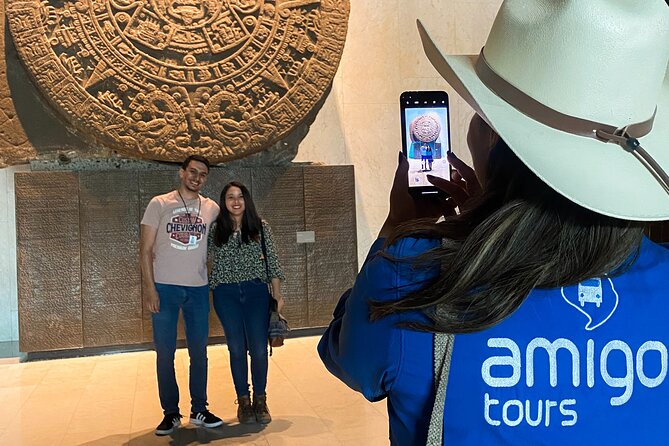
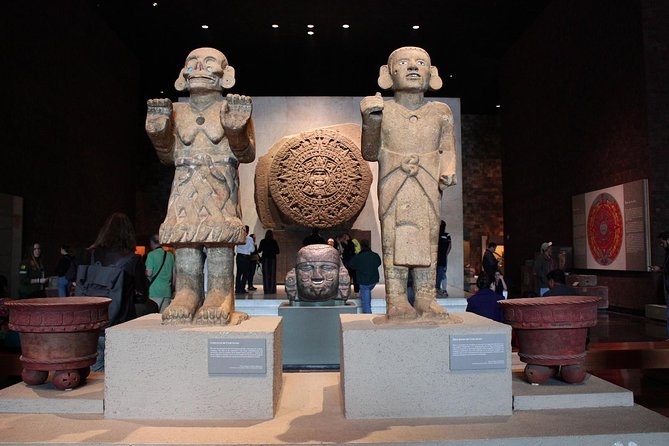
The visit includes the Stone of the Sun, often called the Aztec Calendar. It is one of the museum’s signature objects, and seeing it with an explanation is more useful than simply taking a photograph and moving on.
A guide can point out how the monument fits into Aztec ideas about time and the cosmos. The value is not only in identifying the carved shapes. It is in understanding that the object belongs to a larger system of religion, power, ritual, and urban life.
The museum also has a model showing the layout of Tenochtitlan, the former Aztec capital. Modern Mexico City occupies the central area where that city once stood. This model helps connect the museum to the city outside. When you later walk through central Mexico City, you have a better sense of the older city beneath the modern one.
This is one place where a guide’s method really matters. A clear explanation using the model and surrounding geography can make the relationship between Tenochtitlan and modern Mexico City easy to grasp. A less organized presentation can leave you mixing up Tenochtitlan with Teotihuacan, which was a different city from a much earlier period.
Some guides have been praised for using maps and drawings to show how buildings were constructed. That sort of visual aid is helpful in a museum where dates, places, and names arrive quickly. If your guide is strong, the Aztec rooms should give you a firm starting point for understanding the rest of the visit.
Olmec heads and the museum’s oldest stories
The giant Olmec heads are among the most memorable objects in the collection. They were found in the jungles of Tabasco and Veracruz, and their size alone makes them difficult to forget.
The Olmec material is important because it takes you far earlier than the Aztec period. A good guide will help you see the Olmec not simply as a list of large stone heads, but as part of the early development of complex societies in Mesoamerica.
I would pay close attention to how your guide handles the timeline. This museum rewards a chronological approach, but some tours move from one culture to another without enough warning. If the guide jumps between Teotihuacan, the Toltecs, the Maya, and the Aztecs, ask for dates and locations. A simple timeline can prevent a lot of confusion.
The strongest presentations do not treat each culture as an isolated subject. They explain what changed, what continued, and how later societies interpreted earlier monuments and traditions. That makes the collection feel connected rather than like a series of unrelated rooms.
Maya tombs, cenote treasures, and regional variety
The Maya displays provide another major reason to take the tour. They include treasures recovered from the Sacred Cenote at Chichen Itza and reconstructions of Maya tombs.
The cenote material gives you a look at ritual practices and the importance of sacred water sites. The tomb reconstructions help you think about burial customs and beliefs about death. These are the kinds of exhibits that can seem mysterious if you only read a short label, but become clearer when an expert explains the setting and purpose.
The Maya world also helps show why the term Mesoamerica covers many different regions and societies. The Maya were not simply another version of the Aztecs. Their cities, writing traditions, political structures, and artistic styles developed in different places and periods.
I would not expect the tour to cover every Maya gallery at length. Two and a half hours is enough for a guided introduction, not a complete study of the museum. If the Maya rooms interest you most, return after the tour and spend extra time there.
This is one advantage of the morning schedule. You can use the guided visit to get your bearings, then return to a favorite section while the major ideas are still fresh. You also have the afternoon for other parts of Chapultepec or Mexico City.
More galleries and collections:
- Frida Kahlo VIP [Museum Tickets Included] Walk, Markets & Churros
★ 5.0 · 982 reviews - EXCLUSIVE TOUR Frida Kahlo Museum – SMALL GROUPS
★ 5.0 · 901 reviews - Mexico City: Anthropology Museum Guided Visit
★ 4.4 · 708 reviews - Mexico City: Frida Kahlo Museum Entry Ticket w/Digital Guide
★ 4.5 · 683 reviews
What the 2.5-hour route feels like
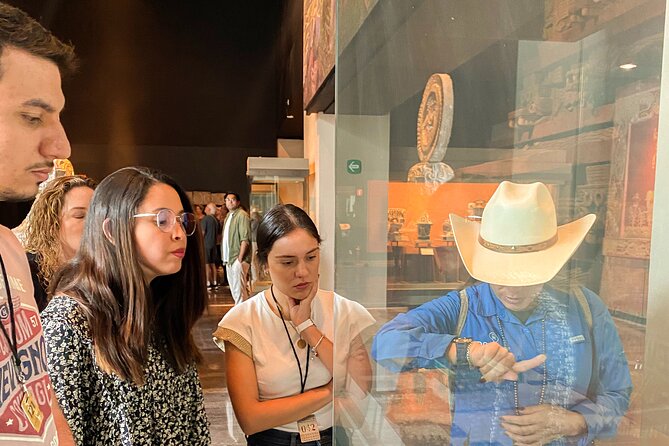
The tour begins at the National Museum of Anthropology on Paseo de la Reforma, in the Polanco area of Chapultepec. It ends back at the same meeting point.
The stated duration is about 2 hours and 30 minutes. That sounds long until you see the museum’s size. In practice, the time should give you a focused introduction to important galleries without trying to cover every object.
A well-run tour may pause in a room and allow you to look around before the guide continues. That can work nicely, since you get both explanation and personal viewing time. The risk is poor timing. If the guide gives you free time and then explains objects you have already passed or read about, the route feels less efficient.
The best guides keep the group moving without rushing. They explain the main pieces, answer questions, and leave enough space for you to look at the cases. Guides such as Genovanna have been praised for giving key information and then allowing time to explore each room independently.
You should also expect the group to stay together. The maximum is 25 people, which is not a private visit. Some experiences have felt closer to a large group than a small one, particularly when the guide has to manage ticket checks, audio equipment, and crowded galleries.
Guide quality is the deciding factor
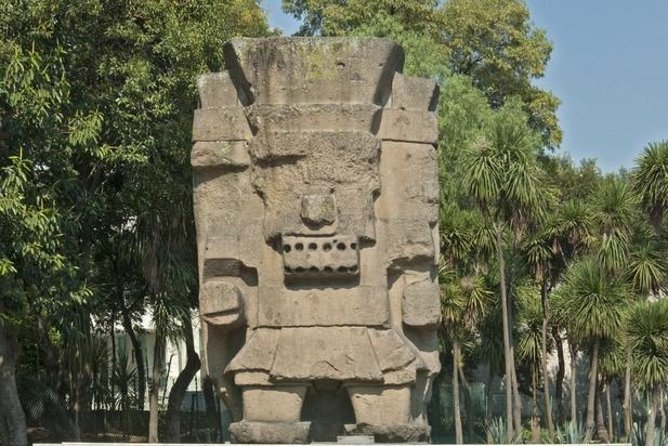
The strongest part of this experience is the potential for excellent guiding. Several guides have earned especially warm praise for combining subject knowledge with patience and enthusiasm.
Alexa has been praised for making the full story of the region easy to follow, including the period before the Spanish conquest. Alan has been described as clear, thorough, and happy to spend extra time answering questions. Ligia has been praised for handling questions in both English and Spanish, while Antonio has been noted for warmth and a strong sense of narrative.
Leonardo has received praise for bringing the objects to life while navigating the large museum. Gibran, also identified as Alex, has used a binder of photographs and examples to explain the Aztec, Maya, and other Indigenous cultures. Those practical visual aids can be very useful when the objects themselves are difficult to interpret.
There is a real downside, though. Some people have struggled to understand the guide’s English, and some presentations have felt like a nonstop lecture. Others have found the route disorganized, with little time for questions or no clear explanation of how the civilizations fit together.
That variation is hard to ignore. The tour’s basic idea is sound, but you are not guaranteed the same level of presentation from one guide to another. If your guide’s explanation is unclear, politely ask for a slower timeline or a map-based explanation early in the visit. That may help you get more from the remaining time.
Arrival, entry, and the group experience
The meeting point is at the museum itself, at Av. Paseo de la Reforma in Chapultepec. You do not need to arrange transport from a hotel as part of this experience, and the museum is near public transportation.
Punctuality matters. One person who arrived 10 minutes late found the group had already left and was unable to reconnect. Mexico City traffic can be unpredictable, so I would arrive well before the stated meeting time rather than cutting it close.
The entry process may include ticket validation and waiting with the group. Some people have found the meeting area confusing, with no obvious sign showing where to meet the guide. Keep your guide’s name and the tour contact details available, and look for the group before joining a general museum queue.
Food, drinks, and backpacks are not allowed inside. Only a handbag is permitted. This is a small rule with a practical effect, so leave larger bags behind rather than arriving with something you may have to store or surrender.
The experience is described as suitable for most people, but two and a half hours inside a major museum requires steady attention and walking. If you need frequent breaks, ask the guide about the pace at the start.
Is $39 a fair price?
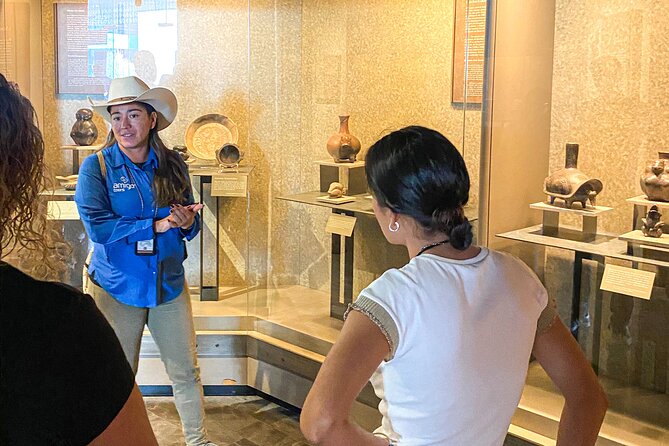
At $39 per person, the price includes both museum admission and the professional guide. That is a reasonable deal if you receive a clear, well-paced introduction from an expert guide.
The real value is not the ticket itself. You can enter a museum, but without context you may miss why the Stone of the Sun matters, how Tenochtitlan relates to present-day Mexico City, or how the Olmec and Maya material fits into the larger story.
The price looks less attractive if the group is poorly managed or the guide’s English is hard to follow. In that case, you may spend most of the 2.5 hours listening without gaining much more than you would from walking through the rooms alone.
A private tour may offer more personal attention, but this particular experience is a group tour with a maximum of 25 people. Some bookings may feel smaller, while others may feel quite full. If you want to ask many questions or set your own pace, confirm the group arrangement before paying for a more expensive option.
The tour has an overall rating of 4.5 from 1,035 reviews, which fits the mixed picture: a strong concept, many excellent guides, and some serious problems with organization and communication. I would call it good value with a guide-quality gamble.
Who should book this museum tour?
I recommend it most strongly to first-time visitors who want a clear introduction to Mexican archaeology and do not read Spanish with ease. It is also a good choice for families, couples, and solo visitors who prefer a story and route rather than a silent walk through a very large museum.
History and archaeology fans should like the range of material. You can see major objects from several civilizations in one visit and then return to the sections that interest you most.
This may not be right for you if you want a quiet, self-directed museum visit. It is also a poor fit if you dislike group tours, have limited patience for spoken explanation, or need to arrive late.
Should you book it?
I would book this tour if you want help making sense of the National Museum of Anthropology on a first visit. The collection is important, but its size and limited English signage can make it hard to understand without a guide.
Book with realistic expectations. You are paying for a group experience, not a private scholar at your side. Arrive early, carry only a small handbag, and be ready to ask questions if the presentation moves too fast.
If you are assigned a guide like Alexa, Alan, Ligia, Antonio, Leonardo, Lili, or Gibran, the tour may give you a strong foundation for the rest of your time in Mexico City. If your guide is unclear or disorganized, use the visit as an orientation and return independently to the rooms you most want to study.
You can cancel for a full refund up to 24 hours before the start time. After that cutoff, refunds are not available. At $39, I think the tour is worth the risk for most first-time visitors, but your punctuality and your guide’s clarity will shape the experience more than the museum ticket itself.
FAQ
How long does the Anthropology Museum Guided Tour last?
The tour lasts approximately 2 hours and 30 minutes. It begins and ends at the National Museum of Anthropology.
What does the $39 price include?
The price includes entrance to the National Museum of Anthropology and a professional English-speaking guide. Food and drinks are not included.
Is the tour offered in English?
Yes. The experience is offered in English. Guide clarity can vary, so ask questions if you need a slower explanation or help with the timeline.
Can I bring a backpack or food into the museum?
No. Food, drinks, and backpacks are not allowed. Only a handbag is permitted.
How large is the tour group?
The activity has a maximum of 25 participants. Some group visits may feel smaller, but you should not expect a private tour.
What happens if I arrive late?
The group may leave without you, and catching up may not be possible. Since late arrivals have missed the tour, arrive early and allow extra time for Mexico City traffic.
Just added around Mexico City
- Mexico Private Food Tour With Locals Including 10 Tastings★ 4.5 · 109 reviews
- Teotihuacan & Anthropology Museum, Templo Mayor & City Tour★ 4.5 · 109 reviews
- THE REAL CDMX: Under the skin of the city★ 5.0 · 111 reviews
- Mexico City: Mexican Folklore Ballet★ 4.5 · 111 reviews
- Teotihuacán plus Bike Tour★ 5.0 · 114 reviews
- Bike to taste the world’s best tacos – Mexico City★ 5.0 · 116 reviews
- EXCLUSIVE TOUR Chapultepec Castle – Small Groups★ 5.0 · 117 reviews
- Balloon flight with private transportation and guided tour to Teotihuacán★ 5.0 · 118 reviews
Museums, compared.
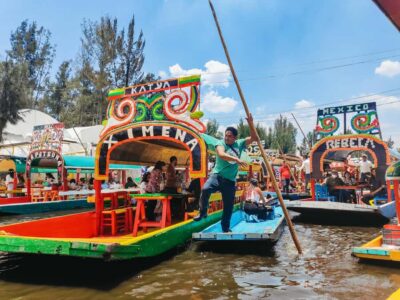
Xochimilco, Coyoacan, Frida Kahlo Museum & Murals Tour
Read our review →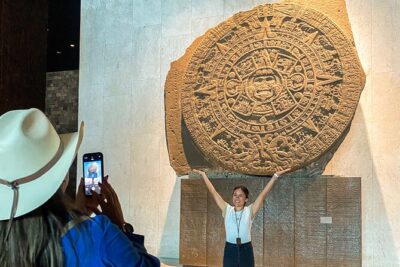
Chapultepec Castle & Anthropology Museum Tour
Read our review →![Frida Kahlo VIP [Museum Tickets Included] Bike, Markets & Churros](https://assets.mexicanguides.com/wp-content/uploads/frida-kahlo-vip-museum-tickets-included-bike-markets-churros-400x267.jpg)
Frida Kahlo VIP [Museum Tickets Included] Bike, Markets & Churros
Read our review →![Frida Kahlo VIP [Museum Tickets Included] Walk, Markets & Churros](https://assets.mexicanguides.com/wp-content/uploads/frida-kahlo-vip-museum-tickets-included-walk-markets-churros-400x267.jpg)
Frida Kahlo VIP [Museum Tickets Included] Walk, Markets & Churros
Read our review →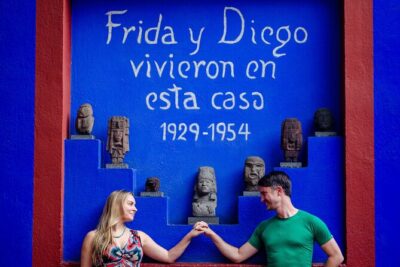
EXCLUSIVE TOUR Frida Kahlo Museum – SMALL GROUPS
Read our review →
Coba Multun-Ha Cenote Tulum and Mayan Museum Small Group
Read our review →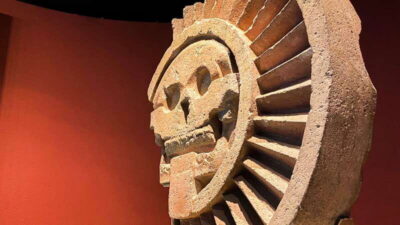
Frida Kahlo Museum Entry Ticket w/Digital Guide
Read our review →Browse the lists this tour appears in