
Reviewed · MUSEUMS
Mexico City: Anthropology Museum Tour with Historian
Ancient Mexico makes more sense when the pieces connect. This three-hour tour turns the huge National Museum of Anthropology into a clear story about shared symbols, crops, engineering, religion, and art across Mesoamerica. I especially like the way it links the Sun Stone to Mexica ideas about time and power, and the way the guide explains Maya writing through an absorbing tale of decipherment. The main drawback is pace: at $175 per person, you pay for expert interpretation, but three hours still cannot cover every gallery in this enormous museum.
I also like the small-group limit of 10 people, which makes it easier to ask questions and hear the guide. Natalia and Hector receive especially strong praise for their warmth, humor, clear English, and command of the subject. If you want a quiet, independent museum visit, this may feel too structured. If the displays usually leave you wondering what you are looking at, this tour could be money well spent.
In This Review
- Key points to know before you book
- Why a guide helps inside this enormous museum
- Start with the building, courtyard, and fountain
- What Mesoamerica actually means
- Agave, textiles, and the everyday side of ancient life
- Cultural exchange in clothing and ritual
- The Olmec colossal head and the problem of labels
- Mexica Mexico, chinampas, and the Sun Stone
- Teotihuacán as a city of many peoples
- Maya writing and the story behind decipherment
- Pakal’s tomb replica and a shocking museum story
- Is $175 per person good value?
- Timing, language, and who should book
- Should you book the Anthropology Museum tour?
- FAQ
- How long does the Anthropology Museum tour last?
- What is included in the price?
- Is transportation included?
- Where do I meet the guide?
- Is the tour available in English?
- Can I cancel or reserve without paying immediately?
Key points to know before you book
- A historian leads the visit: Your guide has a graduate academic degree in art history or history, with tours available in English or Spanish.
- The museum becomes one connected story: You move from Mesoamerican origins to the Olmec, Mexica, Teotihuacán, and Maya worlds rather than treating each room as a separate stop.
- The famous Sun Stone gets proper context: You learn why calling it the Aztec Calendar is misleading and what the monument actually communicates.
- Pakal’s tomb replica closes the tour: The Maya section ends with one of the museum’s most dramatic spaces and the story of the 1985 Christmas Eve theft.
- The group stays small: A maximum of 10 participants helps with questions, while headsets are available for larger groups.
- You meet inside the museum: Look for the guide near the main lobby ticket booth, carrying the WALK MEXICO project logo.
Why a guide helps inside this enormous museum
The National Museum of Anthropology is not a quick stop with a handful of famous objects. It is a large institution with galleries covering many peoples and centuries. Without a plan, you can spend hours admiring beautiful objects while missing the links between them.
This tour gives you those links. You learn how agricultural systems, languages, religious ideas, visual symbols, and artistic methods traveled across Mesoamerica. That approach matters because these societies were not isolated islands. They traded, borrowed, adapted, and reshaped ideas over long stretches of time.
A guide with academic training also helps separate evidence from guesswork. Many ancient objects invite dramatic stories, but archaeology often gives us partial answers. A strong guide can explain what scholars know, what they believe, and what remains uncertain.
That is one reason Natalia and Hector are such important parts of the experience. Natalia is praised for using an iPad and prepared slides to clarify objects and show how artifacts may have looked or functioned in their original setting. Hector, described as a former college professor, is praised for answering difficult questions and making complicated subjects easy to follow.
The group size is another practical advantage. With up to 10 people, you are not simply trailing behind a guide at a distance. You can ask about a symbol, a carving, or a point that needs more explanation. Headsets are available for large groups, though this experience is designed as a small-group tour.
More galleries and collections:
- CDMX: Xochimilco, Coyoacan, Frida Kahlo Museum & Murals Tour
★ 4.4 · 3,025 reviews - Chapultepec Castle & Anthropology Museum Tour
★ 4.5 · 1,348 reviews - Frida Kahlo VIP [Museum Tickets Included] Bike, Markets & Churros
★ 5.0 · 1,072 reviews
Start with the building, courtyard, and fountain
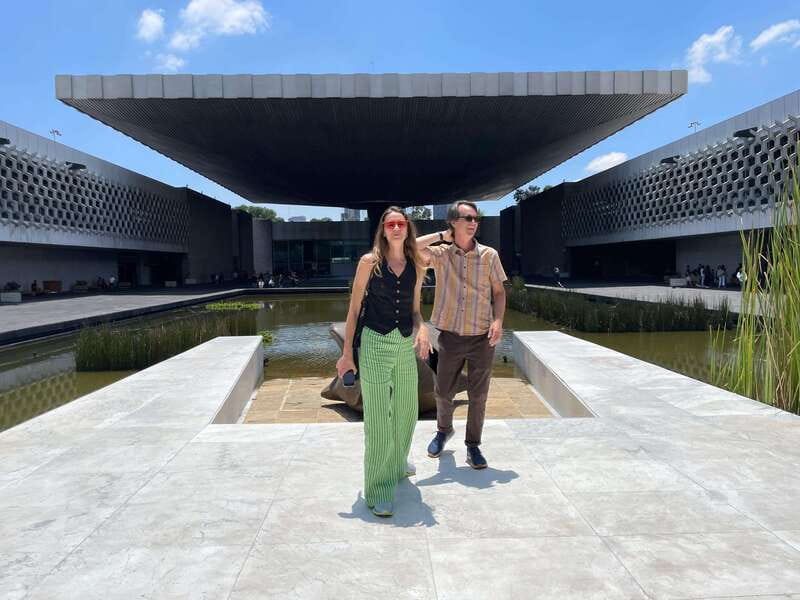
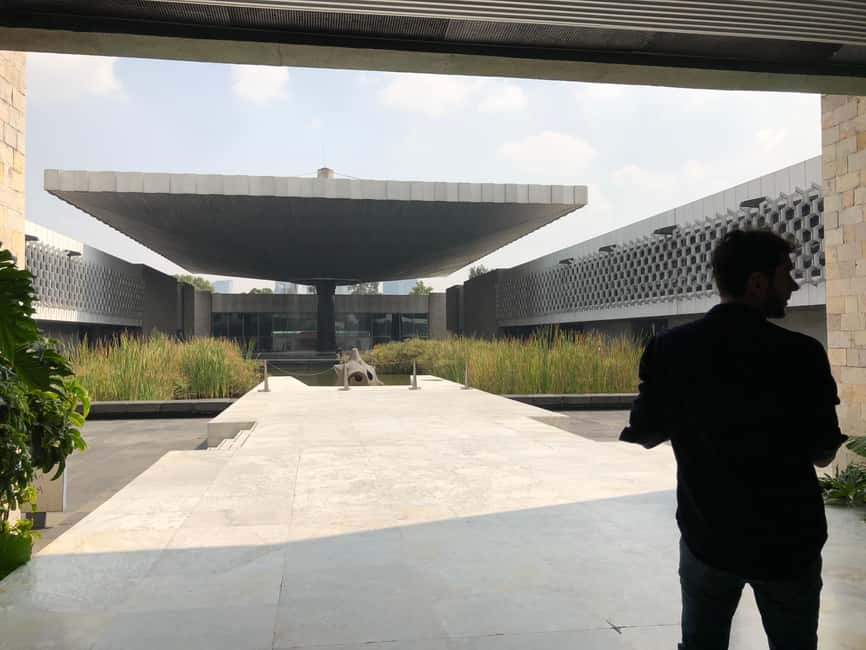
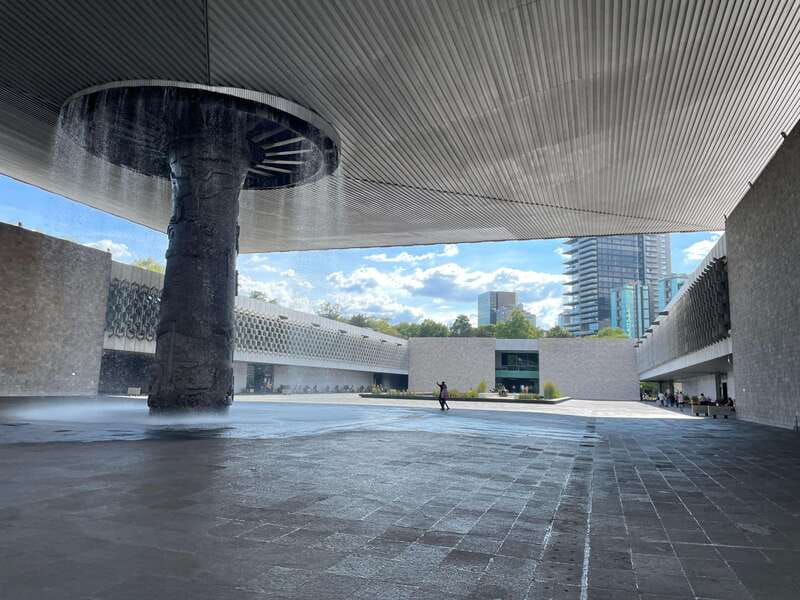
The tour begins with the museum itself. That is a smart choice. The building was designed to honor Mesoamerican cultures through its architecture, murals, symbolism, and large replicas. Before you even reach the oldest objects, you get a sense of how modern Mexico presents and interprets its ancient past.
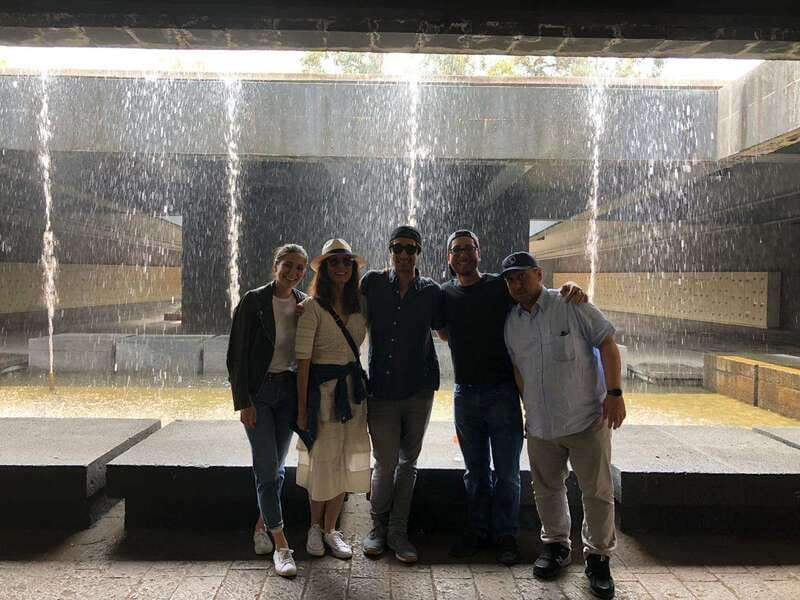
You then enter the famous courtyard and its striking water feature. The fountain is more than a convenient landmark or a photogenic spot. Your guide explains its symbolism and shows how the museum’s architecture uses scale, water, and open space to echo ideas found in Mesoamerican traditions.
This opening gives you a useful frame. You are not just walking into a warehouse of archaeological objects. You are entering a carefully designed argument about identity, memory, and the civilizations that shaped Mexico.
Take a moment here to get your bearings. The courtyard also helps break up the indoor galleries, which can otherwise feel like a steady stream of displays.
What Mesoamerica actually means
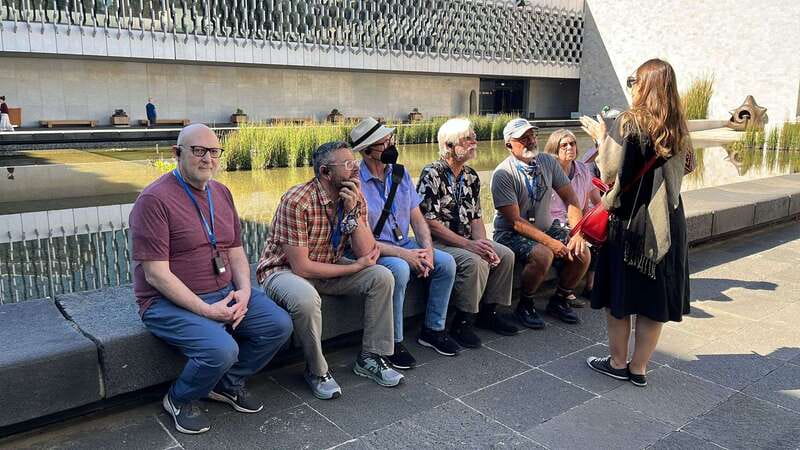
One of the first ideas you encounter is the definition of Mesoamerica developed by Paul Kirchhoff. The term does not refer to one empire or one people. It describes a broad cultural region where distant societies shared important practices and ideas.
Your guide explains common features such as agriculture, languages, calendars, cosmological beliefs, and visual symbols. This does not mean every culture was the same. It means you can spot connections even when the societies were separated by distance and time.
This distinction is useful throughout the rest of the tour. When you see a recurring symbol or artistic method, you learn to ask whether it reflects direct contact, a shared older tradition, or a similar response to the natural world.
The result is a better way to read the museum. Instead of memorizing names, dates, and rulers, you begin to notice patterns.
Agave, textiles, and the everyday side of ancient life
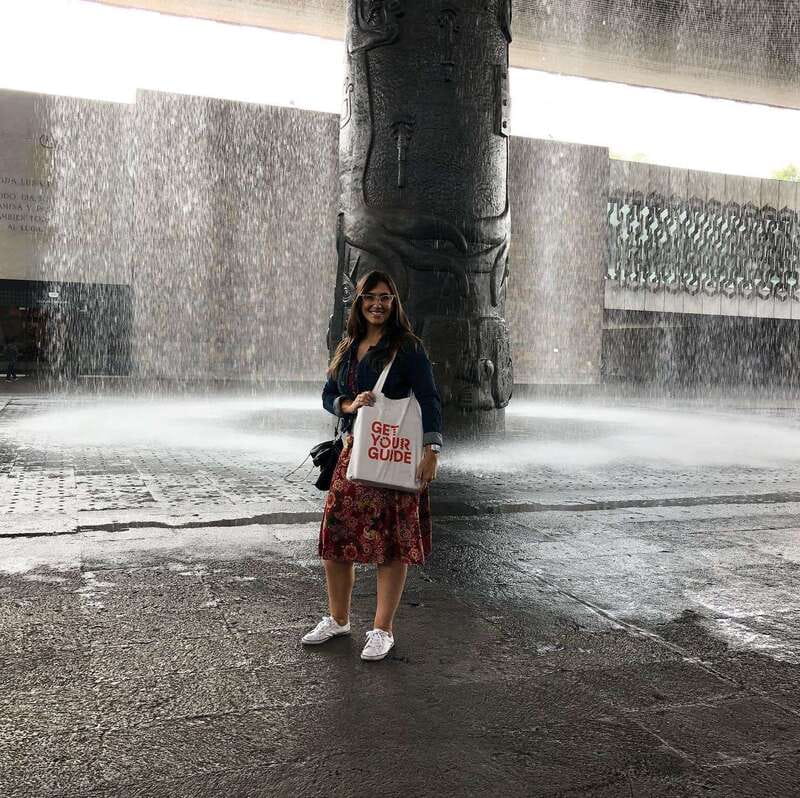
The textile displays offer a welcome change from monumental stone. Here you see looms, clothing, and woven materials from across Mesoamerica. The focus is not simply on attractive garments. It is on the skill and labor behind spinning, weaving, and dyeing.
Agave receives special attention. You learn that it supplied much more than a drink. Its fibers could be used for textiles, while other parts served in tools and household objects. Natural pigments reveal another layer of technical knowledge, showing how people turned organic materials into color.
I like this part of the route because it brings ancient cultures down to human scale. Stone temples and carved monuments are memorable, but fibers, clothing, and household tools show how people worked, dressed, and organized daily life.
It also gives you a better sense of technology. Weaving and dyeing are not minor crafts. They require planning, materials, specialized skills, and knowledge passed between generations.
A few more reviews worth comparing before you book
- Mexico City: Teotihuacan, Tlatelolco & Guadalupe Shrine Tour
★ 4.6 · 3,773 reviews - Teotihuacan Hot Air Balloon Flight from Mexico City / Volare
★ 5.0 · 3,262 reviews - Teotihuacan Private Tour from Mexico City
★ 5.0 · 1,890 reviews - Mexico City: Teotihuacan Early or Afternoon Access Tour
★ 4.6 · 1,547 reviews
Cultural exchange in clothing and ritual
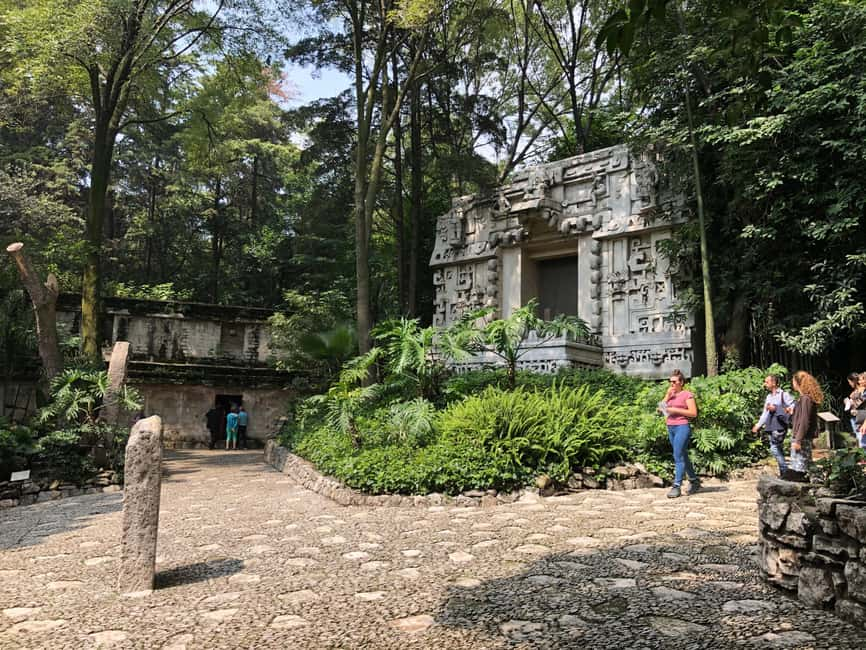
The displays of ritual clothing and ceremonial objects show how artistic identity changes through contact. Festival dress, body decoration, and ritual equipment could carry local meaning while also reflecting outside influence.
Your guide discusses cultural blending across the region. That phrase should not be taken to mean that old traditions simply disappeared. Cultures often adopted a new material, pattern, or ritual form while giving it a local purpose.
This gallery also helps explain why visual storytelling matters so much in Mesoamerican art. Colors, garments, headdresses, and body decoration could communicate status, religious roles, community identity, or participation in a ceremony.
Because the guide connects these objects to wider ideas, you are less likely to see them as costume pieces without context. You begin to read them as social and religious language.
The Olmec colossal head and the problem of labels
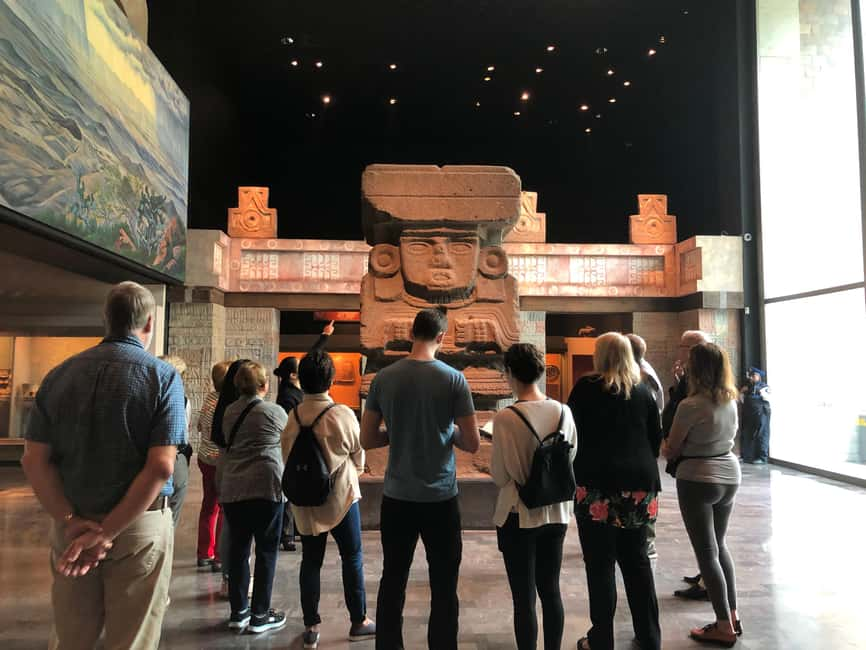
The Olmec gallery brings you face to face with one of the region’s most recognizable forms: a colossal stone head. Its scale alone commands attention, but the more interesting question is what it tells us about Olmec society.
The Olmec are often called the mother culture of Mesoamerica. Your guide adds needed care to that familiar label by explaining the influence associated with Olmec art and religious concepts while avoiding the idea that every later civilization simply copied them.
The head also raises practical questions. How was such a large stone moved? What did the facial features mean? Who was represented? Some answers remain uncertain, and that uncertainty is part of the appeal.
This is a good moment to notice how the museum presents ancient objects. A single sculpture can be admired for its form, studied as political imagery, and used as evidence of long-distance exchange. The guide helps you hold all those readings at once without turning the object into a simple mystery story.
Mexica Mexico, chinampas, and the Sun Stone
The Mexica gallery contains several of the museum’s biggest draws, including material connected to Templo Mayor, chinampas, and the Sun Stone.
The scale model of the Mexica capital is especially helpful. It shows how the city was built on an island environment with bridges, aqueducts, artificial islands, and a sophisticated hydraulic system. Modern Mexico City grew over that earlier city, so the model helps you picture what lies beneath the colonial and modern streets.
Chinampas are often described as floating gardens, but that shorthand can give the wrong impression. The guide explains them as artificial islands supported by a planned water system. Their success depended on engineering, labor, canals, and careful land use.
Then comes the famous stone commonly called the Aztec Calendar. Your guide explains why that name is misleading. The monument is better understood as a complex Mexica stone associated with time, creation, ritual, and power, rather than a simple calendar hanging on an ancient wall.
This is one of the tour’s best teaching moments. You learn how a popular nickname can flatten a complicated object. The symbols become easier to follow when the guide explains the visual sequence and the ideas behind it.
Expect this gallery to be popular. The museum’s major objects can attract crowds, and a clear guide who projects well is valuable. Hector’s strong speaking voice has even drawn the attention of nearby museum visitors, according to the supplied experiences.
Teotihuacán as a city of many peoples
The Teotihuacán section widens the story again. Instead of presenting the city as the achievement of one clearly identified group, the tour introduces it as a multicultural metropolis inhabited by people from different backgrounds.
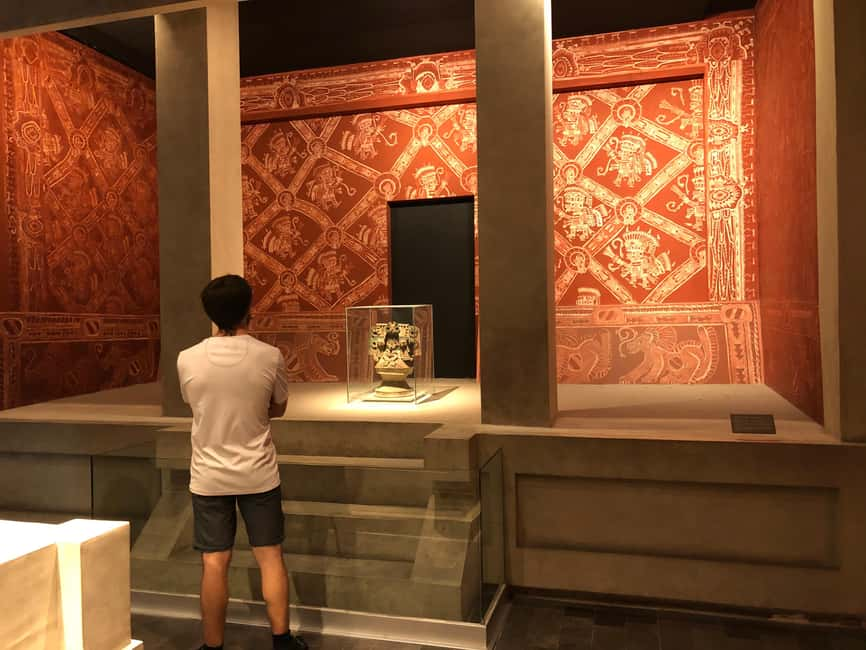
That point changes how you view the city’s art and planning. Teotihuacán was a major center with refined ceramics, obsidian work, murals, and painted architectural decoration. Its influence reached far beyond the city itself.
You also hear about the questions surrounding its rise and decline. Teotihuacán’s political structure, population, and eventual fall remain subjects of study. A good guide will not pretend that every mystery has a neat answer.
The objects here reward close looking. Ceramics can reveal daily habits and artistic choices. Obsidian points to technical skill and trade networks. Mural fragments and colorful architectural replicas help you imagine a city that was not made of bare gray stone.
For many people, this is where the tour’s central theme becomes clearest. Mesoamerica was connected by movement, exchange, and shared ideas, yet each place developed its own character.
Maya writing and the story behind decipherment
The Maya gallery brings the tour to some of the most finely detailed works in the museum. Ceramic portraits, decorated vessels, and jade carvings show a high level of craftsmanship, but the guide does not leave the discussion at beauty.
You learn about Maya writing and how it was deciphered. The story reaches across colonial archives, missing manuscripts, and the work of a Russian soldier who served during World War II. It is a reminder that understanding the ancient Maya required many kinds of evidence and an unusual cast of scholars.
This part is especially useful if you have seen Maya inscriptions but never understood how they functioned. Writing was not just decoration. It recorded names, events, titles, and ideas about power.
Natalia’s use of visual aids is helpful here. Scripts and carved signs can be hard to follow in a glass case. Seeing the symbols explained step by step makes the subject less intimidating, even if you arrive with no background in Maya studies.
The museum cannot give you every detail in one visit. Still, the tour provides a solid foundation for understanding why Maya writing was so difficult to read and why its decipherment changed the study of the civilization.
Pakal’s tomb replica and a shocking museum story
The tour ends at a replica of Pakal’s tomb, one of the museum’s most dramatic spaces. This is a fitting final stop because it brings together royal power, funerary ritual, art, and the Maya view of the afterlife.
The replica lets you see how the tomb was arranged without relying on a small photograph or a distant view. Your guide explains why Pakal’s burial became so important and how the objects connected to the ruler’s status and beliefs.
The ending also includes a story from the museum’s own past: the 1985 Christmas Eve heist. Pakal’s mask and other treasures were stolen that night, adding a modern crime story to the ancient material.
It is an unusual way to close a museum tour. You move from ancient burial practice to questions of preservation, security, and cultural ownership. The story makes the final gallery memorable, though visitors who prefer a quiet ending may find the crime tale a sharp change of mood.
Is $175 per person good value?
At $175 per person, this is not a budget museum visit. The price includes the museum ticket and a guide with a graduate degree in history or art history. Food, drinks, transportation, and hotel pickup are not included.
The value depends on how you use the three hours. If you only want to see the Sun Stone and take a few photographs, admission on its own will cost much less. If you want to understand why the objects matter, how the societies relate, and what scholars still debate, the guide adds the main value.
The museum is large enough that a self-guided visit can become tiring or unfocused. Several people found that a guide helped them avoid feeling lost and put each gallery in context. One tour even ran to about four and a half hours, so you should leave extra time if the discussion becomes lively.
You can stay in the museum after the guided portion, according to the experience details. That makes the tour more useful because you can return to a favorite gallery or continue at your own pace.
Timing, language, and who should book
The experience lasts three hours, with starting times based on availability. Since transportation is not provided, plan your route to the museum yourself and arrive at the main lobby near the ticket booth. Look for the WALK MEXICO logo.
Tours are offered in English and Spanish. English-language ability receives repeated praise, including clear explanations and strong speaking voices. An adult must accompany children, and the museum is wheelchair accessible.
I would especially recommend this tour for:
- First-time visitors to the museum
- People with a serious interest in archaeology, art, or Mexican history
- Families who want children to stay engaged through stories and visual aids
- Anyone who finds large museums overwhelming
- Visitors who prefer asking questions instead of reading every label alone
I would be more cautious if you want a slow, gallery-by-gallery study of the collection. Three hours gives you a guided route through major areas, not a full examination of every room.
Cancellation is free up to 24 hours before the start time, and you can reserve now and pay later. Those options help if your Mexico City schedule is still shifting.
Should you book the Anthropology Museum tour?
Book it if you want the museum to make sense as one connected story. The strongest part is not simply access to famous objects. It is the explanation around them, from agave fibers and textiles to chinampa engineering, Olmec influence, Teotihuacán’s mixed population, Maya writing, and Pakal’s tomb.
The $175 price is high for a three-hour activity, but the small group and academic guide make it easier to justify for serious museum visitors. Natalia and Hector are both praised for clarity, humor, patience, and enthusiasm, with Natalia’s visual materials adding extra help.
Skip it if you prefer wandering alone or if your budget is tight. For most first-time visitors who want context rather than a quick checklist of masterpieces, this is a strong way to begin your Mexico City museum experience.
FAQ
How long does the Anthropology Museum tour last?
The scheduled duration is three hours. Some visits may run longer if the group has many questions, so avoid booking a tight appointment immediately afterward.
What is included in the price?
The $175 per person price includes the museum ticket, an expert guide with a graduate academic degree in history or art history, and headsets for large groups.
Is transportation included?
No. Transportation, food, drinks, pickup, and drop-off are not included. You meet your guide inside the Anthropology Museum.
Where do I meet the guide?
Meet near the museum’s main lobby and ticket booth. The guide will be carrying the WALK MEXICO project logo.
Is the tour available in English?
Yes. The tour is offered in English and Spanish. English-language explanations receive especially strong praise for clarity.
Can I cancel or reserve without paying immediately?
You can cancel up to 24 hours in advance for a full refund. Reserve now and pay later is also available.
Just added around Mexico
- Private Tour with Archaeologist and VR Experience at Teotihuacan★ 5.0 · 34 reviews
- Neon Bike Party – Private Bike Tour★ 4.5 · 34 reviews
- Bike tour to the Tule Tree and the Gastronomic Market★ 5.0 · 34 reviews
- One Way Private Transfer Cancun Int Airport – Playa del Carmen★ 5.0 · 34 reviews
- Mexico City: Full-Day Taxco and Cuernavaca Tour★ 4.1 · 34 reviews
- New Attraction: Guinness World Record Sky Bike in Los Cabos★ 4.5 · 34 reviews
- Isla Mujeres Tour with Open Bar Food and Snorkeling★ 4.0 · 34 reviews
- 1.5 hours Snorkeling at Tulum’s paradise reef★ 4.5 · 34 reviews
Museums, compared.
Xochimilco, Coyoacan, Frida Kahlo Museum & Murals Tour
Read our review →
Chapultepec Castle & Anthropology Museum Tour
Read our review →
Frida Kahlo VIP [Museum Tickets Included] Bike, Markets & Churros
Read our review →

Frida Kahlo VIP [Museum Tickets Included] Walk, Markets & Churros
Read our review →
EXCLUSIVE TOUR Frida Kahlo Museum – SMALL GROUPS
Read our review →
Coba Multun-Ha Cenote Tulum and Mayan Museum Small Group
Read our review →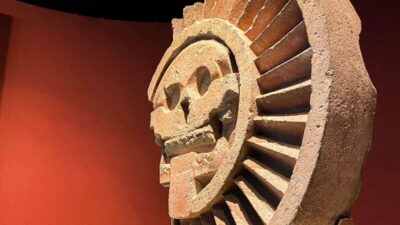
Browse the lists this tour appears in