
Reviewed · WALKING TOURS
Walking Tour: Temples and Convents (Western Zone)
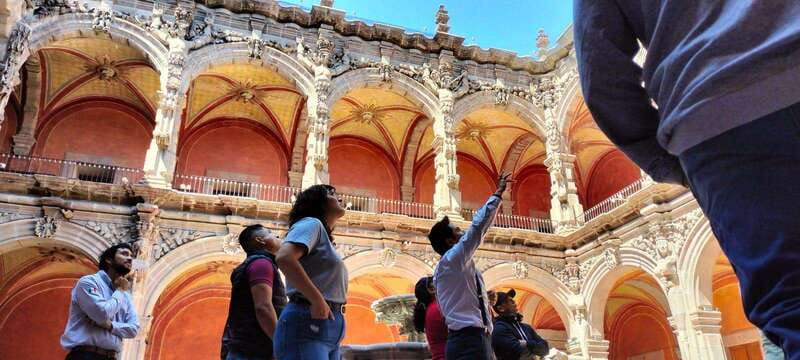
Querétaro rewards slow walking. This two-hour Western Zone tour brings you close to the city’s religious art and colonial architecture, from the former San Francisco convent to the ornate Temple of Santa Rosa de Viterbo. I like the focus on baroque churches and convent history, and I also like the chance to ask questions rather than simply follow a script. The main consideration is that two hours can feel short when there are so many monuments and stories packed into the route.
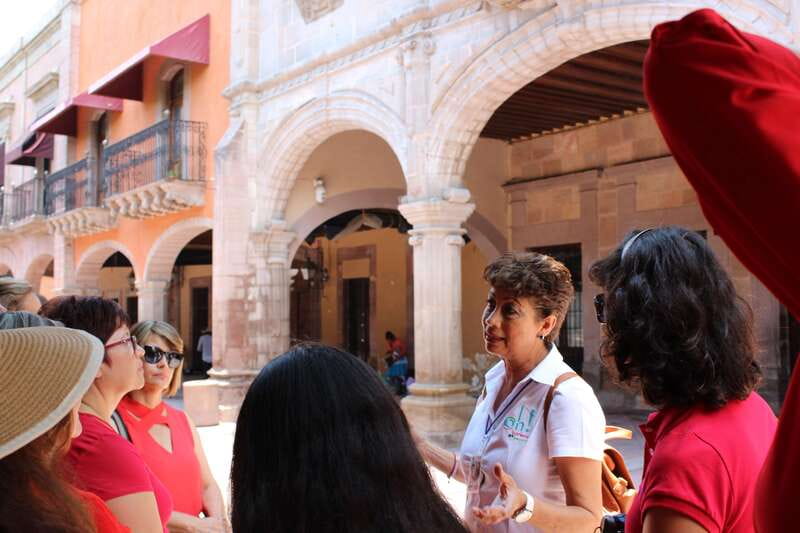
The guides are the real strength. Carlos, Jesús, Jorge, Julio, and Sara have all led tours praised for clear explanations, patience, humor, and strong knowledge of Querétaro and Mexican history. One visitor found the tour useful as a Spanish practice session with Carlos, while others appreciated that Jesús and Julio adjusted the walk to match their interests.
- A two-hour route through Querétaro’s Western Zone, centered on temples, convents, art, and religious history.
- Key stops include San Francisco, Santa Rosa de Viterbo, Capuchinas, San Agustín, and Santa Clara.
- Live guiding is offered in Spanish and English, with several guides praised for excellent English.
- The price is $23 per person, with the guide included but food and drinks left to you.
- The route is wheelchair accessible, and free cancellation is available up to 24 hours before the tour.
- Best booking tip: take it early in your Querétaro visit so the city’s monuments make more sense afterward.
In This Review
- Why the Western Zone Matters
- San Francisco and the First Religious Footprint
- Santa Rosa de Viterbo and Baroque Detail
- Capuchinas, San Agustín, and Santa Clara
- Stories, Questions, and the Guide You Get
- How Much Value Do You Get for $23?
- The Best Time to Take This Walk
- Who Will Enjoy It Most?
- Western Zone or Eastern Zone?
- Should You Book the Temples and Convents Tour?
- FAQ
- How long is the Temples and Convents walking tour?
- How much does the tour cost?
- Which part of Querétaro does this tour cover?
- Which monuments are included in the Western Zone route?
- Is a tour guide included?
- What languages are available?
- Is the tour wheelchair accessible?
- Are food and drinks included?
- Can I cancel the tour for a refund?
- Is there an Eastern Zone tour too?
Why the Western Zone Matters
Querétaro’s historic center is not just a collection of pretty facades. Its churches and convents trace the growth of Catholic orders, the spread of Spanish colonial culture, and the development of local art and architecture.
The Western Zone gives you that story through religious buildings. The route begins with the former Convent of San Francisco, linked to the first religious order to arrive in Querétaro. From there, it moves through buildings shaped by different orders and periods, showing how the city’s spiritual life influenced its streets, public spaces, and artistic traditions.
I like this approach because it gives the old center a clear theme. Instead of racing from one monument to another, you can compare the character of several religious complexes and hear why each one mattered.
The tour description also mentions an Eastern Zone route, which follows Querétaro’s foundation and political history. That is a separate focus. If you want the temples and convents described here, confirm that you are booking the Western Zone rather than the Eastern route.
San Francisco and the First Religious Footprint
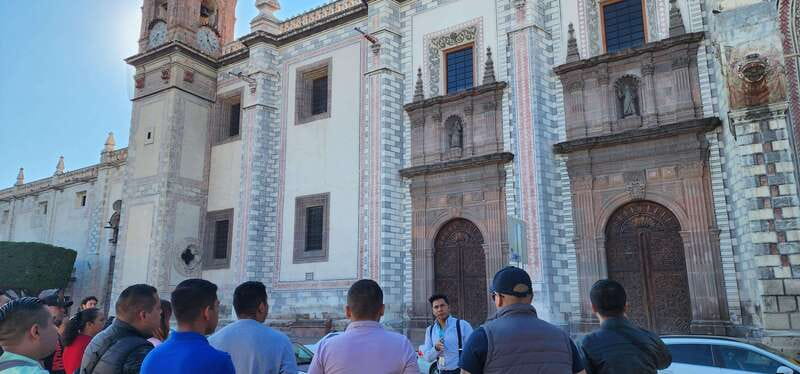
The former Convent of San Francisco is an important opening stop because it connects architecture with the arrival of religious orders in Querétaro. The building represents the early Catholic presence in the city and gives your guide a natural place to explain evangelization during the colonial period.
This is where the route’s wider theme begins. You are not only looking at stonework, arches, and church fronts. You are learning how religious institutions helped shape the city’s identity and daily life.
A good guide can make this kind of stop useful even if you are not an architecture specialist. Jesús was praised for explaining the importance of people, places, and events in a way that connected Querétaro to the wider story of Mexico. Carlos was also singled out for interesting facts, anecdotes, and theories about the sites along the way.
Expect plenty of history in a short period. That is part of the appeal, but it also means you should not expect a long interior visit at every church. The experience is primarily a guided walk through the historic center, with the buildings and their stories as the focus.
More guided walks:
- Historic Downtown Walking Tour
★ 5.0 · 1,289 reviews - Playa del Carmen Walking Food Tour
★ 5.0 · 1,274 reviews - Mexico City: Historic Downtown Walking Tour
★ 4.8 · 1,039 reviews
Santa Rosa de Viterbo and Baroque Detail
The Temple of Santa Rosa de Viterbo is the architectural showpiece of this route. Its baroque design gives you a chance to see the decorative style that made colonial Querétaro so distinctive.
Baroque architecture can look overwhelming at first. The point of a guide is to help you notice how the decoration works: the movement of the facade, the layering of detail, and the way religious buildings were designed to create an emotional response.
Santa Rosa de Viterbo is especially valuable for visitors who enjoy art and architecture but do not want a technical lecture. The guides on this tour are praised for making complex subjects understandable and for answering questions across history, culture, and art.
Claudia’s private walk with Jesús is a good example of how the experience can change with the group. She had a strong interest in history, architecture, and art, so Jesús gave those subjects more attention and adjusted the pace around her questions. That kind of flexibility can make the stop much more rewarding than a fixed speech delivered to everyone in the same way.
The drawback is time. Santa Rosa de Viterbo deserves attention, and the route still has several other major buildings to cover. If you want to photograph every detail or discuss baroque design at length, you may wish the tour lasted closer to three hours.
Capuchinas, San Agustín, and Santa Clara
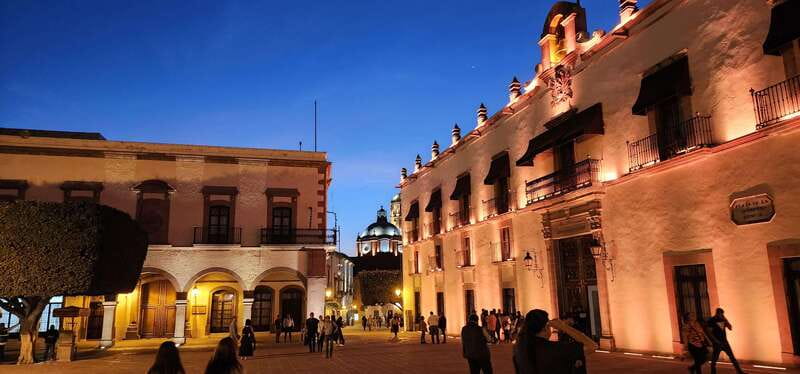
The Western Zone continues through more religious landmarks, including Capuchinas, San Agustín, and Santa Clara. Each adds another piece to the story of convent life and the role of religious orders in colonial Querétaro.
The value here is comparison. One church alone can leave you with a general impression of old Mexico. Several buildings, explained in sequence, help you see changes in style, purpose, and religious influence.
Capuchinas adds to the convent story, while San Agustín and Santa Clara broaden the architectural picture. Your guide can point out features that are easy to pass without context, then connect them to the city’s cultural development.
This is also where the tour benefits from a small group or a private departure. Several people had a one-on-one experience because they were the only participants booked at their time. Jesús then used the extra flexibility to skip sites they had already seen and add more useful context.
You should not assume every tour will become private. Group size can change. Still, the guides appear accustomed to adapting when possible, and that is helpful if you have already visited part of the center.
The walking pace has generally been comfortable. One participant specifically liked the pace and the number of sites covered. Another praised Sara for seeking shade during a hot afternoon, checking on comfort, and allowing time to buy drinks. Those details matter in Querétaro, where a warm day can make a stone-paved walk feel longer than expected.
Stories, Questions, and the Guide You Get
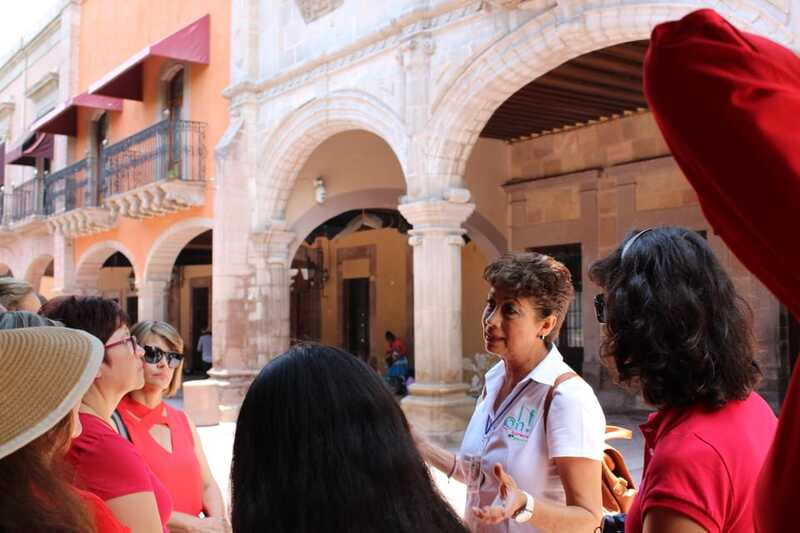
The route works best when you treat it as a conversation. The monuments provide the setting, but the guide supplies the meaning.
Jorge has been praised for excellent English, a personable manner, and the ability to place each site in its wider historical setting. Jesús is repeatedly described as a strong storyteller with wide-ranging knowledge of Querétaro, Mexico, and related subjects. Carlos is praised for his patience and interesting anecdotes, while Julio receives credit for friendly, informative tours that adjust to visitor interests.
Those names are useful when you book, but guide assignment may vary. The important point is the style of service: questions are welcome, and the walk is not described as a rigid, packaged presentation.
You can ask about architecture, colonial society, Mexican history, or modern Querétaro. One guide also answered practical questions about the city as it is today, which makes the tour more useful than a purely historical lecture.
The language setup is another advantage. The tour is available in Spanish and English. One Canadian participant used the walk partly as a Spanish lesson, switching into Spanish when possible. If you speak some Spanish, you may be able to make the outing more interactive, but English support is available.
There are a few realistic limitations. A guide was about 20 minutes late on one occasion, though the delay was not believed to be his fault. Another person found it hard to hear because the guide was ill and wearing a mask. These were isolated concerns, but they remind you to arrive with patience and to speak up if you cannot hear clearly.
A different sort of day out around Mexico:
- Chichen Itza, Cenote, and Valladolid Tour
★ 5.0 · 24,293 reviews - Chichen Itza, Cenote & Valladolid Tour with Tequila and Lunch
★ 4.5 · 15,789 reviews - Teotihuacan, Guadalupe Shrine & Tlatelolco Day Tour with Lunch
★ 5.0 · 11,603 reviews - Cabo Beach Camel Ride, Mexican Buffet and Tequila Tasting
★ 5.0 · 8,815 reviews
How Much Value Do You Get for $23?
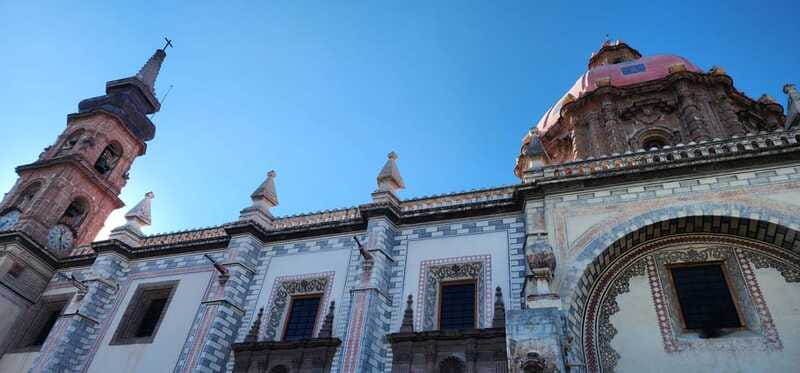
At $23 per person, this is a reasonable price for a two-hour, guide-led introduction to the historic center. You are paying for local interpretation, not transportation, meals, or admission extras.
The strongest value comes from the context. You could walk past San Francisco, Santa Rosa de Viterbo, Capuchinas, San Agustín, and Santa Clara on your own. You would still see beautiful buildings. You would miss much of the explanation about their religious orders, colonial role, artistic style, and place in Querétaro’s development.
The price is especially fair if you are new to the city. Several participants used the walk as their first serious orientation to Querétaro and felt better prepared to explore the center afterward.
You should factor in what is not included. Food and drinks are your responsibility, so carry water or plan a short purchase during the walk. The duration is fixed at two hours, and the route is built around walking rather than extended time inside one monument.
Reserve now and pay later is available, which helps if your plans are still shifting. You can also cancel up to 24 hours in advance for a full refund. These policies make the $23 commitment fairly low-risk.
The Best Time to Take This Walk
I would schedule this tour near the start of your Querétaro stay. It gives you a working map of the center and helps you recognize the buildings when you return on your own.
Loretta offered particularly useful advice: take the tour on your first day because it provides a framework for independent wandering. She also pointed out that museums may open only on certain days, so an early tour helps you plan the rest of your visit.
Morning or late afternoon may be more comfortable than the hottest part of the day, although the available starting times can vary. A March afternoon at 4 p.m. was described as pleasant, while Sara took care to manage heat and shade during a May walk.
Wear comfortable shoes. This is a two-hour city walk, not a quick visit to one church. Bring water, especially in warm weather, and leave room in your schedule for photographs and questions.
The route is listed as wheelchair accessible. If accessibility is important for your particular needs, it is still sensible to confirm the meeting details and route conditions when checking availability.
Who Will Enjoy It Most?
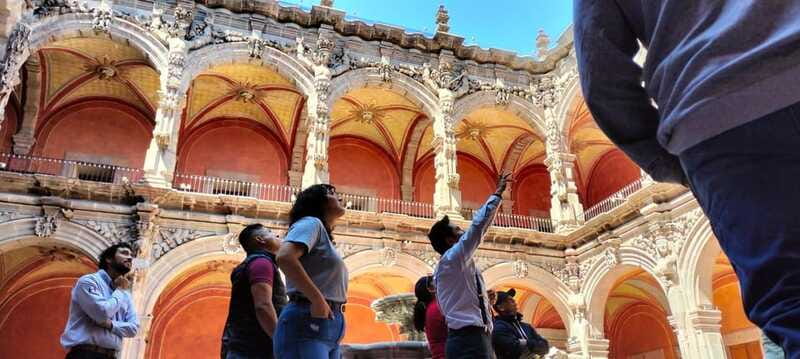
This tour fits you best if you like learning the reason behind what you see. History fans will get a useful account of Querétaro’s colonial development, while architecture lovers will have plenty to examine in the baroque churches and convents.
It also suits first-time visitors who want a clear introduction without spending half a day in a museum. The two-hour length is manageable, and the route covers several major monuments.
Art lovers may especially enjoy Santa Rosa de Viterbo and the comparisons between the different religious buildings. Spanish learners can use the bilingual format to practice, while English speakers can expect clear explanations from guides praised for strong language skills.
Families and mixed-interest groups may also find the walk practical because the guide can answer different kinds of questions. If one person wants architecture and another wants Mexican political history, the conversational format may serve both.
This may be less suitable if you want long, quiet visits inside each church or a highly specialized academic tour. The route covers a lot, and the short duration requires movement. It is best viewed as an informed orientation, not a full study of every convent and temple.
Western Zone or Eastern Zone?
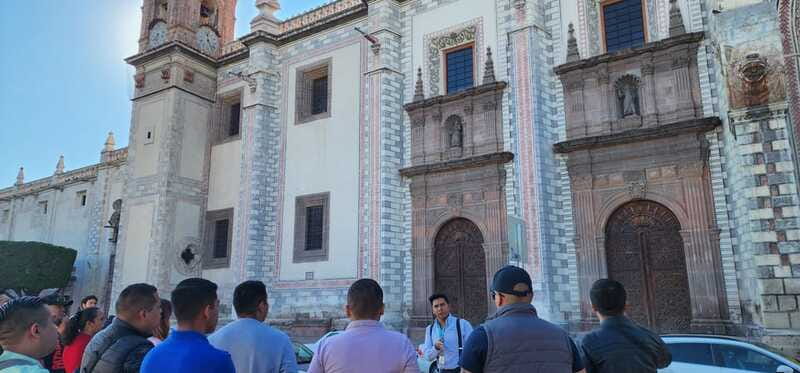
Choose the Western Zone if your priority is religious architecture, baroque design, convent history, and the cultural role of Catholic orders.
Choose the Eastern Zone if you are more interested in the city’s foundation, the viceroyalty period, evangelization at Plaza Fundadores, the Querétaro aqueduct, and Casa de la Corregidora. That route follows the city’s political and civic story rather than concentrating on temples.
The two themes complement each other. If you have enough time, taking both would give you a wider understanding of Querétaro. If you are booking only one, make sure the zone matches your interests. The Western route is the clear choice for church interiors, convent history, and baroque architecture.
Should You Book the Temples and Convents Tour?
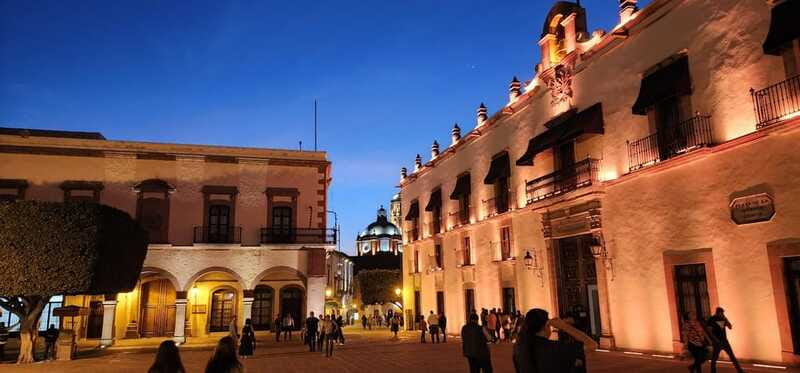
Yes, I would recommend it for a first visit to Querétaro, especially if you want a short, useful introduction to the historic center.
The strongest reasons are the guides, the number of important religious monuments covered, and the way the route connects architecture with Mexican history. At $23, the cost is modest compared with the time you save trying to make sense of the city alone.
Book it early in your stay, carry water, and ask questions. If you want more time at each church, plan a return visit after the walk. For visitors focused on the aqueduct, independence history, and the city’s foundation, choose the Eastern Zone instead. For baroque beauty and convent stories, the Western Zone is the better fit.
FAQ
How long is the Temples and Convents walking tour?
The tour lasts two hours.
How much does the tour cost?
The price is $23 per person.
Which part of Querétaro does this tour cover?
This experience covers the Western Zone of Querétaro, with a focus on temples, convents, religious history, and architecture.
Which monuments are included in the Western Zone route?
The route includes the former Convent of San Francisco, the Temple of Santa Rosa de Viterbo, Capuchinas, San Agustín, and Santa Clara.
Is a tour guide included?
Yes. A live tour guide is included.
What languages are available?
The tour is offered in Spanish and English.
Is the tour wheelchair accessible?
Yes, the activity is listed as wheelchair accessible.
Are food and drinks included?
No. Food and drinks are not included.
Can I cancel the tour for a refund?
Yes. You can cancel up to 24 hours in advance for a full refund.
Is there an Eastern Zone tour too?
Yes. A separate Eastern Zone route focuses on Querétaro’s foundation, the viceroyalty period, Plaza Fundadores, the aqueduct, and Casa de la Corregidora.
Just added around Mexico
- Las Coloradas Pink Lake & Rio Lagartos Guided Tour★ 4.5 · 103 reviews
- Cozumel zipline thrill adventures★ 4.5 · 103 reviews
- Boat tour through the mangroves of Celestún and Playa from Merida★ 4.5 · 103 reviews
- LDS Tour to Chichen Itza + Cenote★ 5.0 · 103 reviews
- Discovery Scuba Dive.★ 5.0 · 103 reviews
- Butterflies, City tour, tequila, and beach (kids free)★ 4.5 · 104 reviews
- Cancun Jungle Tour: Tulum, Cenote Snorkeling, Ziplining, Lunch★ 4.5 · 104 reviews
- Mountain Tour Puerto Vallarta Electric Bikes★ 5.0 · 104 reviews
Walking Tours, compared.

![Frida Kahlo VIP [Museum Tickets Included] Walk, Markets & Churros](https://assets.mexicanguides.com/wp-content/uploads/frida-kahlo-vip-museum-tickets-included-walk-markets-churros-400x267.jpg)
Frida Kahlo VIP [Museum Tickets Included] Walk, Markets & Churros
Read our review →

Puerto Vallarta’s Best Canopy Zipline + Jorullo Bridge walk!
Read our review →
Historical and Cultural Walking Tour of San Miguel de Allende
Read our review →
Tacos and Tequila Walking Tour with Taste of Miguel
Read our review →Browse the lists this tour appears in