
Reviewed · WORKSHOPS
Oaxaca: Oaxacan Mole Workshop with a Traditional Cook
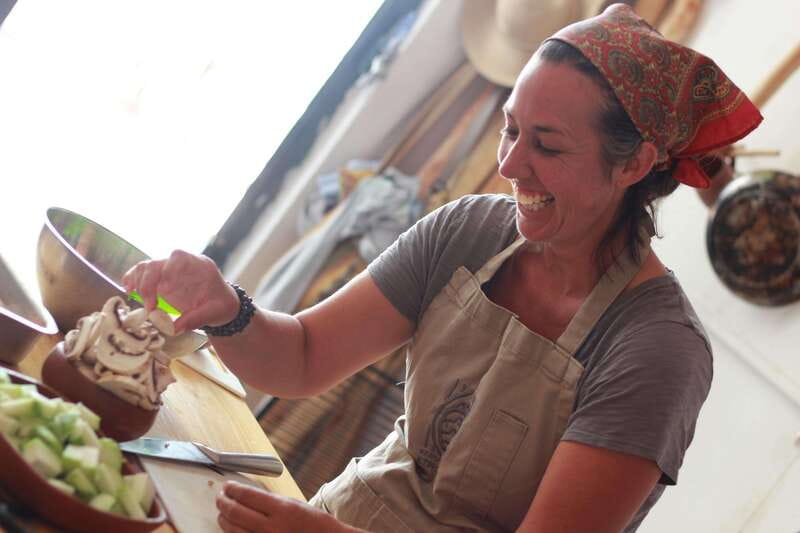
Mole is Oaxaca on a plate. This 3.5-hour workshop takes you from a local market to a working kitchen, where you help choose ingredients, prepare mole, make tortillas, and eat what you cooked. I like the market visit, which gives the food a local setting, and the hands-on cooking, which keeps beginners busy rather than watching from the sidelines. One thing to consider: the class may involve a fair amount of walking and standing, and some sessions have been larger than the advertised four-person limit.
I also like the cultural side of the experience. Guides such as Victor Ramirez and Quetzalli explain Zapotec traditions, regional produce, cacao, quesillo, chiles, and the meaning behind local foods. The main drawback for serious mole students is that the recipe can vary. Some groups prepare a complex black mole, while others make a simpler green mole with much of the work focused on tortillas, quesadillas, and salsas.
In This Review
- Key points at a glance
- Starting five blocks from Oaxaca’s Zócalo
- The market walk puts mole in context
- From raw ingredients to a pot of mole
- Tortillas and quesadillas make the class practical
- A shared meal finishes the lesson
- The teaching style depends on the guide
- Is $64 a fair price?
- Who will enjoy this Oaxaca cooking class?
- Practical tips before you go
- Should you book the Etnofood mole workshop?
- FAQ
- Where does the Oaxacan mole workshop meet?
- How long does the cooking experience last?
- What languages are available?
- How many people can join the class?
- What food will I make?
- Is mezcal included?
- What should I bring?
- Is the activity suitable for children or people with limited fitness?
Key points at a glance
- A local market begins the lesson: Walk from the downtown meeting point to a small market and help select the produce, chiles, herbs, fruit, and other ingredients.
- You cook more than mole: Depending on the day, you may prepare salsa, guacamole or guacachile, tortillas, quesadillas, rice, vegetables, and dessert.
- Victor Ramirez is a favorite guide: His warm teaching style, humor, English skills, and pride in Zapotec culture add real personality to the class.
- The cooking is genuinely hands-on: You chop, fry, blend, mix, press masa, cook, and serve rather than simply watching a chef work.
- The meal is part of the price: You finish by eating the food you prepared, with seasonal fruit water and mezcal for adults.
- Ask about the group size and mole recipe: The activity is advertised for up to four people, but some sessions have accommodated larger groups.
Starting five blocks from Oaxaca’s Zócalo
The meeting point is easy to locate in central Oaxaca: Xicotencatl Street 609, about five blocks from the City Zócalo. Look for the Foodlab with the FILOTEO sign outside and a large dog on the facade.
Transportation is not included, so you make your own way there. From central hotels, this should be a straightforward walk, but allow enough time to find the entrance. Comfortable shoes matter because the experience includes a walk to the market, kitchen work, and several hours on your feet.
The class lasts about three and a half hours. Starting times vary, so check availability when booking. English and Spanish instruction is offered, and the small-group format is intended to give you a chance to ask questions and receive help as you work.
The advertised maximum is four participants. That is an excellent size for a cooking class because everyone should have a useful task and a clear view of the preparation. Still, several sessions have had larger groups, including one with nine people. If personal attention is important to you, confirm the expected group size before paying.
A few more reviews worth comparing before you book
- Flavors of Oaxaca: Cooking Class with No Set Menu and Local Market Tour
★ 4.5 · 333 reviews - Oaxacan Vegetarian Cooking Class
★ 5.0 · 235 reviews - Traditional Cooking Class with Minerva Lopez
★ 5.0 · 197 reviews
The market walk puts mole in context
The first part of the workshop takes place outside the kitchen. You walk to a local market to select the ingredients needed for the meal.
This is more useful than a quick shopping stop. The guide explains local fruits, vegetables, herbs, chiles, cacao, quesillo, and other regional products as you see them in their everyday setting. You may also taste some market foods, including different types of quesillo. That gives you a better sense of how Oaxacan cooking begins, long before anything reaches a blender or frying pan.
Victor Ramirez has received particular praise for explaining ingredients in clear English and connecting food with Zapotec customs. Other guides, including Quetzalli and Wendy, have also led groups through the market and kitchen. The teaching is not limited to naming ingredients. You hear why certain foods matter locally, how products are selected, and how small producers fit into Oaxaca’s food culture.
The market is described as a quieter local market away from the main tourist route. That makes the stop feel useful and grounded, though you should not expect a formal sightseeing tour or a grand historic market building. The value is in learning what you are buying and why it belongs in the meal.
The walk requires a moderate level of fitness. This experience is not a good fit if you have back problems, limited mobility, or difficulty standing and walking for several hours.
From raw ingredients to a pot of mole
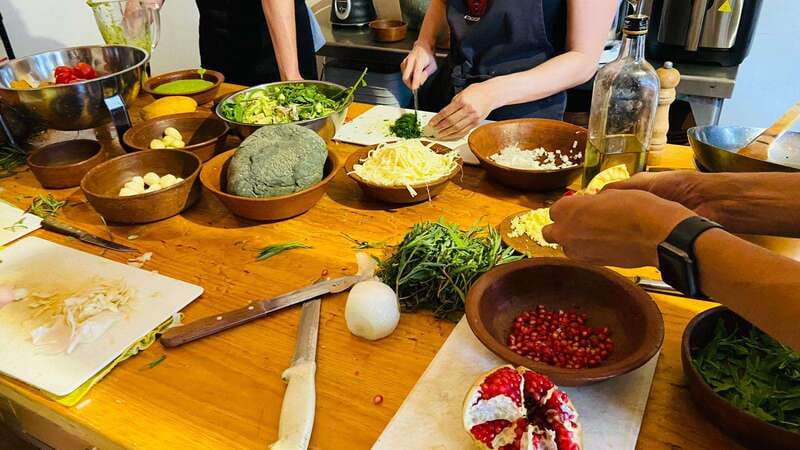
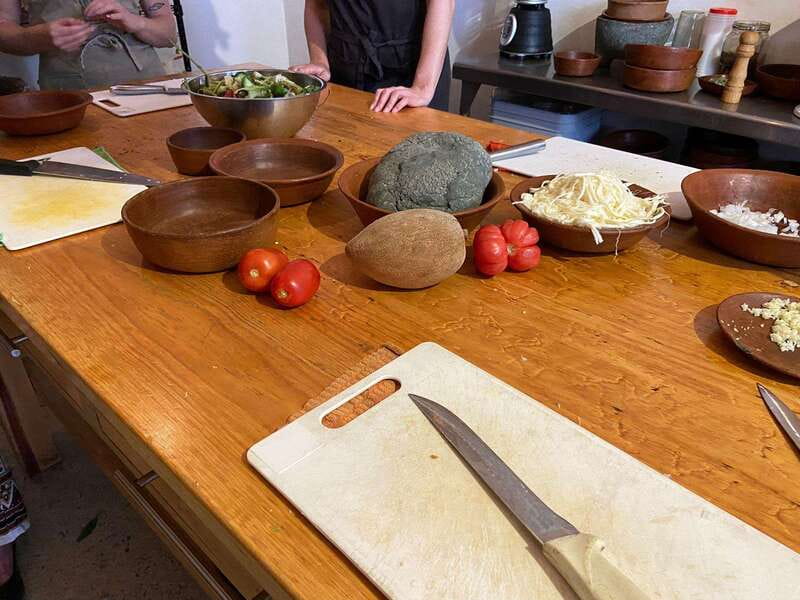
Back at the Foodlab, you move into a clean, modern kitchen and begin preparing the meal. The class is designed to keep you involved. You might clean produce, chop ingredients, toast or fry components, blend sauces, prepare vegetables, and help bring several dishes together.
The centerpiece is mole. Oaxacan mole is not one single recipe, and that is important to understand before booking. The dish can range from a long, complex preparation to a lighter green version built around herbs and vegetables. The exact mole served appears to depend on the instructor, season, and class plan.
Some participants have made black mole and found the process especially memorable. Others have prepared green mole, which involved seasoning, chopping, and blending rather than the long series of steps associated with darker moles. If your main goal is to study black mole in detail, ask which recipe will be taught on your date.
You also learn about several Oaxacan sauces made with chiles and regional ingredients. Depending on the session, the menu has included pico de gallo, salsa, guacachile, guacamole, rice, and cooked vegetables. A locally grown seasonal ingredient may be added as a surprise, perhaps an herb or unusual fruit.
This variety is one of the class’s strengths. You leave with a wider picture of Oaxacan cooking instead of treating mole as an isolated dish. The tradeoff is that more dishes can mean less time devoted to any single recipe.
Tortillas and quesadillas make the class practical
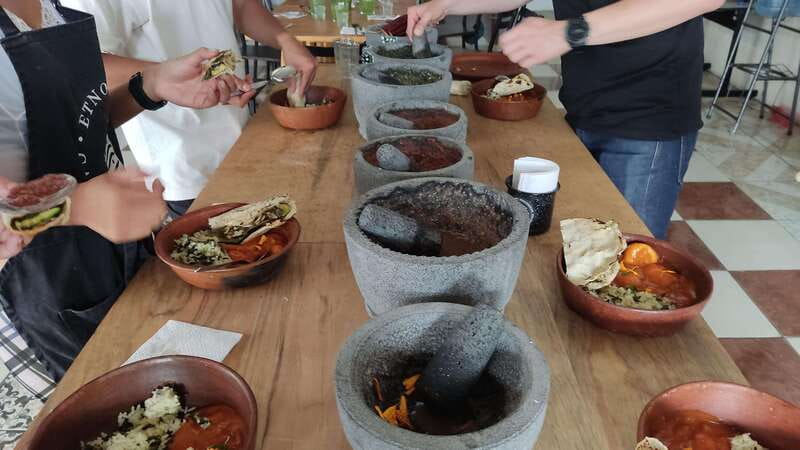
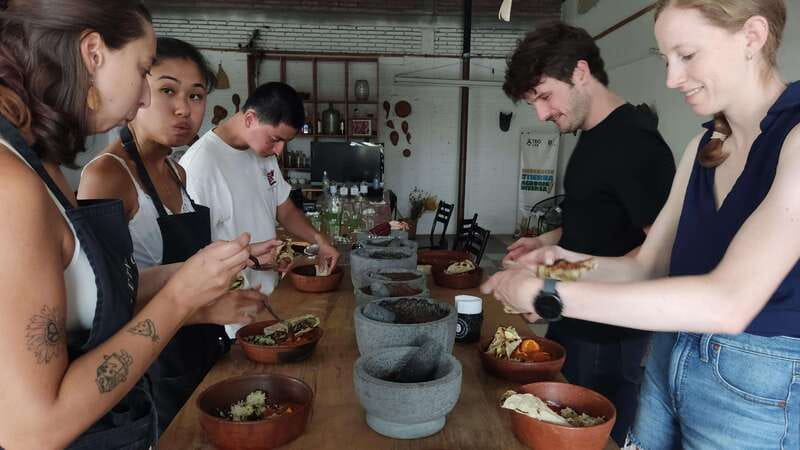
Making tortillas is one of the most enjoyable parts of the workshop. You work with prepared masa, shape it, and press your own tortillas before cooking them. Quesadillas are also part of many sessions, often with local cheese such as quesillo.
The process gives you a feel for the food that a recipe card cannot provide. You learn how masa behaves, how much pressure to use, and how tortillas fit into the meal. Several participants have found this especially rewarding, even when they arrived with little or no cooking experience.
There is a practical limit here. The class uses modern kitchen tools, including a blender and stove, and the masa is pressed rather than ground from whole maize. That is perfectly reasonable for a short urban workshop, but it is not a full demonstration of every traditional technique.
You may also prepare more food than your own party could eat. One small group produced enough for six to eight people. That makes the final meal generous, but it can leave the class feeling longer than necessary if you prefer a tighter lesson with less preparation.
A different sort of day out around Oaxaca:
- Hierve el Agua, Tule Tree, Mitla and Mezcal Distillery Tour
★ 4.5 · 1,094 reviews - Explore Hierve el Agua, Mitla, Tule, Textile and Mezcal for a day
★ 5.0 · 1,043 reviews - Monte Alban Guided Half Day Tour
★ 5.0 · 880 reviews - Oaxaca de Juarez: Monte Alban Half-Day Tour
★ 4.7 · 492 reviews
A shared meal finishes the lesson
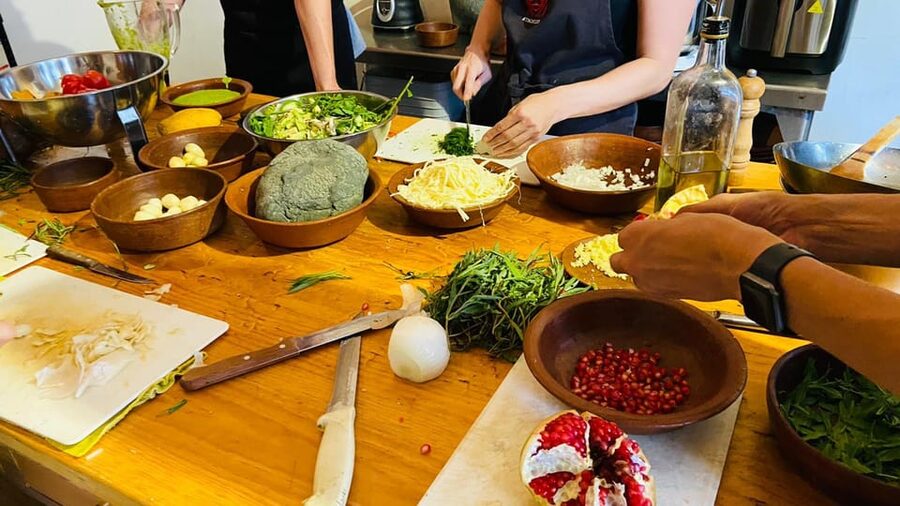
Once the cooking is done, everyone sits down to eat. This is not a token tasting of one spoonful of mole. The meal can include the mole, tortillas, quesadillas, salsas, rice, vegetables, and a typical Oaxacan dessert.
Seasonal fruit-flavored water is included. Adults at least 18 years old also receive mezcal to accompany the mole. Additional food and drinks are not included, so do not assume the class functions as an open-ended restaurant meal.
The shared table is part of the experience’s charm. Groups often include people from several countries, and cooking together gives you an easy way to meet them. You start with assigned tasks and finish by eating the same meal, which creates a friendly rhythm without forcing anyone into awkward group activities.
Dietary restrictions have been accommodated successfully in at least one session, but you should tell the provider in advance. The supplied details do not promise that every restriction can be handled, so ask before booking if you have allergies or a strict diet.
The teaching style depends on the guide
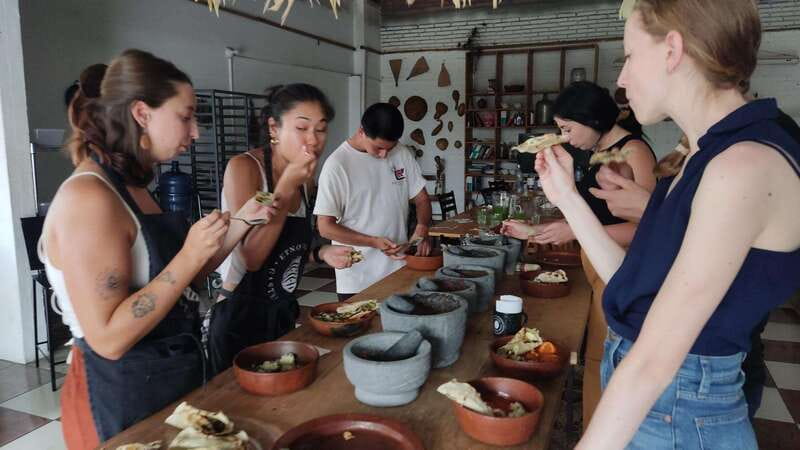
The strongest feature of this workshop is the human element. Victor Ramirez is repeatedly praised for his warmth, humor, patience, and ability to explain both food and culture. He has also encouraged Spanish practice and spoken about the Zapotec value of sharing.
Quetzalli and Wendy have guided other sessions, and the teaching style appears to remain active and friendly. Tasks are assigned so everyone can participate. If you are new to cooking, the instructors demonstrate each step and answer questions as you go.
That said, the exact experience may differ from one date to another. Some people receive a very personal class with only one participant. Other groups have been much larger. A larger class can still work well when the guides divide tasks carefully, but it may feel less like a private lesson.
I would treat the workshop as a cultural cooking session rather than professional chef training. You learn useful methods, ingredient selection, serving ideas, and plenty of kitchen tips. You do not receive a deep culinary school course in every style of mole.
Is $64 a fair price?
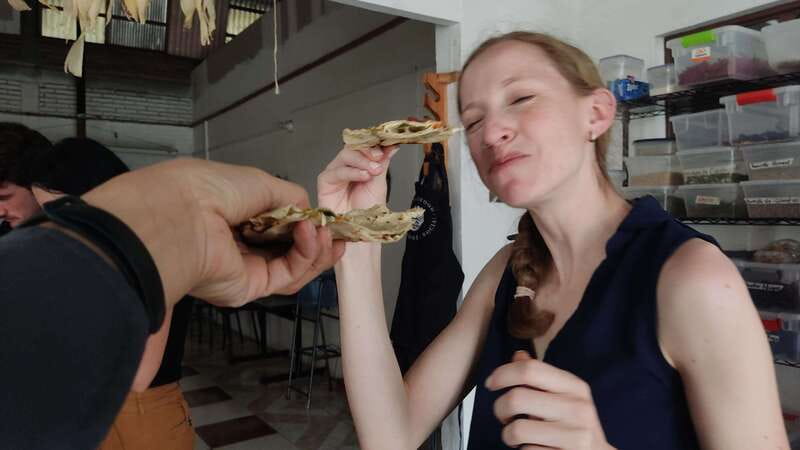
At $64 per person, the price is reasonable if you value the complete experience rather than just the finished meal. Your fee covers the market walk, fresh ingredients, utensils, instruction, hands-on preparation, the meal, dessert, seasonal fruit water, and mezcal for adults.
A restaurant meal in Oaxaca may cost less, especially if you choose a simple local lunch. But a restaurant does not give you several hours of teaching, a market introduction, or the satisfaction of pressing tortillas and making mole yourself.
The value is strongest for people who enjoy participation. You are paying for access to a local food setting, a guide’s explanations, and a structured way to learn dishes that can be difficult to understand from a menu.
The value is weaker if you only want to eat mole or if you dislike repetitive preparation. Chopping, blending, frying, and tortilla work take time. The class can also feel long when a group prepares more food than it needs.
Free cancellation is available up to 24 hours before the experience for a full refund. You can also reserve and pay later, which helps if your Oaxaca schedule is still changing.
Who will enjoy this Oaxaca cooking class?
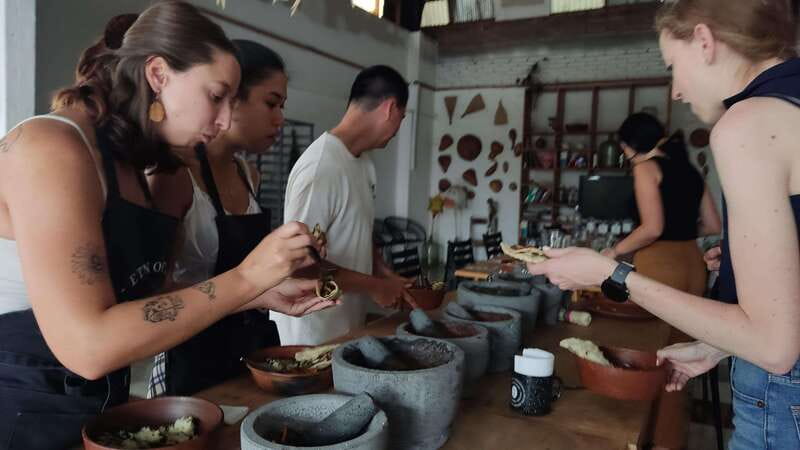
I would recommend it most strongly to:
- First-time visitors who want food and culture in the same activity
- Curious home cooks who enjoy learning by doing
- Adults interested in Zapotec traditions and regional ingredients
- Solo visitors who want a small, social experience
- Couples and friends who would rather cook than take a standard sightseeing tour
- People who like trying unfamiliar chiles, fruits, herbs, cacao, and cheeses
It is less suitable for children under 10, people with back problems, and anyone with a low level of fitness. The walk to the market and the time spent standing in the kitchen are central parts of the experience.
It may also disappoint you if you expect to recreate the entire process from maize to tortilla or study only dark mole. The class uses modern equipment and may include a green mole or several side dishes instead of focusing on one elaborate preparation.
Practical tips before you go
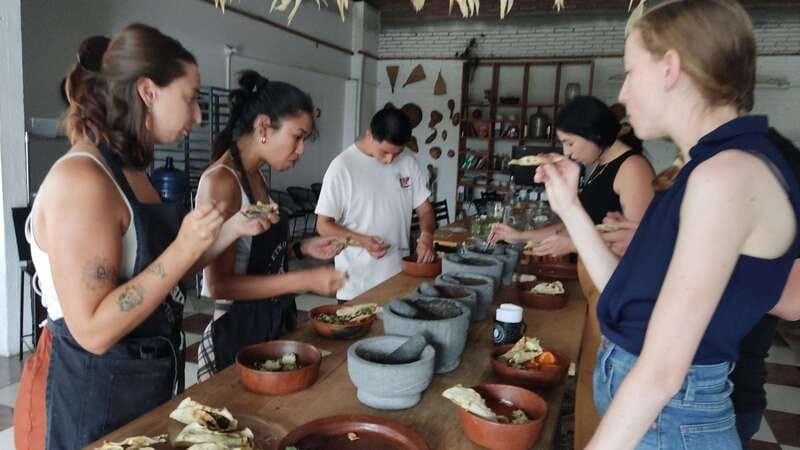
Wear comfortable shoes. You will walk to the market and spend much of the session standing, moving, and working at kitchen counters.
Arrive ready to participate. When a task is offered, take it. The class works best when you chop, stir, press, taste, and ask questions instead of waiting for someone else to do the work.
If you want a particularly personal lesson, request the smallest available group and confirm the expected number of participants. The advertised format is limited to four, but actual group sizes have varied.
Ask which mole is planned. This is the single most useful question for serious food lovers. A black mole workshop and a green mole workshop offer very different lessons.
Tell the provider about dietary restrictions before the day of the class. Also remember that mezcal is only for adults 18 and older, and alcohol and drugs are not permitted beyond the included mezcal service.
Should you book the Etnofood mole workshop?
Yes, if you want a friendly, active introduction to Oaxaca through its food. The combination of a local market, Zapotec cultural context, fresh ingredients, tortilla making, several sauces, and a shared meal gives you far more than a standard cooking demonstration.
I would book it early in your Oaxaca stay. You will gain useful context for the restaurants and markets you visit afterward, and you may recognize ingredients that once seemed mysterious.
Choose another activity if you need a private, highly technical lesson in black mole or if walking and standing are difficult. For everyone else, $64 is a fair price for a personal, good-humored class that connects cooking with people, place, and everyday Oaxacan life.
FAQ
Where does the Oaxacan mole workshop meet?
It meets at a Foodlab on Xicotencatl Street 609 in Oaxaca’s downtown district, about five blocks from the City Zócalo. The building has a FILOTEO sign and a large dog on the facade.
How long does the cooking experience last?
The experience lasts approximately 3.5 hours, including the walk to the market, shopping, cooking, and the final meal.
What languages are available?
The experience is offered in English and Spanish.
How many people can join the class?
The activity is advertised as a small group limited to four participants. Some sessions have had larger groups, so confirm the expected group size if this matters to you.
What food will I make?
You will learn to prepare Oaxacan mole and may also make tortillas, quesadillas, salsa, guacamole or guacachile, rice, vegetables, and dessert. The exact menu can vary.
Is mezcal included?
Yes. Mezcal is included for participants aged 18 and above. Seasonal fruit-flavored water is also included.
What should I bring?
Bring comfortable shoes because the experience includes a walk to the market and several hours of cooking.
Is the activity suitable for children or people with limited fitness?
It is not suitable for children under 10, people with back problems, or people with a low level of fitness. The market walk and kitchen work require moderate physical fitness.
Just added around Oaxaca
- Oaxaca: Early Arrival at Hierve el Agua + Pickup + Admission★ 4.4 · 105 reviews
- Private Transportation from Oaxaca Airport to Hotel★ 4.5 · 107 reviews
- Art walk & Cacao delight★ 5.0 · 111 reviews
- Tule, Mitla & Hierve el Agua Full-Day Tour with Certified Guide★ 4.5 · 114 reviews
- Boil the Water, Mitla, Tule, Mezcal and more★ 4.0 · 118 reviews
- Small Group Boerve del Agua and Mezcal Tour from Oaxaca Centro★ 5.0 · 118 reviews
- Private Minivan: Huatulco International Airport (HUX)★ 4.0 · 119 reviews
- Street Art Bike Ride★ 5.0 · 125 reviews
Workshops, compared.
Cabo San Lucas Mexican Cooking Class Experience and Local Markets
Read our review →
Puerto Vallarta Cooking Class Experience with Market Tour
Read our review →
La Paz World Class Snorkeling in Balandras Hidden Beaches
Read our review →
Mexican Cooking Class with Food Market Visit in Mexico City
Read our review →
Bean to Bar Chocolate Workshop in Puerto Vallarta
Read our review →
Browse the lists this tour appears in