
Reviewed · CITY TOURS
Mexico City: Ticket de entrada Museo Memoria y Tolerancia
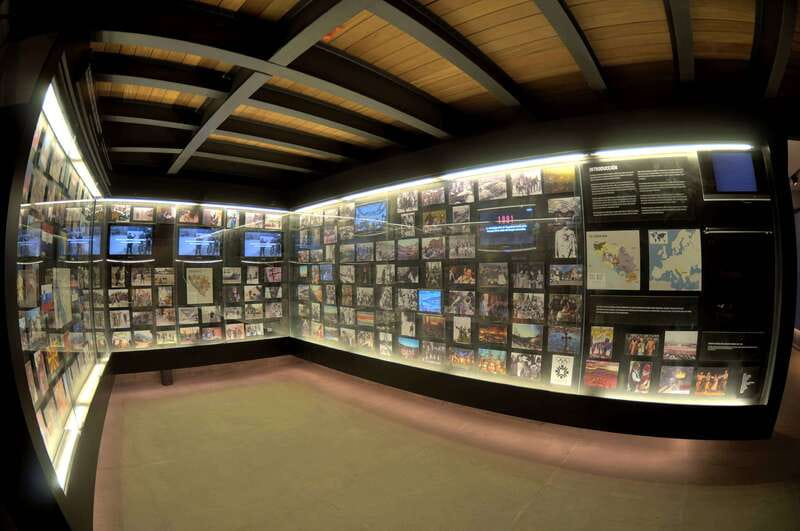
History here asks something of you. Mexico City’s Museo Memoria y Tolerancia uses the Holocaust, genocide, art, and personal testimony to examine how discrimination can grow into mass violence. I like the museum’s serious purpose and its carefully planned mix of documents, photographs, objects, and installations. I also like that your $13 ticket includes the permanent galleries, temporary exhibitions, and an audio guide in Spanish or English.
The main consideration is emotional weight. The permanent exhibition deals with the Holocaust and other crimes against humanity in direct detail, so it is best suited to people over 15. Younger children may enter only with an adult, and families should decide in advance how much difficult material they want to see. With a 4.8 rating from 68 reviews, this is one of Mexico City’s more affecting museum visits, but it is not a light afternoon stop.
In This Review
- Key points to know before you go
- Why this museum deserves time in downtown Mexico City
- Finding the museum at Plaza Juarez
- The permanent exhibition, from the Holocaust to other genocides
- The Anne Frank material and the human scale of history
- Art installations that change the pace
- Using the English or Spanish audio guide
- Temporary exhibitions add value to the $13 ticket
- How long to stay and who will appreciate it most
- Is the museum worth $13?
- Booking flexibility and practical details
- Should you book the Museo Memoria y Tolerancia?
- FAQ
- Where is the Museo Memoria y Tolerancia?
- How much does admission cost?
- What does the ticket include?
- How many rooms are in the permanent exhibition?
- What subjects does the permanent exhibition cover?
- Is the museum suitable for children?
- Is the museum wheelchair accessible?
Key points to know before you go
- A serious 43-room visit: The permanent exhibition presents more than 1,200 objects, documents, and audiovisual pieces.
- History reaches beyond the Holocaust: The galleries also address Armenia, Rwanda, Guatemala, Cambodia, Darfur, and Yugoslavia.
- Art breaks up the difficult material: Works by Jan Hendrix, Jorge Marin, Rivelino, Carl Fredrik Reuterswärd, and Lozano-Hemmer add visual and interactive elements.
- The ticket covers temporary exhibitions: You are not limited to the main historical galleries.
- English support is included: The audio guide is available in both English and Spanish.
- Easy downtown location: You will find the museum at Plaza Juarez, beside the Secretaria de Relaciones Exteriores and across from the Hemiciclo a Juarez.
Why this museum deserves time in downtown Mexico City
The Museo Memoria y Tolerancia is not built around one famous painting or a single dramatic object. Its purpose is broader: to show how prejudice, indifference, propaganda, and violence can build on one another.
That mission gives the museum a clear direction. You move from historical evidence toward questions about personal responsibility, tolerance, human rights, and social action. The goal is not simply to tell you what happened. It asks you to consider how ordinary societies can permit cruelty, and how you might respond when discrimination appears around you.
I value that approach because it connects the past to daily life. A museum about genocide can sometimes feel distant, locked inside dates and names. Here, the emphasis on tolerance and peace gives the historical displays a present-day purpose.
The museum is also an international reference point for this subject in Mexico City. Its permanent exhibition covers 43 rooms, so you should not treat this as a quick stop between the Zocalo and the Alameda Central. Even with a brisk pace, the subject matter rewards time and attention.
A few more reviews worth comparing before you book
- Teotihuacan, Guadalupe Shrine & Tlatelolco Day Tour with Lunch
★ 5.0 · 11,603 reviews - Xochimilco, Coyoacan and Frida Kahlo with Optional Lunch
★ 4.5 · 7,320 reviews - Balloon flight + Breakfast in cave + Pyramids + Pick up CDMX.
★ 5.0 · 6,335 reviews
Finding the museum at Plaza Juarez
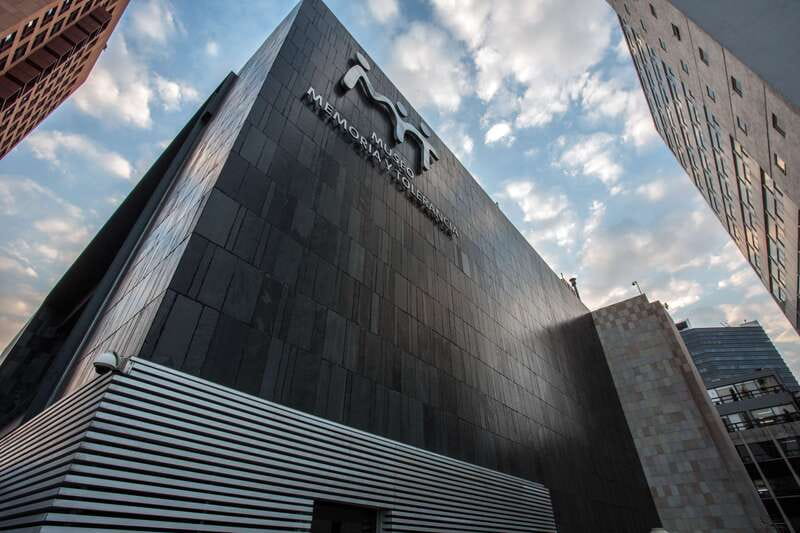
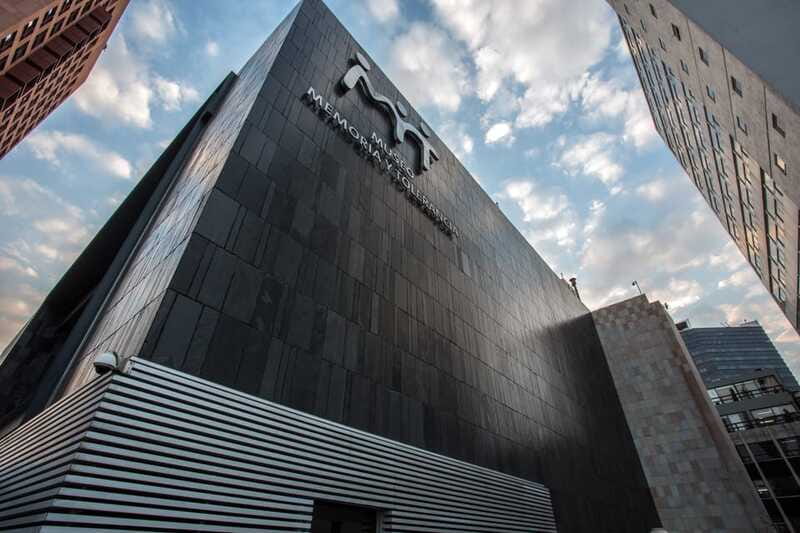
The museum is in downtown Mexico City at Plaza Juarez. It sits next to the Secretaria de Relaciones Exteriores and faces the Hemiciclo a Juarez, the large white marble monument dedicated to Benito Juarez.
This is a useful location for building the museum into a day of central Mexico City sightseeing. You can pair it with nearby public spaces and cultural attractions, though the emotional tone changes sharply once you enter the galleries. I would avoid squeezing this visit between several rushed appointments. Give yourself room to pause.
Your ticket is valid for one day, and the booking information allows you to check available starting times. The price is listed at $13 per person. That is a fair amount for a museum with 43 permanent rooms, more than 1,200 items and audiovisual pieces, an audio guide, and access to temporary exhibitions.
The practical rule is simple: do not bring food or drinks inside. The museum is wheelchair accessible, which makes it a workable choice for many visitors who need step-free access.
The permanent exhibition, from the Holocaust to other genocides
The historical core begins with the Holocaust, the Nazi persecution and murder of European Jews during World War II. The museum uses objects, documents, photographs, and audiovisual material to make the scale of that crime understandable without reducing it to a list of statistics.
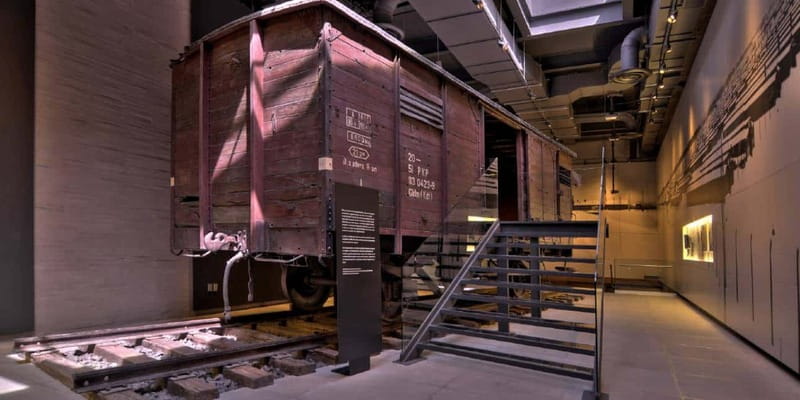
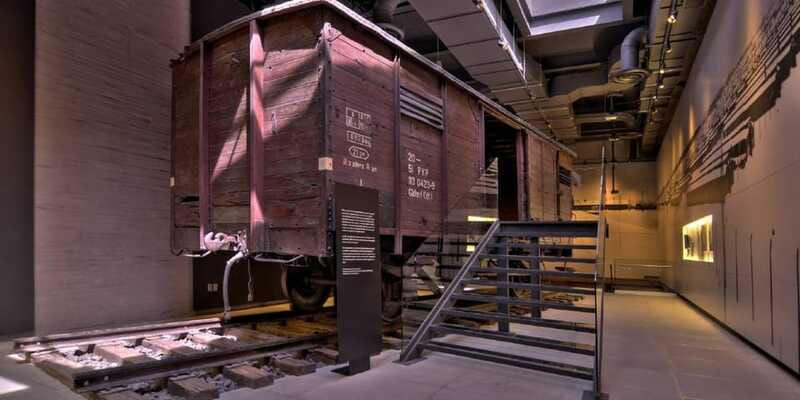
One of the most important features is the train wagon used during World War II to transfer prisoners. A railway carriage is not a small object, but it is still only a fragment of the larger system that carried people toward imprisonment and death. Its presence gives the history a physical form.
The galleries then widen the discussion to other genocides and crimes against humanity. The subjects named in the museum include the Armenian genocides, Rwanda, Guatemala, Cambodia, Darfur, and Yugoslavia. This wider view matters because the museum is not presenting the Holocaust as an isolated event. It is showing recurring patterns of exclusion, dehumanization, organized violence, and silence.
You should expect the exhibition to move between historical explanation and human stories. The documents and photographs provide evidence, while the audiovisual pieces add voices and context. The result can be demanding, particularly if you try to read every panel in all 43 rooms.
My advice is to set your own pace. You do not need to absorb every sentence to gain something from the visit. Pause when an object or account catches your attention, and give yourself permission to move more quickly through sections that feel too intense.
The Anne Frank material and the human scale of history
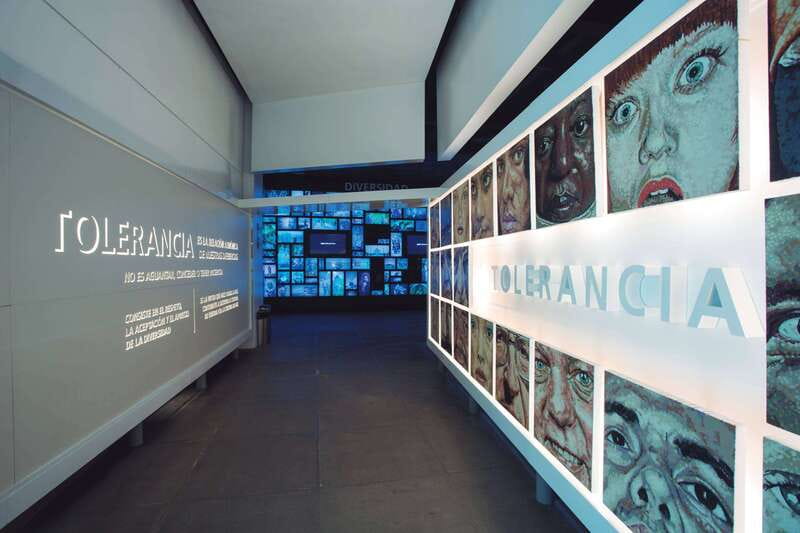
The Anne Frank exhibition is singled out as one of the museum’s most moving sections. That makes sense. Anne Frank’s story often serves as a personal entry point into the Holocaust because her writing gives the historical period a young person’s voice and daily perspective.
For many people, this section may feel more intimate than the larger displays about governments, armies, and systems of persecution. I would plan to spend time here rather than treating it as another room on a route through the museum.
The museum’s strongest emotional effect comes from this movement between the individual and the collective. A single diary, photograph, document, or personal object can help you understand the person behind a number. Then the wider galleries remind you that millions of lives were affected.
That balance also explains why the museum can be meaningful even if you have already visited Holocaust museums elsewhere. The focus is not only remembrance. It also links memory to the choices societies make now.
A different sort of day out around Mexico City:
- Teotihuacan pyramids morning or afternoon without tourist traps
★ 5.0 · 6,186 reviews - Teotihuacan Early Access Guided Tour with optional Lunch
★ 4.5 · 6,138 reviews - Balloon flight + pick up in CDMX + Breakfast in Cave + Pyramids
★ 5.0 · 5,651 reviews - Balloon Flight + Cave Breakfast + Pick Up from CDMX or We Fly
★ 5.0 · 4,410 reviews
Art installations that change the pace
Art plays an important role in the museum. After rooms filled with documents and testimony, the installations give you different ways to think about the subject.
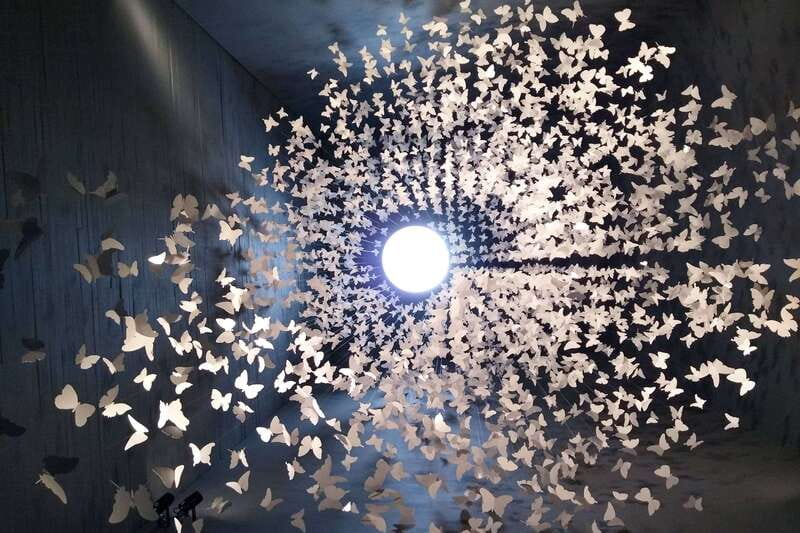
Jan Hendrix is represented by several works, including Lost Potential and Cube. These pieces bring abstraction and visual metaphor into a museum otherwise grounded in historical evidence. They are not simply decoration. They give you a moment to consider what violence destroys, including lives, possibilities, and futures that never had the chance to develop.
The museum also includes an installation involving metronomes by Lozano-Hemmer. The repeated movement and sound create a different physical rhythm from the historical galleries. It is the kind of work that asks you to observe before you interpret.
The Wings of Peace, by Jorge Marin, is a sculptural and interactive work. Rivelino’s YOU is also described as sculptural and interactive. These installations invite participation rather than passive looking, helping the museum shift from historical memory toward the values it wants to promote.
The Non-Violence Project sculpture by Carl Fredrik Reuterswärd adds another recognizable symbol of resistance to violence. A fragment of the Berlin Wall brings Cold War history into the museum’s larger discussion of division, political systems, and human freedom.
You may not connect equally with every artwork. That is part of the value of the mix. Some people will respond most strongly to the documents and photographs, while others will remember the sculptures and installations. The museum gives both kinds of evidence a place.
Using the English or Spanish audio guide
An audio guide is included in Spanish and English. For English-speaking visitors, this is an important part of the ticket rather than a small extra.
The guide lets you follow the museum without depending on a separate tour group. That can be helpful in rooms where you want to stop often, reflect quietly, or spend longer with a particular display. It also gives you a way to understand the material if your Spanish is limited.
I would choose your language before you begin and use the guide as a companion to the objects, not as a race from one recording to the next. The museum has a lot to present, and listening while reading every panel can become tiring.
There is no named guide attached to this experience. You get an audio guide instead, in Spanish or English. That means the quality of your visit depends partly on how you manage your own time and attention.
Temporary exhibitions add value to the $13 ticket
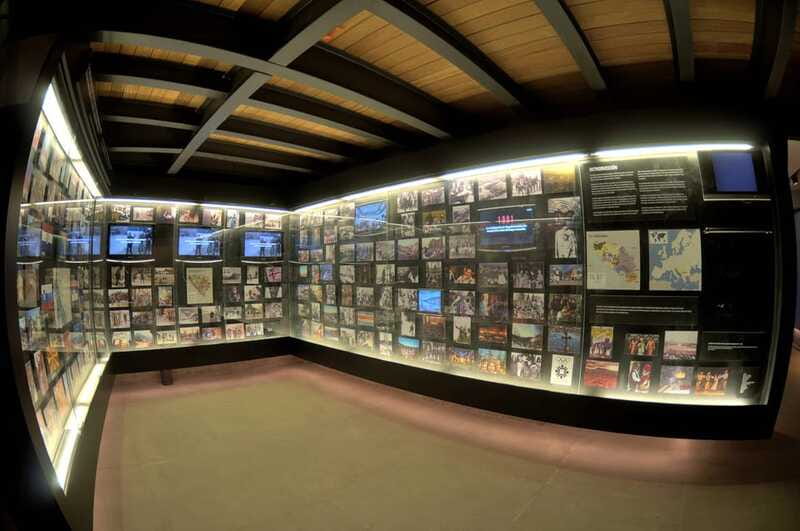
Your entry includes temporary exhibitions as well as the permanent galleries. This improves the value, since you are getting more than the museum’s central Holocaust and genocide display.
Temporary shows can change over time, and the available information does not specify which exhibition will be on display during your visit. That uncertainty is worth remembering when planning your day. You should see the temporary galleries as an added benefit, not the main reason to buy the ticket.
The combination of permanent and temporary material also gives the museum some repeat-visit potential. A first visit may focus on the historical rooms, while a later visit could give you more time for the installations or a different temporary show.
How long to stay and who will appreciate it most
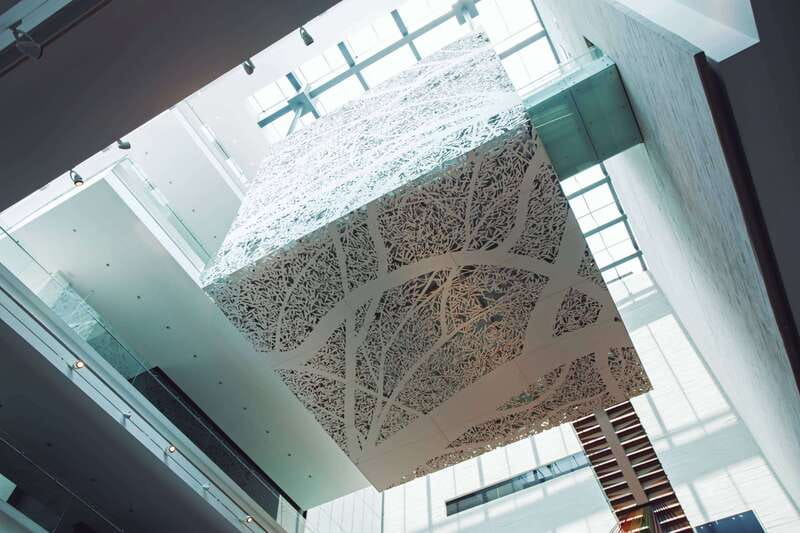
The ticket is valid for one day, but no fixed visit duration is provided. With 43 rooms, more than 1,200 objects and documents, audiovisual material, art installations, and temporary exhibitions, you should allow a substantial part of your day rather than expecting to finish in 30 minutes.
Your ideal pace depends on your interest and emotional energy. A fast visit can give you the broad structure. A slower visit lets you read more, listen to the audio guide, and sit with the personal stories.
The permanent exhibitions are recommended for children older than 15. Children younger than 15 must be accompanied by an adult. Even for older teenagers, I would explain beforehand that the museum contains material about genocide, imprisonment, discrimination, and mass violence.
This museum suits you best if you want history with a moral question attached. It is a good fit for adults, older teenagers, students, educators, and anyone interested in human rights or the causes of mass violence.
It may not suit you if you want a cheerful cultural stop or if you have only a short window before another activity. The museum is serious, and the subject does not become easier simply because the building includes attractive art.
Is the museum worth $13?
At $13 per person, the ticket offers solid value. You receive entry to a substantial permanent exhibition, temporary exhibitions, bilingual audio support, and access to a collection of major installations.
The best value comes from staying long enough to use those inclusions. If you rush through the galleries, the price may feel less worthwhile because the museum’s strength is its amount of context. If you can give it several hours of focused attention, the cost is modest for the scale of the visit.
The 4.8 rating from 68 reviews also reflects the museum’s strong public response. The highest praise centers on its purpose, its combination of information and art, and the emotional force of the Anne Frank material. One particularly enthusiastic assessment compared it favorably with three other museums of tolerance and considered the Mexico City museum the strongest of the group.
That level of praise should not make you expect an easy experience. The museum succeeds because it is difficult, direct, and designed to leave you thinking after you leave.
Booking flexibility and practical details
You can cancel up to 24 hours in advance for a full refund. A reserve-now, pay-later option is also available, which helps if your Mexico City schedule is still changing.
The museum operates with available starting times, so check the schedule before you commit your day. Since it is in central Mexico City, the location is easy to combine with other sightseeing, but I would keep the rest of your plans flexible after the visit.
Food and drinks are not allowed inside. The museum is wheelchair accessible. The audio guide is available in English and Spanish, and temporary exhibitions are included with admission.
Should you book the Museo Memoria y Tolerancia?
Book it if you want a serious, well-organized look at the Holocaust, genocide, discrimination, tolerance, and human rights. The 43 rooms, World War II train wagon, Anne Frank material, Berlin Wall fragment, and varied art installations give the visit a strong range of historical and personal viewpoints.
I would especially recommend it for adults and older teenagers who are ready for difficult material. The $13 price is reasonable when you use the audio guide and see both permanent and temporary exhibitions.
Skip it only if your schedule is too tight for a thoughtful museum visit or if you are seeking something light. This is a place for reflection, not a quick photo stop. For many people, that is precisely why it belongs on a Mexico City itinerary.
FAQ
Where is the Museo Memoria y Tolerancia?
The museum is at Plaza Juarez in downtown Mexico City, beside the Secretaria de Relaciones Exteriores and across from the Hemiciclo a Juarez.
How much does admission cost?
The listed price is $13 per person.
What does the ticket include?
The ticket includes museum entry, the permanent exhibitions, temporary exhibitions, and an audio guide in Spanish or English.
How many rooms are in the permanent exhibition?
The permanent exhibition has 43 rooms.
What subjects does the permanent exhibition cover?
It covers the Holocaust and other crimes against humanity, including the Armenian genocides, Rwanda, Guatemala, Cambodia, Darfur, and Yugoslavia.
Is the museum suitable for children?
The permanent exhibitions are recommended for children older than 15. Children younger than 15 must be accompanied by an adult.
Is the museum wheelchair accessible?
Yes, the museum is wheelchair accessible.
Just added around Mexico City
- Neon Bike Party – Private Bike Tour★ 4.5 · 34 reviews
- Private Tour with Archaeologist and VR Experience at Teotihuacan★ 5.0 · 34 reviews
- Mexico City: Full-Day Taxco and Cuernavaca Tour★ 4.1 · 34 reviews
- Food and Historic Walking Tour: Private Tortilla Crawl in Mexico City Downtown★ 5.0 · 35 reviews
- Guided tour EN Teotihuacan – Breakfast EN cave-round transport★ 5.0 · 35 reviews
- Xochimilco, Coyoacan and Frida Kahlo Museum Tour★ 3.5 · 35 reviews
- Xochimilco: amanecer en kayak Ciudad de México★ 5.0 · 35 reviews
- Full-Day Private Tour of Mexico City: Teotihuacan and Xochimilco★ 5.0 · 35 reviews
City Tours, compared.
Teotihuacan, Tlatelolco & Guadalupe Shrine Tour
Read our review →
Teotihuacan Hot Air Balloon Flight from Mexico City / Volare
Read our review →


The best tour to Teotihuacán from Mexico City
Read our review →
Browse the lists this tour appears in