
Reviewed · CENOTE SWIMS
Merida: Hacienda Sotuta de Peon w/ Cenote & Henequen Tour
History comes alive on rails. About 45 minutes outside Mérida, Hacienda Sotuta de Peón combines a working henequen factory, a ride through old agave fields, a traditional Maya house, and a swim in cenote Dzul Ha. At $58 per person, it offers a lot more than a quick look at a restored estate.
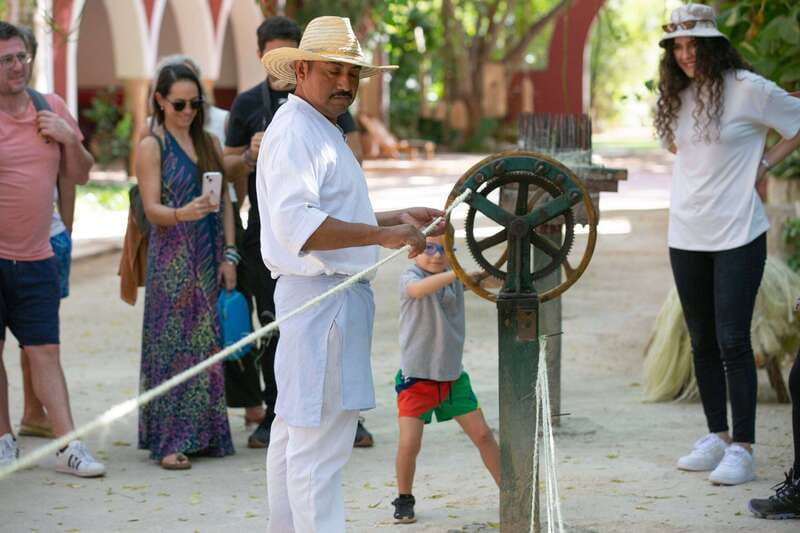
I especially like the working machinery demonstrations, which show how henequen leaves became fiber, twine, and rope. I also like the mule-pulled wooden trucks, a slow and memorable way to reach the cenote. The main drawback is that the tour can feel crowded or noisy when the group is not attentive, especially because the guide presents information in both Spanish and English.
In This Review
- Key points to know before you go
- Why Sotuta de Peón is more than a restored hacienda
- The three-hour guided tour through henequen country
- Riding the mule-pulled trucks to the cenote
- Cenote Dzul Ha: the refreshing centerpiece
- A typical Maya house adds human scale
- Lunch and the KIH restaurant experience
- Is $58 a fair price?
- Group size, language, and the pace of the visit
- What I would pack and how I would plan the day
- Who should book this hacienda tour?
- Should you book Hacienda Sotuta de Peón?
- FAQ
- Where is Hacienda Sotuta de Peón located?
- How long does the experience last?
- What languages are available?
- Is transportation from Mérida included?
- Can I swim in a cenote?
- What should I bring?
- Is lunch included?
- Is the tour suitable for wheelchair users?
Key points to know before you go
- The henequen factory still works: Rebuilt machinery demonstrates how the Yucatan’s famous green gold was processed.
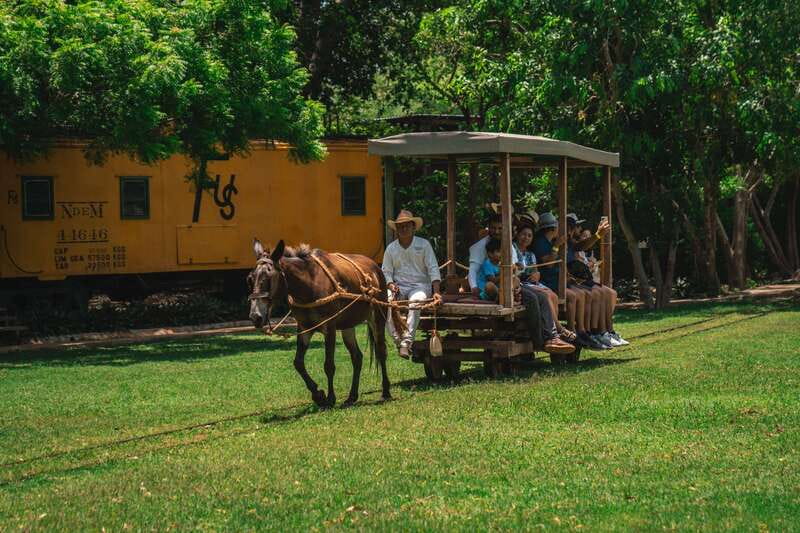
- The truck ride is part of the history: Wooden platforms roll along Decauville rails, pulled by mules through the former plantation grounds.
- Cenote Dzul Ha is enclosed and clear: You can swim in cool freshwater, then use the changing rooms and showers.
- The tour is bilingual: Guides such as Evan and Philip have been praised for clear English and engaging explanations.
- Plan on three to four and a half hours: The guided portion takes about three hours, followed by roughly 30 minutes for lunch.
- Bring swimwear and a towel: You can also use the hacienda swimming pool if you prefer not to enter the cenote.
Why Sotuta de Peón is more than a restored hacienda
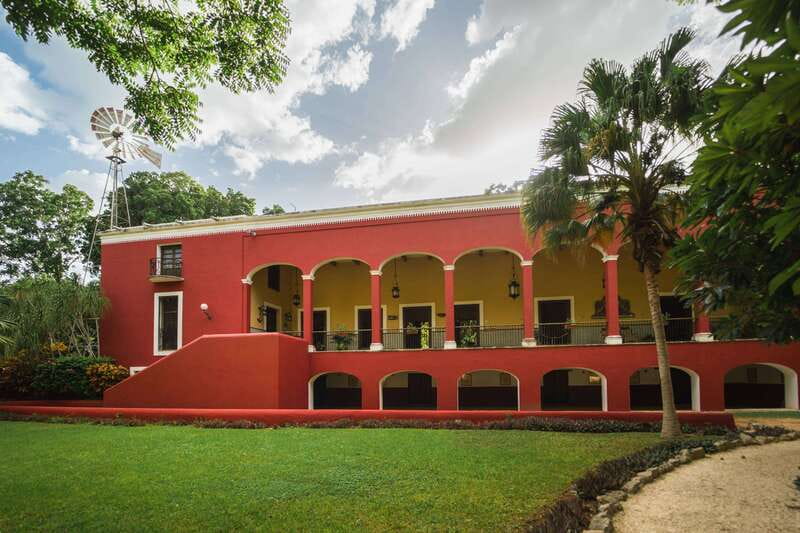
Sotuta de Peón began operating in 1858, during the great henequen boom in Yucatan. Henequen, a type of agave, became the economic engine of the region. Its strong fibers were used for twine, rope, and other practical goods before nylon and plastic changed the market.
That background gives this visit real purpose. You are not simply walking through attractive colonial buildings. You are seeing how a plantation worked, how raw plants were turned into a valuable export, and how the rise of modern materials caused the industry to decline.
After about a century of prosperity, the hacienda was abandoned for three decades. It was later restored as a living museum and working attraction. The restoration aims to show the estate as it operated during its productive years, including the factory equipment and rail system.
I find that this makes the visit more satisfying than a simple photo stop. The buildings matter, but the machinery and production process explain why the hacienda existed in the first place.
More Cenote Swims in Merida
- Chichen Itza, Private Cenote/Food Experience & the magic Izamal
★ 5.0 · 385 reviews - Chichen Itza, Cenote Swim & Izamal Magic Town with Buffet Lunch
★ 4.5 · 317 reviews - From Merida: Chichen Itza Tour, Izamal, Cenote Ik Kil and Food
★ 5.0 · 246 reviews
The three-hour guided tour through henequen country
The main tour lasts about three hours, though the full visit can run from three to four and a half hours depending on the selected departure and activities. Your guide takes you through the grounds, factory, old production areas, and a typical Maya house.
The bilingual format is useful but requires patience. The guide explains the same material in Spanish and English, so each stop takes longer than it would on a single-language tour. Guides Evan and Philip have received strong praise for their English and their enthusiasm for the subject. If you want to hear every detail, stay close to the guide and avoid standing near chatty parts of the group.
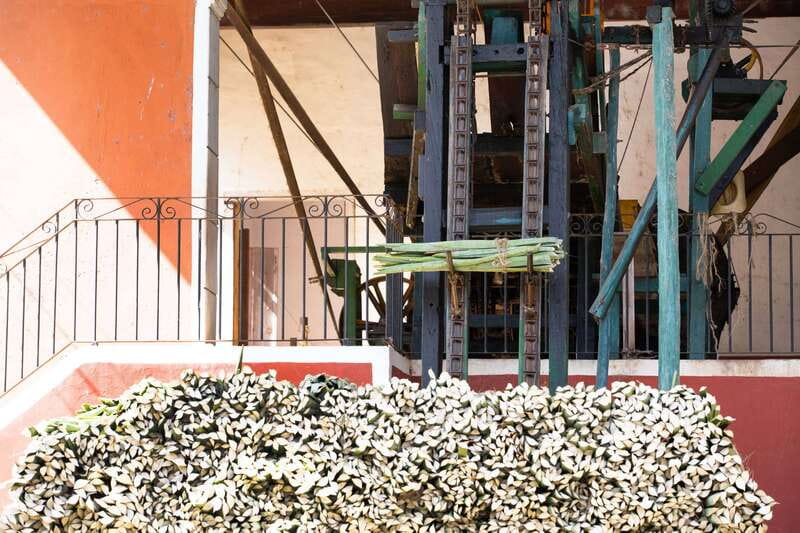
The subject matter is worth your attention. You learn about planting and harvesting the agave leaves, removing the pulp and liquid, separating the useful fiber, combing it, spinning it into twine, and twisting it into thicker rope. Demonstrations with the rebuilt equipment turn an abstract history lesson into something you can follow with your eyes.
Some of the machinery is ancient, but it has been restored to working order. That is the key difference between seeing a silent exhibit and watching an actual production sequence. You can understand the amount of labor and machinery once needed to make something as ordinary as rope.
The tour also addresses henequen’s decline after nylon and plastic became common. This is a useful economic lesson for the Yucatan. The plantation did not simply fade because the buildings grew old. Its main product lost its market.
Riding the mule-pulled trucks to the cenote
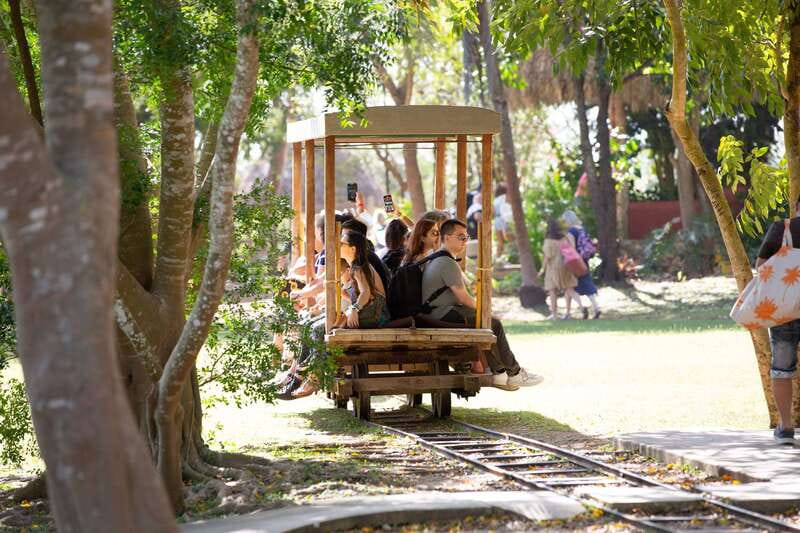
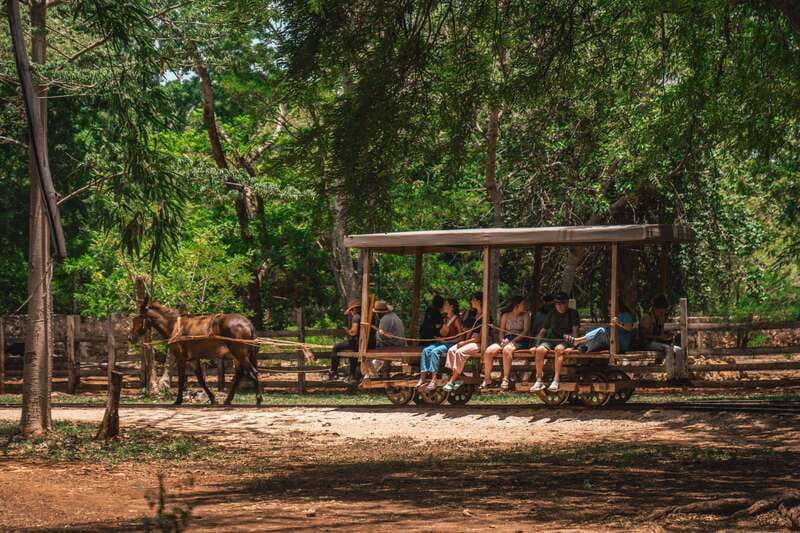
The ride to the cenote uses wooden platforms called trucks. They are flatbed wagons pulled by mules along Decauville rails, the same basic transport method used by plantation workers.
This is not a fast ride, and that is part of its appeal. The slow pace lets you look across the henequen fields and vegetation while sitting in a piece of the hacienda’s working past. It also avoids the feel of a standard motorized transfer from one attraction to another.
The ride can be bumpy, and the trucks are open. Bring sun protection and consider wearing clothing that is comfortable for sitting and swimming. The supplied information does not specify the exact seating arrangement or shade, so you should expect a simple historic wagon rather than a modern sightseeing vehicle.
For me, this is one of the experience’s strongest details. The transportation is not just practical. It explains how people, materials, and harvested plants once moved around the estate.
Cenote Dzul Ha: the refreshing centerpiece
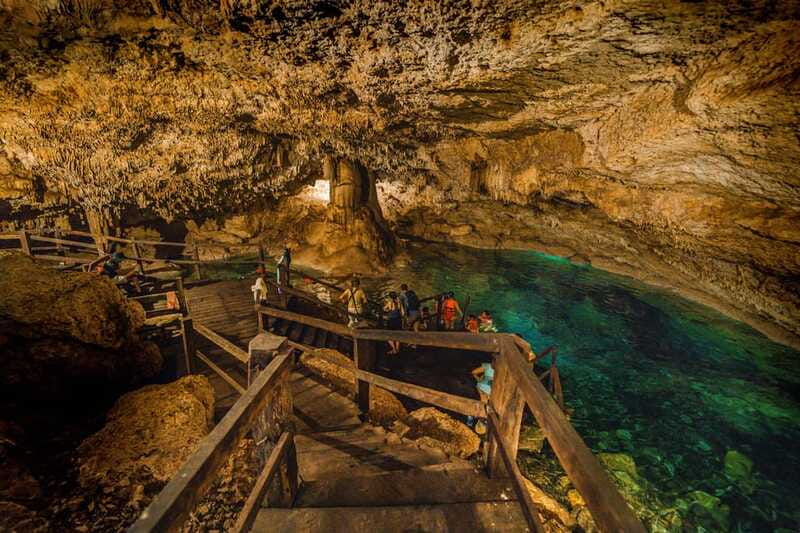
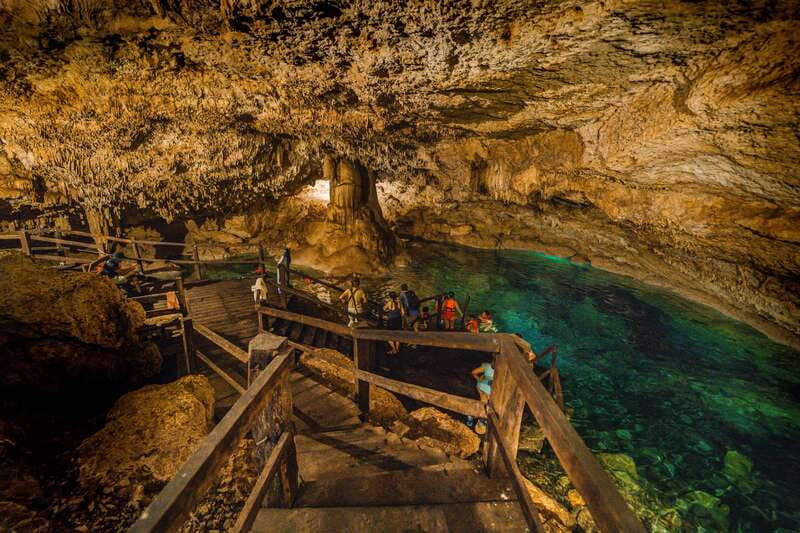
Cenote Dzul Ha, whose name means Lord of the water, is an enclosed freshwater cenote. The water is clear, cool, and alkaline, with rock formations inside the cavern. Lighting highlights the formations and gives the swimming area a striking appearance.
This is a good place to cool off after the factory tour. The cenote is not an optional photo stop. You have time to change, swim, shower, and relax before returning to the main buildings.
Facilities include bathrooms, showers, changing rooms, a bar area, and a place to sit. Those details matter because a cenote visit can be awkward when there is nowhere to change or rinse off. Here, you can treat the swim as a proper part of the day rather than a quick dip between stops.
Bring both a towel and swimwear. If you do not want to swim in the cenote, the hacienda also has a large pool surrounded by tropical flowers and native trees. That gives you a second option, although the cenote is the more distinctive experience.
The water may feel cold at first, especially after walking around in the Yucatan heat. Once you are in, it offers exactly the kind of relief you want. The enclosed setting also makes this different from an open-air cenote with direct sun overhead.
If you are sensitive to slippery surfaces or uneasy around natural rock formations, take your time entering the water. The supplied information confirms that swimming is available, but it does not provide details about water shoes, flotation devices, or the exact entry design. Pack only what you need near the water.
More cenotes worth the drive:
- From Mérida:Uxmal and amazing cenotes guided tour with lunch
★ 4.9 · 175 reviews - Merida : Guided tour of Uxmal, Kabah and Cenote with Lunch
★ 4.5 · 156 reviews - Merida: Uxmal, Cenote and Kabah Archaeological Site Tour
★ 4.7 · 139 reviews - Merida : Chichen Itza, Izamal and Cenote with lunch and pick up
★ 4.5 · 132 reviews
A typical Maya house adds human scale
The stop at a typical Maya house helps balance the plantation story. The factory explains the commercial economy, while the house points toward the daily life and building traditions of the local Maya community.
This part is usually shorter than the factory visit, but it matters. Without it, the hacienda story could feel focused only on owners, machinery, and exports. The house gives you a more personal sense of how people lived in the region.
The available information does not list the interior furnishings or a separate cooking demonstration, so you should not expect a full village visit. Think of it as a compact cultural stop within the larger tour.
Lunch and the KIH restaurant experience
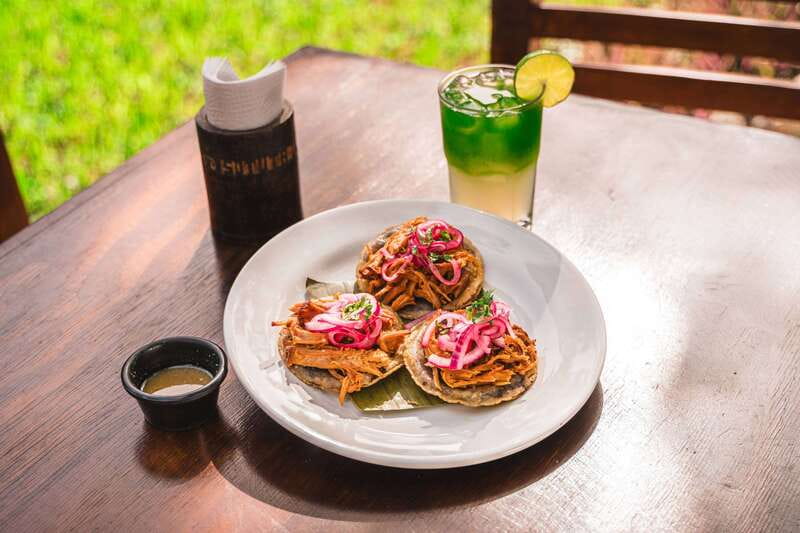
After the guided portion and cenote visit, you return to the hacienda for food. The experience includes appetizers, and the scheduled lunch stop lasts about 30 minutes. The property also promotes a gastronomic experience at Restaurant KIH.
The meal has received particularly warm praise, with one description noting a pleasant four-course lunch. Another mentions excellent snacks and drinks. Since the official inclusions specifically list appetizers, check the exact package you choose to confirm which meal items and beverages are included in your price.
The food service gives the outing a comfortable finish. You do not need to rush straight from a swim into transport back to Mérida. Instead, you have time to dry off, eat, and let the day’s information settle.
Thirty minutes is not a long restaurant sitting, especially if a multi-course meal is being served. If you value a leisurely lunch above all else, this may feel hurried. If you see the food as a pleasant part of a history tour, the timing should work better.
Is $58 a fair price?
At $58 per person, I consider this a good-value half-day outing if you want several experiences in one visit. You get a guided hacienda tour, working factory demonstrations, the mule-pulled truck ride, a Maya house visit, access to the cenote or pool, and food service.
The value is strongest for people who would otherwise need to arrange separate visits to a hacienda and cenote. You also receive context that would be difficult to gather by simply walking around the grounds alone.
Transportation from Mérida may be available as an add-on or as part of a selected option, but the information provided does not establish that every $58 booking includes city pickup. One useful practical detail is that a tour starting at 9:00 in the morning can require transport from Mérida around 7:50. If you are staying in the city, check the exact meeting point and pickup time before booking.
If you drive yourself, the meeting point is at Hacienda Sotuta de Peón Tours, also listed as Hacienda Viva Sotuta de Peón, the sales and office area. The booking option determines the precise starting and drop-off details.
For comparison, a short cenote visit alone can feel limited. Here, the cenote is paired with a substantial cultural program. That makes the price easier to justify, especially if the henequen story interests you.
Group size, language, and the pace of the visit
A small-group option is available. I would choose it if you care about hearing the guide, asking questions, and getting through the factory without feeling lost in a large crowd.
The tour is offered in Spanish and English. Bilingual guiding is a real benefit, though it naturally slows the presentation. The guide may explain one section in Spanish and then repeat it in English. You should allow extra time for that rather than expecting a rapid, single-language tour.
The overall pace mixes walking, demonstrations, sitting on the trucks, swimming, and eating. You are not walking continuously for three hours, but you will move between several areas. Comfortable clothing and shoes make sense, with swimwear and a towel packed separately.
Families can attend, but the experience is not designed as a children’s amusement attraction. Young children may enjoy the mule ride and cenote, while the detailed machinery explanations may test their patience. Adults interested in Yucatan history, traditional production, and architecture will get the most from the guided portion.
The accessibility information needs careful attention. The activity details identify it as wheelchair accessible in one place but also say it is not suitable for wheelchair users elsewhere. Since the route includes historic grounds, rail trucks, a cenote, and changing areas, contact the provider before booking if you use a wheelchair or have limited mobility.
What I would pack and how I would plan the day
Bring a towel, swimsuit, sun protection, and a change of clothes. A small waterproof bag can help keep dry items separate, though the provided information does not confirm storage facilities.
Wear shoes that work for both the hacienda grounds and the cenote area. The exact surface conditions are not specified, so I would favor practical footwear over sandals that slip easily.
Keep your schedule flexible. The advertised duration is three to four and a half hours, and the bilingual explanations, lunch service, and swim can affect the total time. If you have an important afternoon reservation in Mérida, leave a generous cushion.
There are two starting location options and two drop-off options, depending on the package booked. Confirm those details rather than assuming the tour automatically includes hotel pickup. The experience provider is Hacienda Sotuta de Peón.
Free cancellation up to 24 hours in advance and reserve-now, pay-later booking make it easier to fit this into a changing Yucatan itinerary. Pets are not allowed.
Who should book this hacienda tour?
I would recommend it to you if you want history with a hands-on feel. The factory demonstrations, mule-powered rail trucks, and restored grounds give the henequen story a physical presence.
It is also a strong choice if you want a cenote swim but do not want to spend the entire day visiting cenotes. The water at Dzul Ha is the reward at the end of the historical visit, and the changing facilities make the stop practical.
You may want a different outing if your priority is a long, quiet swim, a private guide, or a relaxed gourmet meal. The tour has a set structure, bilingual explanations, and several scheduled stops. It is an organized cultural excursion, not an unhurried day at a country estate.
The group atmosphere also matters. Guides can explain the material well, but side conversations and crying children can make it hard to catch every detail. A small-group option should help, and staying near the guide is sensible.
Should you book Hacienda Sotuta de Peón?
Book this tour if you want to understand why henequen shaped Yucatan and then cool off in a beautiful cenote. The combination is unusually well judged: factory history, a traditional Maya house, a historic mule ride, clear freshwater, and food in one half-day visit.
At $58, the experience offers solid value, particularly for first-time visitors to Mérida who want an outing beyond the city. Confirm transportation, lunch inclusions, meeting point, and accessibility before paying. If those details fit your plans, Sotuta de Peón is a practical and memorable way to connect the region’s past with its natural beauty.
FAQ
Where is Hacienda Sotuta de Peón located?
The hacienda is in the Yucatan Peninsula, about 45 minutes from Mérida. The meeting point is listed as Hacienda Sotuta de Peón Tours, also called Hacienda Viva Sotuta de Peón.
How long does the experience last?
The advertised duration is three to four and a half hours. The guided hacienda tour takes about three hours, followed by a lunch stop of roughly 30 minutes.
What languages are available?
The live guide service is available in Spanish and English. Guides present the information bilingually during the tour.
Is transportation from Mérida included?
Transportation details depend on the option booked. One available schedule has a 9:00 tour start at the hacienda and transportation from Mérida at about 7:50. Confirm the exact pickup arrangement when selecting your option.
Can I swim in a cenote?
Yes. The experience includes swimming in cenote Dzul Ha, which has clear, cool freshwater. A large swimming pool is also available if you prefer not to use the cenote.
What should I bring?
Bring swimwear and a towel. These are specifically listed as recommended items for the experience.
Is lunch included?
The experience includes appetizers and has a scheduled lunch stop. The property also offers a gastronomic experience at Restaurant KIH, but you should check the selected package for the exact lunch and drink inclusions.
Is the tour suitable for wheelchair users?
The activity information gives conflicting accessibility details, listing wheelchair accessibility in one place while also saying it is not suitable for wheelchair users. Contact Hacienda Sotuta de Peón directly to confirm whether the specific route and option meet your needs.
Just added around Merida
- Mérida: The E-bike tour with history and culture★ 4.9 · 36 reviews
- Private Tour in Chichen Itza Official History Guide★ 5.0 · 36 reviews
- Nature tour by boat in the Natural Reserve in Río Lagartos★ 5.0 · 37 reviews
- FROM VALLADOLID RIO LAGARTOS + LAS COLORADAS + CENOTE (COLECTIVO TOURISTIC)★ 4.7 · 37 reviews
- Santa Barbara with Tour in Izamal★ 5.0 · 38 reviews
- The secrets of Uxmal, Cenote and home made food★ 5.0 · 38 reviews
- Private Tulum Experience & Cenote★ 5.0 · 39 reviews
- Private Transportation to/from Merida International Airport★ 4.5 · 39 reviews
Cenote Swims, compared.
Chichen Itza, Cenote & Valladolid Tour with Tequila and Lunch
Read our review →
Chichen Itza, Cenote & Valladolid Tour with Lunch
Read our review →
Early morning Chichen Itza Tour: Cenote and Tequila Tasting
Read our review →
Cancun ATV Jungle Adventure, Ziplines, Cenote and Tequila Tasting
Read our review →
Viator Exclusive: Tulum Ruins, Reef Snorkeling, Cenote and Caves
Read our review →
ATV Adventure, Interactive Bridges, Ziplines, Cenote and Lunch
Read our review →
Cancun Best ATV Tour, Ziplines and Cenote Swim with Lunch
Read our review →Browse the lists this tour appears in