
Reviewed · CANOES & KAYAKS
Holbox: Stars and Bioluminescent Marine Life Kayaking Tour
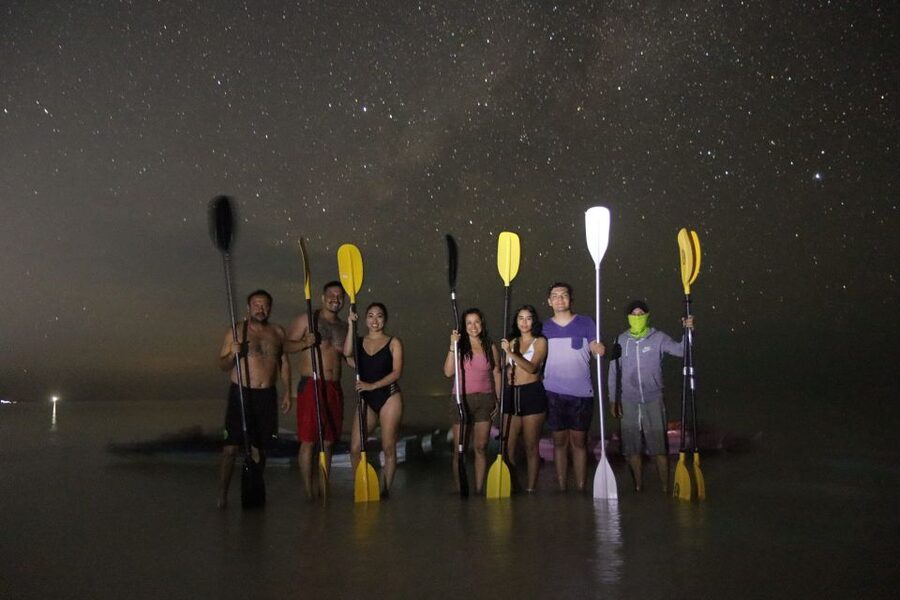
The sea glows when you move. That is the simple magic of this Holbox night kayak trip, where you paddle beneath clear stars, learn about the island’s ecosystem, and swim through neon-blue plankton. I especially like the combination of stargazing and bioluminescence, plus the short hotel transfer that keeps the evening easy.
The $44 price is fair for a guided 1.5-hour outing with equipment and downtown pickup. I also like that guides such as Diego and Omar have added real character to the experience, explaining the marine life and showing small water tricks. The main caution is that the glow is natural and changeable. It is usually strongest in spring and summer, but even then, cloudy water, moonlight, or conditions can make it faint.
In This Review
- Why this nighttime kayak trip is worth considering
- Setting out from downtown Holbox
- Paddling beneath Holbox’s dark sky
- Reaching the sandbanks and glowing water
- What the guides add to the water
- The ride back and what the short duration means
- Is $44 a good value?
- Practical tips for a better night
- Who will enjoy this Holbox experience most?
- Should you book the Holbox bioluminescent kayak tour?
- FAQ
- How long is the Holbox bioluminescent kayaking tour?
- What is included in the price?
- Does the tour include food or drinks?
- What should I bring?
- When is bioluminescence most visible?
- Can I swim during the tour?
- What languages are available?
- Where does the tour finish?
Why this nighttime kayak trip is worth considering
- You swim through living blue light: Movement in the water can make plankton sparkle around your body.
- Holbox offers dark skies: You may see constellations, shooting stars, your zodiac constellation, and three to five planets.
- The tour stays short and focused: At 1.5 hours on the water, it fits neatly into an evening.
- Downtown pickup saves effort: Transport is included from accommodations in central Holbox, though the exact pickup point should be confirmed.
- Spring and summer offer the best odds: Rain can make the glowing effect stronger rather than ruining the outing.
- The guides can make or break the night: Diego and Omar received particular praise, while one guest found the star talk limited and unevenly translated.
Setting out from downtown Holbox
The evening begins with pickup from your accommodation in downtown Holbox, depending on the option you choose. The vehicle then makes a roughly 10-minute golf-cart transfer to the launch area, a fitting form of transport for Holbox and a useful perk when you are carrying beachwear and a towel.
There is one small point to clarify before booking. The stated meeting reference is in front of Casa Las Tortugas, which is not affiliated with the tour company. One person expected direct hotel pickup but instead walked about 15 minutes to meet the vehicle. I would confirm your exact pickup spot rather than assume every downtown address receives door-to-door service.
Once you arrive, the crew supplies the kayaking gear and gets you ready for the water. The equipment is described as high quality, and dry bags are available for phones and other small items according to one account. Still, I would bring only what you need. A phone rarely captures this kind of darkness well, and handling it can pull you out of the moment.
More Kayak Trips in Cancun
- Cancun: Sunset Kayak Experience in the Mangroves
★ 4.8 · 227 reviews - Kayak Mangroves Sunrise Experience
★ 5.0 · 207 reviews - Kayak adventure through Laguna Nichupté in Cancun
★ 5.0 · 175 reviews
Paddling beneath Holbox’s dark sky
The first part of the outing is quiet and simple. You paddle along the coast while water laps against the kayak and the guide points out stars overhead. Because Holbox has low light pollution, the sky is a major part of the experience, not just a pleasant extra.
Depending on the month and conditions, you may hear about visible constellations, identify your zodiac constellation, and spot three to five planets. Shooting stars are also possible. The guide’s explanations add value here, especially if you enjoy learning what you are looking at instead of simply staring upward.
The stargazing quality can depend heavily on the guide. One guest praised Diego for explaining everything clearly, while another felt the guide knew only a limited amount about the stars and repeatedly pointed out the Big Dipper and passing planes. A separate language issue came up when information was not translated fully for English speakers while Spanish commentary continued.
That does not make the sky portion worthless, but it is worth keeping expectations sensible. This is not a formal astronomy lecture. It is a peaceful kayak ride with some constellation talk, and the stars may be the real show.
You may paddle in a double kayak, which can take a little practice. One family found the early wobbling turned into good-natured competition between teenage sons. If you are new to kayaking, expect a brief adjustment as you and your partner learn to match your strokes.
Solo visitors should also feel comfortable asking about the arrangement. Caroline, who went alone, was allowed to ride in the guide’s kayak rather than paddle by herself. That kind of flexibility can matter if you are traveling alone or simply do not feel confident in a kayak after dark.
Reaching the sandbanks and glowing water
The tour eventually reaches sandbanks where you can get into the sea. This is the emotional center of the evening. When the conditions cooperate, movement causes tiny bioluminescent organisms to produce a blue glow, outlining your arms, legs, and body as you move through the water.
The effect is not like swimming in a pool filled with electric-blue lights. It is subtler and more natural. You might see sparks around your hands, trails beside your legs, or blue flashes as the water moves. Under a moonless sky, the contrast can feel remarkable, with stars above and points of light below.
Several details help explain why people remember this part so strongly. In July, Omar reportedly used water tricks to show the glow from different angles and offered a snorkel so the effect could be viewed from below. A stingray also appeared during that outing, its movement surrounded by blue light. A horseshoe crab was spotted on another trip and became a useful lesson in local marine life.
Those sightings are not guaranteed, and you should not book expecting a particular animal. The horseshoe crab and stingray were fortunate encounters, while the plankton itself can also be weak. One May outing had little bioluminescent activity, and that was not something the operator could control.
The best conditions are generally in spring and summer, when the effect is most prominent. Rain may actually improve the glow. That is useful to know if the evening looks damp. A rainy forecast does not automatically mean cancellation in spirit, though you should still follow the operator’s instructions about weather and safety.
What the guides add to the water
A strong guide turns a pretty paddle into a worthwhile nature lesson. The included guides speak English, Spanish, and French, and the tour covers the island’s ecosystem along with the basic cause of bioluminescence.
The strongest accounts praise the guides for being friendly, calm, and informative. Diego was singled out for a clear explanation, while Omar helped make the water activity more playful and memorable. You can ask questions about the plankton, the shoreline, the animals you see, and the constellations overhead.
The quality may not be perfectly consistent. One guest found the guide shy and less confident with astronomy, even though his explanation of the horseshoe crab was better. If you want a detailed scientific talk in English, this may not always deliver. If you want a guide who gives context while you enjoy the setting, the experience is more likely to satisfy.
The language information deserves a practical note. English is listed as an available tour language, but one English-speaking guest felt that not everything was translated. If precise interpretation matters to you, confirm the language arrangement before setting out.
More paddling trips:
- Bioluminescence Tour in Kayak in Holbox Island
★ 4.5 · 165 reviews - Holbox: Guided Bioluminescence Kayaking Tour
★ 4.4 · 143 reviews - Holbox: Guided Sunrise/Sunset Kayak Tour by Mangrove Reserve
★ 4.5 · 127 reviews - Kayak TOUR POR Laguna Nichupte Cancun
★ 5.0 · 117 reviews
The ride back and what the short duration means
After the swim and stargazing, you return by kayak and then take another golf-cart ride of about 10 minutes. The stated finish point is Casa Las Tortugas, which serves as a reference point even though the hotel is not part of the tour company.
The 1.5-hour duration is a strength if you want a memorable evening without giving up half the night. It is long enough to paddle, listen to an explanation, reach the sandbanks, and swim when conditions allow. It is not long enough for a slow, extended astronomy session or a lengthy marine biology class.
You should also remember that the full outing includes transfers, preparation, and returning equipment. The time actually spent paddling or swimming may be less than 90 minutes. That is normal for a short guided activity, but it matters when judging the $44 cost.
Is $44 a good value?
For $44 per person, the tour includes downtown Holbox pickup and drop-off, a guide, and the kayak outing. You do not pay separately for the basic kayaking gear, which makes the price easier to accept.
I see the value in the combination. A beach walk can give you stars, and a regular kayak trip can give you quiet water, but this outing joins both with the chance to swim through bioluminescence. The experience is also easy to fit into a Holbox stay because it does not take an entire day.
The price feels strongest when the plankton is active and the guide is engaged. It feels less convincing when the glow is faint, the astronomy explanation is thin, or pickup is less convenient than expected. Natural conditions are part of the risk, so I would treat the $44 as payment for access, equipment, transport, and the chance to see the effect, not a guarantee of a spectacular blue display.
You do not receive food or drinks, so eat beforehand and bring water for your own comfort. The tour asks you to bring a towel and beachwear, though one person found the towel simply got wet. If you bring one, keep it somewhere dry until the end. Dry bags are reportedly provided for phones and similar items.
Practical tips for a better night
Choose the timing carefully. Spring and summer usually offer the best chance of strong bioluminescence. A moonless evening can make the glow and stars easier to appreciate, though the precise effect remains natural and unpredictable.
Wear clothing you can swim in. You will be asked to bring beachwear, and the outing includes a dip at the sandbanks. Avoid bringing anything delicate or difficult to dry.
Do not use a flashlight. Flashlights are not allowed, and that rule helps protect the dark-sky setting. Follow the guide’s instructions as you move around the kayaks and shore.
Leave alcohol behind. Alcoholic drinks are not allowed in the vehicle, and food and drinks are not included.
Protect your phone. The blue glow is hard to photograph, especially in darkness. A dry bag can keep your phone safe, but your own eyes will give you a better view than most camera screens.
Ask about the kayak setup. Double kayaks may require some teamwork. Solo participants can ask whether joining the guide or another arrangement is possible.
Check accessibility details. The information is mixed: the activity is described as wheelchair accessible in one place, but it is also marked as unsuitable for people with mobility impairments and wheelchair users. If this applies to you, contact the provider before paying.
Who will enjoy this Holbox experience most?
I would recommend it to couples, families with older children, friends, and solo visitors who want something more unusual than a standard evening on the beach. It suits anyone who likes calm water, simple nature explanations, and the thrill of seeing a natural effect with their own hands.
It is especially good for people who can accept uncertainty. You may get a spectacular blue outline around your body, or you may see only a modest sparkle. You may have a guide like Diego or Omar who adds plenty of detail, or a quieter guide whose astronomy knowledge feels basic.
I would not choose it if you need a guaranteed photographic result, a long kayak journey, a formal astronomy program, or a fully predictable schedule. It is also not the best fit if getting wet is a problem.
Should you book the Holbox bioluminescent kayak tour?
Book it if you want a short, unusual night on the water and can accept nature’s limits. The strongest version of this trip is special: dark skies, quiet paddling, glowing plankton, and perhaps a stingray or horseshoe crab appearing in the blue water.
Before booking, check the pickup point, confirm the language you need, and aim for spring or summer if bioluminescence is your main reason for going. At $44, I consider it a reasonable buy for the right conditions, but not a guaranteed light show. The stars alone make it pleasant. When the plankton is active, it can become one of Holbox’s most memorable evenings.
FAQ
How long is the Holbox bioluminescent kayaking tour?
The tour lasts 1.5 hours. The itinerary also includes golf-cart transfers of about 10 minutes each way.
What is included in the price?
The price includes hotel pickup and drop-off in downtown Holbox, an English-speaking guide, and the kayaking tour.
Does the tour include food or drinks?
No. Food and drinks are not included.
What should I bring?
Bring a towel and beachwear. Dry bags may be provided for phones and other small belongings.
When is bioluminescence most visible?
The effect is usually most prominent in spring and summer. Rain may improve its intensity.
Can I swim during the tour?
Yes. The tour reaches sandbanks where you can get into the sea and see the plankton glow in response to your movement.
What languages are available?
Guided tours are available in English, Spanish, and French.
Where does the tour finish?
The stated finish point is Casa Las Tortugas. The vehicle parks in front of the entrance, which is used as a reference point and is not affiliated with the tour provider.
Just added around Cancun
- Las Coloradas Pink Lake & Rio Lagartos Guided Tour★ 4.5 · 103 reviews
- LDS Tour to Chichen Itza + Cenote★ 5.0 · 103 reviews
- Cancun Parasailing Adventure★ 4.0 · 104 reviews
- Cancun Mayan Pass: ATV, Cenote, Zipline, Transportation & Horses★ 4.5 · 105 reviews
- Amazing Romantic Dinner on a Spanish Galeon with Saxophone Music★ 4.5 · 105 reviews
- Catamaran Booze Party With Open Bar in Cancun★ 4.5 · 105 reviews
- Mud Madness at Selvatica★ 4.5 · 106 reviews
- Private Yacht Rental Sea Ray 46ft Cancun 23P3★ 5.0 · 107 reviews
Canoes & Kayaks, compared.
Los Cabos Arch and Playa del Amor Tour by Glass Bottom Kayak
Read our review →
Kayak Expedition to the Arch of Cabo San Lucas, Lovers Beach & Snorkel
Read our review →
Los Cabos Power snorkel Adventure, Kayaking and Stand-Up Paddle
Read our review →
4 Private Cenotes, Zip-Lines, Canoes & Mayan Village with Delicious Lunch
Read our review →
Cabo San Lucas Glass Bottom Kayak Tour and Snorkel at Two Bays
Read our review →
Pirate’s Channel & 3 Lagoons Kayak or SUP/Paddle Tour +Meditation
Read our review →
Sunrise Paddle Quest: Embrace the Dawn on Bacalar’s Waters
Read our review →
Sunrise by Paddle or Kayak with Floating Picnic
Read our review →Browse the lists this tour appears in