
Reviewed · CANCUN TOURS
Bioluminescence Experience in Holbox
The water lights up when you move. This Holbox night tour combines glowing plankton and stargazing, with a guide who explains both in clear English and, when needed, Spanish. I like the hotel pickup within Holbox and the fact that wetsuits, water shoes, masks, and snorkels are supplied. The main catch is that the experience depends heavily on moonlight, weather, mosquitoes, and the exact water conditions that night.
I also like the small-group setup, which gives guide Alex, Javier, or Alan time to help people in the water and point out stars overhead. The schedule is set around the lunar cycle, so you may not start at the advertised 10 p.m. A near-full moon once pushed a family’s outing to 3 a.m., which tells you this is not a clockwork activity.
In This Review
- Five things to know before you book
- What makes Holbox bioluminescence special
- Pickup, equipment, and the late-night start
- The buggy ride to the dark side of Holbox
- Stargazing before the water
- Entering the shallow water near Punta Coco
- Mosquitoes, mangroves, and the honest downside
- Group size, language, and family suitability
- Is the experience good value?
- Timing, weather, and cancellation rules
- Who should book this Holbox night tour?
- Should you book it?
- FAQ
- Where does the bioluminescence experience take place?
- What time does the tour start?
- Does the tour operate during a full moon?
- How deep is the water?
- What equipment is included?
- Is pickup available from outside Holbox?
- Do I need to bring food or drinks?
- Can children participate?
- What happens if the plankton does not appear?
- What is the cancellation policy?
Five things to know before you book
- The moon controls the schedule: Full moon nights are excluded, and the final start time is confirmed the day before.
- You enter shallow water: The activity takes place at roughly 1 meter deep in the sea or mangrove area near Holbox.
- The stars are part of the show: Guides often point out constellations, planets, the Milky Way, and even passing Starlink satellites.
- Mosquito protection matters: Wetsuits and long sleeves help, but bring insect repellent and expect bugs near still mangrove water.
- The glow is real but not guaranteed: If the plankton does not appear, you can reschedule or receive a refund.
What makes Holbox bioluminescence special
Bioluminescence is produced by tiny marine organisms that emit flashes of blue-green light when the water is disturbed. You may see the glow when you move your hands, kick your feet, or swim through the shallow water. Some people also see luminous specks in the wet sand or fish passing through the glowing water.
This is not a floodlit show. The darker the night, the better your eyes can pick out the faint sparks. That is why the tour avoids full moon nights and changes its start time with the lunar cycle. A few days past the full moon, the effect may look modest. Around a new moon, the same water can seem far brighter.
You should also set your expectations sensibly. Photos and videos tend to make bioluminescence look stronger than it does in person. The most reliable pleasure is the strange sensation of making the water sparkle with your own movements, not a constant blue glow around your entire body.
A few more reviews worth comparing before you book
- Chichen Itza, Cenote, and Valladolid Tour
★ 5.0 · 24,293 reviews - Chichen Itza, Cenote & Valladolid Tour with Tequila and Lunch
★ 4.5 · 15,789 reviews - Cancun: Chichen Itza, Cenote & Valladolid Tour with Lunch
★ 4.6 · 6,722 reviews
Pickup, equipment, and the late-night start
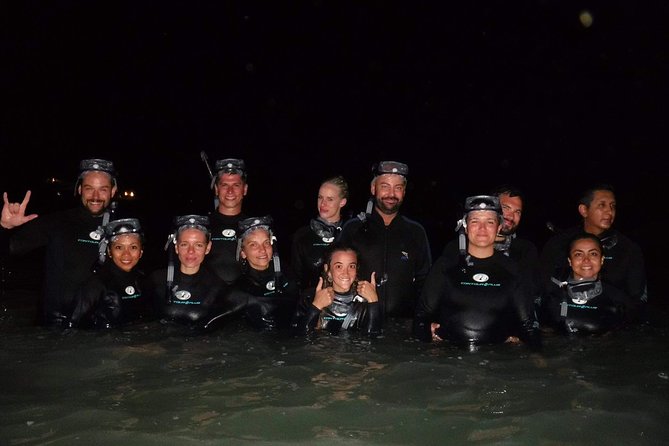
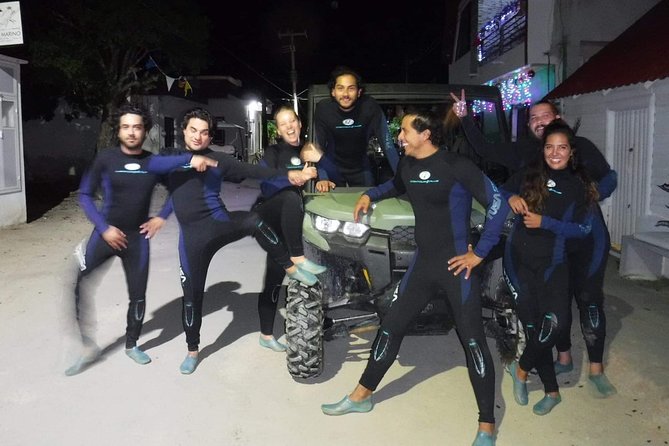
Pickup is available only inside Isla Holbox. During the day, the operator brings the equipment to your accommodation, so you can try on or receive the correct items before the activity. Later, a certified guide collects you in a buggy and drives you to the site.
The start time is shown as 10 p.m., but that is not fixed. The moon and local conditions determine the actual hour, and the guide confirms it the day before. If darkness is especially important for the plankton, you could be asked to go much later.
One family reported starting around 3 a.m. to avoid a nearly full moon. That sounds inconvenient, but the unusual hour can also make the outing feel like a true nighttime adventure. Still, do not book this for the evening before an early ferry, flight, or busy excursion unless you are comfortable losing sleep.
The supplied equipment includes:
- A long wetsuit
- Special water shoes
- A professional snorkeling mask
- Snorkeling equipment
- A mosquito mask
- Private transportation within Holbox
- A guide certified by SECTUR
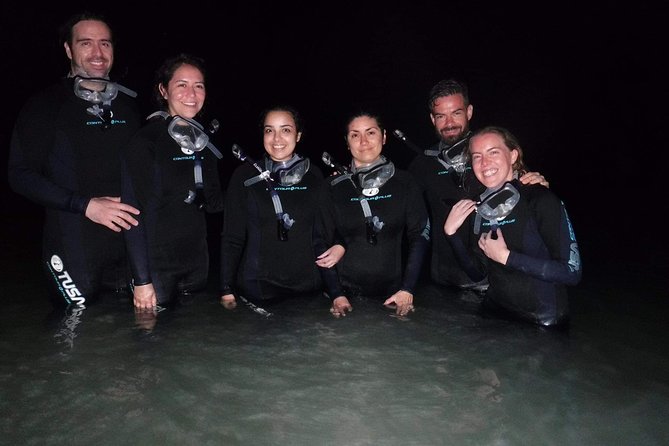
The wetsuit is useful even if you do not feel cold. Several outings involved heavy mosquitoes, and the long suit provides a layer of protection. It does not replace insect repellent, though. Put on repellent before leaving and bring more if the operator allows it.
Wear your swimsuit under the wetsuit. Leave valuables behind. You may not want to carry your phone, wallet, jewelry, or camera into the dark water, and some outings require phones to remain in the vehicle. The experience is far better when you are not worrying about a lost device.
The buggy ride to the dark side of Holbox
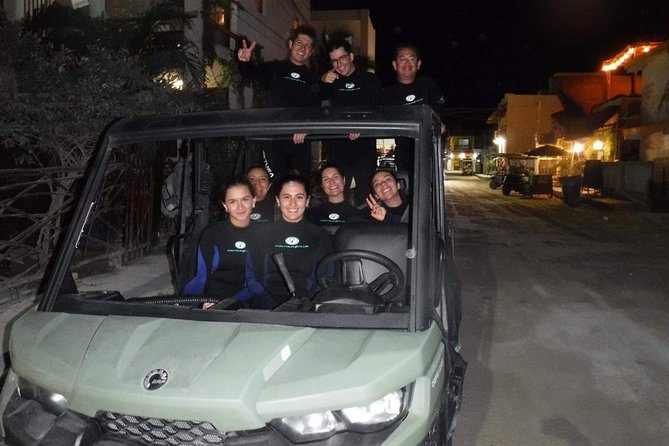
The buggy transfer is short, practical, and part of the fun. You ride away from the brighter parts of town toward a darker area around Punta Coco or a nearby mangrove site. The exact location can change if the plankton is weak at the first stop.
That flexibility is valuable. On one outing, the guide moved the group to a second location when the first area did not have enough visible bioluminescence. This cannot guarantee a dazzling display, but it shows why a guide can be more useful than simply arriving at the shoreline alone.
The tradeoff is comfort. Some groups walk through dark mangrove paths for several minutes, and one negative account described a walk of roughly 1 kilometer with uneven ground and trip hazards. Because stray light can reduce the quality of stargazing, guides may limit flashlight use. If you are uneasy walking in darkness, ask about the route and lighting before you leave.
This is an important safety question, not a fussy detail. The supplied information says the guide accompanies you throughout the activity, but conditions around mangroves can feel remote. Tell the guide if you need a slower pace or better visibility on the return walk.
Stargazing before the water
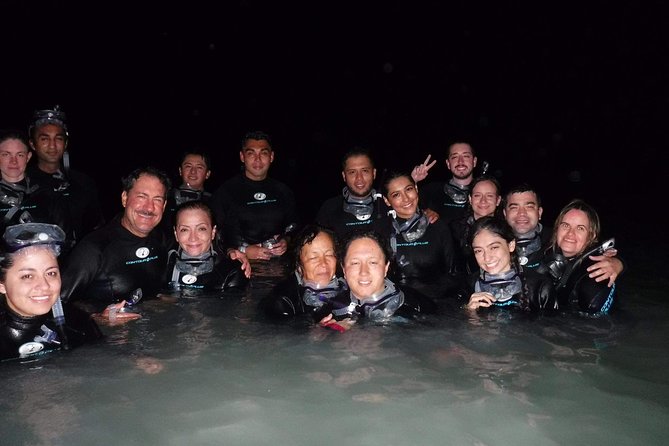
The outing often begins with the sky. Guides Alex, Javier, and Alan have pointed out constellations, planets, and star patterns while the group waits for its eyes to adjust. Depending on the night, you might see Jupiter, Venus, the Milky Way, or a line of Starlink satellites.
I like this addition because it gives you something worthwhile before the water portion begins. If the plankton is faint, the sky can still provide a memorable night. It also gives the guide a useful way to explain how natural light affects what you see.
Some people may find the astronomy talk longer than expected. One dissatisfied participant felt that about 30 minutes of stargazing was too much because the main interest was bioluminescence. If you want only a quick swim, this may feel like a detour. If you enjoy looking up at a dark sky, it is one of the tour’s strongest extras.
The quality depends on the guide. Alex is praised for his humor and clear explanations, while Javier and Alan also receive strong marks for their astronomy and science talks. Several guides have conducted the activity in both English and Spanish, which is helpful for mixed-language groups.
A different sort of day out around Cancun:
- Early morning Chichen Itza Tour: Cenote and Tequila Tasting
★ 5.0 · 6,657 reviews - Private Roundtrip Transportation from Cancun Airport to Cancun Hotel Zone
★ 5.0 · 5,086 reviews - Cancun ATV Jungle Adventure, Ziplines, Cenote and Tequila Tasting
★ 4.5 · 4,873 reviews - Viator Exclusive: Tulum Ruins, Reef Snorkeling, Cenote and Caves
★ 5.0 · 4,242 reviews
Entering the shallow water near Punta Coco
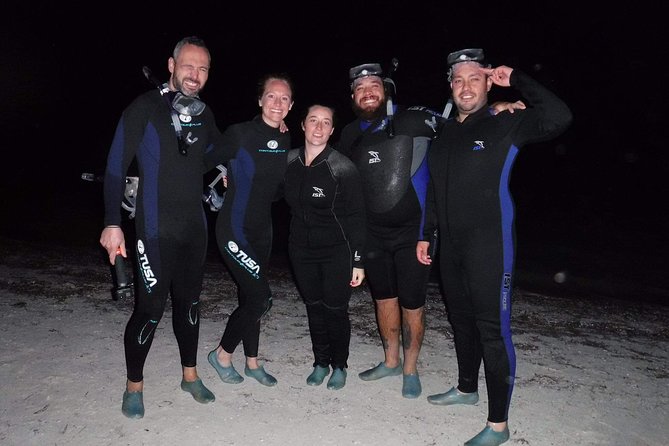
At the water, the guide explains the safety rules and demonstrates how to use the equipment. The group then enters water around 1 meter deep, usually in the sea or a mangrove area around Holbox Island.
You do not need to be an expert swimmer to take part, since the water is shallow and the guide stays with the group. Still, the tour involves wading, walking on or near soft ground, and using a mask and snorkel. If you dislike mud, mosquitoes, or dark water, the setting may test your patience.
Once everyone is in place, you move your hands and feet through the water. The plankton responds with tiny flashes. A guide may use a shirt or another simple object to collect some of the glowing organisms briefly for a closer look. Some participants have seen fish moving through the illuminated water, which adds a little drama to the scene.
The effect may be subtle at first. Give your eyes time to adjust and watch the water around your hands rather than expecting a bright sheet of light. A new moon and clear weather offer the best chance of seeing the phenomenon clearly, but nature does not follow a script.
Mosquitoes, mangroves, and the honest downside
Mosquitoes are the biggest practical complaint. Still water, mangroves, humid air, and a late-night visit create ideal conditions for insects. One group had a miserable time near a swampy area, while another group reported no bites at all. Your experience may depend on wind, recent rain, location, clothing, and how much repellent you use.
Bring strong insect repellent. Apply it before pickup, especially to exposed areas, and ask if you can reapply after putting on the wetsuit. A long wetsuit and mosquito mask help, but your hands, neck, and any exposed skin can still be vulnerable.
The remote setting also raises a safety concern for some people. One participant felt uncomfortable walking through dark mangroves and entering an isolated lagoon, especially after asking about crocodiles and receiving an unhelpful answer. The supplied details do not establish that crocodiles are present at the swimming site, so you should not assume either way. If wildlife concerns matter to you, ask the operator directly before booking.
It is also fair to say that the guide’s personality can shape the night. Most praise centers on friendly, funny, attentive guiding, but not every interaction has pleased every person. A small group can feel personal and engaging, yet it also means the guide’s judgment and communication affect the whole outing.
Group size, language, and family suitability
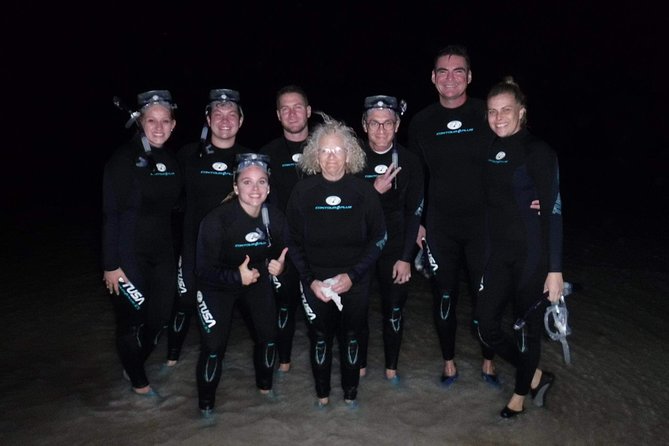
The maximum group size is 24 people. That is not an intimate private tour, but it is still manageable for a water activity when the guide keeps everyone together. The experience is described as a small-group outing, and the guide has time to explain the plankton, help with equipment, and point out stars.
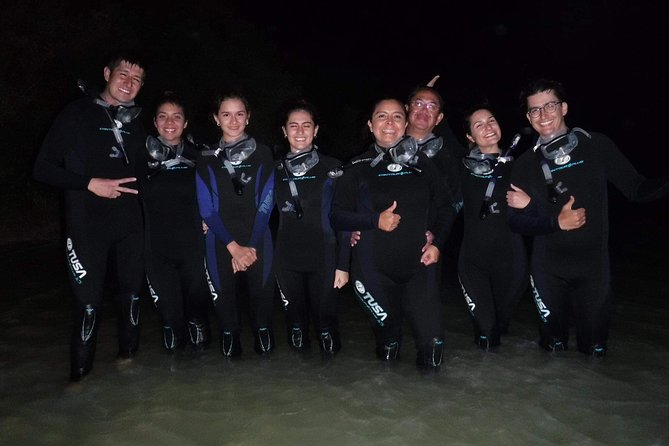
Families have brought children and teenagers, including a group ranging from age 9 to 41. The shallow water and supplied equipment make it suitable for many participants. You should still consider how your child handles darkness, insects, muddy paths, unusual hours, and being in open water at night.
Most people can participate, but the information does not provide a detailed accessibility assessment. If you have limited mobility, ask in advance about the buggy, the walk to the water, the ground conditions, and getting in and out of the sea or mangrove area.
The tour is offered in English. Individual guides have also used Spanish during the experience, but you should confirm language needs when booking if this matters to your group.
Is the experience good value?
No price is provided here, so I cannot judge the exact cost against other Holbox activities. I can judge what you receive for the fee: transport within Holbox, equipment, a certified guide, an astronomy session, and help finding a suitable location.
That package can be good value if you want an organized night out and do not want to arrange transport or rent gear. The guide’s ability to shift locations may also save you from arriving at a weak spot and finding little to see.
Going alone to Punta Coco may cost less, but you would give up the explanations, equipment, pickup, and the operator’s attempt to find stronger conditions. Some people prefer the freedom of arriving independently and leaving after a few minutes. Others will appreciate having someone explain what is happening and keep the activity moving.
The value drops if you dislike long waits, stargazing, insects, or shallow-water wading. It also drops if you expect the water to glow as strongly as a professionally edited photograph. This is a nature-based experience, not a guaranteed light show.
Timing, weather, and cancellation rules
The tour cannot operate on full moon nights, and the schedule changes with the lunar cycle. Weather can also cancel the activity. If poor weather prevents the outing, you are offered another date or a full refund.
If the bioluminescence does not appear, the operator says you can reschedule or receive your money back. That is a useful safeguard, though you should confirm the exact process before setting out.
You can cancel for a full refund up to 24 hours before the local start time. Cancellations or changes made within 24 hours are not refunded or accepted. Since the final hour may shift, keep your plans flexible and check the confirmed time the day before.
Who should book this Holbox night tour?
I would choose this experience if you want more than a quick look at glowing water. The combination of astronomy, a buggy ride, guided snorkeling, and supplied protective clothing gives the evening a clear shape.
It is especially suited to:
- Couples looking for an unusual night activity
- Families with children or teenagers who can manage a late hour
- People who enjoy astronomy as much as marine life
- Visitors staying within Holbox who want pickup and equipment included
- Anyone who would rather have a guide explain the science than explore alone
I would hesitate if you are very sensitive to mosquitoes, uncomfortable in dark remote areas, or unable to accept a schedule that may move late into the night. You may also prefer an independent visit if you only want to splash your hands in the water for a few minutes.
Should you book it?
Yes, if you approach it as a guided nature outing rather than a guaranteed neon spectacle. The best parts are the dark sky, the strange blue sparks around your hands, the included equipment, and guides such as Alex who add humor and clear explanations.
Book during a darker moon phase if you can, confirm the time the day before, wear your swimsuit under the wetsuit, and bring serious mosquito repellent. Leave valuables behind and ask direct questions about the walking route, lighting, and water location if those details affect your comfort.
For many people, this will be one of Holbox’s most memorable evening activities. Just remember that the plankton decides how much magic you get.
FAQ
Where does the bioluminescence experience take place?
It takes place around Holbox Island, in the sea or a mangrove area. Punta Coco is one location used during the experience, but the exact site may change depending on the strength of the bioluminescence.
What time does the tour start?
The listed start time is 10 p.m., but the actual hour varies with the lunar cycle. The operator confirms the schedule with you the day before.
Does the tour operate during a full moon?
No. The activity cannot be carried out on full moon nights because the extra light can make the bioluminescence difficult to see.
How deep is the water?
The activity takes place at an approximate depth of 1 meter. The guide accompanies the group and explains the precautions before entering the water.
What equipment is included?
You receive a long wetsuit, mosquito mask, special water shoes, a professional snorkeling mask, and snorkeling equipment. Private transportation within Holbox and a SECTUR certified guide are also included.
Is pickup available from outside Holbox?
No. Pickup service is available only within Isla Holbox. Transportation outside the island is not included.
Do I need to bring food or drinks?
Meals and drinks are not included. The supplied information does not specify that refreshments are provided, so plan accordingly before pickup.
Can children participate?
Most people can participate, and families with children and teenagers have taken part. The activity involves late-night travel, walking, mosquitoes, and shallow-water snorkeling, so consider whether those conditions suit your child.
What happens if the plankton does not appear?
The operator says you can reschedule the experience or receive a refund if the bioluminescence does not appear. Poor weather can also lead to a new date or a full refund.
What is the cancellation policy?
You can cancel at least 24 hours before the experience for a full refund. Cancellations or changes made less than 24 hours before the start time are not accepted and are not refunded.
Just added around Cancun
- Las Coloradas Pink Lake & Rio Lagartos Guided Tour★ 4.5 · 103 reviews
- LDS Tour to Chichen Itza + Cenote★ 5.0 · 103 reviews
- Cancun Parasailing Adventure★ 4.0 · 104 reviews
- Cancun Mayan Pass: ATV, Cenote, Zipline, Transportation & Horses★ 4.5 · 105 reviews
- Amazing Romantic Dinner on a Spanish Galeon with Saxophone Music★ 4.5 · 105 reviews
- Catamaran Booze Party With Open Bar in Cancun★ 4.5 · 105 reviews
- Mud Madness at Selvatica★ 4.5 · 106 reviews
- Private Yacht Rental Sea Ray 46ft Cancun 23P3★ 5.0 · 107 reviews
Cancun Tours, compared.
Chichen Itza, Cenote & Valladolid Tour with Tequila and Lunch
Read our review →
Chichen Itza, Cenote & Valladolid Tour with Lunch
Read our review →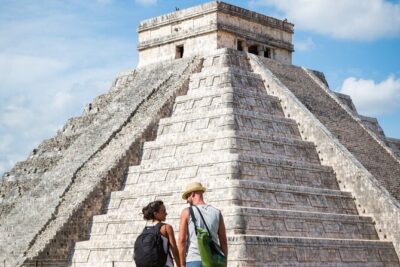
Early morning Chichen Itza Tour: Cenote and Tequila Tasting
Read our review →
Cancun ATV Jungle Adventure, Ziplines, Cenote and Tequila Tasting
Read our review →
Viator Exclusive: Tulum Ruins, Reef Snorkeling, Cenote and Caves
Read our review →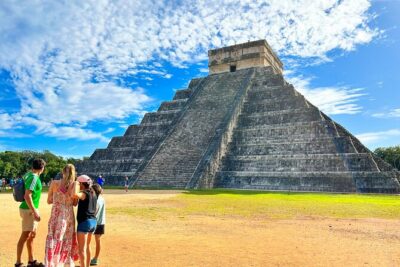
Chichen Itza Early Access All Inclusive: Hotel Pick up & All Fees
Read our review →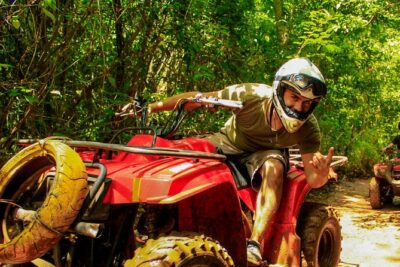
ATV Adventure, Interactive Bridges, Ziplines, Cenote and Lunch
Read our review →Browse the lists this tour appears in