
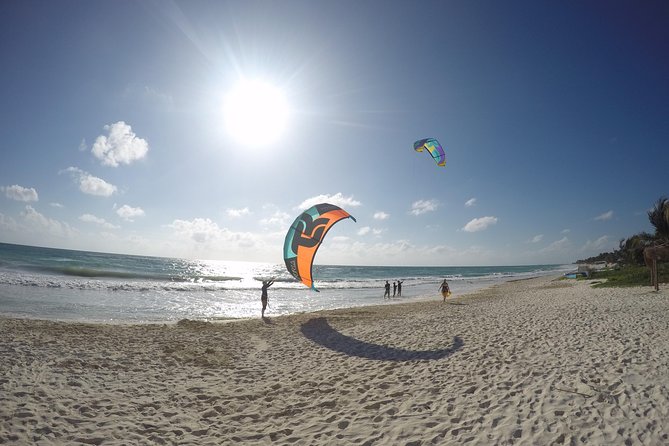
Reviewed · WORKSHOPS
Private Kiteboarding Lesson in Tulum
Kiteboarding starts with the wind. This private three-hour lesson in Tulum gives you one-on-one coaching, full equipment, and a clear path from kite control to your first rides. I like the private format, since your instructor can adjust the pace to your skills. I also like the strong safety focus, including self-rescue and bar systems before you head into the water. The main consideration is weather: poor wind or rain can cancel the session, so keep some flexibility in your schedule.
You meet at Mexican Caribbean Kitesurf & Paddlesurf at Ahau Tulum, along the coastal road. The lesson is taught in English by an IKO-certified instructor and suits beginners as well as riders who want to sharpen specific skills. Mauricio and Roma are named as instructors, and one especially useful detail is their flexibility: Mauricio has worked with a complete novice while also helping another student with tricks, strapless riding, and winging. That kind of adjustment is hard to get in a large group.
In This Review
- Key Points Before You Book
- Meeting the Kite at Ahau Tulum
- First Hour on the Sand: Wind, Lines, and Safety
- In the Water: Body Dragging and Power Strokes
- Water and Board: From Assisted Starts to Solo Riding
- What Makes the Private Format Worth It
- What the Equipment and Facilities Add
- Weather, Timing, and Cancellation Rules
- Who Should Book This Tulum Lesson?
- My Verdict on the $270 Price
- Should You Book the Private Kiteboarding Lesson?
- FAQ
- Where does the kiteboarding lesson begin?
- Where does the activity end?
- How long does the lesson last?
- Is the lesson private?
- What language is offered?
- What is included in the price?
- Is transportation included?
- What happens if the weather is poor?
Key Points Before You Book
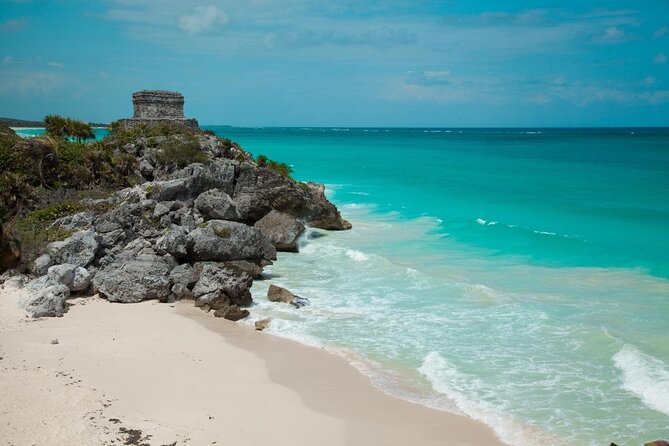
- Private instruction keeps the lesson focused on you: You are not sharing practice time with a large class, so the instructor can work at your pace.
- The lesson moves from beach safety to real riding: You cover wind theory, setup, safety systems, self-rescue, body dragging, power strokes, waterstarts, riding, and transitions.
- IKO-certified instruction adds structure: You learn standard kiteboarding methods rather than simply being handed a kite and sent into the water.
- The session includes the main equipment: Kiteboarding gear, bathrooms, showers, Wi-Fi, and paddleboarding boards are included.
- Weather can change the plan: If conditions are poor, you can choose another date or receive a full refund.
- The three-hour format works best with a clear goal: Beginners can build a foundation, while returning riders should tell the instructor exactly what they want to improve.
Meeting the Kite at Ahau Tulum
Your lesson begins at Mexican Caribbean Kitesurf & Paddlesurf, at Ahau Tulum on Carr. Tulum a Boca Paila Km. 7.5 in the Tulum Beach area. The activity ends at the same meeting point, which keeps the day simple once you arrive.
Transportation is not included, so you need to arrange your own way to the beach. Food and drinks are also not included. That matters because the lesson lasts about three hours, and you may want to plan refreshments before or after your session rather than expect them as part of the booking.
The base price is $270 per person. That is not a casual beach activity price, but the value becomes clearer when you consider what it covers: a private lesson, an IKO-certified instructor, kiteboarding gear, access to bathrooms and showers, Wi-Fi, and paddleboarding boards. You are paying for direct teaching time and equipment, not simply a short assisted ride.
I would consider the price strongest for a first lesson, a pair of participants with different abilities, or an intermediate rider who has a very specific target. Mauricio’s reported flexibility is useful here. One person wanted to work on tricks, strapless technique, and winging, while a partner was starting from zero. A private setup can handle that split far better than a fixed group class.
A few more reviews worth comparing before you book
- Cabo San Lucas Mexican Cooking Class Experience and Local Markets
★ 5.0 · 915 reviews - Puerto Vallarta Cooking Class Experience with Market Tour
★ 5.0 · 698 reviews - La Paz World Class Snorkeling in Balandras Hidden Beaches
★ 5.0 · 582 reviews
First Hour on the Sand: Wind, Lines, and Safety
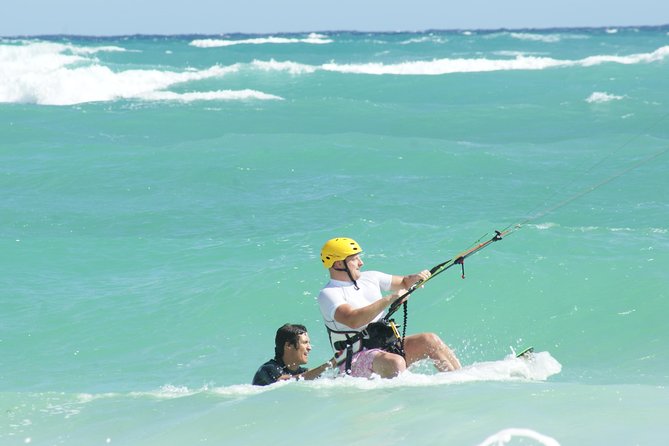
The lesson begins on the beach, where you learn how the kite works before dealing with the extra challenge of moving water. This opening may feel less thrilling than getting airborne, but it is where the important decisions happen.
First comes kite and wind theory. You learn the wind window, the area around you where the kite can fly and generate different levels of power. Understanding this idea helps you predict how the kite will respond when it moves across the sky. It also gives you a basic sense of where the kite is safer and where it can pull hard.
Next, you help set up the kite and lines. This is useful because kiteboarding is not just a matter of holding a bar. You need to know how the parts connect and how to check the arrangement before entering the water. An instructor can correct mistakes at this stage, when they are easier to see and fix.
You then examine the bar and its safety systems. This is one of the most valuable parts of the lesson for a beginner. The bar controls the kite, while the safety systems help you reduce power or separate yourself from the kite if something goes wrong. The course does not treat safety as a footnote. It places these systems near the start, where they belong.
Self-rescue technique follows. You learn what to do if you lose control or need to return safely without normal kite power. The supplied details do not promise a full rescue course, so I would view this as a practical introduction rather than a replacement for continued safety training.
The beach portion ends with kite control. You begin to connect theory with movement, learning how small bar inputs affect the kite. This is also where a private instructor can spot hesitation or poor positioning and give immediate corrections.
In the Water: Body Dragging and Power Strokes
Once you understand the equipment, the lesson shifts into the water. The first water skill is body dragging upwind. Rather than trying to ride a board right away, you use the kite to move through the water while keeping your body position controlled.
This step teaches you how the kite pulls and how to work with that pull. It also helps you recover the board if it moves away from you later. For beginners, body dragging can feel awkward at first, but it is a practical bridge between kite control and board riding.
Power strokes come next. These are deliberate movements of the kite that create the force needed to move you through the water. You begin to feel the relationship between kite position, body position, and power. The instructor can keep this practice measured, which matters because too much power too soon makes learning harder and less comfortable.
A private session is particularly useful here. You can repeat a movement until it makes sense instead of moving on because the rest of a group is ready. If you already know the basics, you can spend less time on this stage and ask for more advanced practice.
Water and Board: From Assisted Starts to Solo Riding
The board section begins with an assisted waterstart. A waterstart is the moment when the kite pulls you from the water onto the board. Starting with assistance gives you help with timing, board placement, and kite movement before you try to coordinate everything alone.
You then work toward a solo waterstart. This is a major milestone because it requires you to manage the kite, board, and body position at the same time. The lesson plan does not promise that every participant will master every stage in three hours. Your progress will depend on prior experience, comfort in the water, and the conditions on the day.
After starting, you practice riding downwind. This direction is generally part of learning to control your first short runs, since you can focus on staying upright and keeping the kite steady. The goal is not simply to move, but to understand how your direction changes the kite’s pull.
Riding upwind comes later. It requires more control and better board edging, so it is a useful sign that you are beginning to manage the kite rather than just being pulled along by it. The sequence from downwind to upwind makes sense: first find stability, then work on direction and control.
Transitions complete the listed board skills. A transition is a change from one direction to another. This can be a demanding step, and you may only receive an introduction if you are new to the sport. An experienced rider, on the other hand, can use this time to clean up technique and make changes more controlled.
A different sort of day out around Tulum:
- Chichen Itza, Cenote and Valladolid Small Group Day Trip
★ 5.0 · 2,104 reviews - Tulum Guided Tour, Magical Cenote, Lagoon Snorkeling and Beachside Lunch
★ 5.0 · 1,888 reviews - Tulum Ruins, Turtles in Akumal and Cenote tour
★ 5.0 · 1,706 reviews - Sian Ka’an Adventure Full Day Trip to Punta Allen
★ 5.0 · 1,179 reviews
What Makes the Private Format Worth It
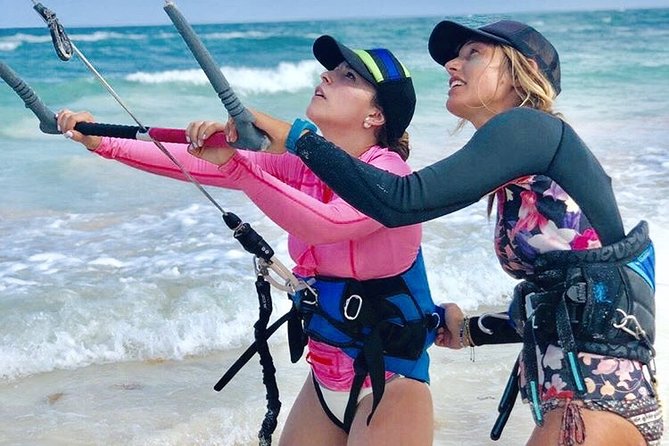
The most important difference here is not the beach location or the equipment. It is the instructor’s attention. A private lesson lets you ask questions without holding up a class, repeat a skill when needed, and move forward when you are ready.
That flexibility also helps mixed-ability groups. The experience described by the provider included one participant who was new to kiteboarding and another who wanted to work on tricks, strapless riding, and winging. Mauricio adapted to both needs. That is a strong sign for couples or friends who want to share an activity but do not have the same experience level.
You should still set realistic expectations. Three hours is enough time for a well-structured introduction, but it may not turn you into an independent rider. Kiteboarding combines wind reading, equipment handling, safety, balance, and timing. If you are starting from zero, your best outcome may be safe kite control and a first assisted or solo waterstart.
The private format also does not remove every challenge. You still need to be comfortable with moderate physical activity, getting wet, handling the equipment, and following safety instructions. The experience is not recommended for people with back problems or serious medical conditions.
What the Equipment and Facilities Add
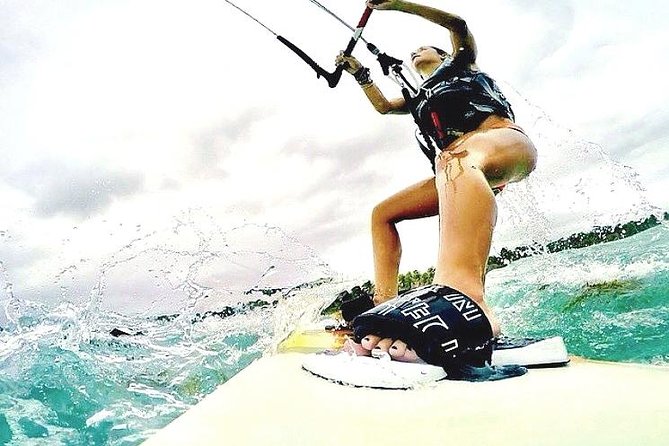
Kiteboarding gear is included, which saves you from renting equipment separately or trying to identify what you need before the lesson. The instructor handles the teaching, but you still get the benefit of learning with the gear used during the session.
Bathrooms and showers are practical additions. You may not think much about them when booking, but they make the start and finish easier, especially after a water-based activity. Wi-Fi is also available at the location, though it is not a reason by itself to choose the lesson.
Paddleboarding boards are included as well. The information does not specify that paddleboarding forms part of the kiteboarding lesson, so do not assume it replaces kite practice or is guaranteed as a separate guided activity. It is best viewed as an added facility available through the experience.
The mobile ticket makes access easier once your booking is confirmed. Confirmation is provided at the time of booking, and the meeting and end point are the same. Those details reduce confusion on the day, but you still need to handle your own transportation.
Weather, Timing, and Cancellation Rules
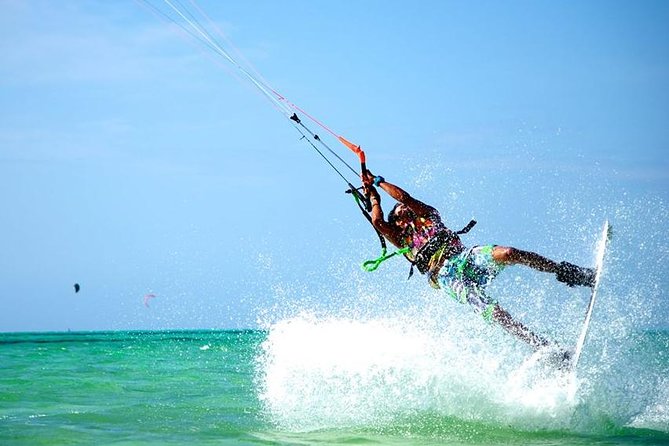
This activity depends on favorable weather conditions. Wind is central to kiteboarding, so a poor forecast can change the plan. If the provider cancels because conditions are unsuitable, you can choose another date or receive a full refund.
You can cancel for a full refund up to 24 hours before the experience start time. Cancellations made less than 24 hours before the start are not refunded, and changes inside that same window are not accepted. The cut-off uses local Tulum time.
I would avoid scheduling this lesson immediately before an important departure or fixed evening plan. A weather change may force you to move the session, and the best response is to leave room in your Tulum schedule. The cancellation protection is generous if you act early, but it does not protect a last-minute change on your side.
Who Should Book This Tulum Lesson?
This experience is a good match for a first-time kiteboarder who wants careful instruction rather than a crowded group class. The theory, setup, safety systems, and self-rescue work create a sensible foundation before the board appears.
It also suits an intermediate rider who wants to focus on a particular goal. Tell the instructor if you want to practice tricks, strapless riding, or winging. The experience has already shown that such requests can be accommodated alongside beginner instruction.
Couples and friends with different skill levels may find the private setup especially useful. One person can receive beginner coaching while another works on more advanced control, subject to the instructor’s judgment and the available time.
The minimum age is 10. Participants should have a moderate level of physical fitness. The experience is not recommended for people with back problems or serious medical conditions, although service animals are allowed.
My Verdict on the $270 Price
At $270 per person, this is a premium lesson, but it offers more than a quick tryout. The three-hour duration gives the instructor time to explain the wind, set up the gear, cover safety, practice kite handling, and move into water skills.
I would not choose it if you only want a short beach novelty or if you are looking for the cheapest way to get on a board. I would choose it if you value direct coaching and want a structured introduction with equipment already supplied.
The perfect value depends on your goal. A beginner may leave with a solid base and a better idea of whether kiteboarding is worth pursuing. An experienced rider may get more value by arriving with a short list of skills to improve. Either way, the private format is the main reason to pay more.
Should You Book the Private Kiteboarding Lesson?
Book it if you want focused instruction, you meet the fitness requirements, and you can keep your schedule flexible for weather. The combination of IKO-certified teaching, safety practice, complete kiteboarding gear, and private attention makes this a serious introduction rather than a quick photo opportunity.
Before booking, be clear about your level and your goals. If you are new, expect to spend meaningful time learning kite control and safety before riding. If you already kiteboard, ask to work on specific skills such as tricks, strapless riding, winging, or transitions.
I would pass if $270 feels too high for a lesson that may be adjusted by wind conditions, or if you need a fixed activity that cannot move. For most people who want to learn properly in Tulum, though, this is a strong choice, provided you treat the three hours as the beginning of the sport, not the finish line.
FAQ
Where does the kiteboarding lesson begin?
The lesson starts at Mexican Caribbean Kitesurf & Paddlesurf at Ahau Tulum, Carr. Tulum a Boca Paila Km. 7.5 Zona Costera, Tulum Beach, 77760 Tulum, Q.R., Mexico.
Where does the activity end?
The activity ends back at the meeting point at Ahau Tulum.
How long does the lesson last?
The lesson lasts approximately three hours.
Is the lesson private?
Yes. This is a private activity, and only your group participates.
What language is offered?
The experience is offered in English.
What is included in the price?
The price includes an IKO-certified instructor, kiteboarding gear, use of bathrooms, showers, Wi-Fi, and paddleboarding boards.
Is transportation included?
No. Transportation, food, and drinks are not included.
What happens if the weather is poor?
If poor weather causes a cancellation, you can choose an alternative date or receive a full refund.
Just added around Tulum
- 1.5 hours Snorkeling at Tulum’s paradise reef★ 4.5 · 34 reviews
- Tulum Half-Day Jungle Adventure ATV, Ziplines (4) & Mexican Snack★ 4.5 · 35 reviews
- From Riviera Maya: Snorkeling & Private Cenote Half-Day Tour★ 4.9 · 36 reviews
- Round-trip Private Transfer Cancun Airport to TULUM Downtown★ 5.0 · 36 reviews
- Private Cancun Airport (CUN) Transportation to/from Tulum★ 4.0 · 36 reviews
- Tulum Area Experiences Guided Snorkeling Tour – Casa Cenote + Ocean Reef & Lunch★ 4.5 · 36 reviews
- Coba Ruins and Punta Laguna Monkey Reserve Day Tour from Tulum★ 5.0 · 37 reviews
- Luxury Tour to Chichen Itza and 2 Cenote – From Tulum★ 3.5 · 37 reviews
Workshops, compared.

Cabo San Lucas Mexican Cooking Class Experience and Local Markets
Read our review →
Puerto Vallarta Cooking Class Experience with Market Tour
Read our review →
La Paz World Class Snorkeling in Balandras Hidden Beaches
Read our review →

Mexican Cooking Class with Food Market Visit in Mexico City
Read our review →
Bean to Bar Chocolate Workshop in Puerto Vallarta
Read our review →
Browse the lists this tour appears in