
Reviewed · SCUBA DIVING
PADI Discover Scuba Diving
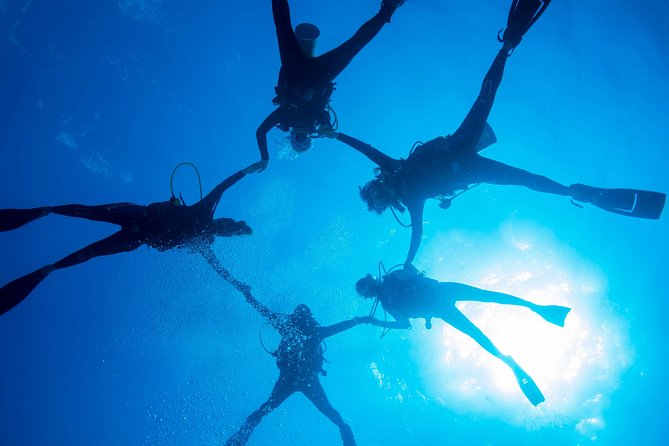
Breathe underwater, then meet the reef. Costa Maya’s PADI Discover Scuba program gives you a sensible first taste of scuba without committing to a full certification course. You begin with classroom instruction, practice in water shallow enough to stand in, then take a short boat ride to a coral garden for a supervised underwater outing.
I like the patient, close attention from the instructors, especially guides such as Sebastian, Brenda, Jesse, Rodrigo, and David, who have helped nervous beginners work through mask leaks, ear pressure, and first-water panic. I also like the small-group feel and generous reef time, with an average underwater session of about 43 minutes. The main caution is the sea itself: rough water can make the boat ride and descent difficult, particularly for someone trying scuba for the first time.
In This Review
- Key Points Before You Book
- What This Costa Maya Scuba Course Really Offers
- First Stop: Theory and the Scuba Unit
- Shallow Water Practice Builds Confidence
- A Ten-Minute Boat Ride to the Coral Garden
- What You May See Below the Surface
- Why the Instructors Matter So Much
- Group Size, Timing, and the Cruise-Port Question
- Is $100 a Fair Price?
- Rough Seas and Other Practical Drawbacks
- Cancellation and What to Bring
- Who Should Book This Costa Maya Experience?
- Should You Book the PADI Discover Scuba Experience?
- FAQ
- How long does the PADI Discover Scuba experience last?
- What is the maximum depth?
- How long is the underwater session?
- What is included in the price?
- Is transportation included?
- What is the minimum age?
- Can I cancel for a full refund?
- How long should I wait before going to a higher altitude?
Key Points Before You Book
- Three stages in one outing: classroom theory, shallow-water skills, and a reef session.
- A 10-minute boat ride takes you from the practice area to the coral garden.
- Maximum depth is 40 feet, with the descent guided along a mooring line.
- Small groups matter: the maximum group size is 16, and some sessions have had only a few participants.
- The $100 price includes equipment and bottled water, but taxi fare is extra.
- Good weather is important: poor conditions can lead to a rescheduled outing or full refund.
What This Costa Maya Scuba Course Really Offers
This is not a shortcut to a scuba license. It is a supervised introduction that lets you learn basic procedures and experience a reef before deciding if formal certification is right for you.
That makes it a good fit for a cruise stop, a family holiday, or anyone who has always been curious about scuba but does not want to spend several days in a certification course. You learn enough theory and practical skills to take part safely under the direct care of a PADI instructor.
The session lasts about three hours and 45 minutes. That sounds long for a first attempt, but much of that time is used well. You need a proper explanation of pressure, breathing, equipment, and underwater communication before you are ready to leave the shore.
The pace is also useful for nervous beginners. Several participants needed extra time with ear pressure or simply getting comfortable below the surface. The instructors did not treat that as a failure. They paused, coached, adjusted equipment, and allowed people to proceed at their own speed.
That personal approach is the heart of the experience. Scuba equipment can feel awkward at first, and breathing through a regulator takes a moment to accept. Having an instructor close by makes the difference between an anxious attempt and an enjoyable one.
More dive sites worth booking:
- Two tanks local diving for certified divers, SCUBA gear included
★ 5.0 · 122 reviews - 2 Tank Dive (for certified divers)
★ 5.0 · 120 reviews - Discovery Scuba Dive.
★ 5.0 · 103 reviews
First Stop: Theory and the Scuba Unit
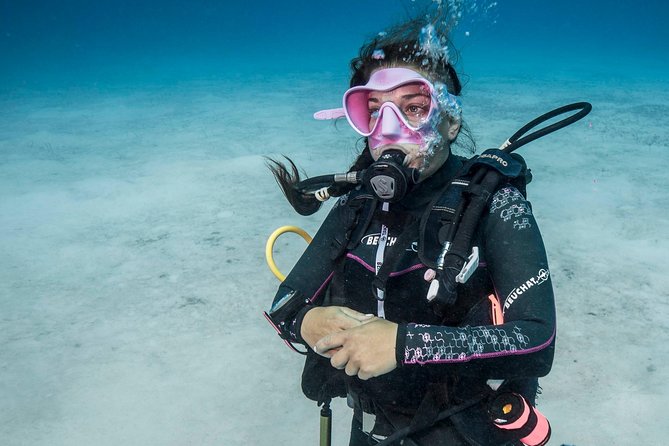
The session begins with an explanation of diving physiology and a tour of the scuba unit. In plain terms, you learn what pressure does to your body, how to breathe with the equipment, and how the main pieces work together.
This part is not just paperwork before the fun begins. It explains why you must equalize your ears, how to respond if your mask fills with water, and how to communicate underwater. You also get a clearer sense of the equipment before wearing it in the sea.
The training is especially useful for people who are uneasy about breathing underwater. Sebastian, Brenda, Jesse, and other instructors have been praised for explaining procedures clearly and repeating them when needed. That patience matters more than a fast presentation.
You should listen closely to the health questions, too. You need medical advice if you have high blood pressure, angina, or take medication for blood pressure. A history of collapsed lung, chest surgery, seizures, fainting, epilepsy, heart disease, heart attack, heart surgery, or blood vessel surgery also requires a check with your doctor.
The minimum age is 10. A parent or guardian should think carefully about a child’s comfort in open water, even though the formal minimum is clear.
Shallow Water Practice Builds Confidence
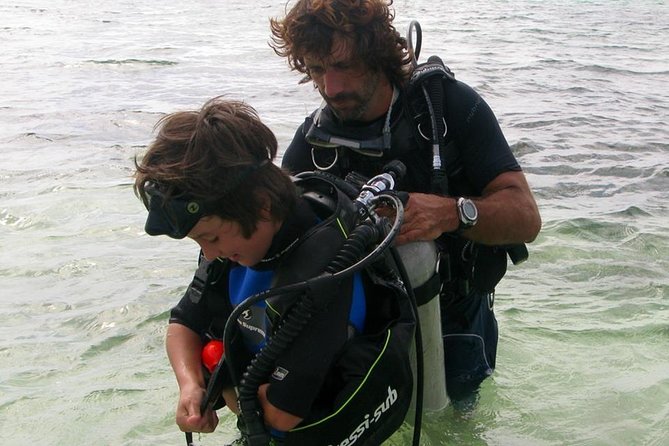
After the theory, you move into confined water shallow enough to stand in. This is where the course becomes practical.
You practice basic skills with the actual equipment you will use later. The shallow setting gives you room to stop, stand up, ask questions, and try again. For a first-time participant, that safety net is valuable.
This is also the point where small equipment problems are found. One participant had a leaking mask, a loose weight belt, and ear discomfort. The instructor calmly fixed each issue before the reef session continued. That is exactly what this practice period should do: catch problems early, not once you are over deeper water.
You may need more than one attempt to descend. That is normal. Some beginners feel panic as soon as they leave the surface, while others struggle to clear their ears. Jesse and Sebastian have been singled out for helping people calm down and continue without pressure.
If you cannot get comfortable in the shallow area, you should not feel pushed to continue. The aim is not to prove courage. It is to find out if scuba suits you, with safety taking priority over completing every stage.
A Ten-Minute Boat Ride to the Coral Garden
Once the basic skills are complete, you take a boat for about 10 minutes to the reef site. The short ride keeps the outing focused and leaves more time for the actual underwater session.
The boat portion can feel more intimidating than expected when the sea is rough. One person described stronger waves and an unsettling ride, while another group had a smooth outing despite unsettled weather. Conditions are not fully within the operator’s control, so keep that in mind when choosing the experience.
At the site, the bottom begins at about 25 feet. You descend along a mooring line, which gives you a fixed visual and physical reference. This is a thoughtful arrangement for beginners, since open-water descent can feel confusing when there is no clear point to follow.
The maximum depth is 40 feet, in line with the safety limits for this introductory program. You are not being taken into extreme depth or left to explore alone. A PADI instructor stays with you during the reef session.
A few more reviews worth comparing before you book
- Chacchoben Mayan Ruins from Costa Maya
★ 4.5 · 1,352 reviews - Costa Maya Shore Excursion: Chacchoben Day Trip
★ 5.0 · 1,109 reviews - Bacalar – 7 Colors Lagoon Excursión Costa Maya
★ 5.0 · 408 reviews - Chacchoben Mayan Ruins from Costa Maya
★ 4.5 · 381 reviews
What You May See Below the Surface
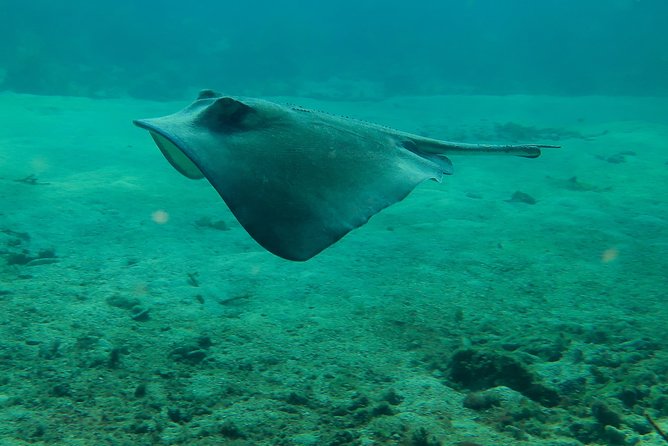
The underwater setting is a coral garden, and the marine life has been a major reason people remember the outing. You might find schools of small tropical fish, stingrays, turtles, lobsters, moray eels, clownfish, and large coral formations.
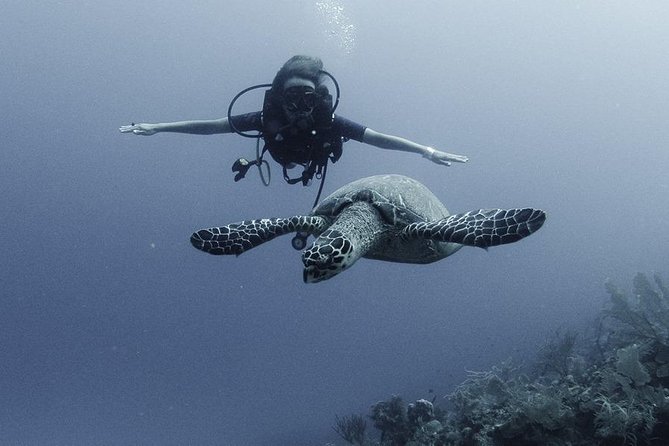
One outing included a stingray and lobsters tucked into a cave. Another included a turtle and a large ray. These sightings are never guaranteed, but the range of life described around the site suggests that even a relatively shallow session can be rewarding.
The coral has received particularly strong praise. Some experienced scuba participants considered it among the most beautiful coral they had seen in other countries. That is high praise, though conditions and visibility can vary with weather.
You should also keep expectations sensible. This is not a guaranteed wildlife show. Manta rays are present in the wider area, but seeing one is not assured. Your instructor may point out marine life that you would otherwise miss, which adds value for someone unfamiliar with reefs.
The average underwater time is about 43 minutes, but your personal time depends on air consumption. That is a useful detail for beginners who imagine everyone stays underwater for exactly the same length of time. Your breathing rate, comfort, and equipment use all affect the duration.
Why the Instructors Matter So Much
A first scuba experience depends less on fancy facilities than on the person beside you. Here, the strongest praise goes to the teaching style.
Sebastian, often called Sea Bass, has been recognized for being funny, calm, attentive, and professional. He has worked with people who were nervous, struggled with their ears, or needed several attempts to reach the bottom.
Brenda has also been praised for calming beginners and helping rusty certified participants refresh their skills. Jesse helped one first-timer work through repeated panic attacks and self-doubt. Rodrigo, David, Lucia, and Gala have likewise been recognized for careful explanations and steady support.
Names and staffing can change, but the pattern is clear: the instructor’s role is hands-on. Guides manage the equipment, check that you understand the procedures, and stay near you during the reef session.
That is particularly useful when a group has mixed experience. A certified family member can join a beginner in the same outing, and in some cases a certified participant has been allowed to join another group while a companion completes the introductory training.
English is offered, but communication deserves a careful note. Most English-speaking participants have found the instruction clear. One family had difficulty understanding a dive master’s English, and only one of three young people reached the bottom. If precise verbal instruction is essential for your comfort, ask about the assigned guide and language ability before you go.
Group Size, Timing, and the Cruise-Port Question
The maximum group size is 16, but actual groups may be much smaller. Some sessions had only two or four participants with two guides, which allowed the staff to give more individual attention.
A maximum of 16 is not the same as a guaranteed group of 16. If keeping the group small is important to you, ask when booking rather than assuming. Still, the reported staffing pattern is encouraging for beginners.
The meeting point is in Huachinango, Costa Maya, and the activity finishes there. The cab costs about $4 per person per ride, though a solo passenger may pay $8. Bring cash, because the exact taxi price has varied slightly in personal accounts.
From the cruise port, the ride is short. The beach used for practice is close enough that you can see the ship from shore, and one account placed it at about a mile from the port. Leave enough time for transport in both directions, especially if your ship has a fixed departure time.
The booking uses local time, so check your watch and ship schedule carefully. Some cruise passengers have had delayed docking and still completed the outing because the operator was understanding, but you should not rely on every delay working out.
The total listed duration is about three hours and 45 minutes. Add taxi time and a sensible buffer before returning to the ship.
Is $100 a Fair Price?
At $100 per person, this is a fair price for a first scuba experience if you value instruction and personal supervision. The fee includes the scuba equipment and bottled water, as well as the theory lesson, shallow-water practice, boat ride, and reef session.
You are not paying only for 40 minutes underwater. You are paying for trained supervision, equipment setup, skills practice, and a controlled introduction to scuba. For a beginner, that preparation is what makes the reef session possible.
The extra taxi cost is modest but should be included in your budget. Photography may also be available, but it is not listed as part of the included price, so ask before assuming photos are included.
The value is strongest for three types of people:
- First-time scuba participants who want a guided test before certification.
- Couples or families with one certified person and one beginner.
- Certified people who are rusty and want a gentle refresher with close support.
If you already hold a current certification and want a longer or more technical underwater session, this introductory format may feel limited. The 40-foot maximum and guided structure are designed for beginners, not advanced exploration.
Rough Seas and Other Practical Drawbacks
Weather is the main variable. Several outings took place in rain, clouds, or rough water, and some still went ahead successfully. Clear water and good marine life can appear even on a cloudy day, but rough waves may make the boat trip and descent uncomfortable.
The operator requires good weather for the activity. If poor conditions cause a cancellation, you are offered another date or a full refund. That policy is helpful, but it does not remove the need to plan around a cruise schedule.
The beach setting is relaxed, with restaurants and vendors nearby. That can be convenient if you want to spend more time in the area, but facilities are not the polished part of the experience. One person specifically found the beach-bar toilet facilities lacking.
Bring bug spray for the beach. This is a small tip, but it matters in a warm coastal setting.
You should also plan your post-scuba schedule. The safety information requires a 12-hour period between scuba and ascending to an altitude above 300 meters, or 1,000 feet. That matters if you plan to fly soon afterward or travel into the mountains.
Cancellation and What to Bring
You can cancel at least 24 hours before the scheduled start for a full refund. Changes or cancellations inside that window are not accepted for a refund, and the cut-off is based on local time.
Bring cash for the taxi, swimwear, and anything you need for the beach. Bottled water and scuba equipment are provided. Bug spray is a useful addition, and you may want to ask about available photography if recording the experience matters to you.
Wear practical sun protection before and after the water session. The supplied information does not specify towels, meals, or personal lockers, so confirm those details directly if you need them.
Who Should Book This Costa Maya Experience?
I would choose this for a curious beginner who wants a real reef encounter without taking a full certification course. It is also a strong choice for families, couples, and mixed-experience groups because certified and non-certified participants may be able to enjoy the same outing.
You should be comfortable listening carefully, practicing skills, and accepting that your first descent may take time. If you dislike open water, have difficulty with pressure in your ears, or are visiting on a day with rough seas, this may be a harder first attempt.
The safety-minded instruction is a major advantage. You are not simply handed equipment and sent offshore. The process gives you several chances to identify problems before reaching the coral garden.
Should You Book the PADI Discover Scuba Experience?
Yes, if you want a carefully supervised first try and the weather looks promising. The 4.9 rating from 99 reviews and 98 percent recommendation reflect the experience’s strongest qualities: calm instructors, good support for anxious beginners, attractive coral, and a reasonable price.
I would book it with three conditions. Confirm the meeting time in local time, leave a generous buffer before your ship departs, and understand that rough water can change the experience. If those points work for you, Mar Adentro Diving offers a practical and friendly way to see Costa Maya below the surface.
FAQ
How long does the PADI Discover Scuba experience last?
The activity lasts approximately three hours and 45 minutes, including theory, shallow-water practice, the boat ride, and the reef session.
What is the maximum depth?
The maximum depth is 40 feet. The descent begins where the bottom is about 25 feet deep and follows a mooring line.
How long is the underwater session?
The average underwater time is about 43 minutes. Your exact time depends on how quickly you use your air.
What is included in the price?
Scuba equipment and bottled water are included. The listed price is $100 per person.
Is transportation included?
No. Taxi fare is extra and is listed at $4 per person per ride. A solo passenger may pay $8.
What is the minimum age?
The minimum age is 10 years old.
Can I cancel for a full refund?
Yes. You must cancel at least 24 hours before the experience start time for a full refund. Cancellations within 24 hours are not refunded.
How long should I wait before going to a higher altitude?
You need a 12-hour period between scuba and ascending above 300 meters, or 1,000 feet.
Just added around Costa Maya
- Costa Maya E-Bikes Rental★ 5.0 · 36 reviews
- Private sport fishing in costa maya, mahahual 4 hrs★ 5.0 · 38 reviews
- Costa Maya All Included Beach Break from Cruise Port★ 4.0 · 40 reviews
- Snorkel Tour on the Costa Maya with experienced Guid★ 5.0 · 42 reviews
- Experience Guided Snorkeling in Costa Maya★ 5.0 · 45 reviews
- Lagoon of 7 colors from Costa Maya – Boat Tour and transportation★ 5.0 · 49 reviews
- Beach Break Costa Maya with Lunch and Open Bar★ 4.0 · 50 reviews
- Authentic Beachfront Mexican Cooking Class Cafe Jaguar Costa Maya★ 5.0 · 50 reviews
Scuba Diving, compared.

Diving in the Mexican Caribbean for Beginners | 2 Tanks 2 Dives | All Inclusive
Read our review →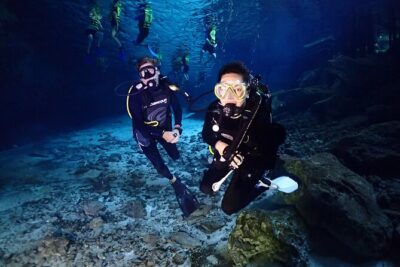
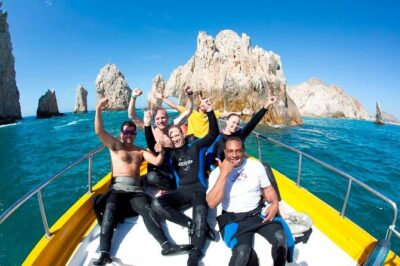
2-Tank Scuba Dive in Cabo San Lucas Reserve for Certified Divers
Read our review →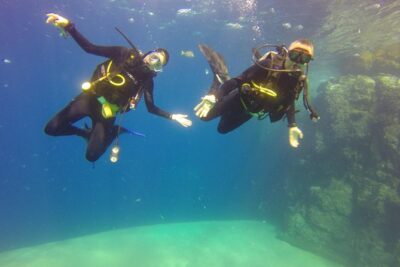
Discover Scuba Diving & Beach Club with Transportation In Riviera Maya
Read our review →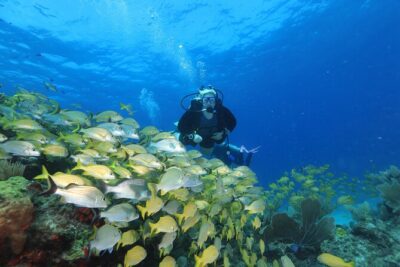
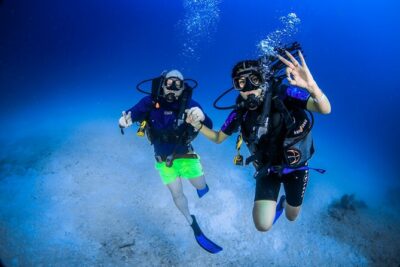
Two Tanks Scuba Diving for Beginners in Cancun
Read our review →Browse the lists this tour appears in