
Reviewed · MEXICO CITY TOURS
Iztapalapa: Cable Car Tour and Urban Art From the Heights
Mexico City looks different from a gondola. This four-hour outing combines the Cablebús ride with rooftop murals, mountain views, and a guided look at Iztapalapa, a part of the city many visitors miss. I like the unusual viewpoint and the way the tour links public art to local life. I also like that guides such as Benjamin, Eduardo, Gabi, and Oscar help you use the metro with confidence, not just point out sights from a bus window.
The main drawback is time spent getting there and back: about 85 minutes of the day is devoted to metro travel. That is useful if you want to learn Mexico City’s transit system, but it may feel slow if you already know urban rail. The clothing rules are also unusually strict, and the ride is not suitable for people with vertigo or motion sickness.
In This Review
- Five things that make this Iztapalapa tour different
- Starting at Bellas Artes and learning the metro
- Seeing Iztapalapa from the longest Cablebús route
- Murals that tell Iztapalapa’s stories
- A park, distant volcanoes, and Iztapalapa’s past
- Tortillas, gorditas, and a taste of daily life
- The return ride and what four hours really means
- Is $24 a fair price?
- Who should book this experience?
- Final call: book it for the view and the context
- FAQ
- Where does the Iztapalapa Cablebús tour begin?
- How long does the experience last?
- Is public transportation included?
- Is food included?
- What languages are offered?
- Is the tour suitable for people with vertigo or motion sickness?
Five things that make this Iztapalapa tour different
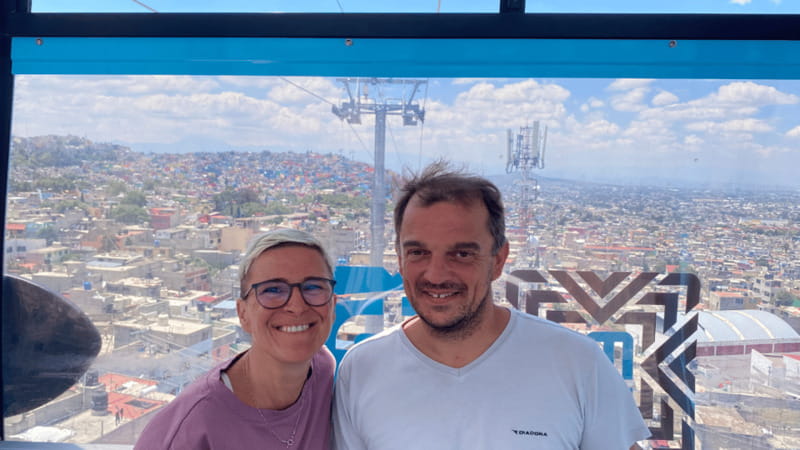
- The Cablebús provides a rare high-up view of Iztapalapa, its tightly packed streets, colorful buildings, murals, and surrounding mountains.
- The metro ride is part of the lesson, giving first-time Mexico City visitors practical help with a huge public transport system.
- The art is made for daily commuters, with large murals placed where people see them from the cable car, not only in a formal gallery.
- A local food stop adds real flavor, with tortillas included and gorditas available for 15 pesos.
- The small group is limited to nine people, making it easier to ask about Iztapalapa, music, food, history, and daily life.
- The tour avoids the usual visitor circuit, but still begins and ends at the easy-to-find Bellas Artes area.
Starting at Bellas Artes and learning the metro
Meet at the Parisian entrance of the Bellas Artes subway station, on the left side of the palace. Look for a guide wearing a green shirt and carrying a green umbrella. This detail matters because the area around Bellas Artes can be crowded, and one person had trouble finding the meeting point. I would save a photo of the entrance and leave a WhatsApp number with the correct country code for quick contact.
From there, the group spends about 45 minutes on the metro. This is not just a transfer. Your guide explains how the system works, helps you follow the right line and direction, and gives you a working introduction to one of Mexico City’s most useful ways to get around.
The metro portion received the most mixed reaction. If you are new to Mexico City public transport, it can be one of the best parts of the outing. Benjamin was praised for making the system feel manageable, and several guides helped people gain confidence for the rest of their stay. If you are already comfortable with large subway networks, the explanations may feel longer than needed. One London-based participant specifically wished this section were shorter.
That difference is worth considering before you book. You are paying not only for a scenic ride, but also for guidance through the city’s transport network. For a first day in Mexico City, that practical help can be worth more than another standard sightseeing stop.
A few more reviews worth comparing before you book
- Teotihuacan, Guadalupe Shrine & Tlatelolco Day Tour with Lunch
★ 5.0 · 11,603 reviews - Xochimilco, Coyoacan and Frida Kahlo with Optional Lunch
★ 4.5 · 7,320 reviews - Balloon flight + Breakfast in cave + Pyramids + Pick up CDMX.
★ 5.0 · 6,335 reviews
Seeing Iztapalapa from the longest Cablebús route
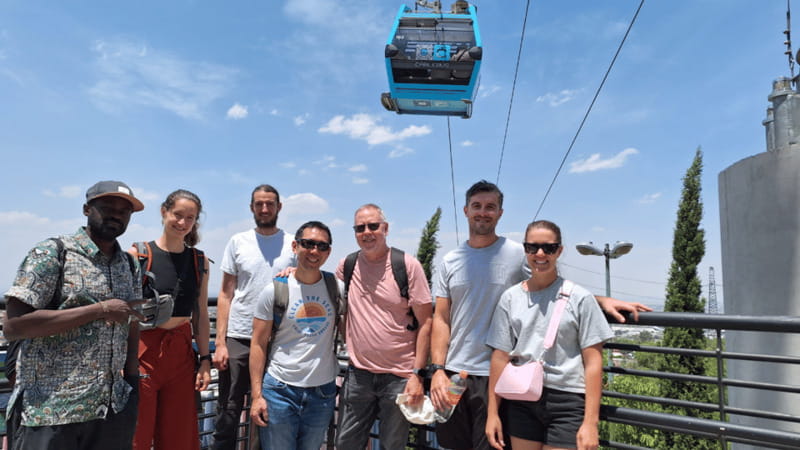
After the metro connection, you board the Cablebús for roughly 40 minutes. The ride is the heart of the experience. From the cabins, you look down over the architecture, narrow streets, rooftops, and the dense pattern of homes that is hard to understand from street level.
The route gives you a broad view of how Mexico City has spread outward. Mountains frame parts of the horizon, while the city stretches into the distance. At times, the scene is colorful and full of painted walls. At other points, the view is more about the sheer size and density of the urban area.
The Cablebús is presented as the longest public transport cable car in the world. Its value here is not just novelty. It is public transport serving communities that can be difficult to connect by road, and it lets you see how a cable system fits into everyday city life. You are riding with a purpose beyond sightseeing.
The cabins are described as modern, clean, safe, and quiet. That makes the ride comfortable for looking and listening, although people prone to motion sickness or vertigo should take the warnings seriously. You are high above the streets for a sustained period, not just on a short amusement ride.
Bring motion sickness prevention if you need it. Comfortable shoes are also required, even though the activity is promoted as a tour without walking. You will still move through stations, the metro, a park, and a local area, so this is not a seated vehicle tour from start to finish.
Murals that tell Iztapalapa’s stories

The murals are one of the strongest reasons to choose this outing. Seen from the Cablebús, they become part of the city rather than isolated works on a wall. Some are placed on rooftops or large building surfaces, which means the cable car gives you a view that pedestrians cannot get.
Your guide explains the history and cultural meaning behind the images. That context changes the ride. Without explanation, you might notice bright colors and large shapes. With a guide such as Alexia, who was praised for explaining how the murals affect people on their daily commute, you begin to see public art as part of the neighborhood’s identity and routine.
I like this approach because it avoids treating Iztapalapa as a backdrop. The art is connected to the people who live there, the routes they take, and the stories the community chooses to display. Rebecca, who especially valued community art, described the high-up view of the massive murals as a highlight of her Mexico City visit.
The best way to enjoy this section is to keep your eyes moving. Look below for murals, then outward for the mountains, then across the rooftops and streets. Your guide may point out details that are easy to miss from a moving cabin. A small group helps here, since you can ask for a mural to be explained again or request time for photographs.
A park, distant volcanoes, and Iztapalapa’s past
The group visits a local park for a photo stop of about 15 minutes, with scenic views continuing for around 30 minutes. From this higher part of the city, you may see the volcanoes and Mexico City spreading into the distance.
The stop also gives the guide room to explain Iztapalapa’s development. The discussion covers how the area has grown, the challenges it has faced, and the ways its communities have adapted over time. This is an important part of the experience because the Cablebús itself makes more sense once you understand the need to connect outlying neighborhoods.
The stop is not a long walking tour of monuments. You are not coming here for a polished historic center or a sequence of famous buildings. Instead, you get a view of a working community and a discussion about how urban growth affects ordinary life.
Music adds another local layer. The guide introduces rhythms associated with the area, including cumbia, sonidero, and urban rock. These references help explain Iztapalapa as a place with its own social and cultural character, not simply an extension of the tourist center.
Be ready for a conversational experience rather than a formal lecture. The quality depends partly on the guide’s ability to connect history, transport, music, and the view. The strongest feedback came from guides who were warm, clear, and able to relate the information to the neighborhoods below.
A different sort of day out around Mexico City:
- Teotihuacan pyramids morning or afternoon without tourist traps
★ 5.0 · 6,186 reviews - Teotihuacan Early Access Guided Tour with optional Lunch
★ 4.5 · 6,138 reviews - Balloon flight + pick up in CDMX + Breakfast in Cave + Pyramids
★ 5.0 · 5,651 reviews - Balloon Flight + Cave Breakfast + Pick Up from CDMX or We Fly
★ 5.0 · 4,410 reviews
Tortillas, gorditas, and a taste of daily life
The tortilla activity is small, but it gives the outing a welcome hands-on finish. You learn why tortillas matter so much in Mexican food and culture, then have the chance to take part in making them. Tortillas are included in the $24 price.
Food is not formally included beyond the tortillas, so bring cash. Gorditas cost 15 pesos, and several itineraries include a stop at a local market or food stall. Some people also enjoyed fruit juice, tacos, sweets, and other local specialties during the stop, although you should treat those purchases as optional extras rather than part of the fixed price.
This food section works because it connects the tour’s big themes to something ordinary. The Cablebús shows the city from above. The tortilla brings you back to the table. In between, you hear about community, transport, music, and local history.
You should not expect a full food tour or included meal. Eat beforehand if you need a substantial breakfast or lunch, and carry small cash for snacks. The market stop can be one of the most enjoyable moments, but the exact food selection is not guaranteed in the activity details.
The return ride and what four hours really means
The return trip includes about 25 minutes on the Cablebús and another 40 minutes on the metro back to Bellas Artes. Altogether, the experience lasts around four hours.
That timing gives you enough space to enjoy the view without turning the day into an exhausting marathon. It also means the trip is transport-heavy. You spend roughly half the outing moving between Bellas Artes and Iztapalapa, with the guide providing commentary along the way.
The return ride can be a useful second look. On the way out, you may focus on learning the route and spotting murals. On the way back, you can pay more attention to the city beyond the cabins. Still, anyone looking for several hours of walking, museums, or major historic buildings should choose a different activity.
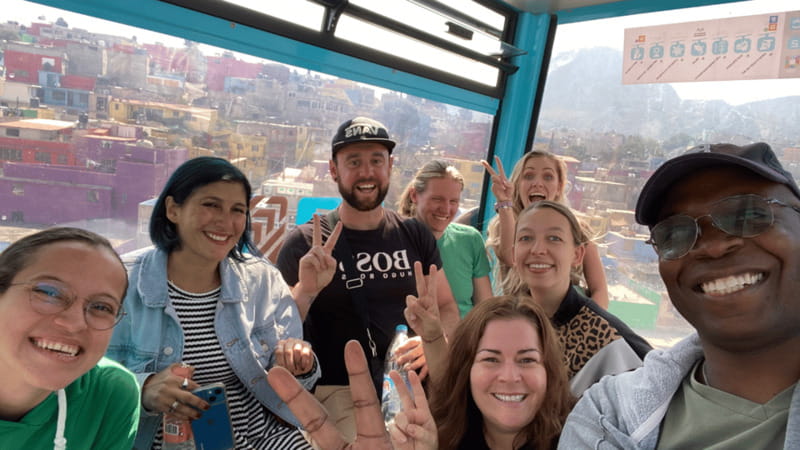
The group size is limited to nine people. That is a good fit for this kind of outing, since stations and public transport require organization. Guides have included Eduardo, Benjamin, Alexia, Oscar, Gabi, Gabriel, Tomas, Gabriella, Thomas, and others. Their styles vary, but the most consistently praised qualities are clear English, patience, local insight, and genuine care for the community.
Is $24 a fair price?
At $24 per person, the tour offers good value if you use its full package: a public transport card, metro rides, Cablebús rides, a guide, educational material, and tortillas. You also avoid the stress of working out an unfamiliar route on your own.
The value is especially strong for first-time visitors. Several guides helped people understand the subway well enough to use it later without fear. That practical benefit can save you time and taxi money during the rest of your trip.
The calculation changes if you already know Mexico City’s metro or if you mainly want the cable car. In that case, you may feel that the long transit sections take up too much of the four-hour schedule. You will also need extra cash for food, drinks, and optional gorditas.
Free cancellation up to 24 hours before the start and reserve-now, pay-later booking make the outing easier to fit into a changing schedule. Those policies are useful, but the real question is whether you value local context and public transport instruction as much as the views.
Who should book this experience?

I would recommend it to you if you want a different side of Mexico City and are curious about how residents move through the city. It suits people who enjoy public art, urban geography, community stories, food traditions, and a guide-led introduction to the metro.
It is also a strong first-day activity if the subway seems intimidating. You learn by doing, with someone beside you to explain the stations and connections. The Cablebús then gives you a memorable reason to make the journey.
It is less suitable for people with vertigo, respiratory problems, altitude sickness, motion sickness, or a strong dislike of public transport. The activity is not for children under five, and it excludes people over 220 pounds or 100 kilograms. The restrictions also list high heels, sandals, flip-flops, shorts, short skirts, sleeveless shirts, sunglasses, large bags, drones, bikes, scooters, and several other items.
Wear discreet, comfortable clothing and closed shoes. Leave jewelry and large luggage behind. The clothing guidance is more conservative than many city tours, so follow it carefully rather than arriving in holiday beachwear.
Final call: book it for the view and the context
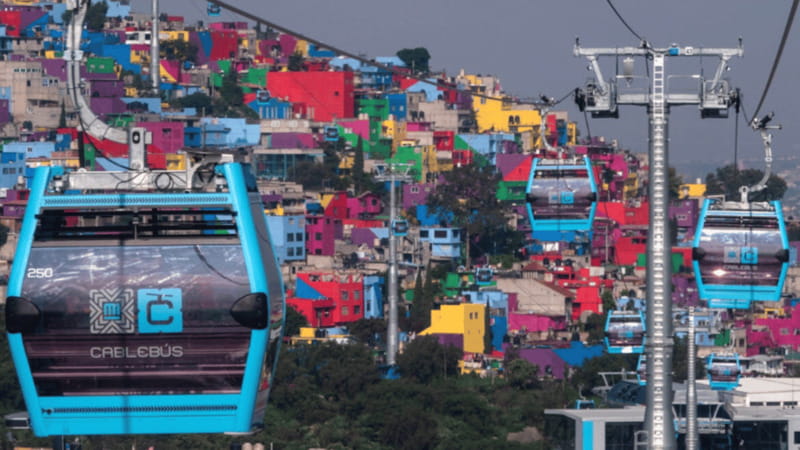
Book this tour if you want Mexico City to feel larger, more complicated, and more connected than the central districts suggest. The Cablebús views are the headline, but the real value comes from seeing murals, transport, food, music, and community life as parts of one place.
Skip it if you want a fast attraction with little transit time. The metro ride is a major part of the day, and experienced subway users may find the instruction repetitive. For everyone else, the 4.9 rating from 124 bookings reflects a clear pattern: guides make the difference, and the strongest ones, including Benjamin, Eduardo, Gabi, Oscar, and Alexia, turn an unfamiliar route into a thoughtful introduction to Iztapalapa.
FAQ
Where does the Iztapalapa Cablebús tour begin?
Meet at the Parisian entrance of the Bellas Artes subway station, on the left side of the palace. Guides wear a green shirt and carry a green umbrella.
How long does the experience last?
The tour lasts about four hours, including the metro rides from Bellas Artes, the Cablebús journeys, the guided visit, scenic stops, and the return to Bellas Artes.
Is public transportation included?
Yes. The price includes a public transport card, the metro rides, and the Cablebús ride.
Is food included?
Tortillas are included, and the activity includes a tortilla-making experience. Meals and drinks are not included. Gorditas are available for 15 pesos.
What languages are offered?
The live tour guide is available in English and Spanish. Some content may be shown in its original language.
Is the tour suitable for people with vertigo or motion sickness?
No. The activity is not suitable for people with vertigo, motion sickness, seasickness, altitude sickness, or respiratory issues.
Just added around Mexico City
- Teotihuacan & Anthropology Museum, Templo Mayor & City Tour★ 4.5 · 109 reviews
- Mexico Private Food Tour With Locals Including 10 Tastings★ 4.5 · 109 reviews
- THE REAL CDMX: Under the skin of the city★ 5.0 · 111 reviews
- Mexico City: Mexican Folklore Ballet★ 4.5 · 111 reviews
- Teotihuacán plus Bike Tour★ 5.0 · 114 reviews
- Bike to taste the world’s best tacos – Mexico City★ 5.0 · 116 reviews
- EXCLUSIVE TOUR Chapultepec Castle – Small Groups★ 5.0 · 117 reviews
- Balloon flight with private transportation and guided tour to Teotihuacán★ 5.0 · 118 reviews
Mexico City Tours, compared.
Teotihuacan, Guadalupe Shrine & Tlatelolco Day Tour with Lunch
Read our review →
Xochimilco, Coyoacan and Frida Kahlo with Optional Lunch
Read our review →
Balloon flight + Breakfast in cave + Pyramids + Pick up CDMX.
Read our review →
Teotihuacan pyramids morning or afternoon without tourist traps
Read our review →
Teotihuacan Early Access Guided Tour with optional Lunch
Read our review →
Balloon flight + pick up in CDMX + Breakfast in Cave + Pyramids
Read our review →
Balloon Flight + Cave Breakfast + Pick Up from CDMX or We Fly
Read our review →
Teotihuacan, Tlatelolco & Guadalupe Shrine Tour
Read our review →Browse the lists this tour appears in