
Reviewed · MEXICO CITY TOURS
Fly over to the Unexplored Parts of CDMX by Cable Car
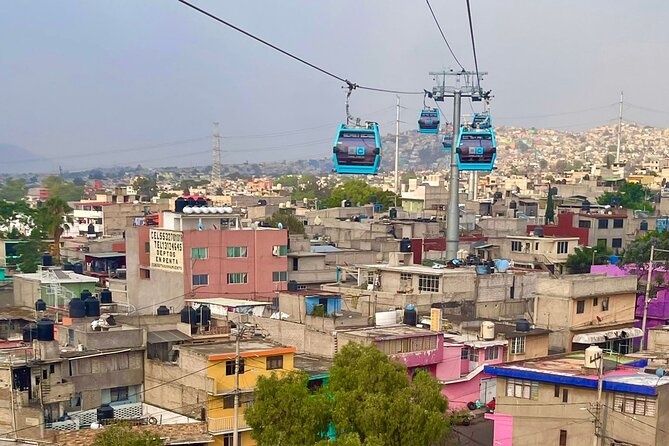
Mexico City looks different from above. This 4.5-hour outing takes you beyond the usual Centro Histórico circuit and into Iztapalapa, where you ride the public Cablebús over dense neighborhoods, see rooftop murals, and learn how local life fits into the city’s enormous scale. I especially like the authentic public-transport experience and the chance to eat tacos at Mercado Quetzalcoatl. The main drawback is pace: you’ll walk often, use stairs, and need to follow English commentary that may come quickly in noisy stations.
The tour is led by Fernando, sometimes with Alex or Fernando’s sister, and the strongest part is the guide’s ability to connect Mexico City’s history, transportation, geography, and present-day communities. I also like that the tour includes a museum, local food, murals, a Cablebús ride, and a traditional drink for $58. It is a lot of activity for the price, but it is not a relaxed sightseeing stroll.
If you want only famous monuments, polished museums, and an easy afternoon, choose another outing. If you want to understand how people move through CDMX and see an area most visitors skip, this is one of the more unusual choices in the city.
In This Review
- Key points at a glance
- Why this Iztapalapa tour is different
- Meeting downtown at Churrería El Moro
- Museum of Cultures by Iztapalapa Passion
- Walking through Iztapalapa’s streets
- Riding the Cablebús above the city
- Mercado Quetzalcoatl: murals with your tacos
- Pulque and the downtown finish
- Is $58 a fair price?
- Who should book this experience?
- Should you book the Iztapalapa Cablebús tour?
- FAQ
- Where does the tour begin?
- Where does the tour end?
- How long does the experience last?
- How much does the tour cost?
- Is the tour offered in English?
- Is a mobile ticket available?
- What is included during the tour?
- How much walking is involved?
- Can the tour be canceled for a refund?
Key points at a glance
- The Cablebús is real public transportation: You ride above working neighborhoods rather than taking a purpose-built sightseeing gondola.
- Iztapalapa is the focus: The tour explores Mexico City’s largest district and gives context about its history, traditions, streets, and communities.
- Murals and tacos share the spotlight: Mercado Quetzalcoatl combines local food with striking public art.
- Fernando shapes the experience: His explanations cover history, sociology, geography, and how to use the city’s Metro and cable-car systems.
- Expect a brisk four and a half hours: Walking, stairs, transfers, and quick explanations make this an active outing.
- The finish is local and traditional: You end with a complimentary alcoholic drink, described as a pre-Hispanic beverage, at a downtown pulquería.
Why this Iztapalapa tour is different
Most first-time visits to Mexico City stay within a familiar triangle: the Zócalo, Chapultepec, and neighborhoods such as Roma and Condesa. Those areas are worthwhile, but they do not explain the whole city. Iztapalapa offers another piece of the story.
This district is described as Mexico City’s largest, and the tour uses its streets, transit system, cultural spaces, murals, and food stalls as teaching tools. You are not simply being driven to a viewpoint. You are moving through the city in the same broad way local residents do, then looking down from the Cablebús to grasp how far the urban area extends.
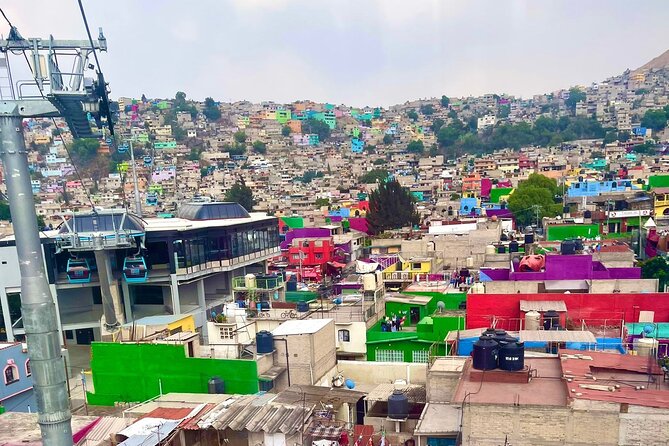
That change in viewpoint matters. From street level, CDMX can feel like a series of separate neighborhoods. From the cable car, the dense housing, colorful buildings, rooftops, roads, and distant volcanic forms help you understand the city’s size. The ride also gives you a look at daily life below, rather than a view designed only for tourists.
The experience has a strong educational side. Fernando explains Mexican history, Iztapalapa’s traditions, the shape of the city, and the public transportation network. Several comments describe his English as fluent but fast, so pay close attention, especially inside a noisy Metro car or station.
A few more reviews worth comparing before you book
- Teotihuacan, Guadalupe Shrine & Tlatelolco Day Tour with Lunch
★ 5.0 · 11,603 reviews - Xochimilco, Coyoacan and Frida Kahlo with Optional Lunch
★ 4.5 · 7,320 reviews - Balloon flight + Breakfast in cave + Pyramids + Pick up CDMX.
★ 5.0 · 6,335 reviews
Meeting downtown at Churrería El Moro
The tour begins at Churrería El Moro Centro, at Eje Central Lázaro Cárdenas 42 in the Centro Histórico. This is a practical meeting point near public transportation, but you should allow time to find the exact spot and arrive ready to move.
The starting location also gives you a useful first lesson in CDMX logistics. One of the tour’s recurring themes is how to use the Metro and other public systems instead of relying only on taxis or ride-hailing cars. If you take the tour near the beginning of your stay, you can apply that knowledge during the rest of your trip.
The group can reach a maximum of 20 people. That is large enough to create a social outing, but still small enough for a guide to keep the group together if everyone stays attentive. The pace may feel faster in a full group, especially when crossing streets, entering stations, or climbing stairs.
Wear shoes suited to walking. The tour involves streets, transit stations, stairs, and transfers. A cane or mobility limitation may make the pace difficult, and hearing loss could be a concern when Fernando is speaking in crowded or noisy areas. The description says most people can participate, but the practical test is your comfort with several hours of movement.
Museum of Cultures by Iztapalapa Passion
The first scheduled stop is the Museum of Cultures by Iztapalapa Passion, with about 35 minutes inside and admission included. Its purpose is to explain the history and traditions of Iztapalapa before you continue through the district itself.
That order is useful. Without some background, a walk through an unfamiliar part of a huge city can become a blur of buildings and transit stops. The museum gives you a framework for understanding what Fernando points out later in the streets, cultural center, market, and murals.
Do not expect a long museum visit. Thirty-five minutes is enough for an introduction, not a full study of every exhibit. The value comes from the connection between the museum and the rest of the afternoon. You are not treating Iztapalapa as a passing backdrop. You are getting an explanation of its traditions before seeing how the district functions today.
The title of the museum also points toward one of the tour’s cultural themes, the Iztapalapa Passion. The supplied information does not give a full exhibit list, so it is best to think of this stop as a short orientation rather than a stand-alone museum tour.
Walking through Iztapalapa’s streets
The next portion lasts about an hour and takes you through Iztapalapa on foot. You visit a cultural center, walk local streets, and eat local food before taking the Cablebús.
This is where the tour asks you to be open-minded. The point is not to collect another postcard view. It is to see an ordinary urban district through a guide who can explain its past and present. Fernando’s commentary connects the built environment with history, local identity, and transportation.
The tour’s direct approach is one of its strengths. You are not kept inside a tourist bubble. You may find the setting more raw and less polished than the central neighborhoods, which is exactly why the experience feels different. At the same time, do not confuse less touristy with effortless. You need to stay with the group and follow instructions during street walking and transit use.
The afternoon is also interactive. Fernando may ask questions, explain place names, and test your memory of what you have learned. Some people will enjoy this energy. Others may prefer a guide who speaks less and leaves more time for quiet observation.
If your English is not strong, or if you need commentary delivered slowly, this is worth considering before booking. The guide is praised for clear explanations and strong command of the subject, but the pace can be demanding.
A different sort of day out around Mexico City:
- Teotihuacan pyramids morning or afternoon without tourist traps
★ 5.0 · 6,186 reviews - Teotihuacan Early Access Guided Tour with optional Lunch
★ 4.5 · 6,138 reviews - Balloon flight + pick up in CDMX + Breakfast in Cave + Pyramids
★ 5.0 · 5,651 reviews - Balloon Flight + Cave Breakfast + Pick Up from CDMX or We Fly
★ 5.0 · 4,410 reviews
Riding the Cablebús above the city
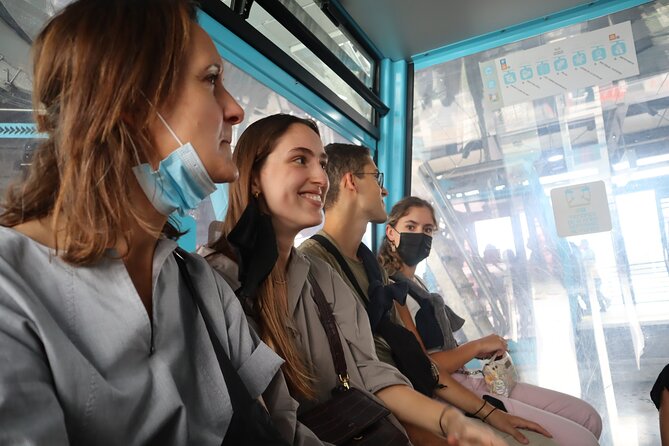
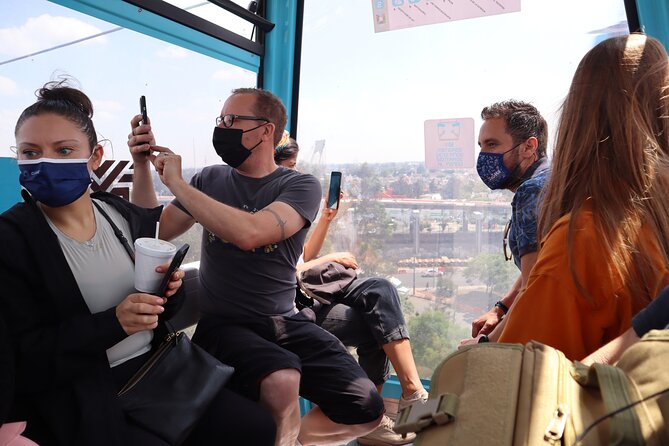
The Cablebús is the central event, and it is more interesting because it functions as public transportation. You are not taking a short amusement ride built around a single monument. You are riding above real neighborhoods and using a transit system that helps connect the city.
From the cabins, you can see colorful homes, rooftops, murals, roads, and the broad spread of CDMX. The view helps put Iztapalapa in context. The district is not an isolated excursion. It is part of a vast metropolitan area whose size is hard to understand from street level.
The ride is described as smooth and safe, but the bigger reward is the view and the explanation that comes with it. Fernando points out details that you might otherwise miss, including rooftop art and the way neighborhoods developed. Without that commentary, the ride could become a pleasant but confusing sweep over apartment blocks and streets.
The Cablebús can also teach you how practical transit can serve as sightseeing. Mexico City’s transportation network is not just a way to get from one attraction to another. It reveals how the city works. This tour uses that system as part of the subject.
Keep your expectations realistic. You will not get a panoramic view of every famous CDMX landmark, and weather can affect visibility. The experience requires good weather, so poor conditions may lead to a different date or a full refund.
Mercado Quetzalcoatl: murals with your tacos
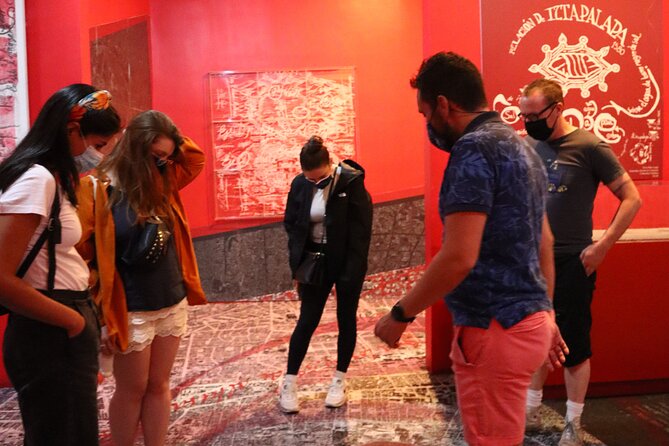
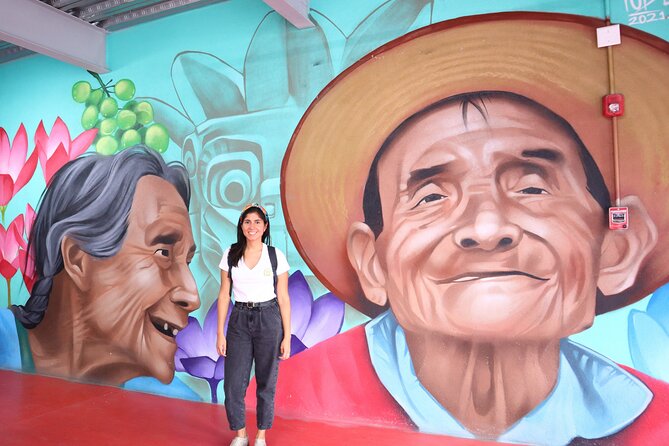
The market visit lasts about 30 minutes, with admission included. The supplied details highlight two things: tacos and murals. That combination gives this stop a welcome shift from explanation to direct experience.
The food is not presented as a formal tasting menu. You are visiting a local market and eating local tacos, with carnitas specifically praised in the tour feedback. This is part of the value of the outing. Rather than stopping at a restaurant selected for international visitors, you get a brief look at a neighborhood market and a taste of what is being served there.
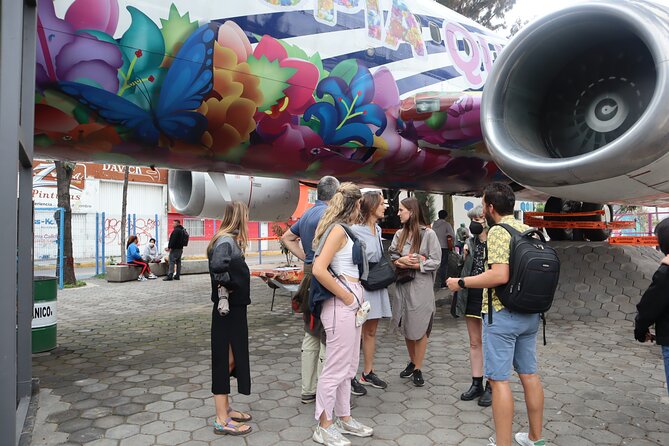
The murals are just as important. Several descriptions point to beautiful and spectacular public art, including work on rooftops and buildings. The guide’s background in design, visual culture, and urban planning is especially useful here, since he can help you notice how art changes the feel of a neighborhood and how local projects bring public spaces to life.
Thirty minutes goes quickly. You may have time to eat, look around, and hear the main explanation, but this is not a long market exploration. If you care more about photography or food than transit, you may wish for extra time. Still, the short stop fits the tour’s larger aim: cover several connected parts of Iztapalapa rather than settle into one place.
Pulque and the downtown finish
The final stop is a local bar, where you receive a complimentary alcoholic beverage described as a pre-Hispanic drink. The itinerary names Pulquería Vacas Verdes Bellas Artes, while the meeting details identify the finish as Pulquería La Risa on Calle de Mesones 71 in the Centro Histórico.
Because those names do not match, confirm the exact ending location with Warrior Gastro-Tours before departure. The practical point is clear: the tour finishes downtown in a pulquería, but the specific venue should be checked.
Pulque is made from fermented agave sap and has a long place in Mexican food and drink culture. Here, it works as a fitting final lesson after a day focused on local history and public life. You can sit down, have the included drink, and shift from walking and transit to conversation.
The stop is brief, about 20 minutes. Think of it as a taste rather than a full evening at a bar. If you do not drink alcohol, the supplied information does not specify a nonalcoholic alternative, so ask before booking.
Is $58 a fair price?
At $58 per person, the price is strong if you value instruction and access to places you would not comfortably reach on your own. The cost includes museum admission, market admission, tacos, a snack, an alcoholic beverage, and the guide’s time across roughly four and a half hours.
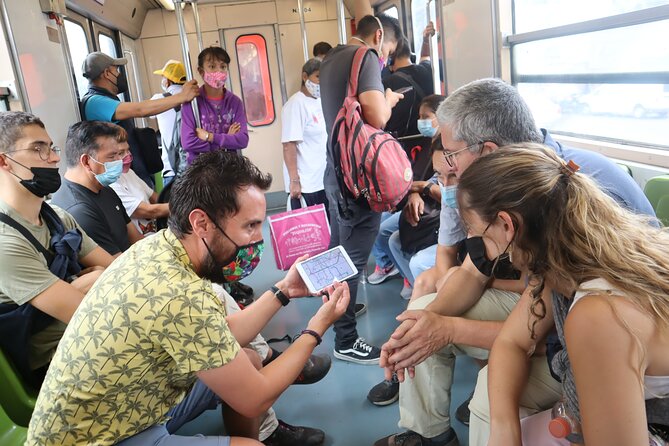
You also receive practical transit instruction. Several people considered learning to use CDMX public transportation one of the tour’s biggest benefits. That lesson can save money and time during the rest of your trip, especially if you have been relying on cars and getting stuck in traffic.
The value is less obvious if you count only ticketed attractions. The museum visit is short, the market stop is brief, and the Cablebús itself is public transit rather than an expensive private attraction. You are paying for the route, the interpretation, the coordination, the local context, and the confidence to explore beyond the usual zones.
A maximum group of 20 keeps the price below what you would expect for a private tour, though the experience may feel less personal with a full group. If you want an entirely private pace, ask about availability before booking.
Who should book this experience?
I would choose this tour for an active first or second day in CDMX. It gives you a working introduction to Metro and Cablebús travel, a sense of the city’s scale, and ideas for food and bars later in your stay.
It suits you best if you:
- Enjoy local neighborhoods more than polished tourist districts
- Want history and social context along with sightseeing
- Are comfortable walking at a brisk pace
- Can manage stairs and public transportation
- Like asking questions and taking part in an energetic tour
- Want a guide who offers suggestions for the rest of your time in Mexico City
Families can enjoy it, including older children and teenagers, but the schedule is active. It is less suitable if you have difficulty walking quickly, need frequent rests, have hearing challenges in noisy settings, or prefer slow and leisurely touring.
The tour has a 4.8 rating from 168 reviews, with 95 percent recommending it, which fits the pattern of strong praise for Fernando’s energy, transit instruction, city knowledge, and ability to show Iztapalapa from a local point of view. One critical account raises a serious concern about communication style and pace. That experience should not be ignored. A guide can know a great deal and still not be the right match for every group.
Should you book the Iztapalapa Cablebús tour?
Book it if you want the Mexico City most guidebooks leave out. The Cablebús view is memorable, but the full value comes from combining it with the museum, street walking, murals, market food, public-transit lessons, and pulque.
Skip it if you need an easy, slow afternoon or want only major sights. This is a fast-paced and demanding outing, and Fernando’s teaching style is direct and energetic.
For most active visitors who want to see beyond Centro Histórico, Roma, and Condesa, I think $58 buys a worthwhile four and a half hours. Confirm the final bar location, arrive ready to walk, and treat the day as a lesson in how CDMX actually works.
FAQ
Where does the tour begin?
It begins at Churrería El Moro Centro, Eje Central Lázaro Cárdenas 42, Centro Histórico, Mexico City.
Where does the tour end?
It finishes at a local bar in the Centro Histórico. The meeting details list Pulquería La Risa at Calle de Mesones 71, while the itinerary names Pulquería Vacas Verdes Bellas Artes, so confirm the exact location before the tour.
How long does the experience last?
The experience lasts approximately 4 hours and 30 minutes.
How much does the tour cost?
The price is $58 per person.
Is the tour offered in English?
Yes. The tour is offered in English.
Is a mobile ticket available?
Yes. The experience includes a mobile ticket.
What is included during the tour?
Included elements are admission to the Museum of Cultures by Iztapalapa Passion, admission connected with the Mercado Quetzalcoatl visit, local tacos, a complimentary snack, and an alcoholic beverage at the final bar.
How much walking is involved?
The tour includes walking through Iztapalapa, public transportation, Metro and Cablebús stations, and stairs. It is described as fast-paced, so you should be comfortable walking regularly.
Can the tour be canceled for a refund?
You can cancel at least 24 hours before the local start time for a full refund. Cancellations or changes made within 24 hours are not refunded or accepted. Poor weather or failure to reach the minimum number of participants may lead to a different date or a full refund.
Just added around Mexico City
- Teotihuacan & Anthropology Museum, Templo Mayor & City Tour★ 4.5 · 109 reviews
- Mexico Private Food Tour With Locals Including 10 Tastings★ 4.5 · 109 reviews
- THE REAL CDMX: Under the skin of the city★ 5.0 · 111 reviews
- Mexico City: Mexican Folklore Ballet★ 4.5 · 111 reviews
- Teotihuacán plus Bike Tour★ 5.0 · 114 reviews
- Bike to taste the world’s best tacos – Mexico City★ 5.0 · 116 reviews
- Balloon flight with private transportation and guided tour to Teotihuacán★ 5.0 · 118 reviews
- EXCLUSIVE TOUR Chapultepec Castle – Small Groups★ 5.0 · 117 reviews
Mexico City Tours, compared.
Teotihuacan, Guadalupe Shrine & Tlatelolco Day Tour with Lunch
Read our review →
Xochimilco, Coyoacan and Frida Kahlo with Optional Lunch
Read our review →
Balloon flight + Breakfast in cave + Pyramids + Pick up CDMX.
Read our review →
Teotihuacan pyramids morning or afternoon without tourist traps
Read our review →
Teotihuacan Early Access Guided Tour with optional Lunch
Read our review →
Balloon flight + pick up in CDMX + Breakfast in Cave + Pyramids
Read our review →
Balloon Flight + Cave Breakfast + Pick Up from CDMX or We Fly
Read our review →
Teotihuacan, Tlatelolco & Guadalupe Shrine Tour
Read our review →Browse the lists this tour appears in