
Reviewed · MEXICO CITY TOURS
Culinary Secrets of the Centro Histórico
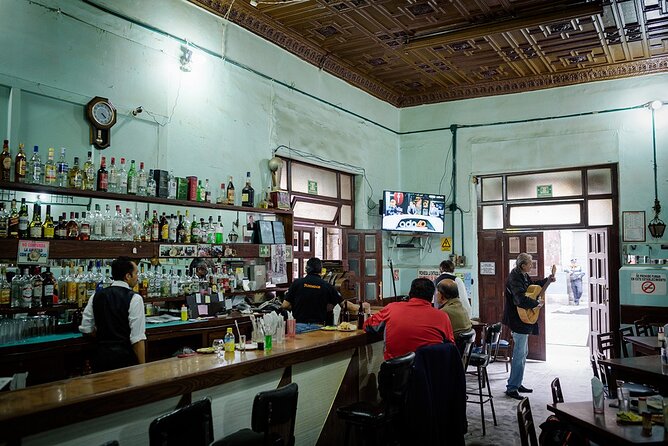
Come hungry, leave with a better map of Mexico City. This five-hour food walk through the Centro Histórico combines excellent local eating with stories about buildings, migration, art, and Mexican foodways. I like the small maximum of seven people, and I like that the route includes ordinary eateries and street stalls that you would be unlikely to find in a standard guidebook.
The main caution is simple: this is a long, food-heavy walking day. One reported outing covered about 7 kilometers and lasted close to six hours, so comfortable shoes and a serious appetite matter. It is also not suitable for vegans, and the $140 price is best justified if you want food, guiding, and cultural context in one package.
In This Review
- Key things to know before you book
- Why this food walk works so well
- Starting at Café La Blanca and Plaza de Santo Domingo
- The Justo Sierra Synagogue adds a rare cultural stop
- Palacio de Mineria and the Centro’s grand buildings
- The House of Tiles brings food and spectacle together
- Camino Real de Tierra Adentro explains the road behind the food
- What you are likely to eat during the day
- Why the small group and guide matter
- Walking distance, timing, and practical comfort
- Is $140 a fair price?
- Who should book this experience?
- Should you book Culinary Secrets of the Centro Histórico?
- FAQ
- Where does the tour start?
- Where does the tour end?
- How long does the tour last?
- How large is the tour group?
- Is the tour offered in English?
- What food and drinks are included?
- Is the tour vegan friendly?
- What places are visited?
- Is the tour accessible by public transportation?
- Can I cancel for a full refund?
Key things to know before you book
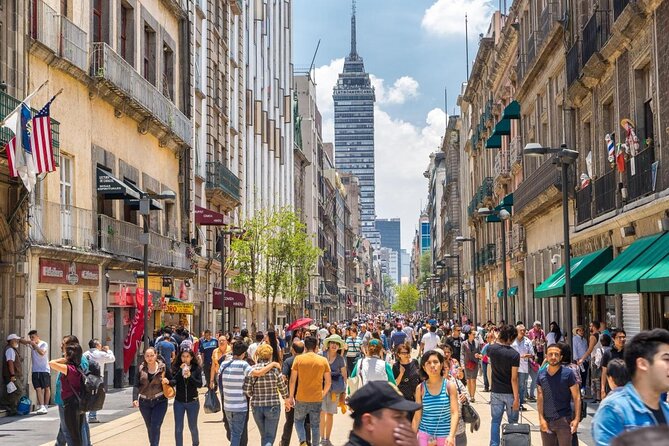
- The route covers more than food: You visit Plaza de Santo Domingo, a historic synagogue, Palacio de Mineria, the House of Tiles, and part of the Camino Real de Tierra Adentro.
- The group is very small: The maximum is seven people, which makes it easier to ask questions and move through busy streets.
- You eat across several settings: Expect a mix of restaurants, food markets, street vendors, coffee, sweets, juices, lunch, and alcoholic drinks.
- The guides are a major part of the experience: Past outings were led by guides including Ana, Victor, Liz, Lis, Ignacio, Nacho, and Raul.
- The day ends with mezcal: Several accounts describe a mezcal tasting as the final flourish.
- Plan ahead: The experience is often booked 47 days in advance, and confirmation can take longer if you reserve within one day of departure.
Why this food walk works so well
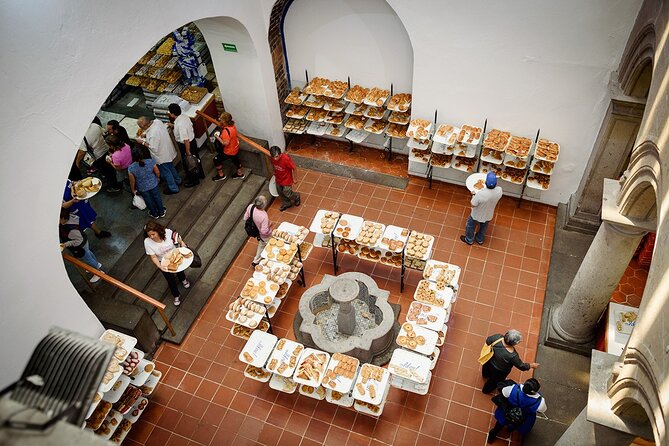
The Centro Histórico is easy to admire from the outside. You can walk past grand facades, churches, plazas, and museums without understanding how ordinary food fits into the city’s story. This tour tries to connect those pieces. A taco, a market stall, a cup of coffee, or a sweet becomes part of a larger account of Mexico City.
I like that the food is not confined to one polished restaurant. The route has included street vendors, a market, midrange restaurants, higher-end stops, and even a museum food offering. That range gives you a more useful picture of daily eating than a single sit-down meal.
The guide also shapes the day. Ana was praised for combining food, history, and local knowledge. Victor received credit for keeping the pacing comfortable, so the group could try many foods without feeling ill by the end. Liz and Lis were noted for taking people to places they would not have found alone, while Ignacio, also called Nacho, connected food with murals, art, and city artifacts.
This is not a tour for people who want a quick list of restaurants. It is better for you if you enjoy asking why a dish exists, how an ingredient is used, or what a building has seen over time.
A few more reviews worth comparing before you book
- Teotihuacan, Guadalupe Shrine & Tlatelolco Day Tour with Lunch
★ 5.0 · 11,603 reviews - Xochimilco, Coyoacan and Frida Kahlo with Optional Lunch
★ 4.5 · 7,320 reviews - Balloon flight + Breakfast in cave + Pyramids + Pick up CDMX.
★ 5.0 · 6,335 reviews
Starting at Café La Blanca and Plaza de Santo Domingo
The meeting point is Café La Blanca at Avenida 5 de Mayo No. 40. From there, the walk moves toward Plaza de Santo Domingo, where the day begins with food and orientation.
The plaza is a useful opening point because it puts you directly into the Centro Histórico rather than easing you in from a hotel district. The itinerary allows about an hour here, including the first food experiences and an introduction to the area.
Breakfast, coffee, and freshly prepared bites are part of the larger food program. The exact dishes can vary, but the experience has included tacos, enchiladas, sweets, juices, and other Mexican specialties across the day. One outing began with a substantial breakfast and coffee, then continued through tastings before reaching lunch.
Do not treat the opening food as a small sample that you can forget. The day contains enough eating that you should arrive hungry but not starved. You will enjoy the later stops more if you pace yourself from the start.
The Justo Sierra Synagogue adds a rare cultural stop
The visit to Justo Sierra Synagogue is one of the most unusual parts of the route. It is described as one of Mexico City’s oldest synagogues, giving the tour a cultural dimension that many food walks skip.
This stop matters because the Centro Histórico is not only a Spanish colonial and Mexican national setting. Its streets also reflect communities that arrived, settled, worked, and shaped the city. The synagogue adds that wider view without taking the tour away from its food focus.
Several people singled out the synagogue as a favorite stop. I can see why. After a succession of tastings, a quiet cultural site gives the day a change of pace. It also helps prevent the walk from becoming a simple exercise in eating from one address to the next.
Allow about an hour for this part of the route. The supplied information does not specify interior access rules or any religious dress requirements, so it is sensible to follow the guide’s instructions and treat the site respectfully.
Palacio de Mineria and the Centro’s grand buildings
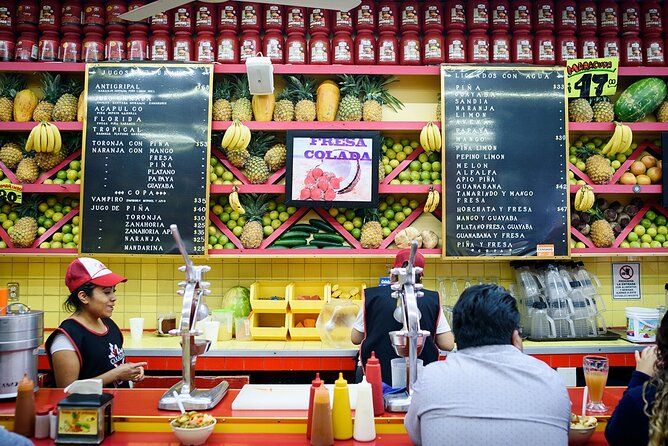
The next section brings you to Palacio de Mineria, a colonial-era palace that provides a strong visual counterpoint to the food stops. You may be eating tacos, sweets, or drinking freshly squeezed juice, then suddenly find yourself looking at a building that belongs to a very different chapter of the city.
That contrast is one of the tour’s strengths. Mexico City’s historic center can seem like a collection of impressive facades until someone explains how the places connect. The guide’s job is to give the buildings a role in the day’s story, not simply point them out as photo stops.
The itinerary gives this area about an hour. Because this is a walking tour, the time includes movement, discussion, and food rather than a formal architectural visit. If you want a long, detailed interior tour of every building, this is not the right format. If you want a readable introduction while eating well, it makes better sense.
The food also helps keep the historical talk grounded. You are not only hearing about the city in abstract terms. You are tasting the kinds of dishes and drinks that make its streets worth exploring.
A different sort of day out around Mexico City:
- Teotihuacan pyramids morning or afternoon without tourist traps
★ 5.0 · 6,186 reviews - Teotihuacan Early Access Guided Tour with optional Lunch
★ 4.5 · 6,138 reviews - Balloon flight + pick up in CDMX + Breakfast in Cave + Pyramids
★ 5.0 · 5,651 reviews - Balloon Flight + Cave Breakfast + Pick Up from CDMX or We Fly
★ 5.0 · 4,410 reviews
The House of Tiles brings food and spectacle together
The famous House of Tiles, known for its blue-and-white tiled exterior, is one of the most photogenic stops. The route allows about 45 minutes here, enough to appreciate the building and fit in another bite.
This is a good reminder that a food walk can also help you organize your sightseeing. You could visit the House of Tiles on your own, but the tour places it in a sequence with meals, snacks, and nearby streets. That saves you from treating food and monuments as separate parts of your day.
The stop may appeal most to first-time visitors who want a broad view of central Mexico City. You get a striking building, a short break from the street, and another chance to taste something without turning the day into a formal restaurant crawl.
The practical drawback is that the historic center can be crowded and distracting. Keep track of the group, especially while photographing the building or moving between food stops. The small group helps, but you still need to stay alert in busy streets.
Camino Real de Tierra Adentro explains the road behind the food
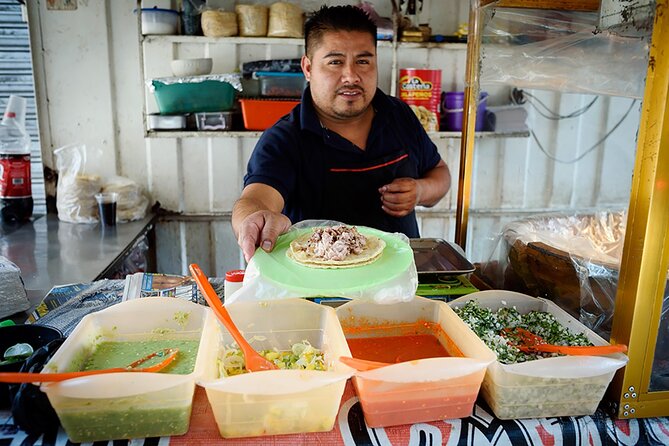
The Camino Real de Tierra Adentro is another stop where the guide links the city to a larger story. During the colonial period, this route served as a staging ground for journeys extending as far as what is now New Mexico.
The scheduled time is about 30 minutes. That makes it a shorter historical pause, but it gives the day a sense of distance and movement. The Centro Histórico was not an isolated collection of plazas. Goods, people, ideas, and ingredients traveled through it.
This is the sort of explanation that can make a dish taste different in your memory. Food is shaped by trade, travel, local custom, and changing communities. The tour does not present Mexican cuisine as a single fixed tradition. Instead, it places what you eat within the city’s long exchange with the wider region.
You should not expect an archaeological expedition or a long museum lecture here. The value comes from the guide’s narration and from seeing how a food route can also be a route through Mexico’s past.
What you are likely to eat during the day
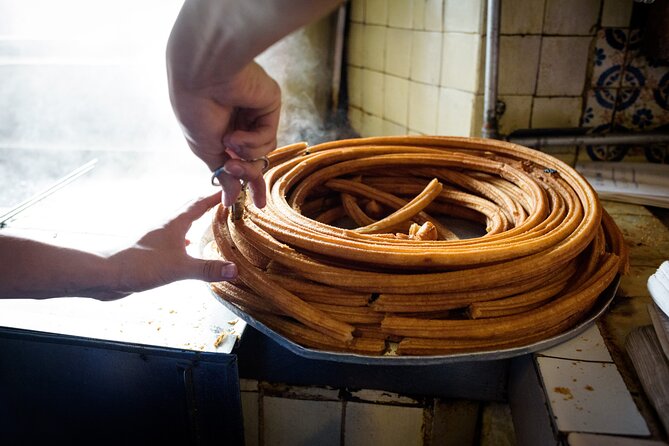
The food is the main reason to book, and the variety is more impressive than any single named dish. Accounts of the experience describe breakfast, coffee, tacos, enchiladas, sweets, fresh juice, market food, street snacks, lunch, and mezcal.
The route has also included food from several levels of formality. You might move from a modest stall to a traditional restaurant, then to a market or a more polished setting. That variety helps you understand that Mexico City eating is not one thing. It can be quick, social, inexpensive, ceremonial, old-fashioned, or experimental.
The pacing appears carefully judged. One account described eating a great deal without becoming uncomfortably full, while another joked that there was so much food that dinner was unnecessary. Expect lunch and brunch-style portions rather than tiny decorative samples.
The exact menu can change, so do not book this expecting a fixed tasting list. The supplied details do not identify every dish or address. That flexibility is useful in a city where the best choice may depend on what is fresh and available that day, but it also means you should tell the operator about dietary needs before booking.
The tour includes snacks, breakfast, brunch, lunch, coffee or tea, and alcoholic beverages. It is specifically not vegan friendly. The information does not say how vegetarian, gluten-free, dairy-free, or allergy requests are handled, so ask before paying if those issues affect your meal.
Why the small group and guide matter
A maximum of seven people is a real advantage in the Centro Histórico. Small groups can enter modest food places more easily, gather around a market counter, and keep conversation flowing without a guide shouting to the back row.
You also get more room to ask questions. The best moments on this kind of tour often come from a side question about a sauce, a mural, a neighborhood, or a family tradition. A small group makes those exchanges possible.
The named guides have different personalities, but the strongest pattern is clear. Ana brought humor and strong local insight. Victor was praised for enthusiasm and steady pacing. Liz and Lis combined food knowledge with stories about the city and the Mexican Revolution. Ignacio and Nacho were especially good at explaining ingredients, preparation, art, and city history. Raul added an upbeat tone and a mezcal tasting at the end.
That does not guarantee a particular guide on your date. It does tell you what to hope for: a guide who treats the city as a connected story rather than a checklist of snacks.
Walking distance, timing, and practical comfort
The advertised duration is about five hours, though some outings have run close to six. One account estimated roughly 7 kilometers of walking. That is enough distance to affect your choice of shoes, energy level, and schedule.
Wear supportive footwear. You will be walking through central streets and stopping often, so this is not the day for stiff new shoes or delicate sandals. Bring water, even though the tour includes drinks, because food tastings and city walking can make you thirsty.
The start is at Café La Blanca, and the end is Plaza Manuel Tolsá at Tacuba 8. Both are in the Centro Histórico, and the area is near public transportation. The mobile ticket is useful for a quick meeting-point check.
Most people can participate, and service animals are allowed. The tour requires good weather and a minimum number of participants. If poor weather or insufficient enrollment cancels the outing, you are offered another date or a full refund.
The free cancellation deadline is 24 hours before the start time. Canceling later does not qualify for a refund, and late changes are not accepted.
Is $140 a fair price?
At $140 per person, this is not a budget food crawl. The price makes more sense when you count the full package: roughly five hours, a small group, many tastings, breakfast, lunch, drinks, historical interpretation, and a guide who knows where to go.
You are also paying for access to places that may be hard to locate on your own. A map can show you the House of Tiles and Palacio de Mineria. It is less useful for finding the right market counter, street stall, or traditional eatery at the right moment.
The value is strongest if you want to make one major food-and-culture booking during your Mexico City stay. It can replace several separate meals and give you a better sense of where to eat afterward.
The value is weaker if you eat little, avoid alcohol, want only famous restaurants, or prefer to explore at your own pace. It is also a poor fit for vegans. Bring curiosity as well as appetite, because the food is only half the product.
Who should book this experience?
I would recommend it to first-time visitors who want a strong introduction to the Centro Histórico. It suits couples, friends, and families who enjoy walking and want a guide to explain what they are seeing between meals.
It is also a good choice for people who already know Mexican food but want more context. One especially telling account came from a Mexican participant who felt the guide still offered new insight into the country’s food culture. That suggests the tour goes beyond naming dishes and pointing out famous addresses.
Book it early if your schedule is fixed. The average booking lead time is 47 days, which signals that popular dates can fill well ahead of arrival.
Should you book Culinary Secrets of the Centro Histórico?
Book this tour if you want a full day of eating, walking, and city stories in a small group. The strongest reasons are the food variety, the lesser-known eateries, the synagogue visit, and guides such as Ana, Victor, Liz, Lis, Ignacio, Nacho, and Raul, who bring the route to life.
Skip it if you need a short outing, a fixed menu, a vegan meal, or a low-cost way to sample one neighborhood. For everyone else, the $140 price is reasonable for a five-hour program packed with food, drinks, history, and expert local direction. Arrive hungry, wear good shoes, and leave room for mezcal.
FAQ
Where does the tour start?
It starts at Café La Blanca, Avenida 5 de Mayo No. 40, Centro Histórico de la Ciudad de México.
Where does the tour end?
The tour ends at Plaza Manuel Tolsá, Calle de Tacuba 8, in the Centro Histórico.
How long does the tour last?
The advertised duration is approximately five hours. Some outings have lasted close to six hours.
How large is the tour group?
The maximum group size is seven people.
Is the tour offered in English?
Yes. The experience is offered in English.
What food and drinks are included?
The package includes snacks, coffee or tea, alcoholic beverages, lunch, brunch, and breakfast.
Is the tour vegan friendly?
No. The experience is specifically listed as not vegan friendly.
What places are visited?
The route includes Plaza de Santo Domingo, Justo Sierra Synagogue, Palacio de Mineria, the House of Tiles, and the Camino Real de Tierra Adentro.
Is the tour accessible by public transportation?
Yes. The meeting area is near public transportation.
Can I cancel for a full refund?
Yes, if you cancel at least 24 hours before the experience begins. Later cancellations and changes are not accepted for a refund.
Just added around Mexico City
- Mexico Private Food Tour With Locals Including 10 Tastings★ 4.5 · 109 reviews
- Teotihuacan & Anthropology Museum, Templo Mayor & City Tour★ 4.5 · 109 reviews
- THE REAL CDMX: Under the skin of the city★ 5.0 · 111 reviews
- Mexico City: Mexican Folklore Ballet★ 4.5 · 111 reviews
- Teotihuacán plus Bike Tour★ 5.0 · 114 reviews
- Bike to taste the world’s best tacos – Mexico City★ 5.0 · 116 reviews
- EXCLUSIVE TOUR Chapultepec Castle – Small Groups★ 5.0 · 117 reviews
- Balloon flight with private transportation and guided tour to Teotihuacán★ 5.0 · 118 reviews
Mexico City Tours, compared.
Teotihuacan, Guadalupe Shrine & Tlatelolco Day Tour with Lunch
Read our review →
Xochimilco, Coyoacan and Frida Kahlo with Optional Lunch
Read our review →
Balloon flight + Breakfast in cave + Pyramids + Pick up CDMX.
Read our review →
Teotihuacan pyramids morning or afternoon without tourist traps
Read our review →
Teotihuacan Early Access Guided Tour with optional Lunch
Read our review →
Balloon flight + pick up in CDMX + Breakfast in Cave + Pyramids
Read our review →
Balloon Flight + Cave Breakfast + Pick Up from CDMX or We Fly
Read our review →
Teotihuacan, Tlatelolco & Guadalupe Shrine Tour
Read our review →Browse the lists this tour appears in