
Reviewed · CHICHEN ITZA TOURS
Chichen Itza: Self-Guided Tour with Audio Narration & Map
Ancient stones deserve more than a quick photo. This $9.99 self-guided tour gives you a GPS-triggered audio walk through Chichén Itzá, with narration, photos, text, and a suggested route. I like the freedom to pause, repeat, or leave the path without losing your place, and I like that the app works offline after you download it. The main drawback is that setup must be done carefully before arrival, and the quality of the experience depends on your phone, battery, headphones, and the app working properly.
You get more than 37 audio stories along a route of roughly 1.5 to 2 miles. The material covers El Castillo, the Great Ball Court, El Caracol, the Temple of the Warriors, Las Monjas, and several smaller structures that are easy to overlook. It is a practical alternative to hiring a private guide, but it is not a full substitute for a live expert who can answer questions or adjust the visit to your interests.
The tour is offered in English and usually takes about two hours if you listen to everything. Allow two to three hours at the site if you want time for photographs, shade breaks, souvenirs, and a slower walk between stops.
In This Review
- Key points about the Chichén Itzá audio walk
- What you are buying for $9.99
- Get the app working before you reach the ruins
- Entering through the handicraft market
- El Castillo and the Great Ball Court
- Tzompantli and the Eagles and Jaguars Platform
- El Caracol, the Ossuary, and the southern monuments
- The Temple of the Warriors and Red House
- La Iglesia and the final stretch
- How well does the GPS route work?
- The limits of an audio guide
- Timing, heat, shade, and walking distance
- Who should book this Chichén Itzá tour?
- Should you book it?
- FAQ
- Is admission to Chichén Itzá included?
- How long does the audio tour take?
- Does the tour work without internet?
- What app do I need?
- Where does the tour start and finish?
- Is the tour offered in languages besides English?
- Do I need headphones?
- Can I pause or repeat the tour?
Key points about the Chichén Itzá audio walk
- Offline GPS keeps the tour running: Download the content on strong Wi-Fi or cellular service before arriving, then use it without data roaming or an internet signal.
- El Castillo gets the attention it deserves: The narration explains the Pyramid of Kukulkan and its place in Maya and Toltec culture.
- The route covers far more than the famous pyramid: You also visit the ball court, skull rack, observatory, Temple of the Warriors, Ossuary, Nunnery, and La Iglesia.
- You control the pace: Pause for shade, replay a story, skip a stop, or wander away for photographs and return later.
- The value is hard to beat: At $9.99 per person, it costs far less than a private guide and gives you useful context where on-site signs can feel limited.
- Prepare your phone first: You need the separate Action Tour Guide app, a password sent after booking, GPS, headphones, and enough battery for the walk.
What you are buying for $9.99
The product is an audio tour, not admission to the archaeological zone. Your Chichén Itzá entry ticket must be purchased separately, and the $9.99 price does not include attraction passes, reservations, or other access costs.
That distinction matters because the entrance fee can be a major part of your day’s budget. Still, the audio tour itself is inexpensive. A private guide may give you a more personal visit, but this option lets you add structure and historical explanation for roughly the cost of a casual meal or drink.
I find the value strongest for couples and families who want information without being tied to a group. Two people can share one tour with split headphones, though each person may find a separate pair more comfortable. Solo visitors also get plenty of freedom, especially if they prefer to stop often for pictures.
The tour details describe the access as new, lifetime access with no expiry. Some older provider messages refer to one year of use, so I would check the current access terms at booking if repeat visits matter to you. The practical point remains the same: you can pause and restart the tour, and the app is designed for use at your own pace rather than one fixed departure time.
More ways to see Chichen Itza:
- Chichen Itza, Private Cenote/Food Experience & the magic Izamal
★ 5.0 · 385 reviews - Chichén Itzá Skip-the-Line Entrance Ticket
★ 4.0 · 343 reviews - Chichen Itza, Cenote Swim & Izamal Magic Town with Buffet Lunch
★ 4.5 · 317 reviews
Get the app working before you reach the ruins
This is the most important practical advice. After booking, look for an email and text message with setup instructions and a password. Search your inbox and messages for audio tour, then download the separate Action Tour Guide app and enter the password before you leave reliable Wi-Fi or cellular service.
The app must be downloaded while you have a strong connection. Once the tour content is stored on your device, the route uses GPS rather than mobile data. That is useful at a large archaeological site, where you do not want to spend the visit wrestling with roaming charges or a weak signal.
Give yourself time to test the app. One user had trouble when the password screen kept returning, and closing and reopening the app solved the problem. That is a simple fix, but it is much better to discover it at your hotel than beside the entrance.
Bring:
- Earbuds or headphones
- A fully charged phone
- A portable battery pack
- The phone used to download and activate the tour
- The booking email and password
Battery life deserves special attention. The route is long, GPS uses power, and audio plays throughout the walk. One visitor enjoyed the tour but ran out of battery, a preventable problem at a site where charging options should not be assumed.
Entering through the handicraft market
The first stop is the handicraft market near the entrance. It introduces the setting and frames Chichén Itzá as the remains of a major Maya center rather than just a single pyramid.
This is also the place to orient yourself. The route can feel slightly confusing for the first few minutes, especially if you begin walking before the GPS and audio line up. Take a moment to identify the first story point and confirm that the map shows your position correctly.
The opening material is brief, around five minutes. Think of it as a warm-up rather than a full lesson on Maya civilization. The route becomes more useful once you reach the main monuments.
El Castillo and the Great Ball Court
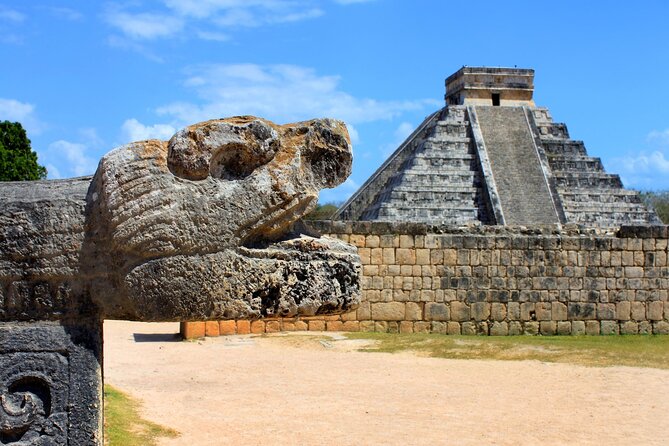
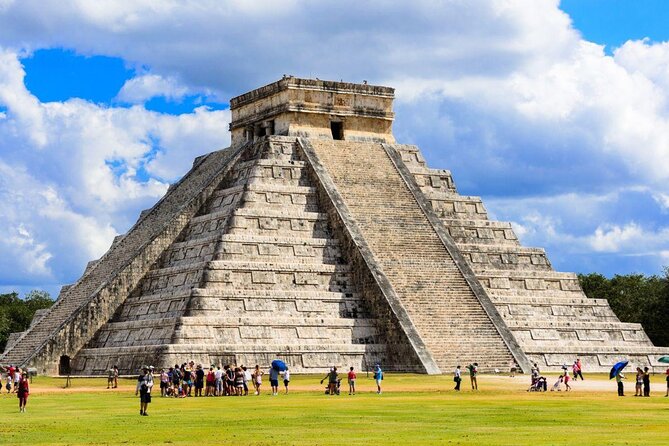
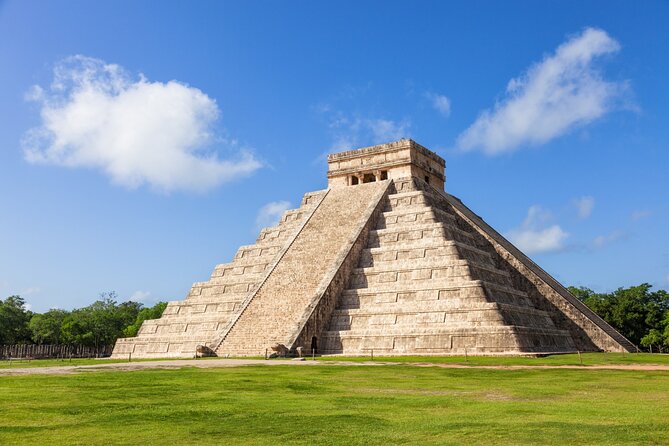
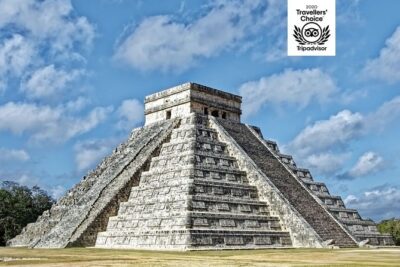
El Castillo is the star of the visit, and the tour gives it a proper introduction. Also called the Pyramid of Kukulkan, it was built in honor of the feathered serpent deity. The audio helps you look beyond its familiar shape and notice how the architecture reflects Maya ideas about religion, time, astronomy, and public ceremony.
You cannot climb the pyramid, so a good audio explanation is especially useful here. You will spend your time looking closely at the structure, listening, and taking in its scale from different angles.
From there, the route leads to the Gran Juego de Pelota, or Great Ball Court. This was not simply a sports field. Sculpted reliefs along the walls show ball players and scenes connected to Maya beliefs and ritual life.
The narration is most useful when it points your eyes toward details you might otherwise pass. On-site signage can be limited, and the audio gives you a reason to study the carved panels instead of walking through in a few minutes.
A different sort of day out around Merida:
- From Cancún: Rio Lagartos & Las Coloradas Day Trip & Lunch
★ 4.6 · 451 reviews - Merida Walking Food Tour. Authentic & Local Cuisine
★ 5.0 · 451 reviews - Merida Street Food Walking Tour
★ 5.0 · 417 reviews - Taste of the Yucatan: Merida Cooking Class and Market Visit
★ 5.0 · 291 reviews
Tzompantli and the Eagles and Jaguars Platform
The Tzompantli is one of the more unsettling stops. Its name means skull rack, and the platform is decorated with skulls, snakes, eagles, and warriors carrying human heads.
The stop is short, but the subject gives the ceremonial center a harder edge. Chichén Itzá was not only a place of impressive geometry and carved decoration. Ritual sacrifice and warfare were part of the world represented here.
Nearby, the Eagles and Jaguars Platform is a flat square structure with stairways on all four sides. It appears to have served as a public stage for ceremonies, dances, rituals, or speeches rather than supporting a temple.
These two stops work well together. One shows powerful imagery carved in stone, while the other helps you imagine how people may have gathered in the open space around these platforms.
El Caracol, the Ossuary, and the southern monuments
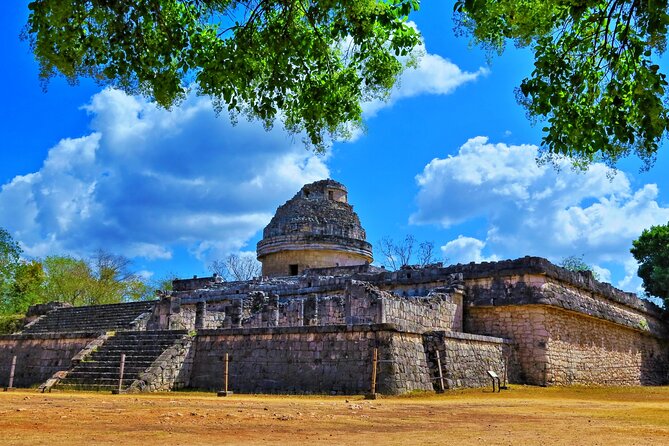
El Caracol is among the most interesting buildings on the route. The circular remains on top are associated with an observatory, where Maya astronomers watched the sky and tracked planetary movements.
The audio gives you a reason to look at the building as more than an unusual round structure. Its form and possible astronomical use help explain how observation of the heavens shaped Maya public life and belief.
The route includes El Caracol twice in the supplied stop sequence, once as the main observatory stop and again later with the same basic subject. That duplication may reflect two nearby GPS points or a route design issue. If the second explanation repeats material, you can simply skip it.
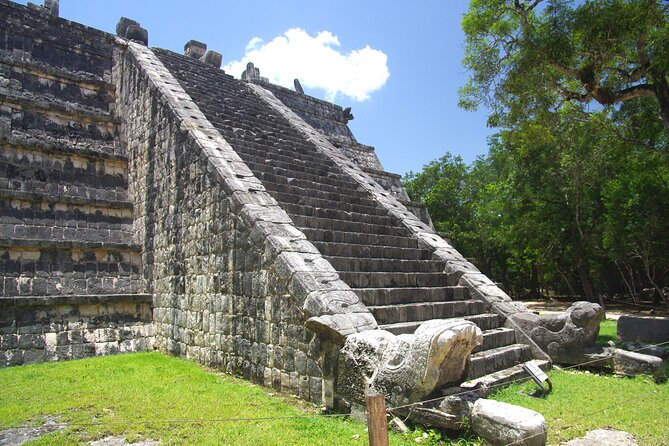
The Ossuary, also called El Osario or the High Priest’s Grave, is a smaller pyramid with a serious name. Archaeologists found human and animal remains in and beneath the structure, including several tombs thought to have belonged to high-ranking Maya people.
This is a good example of why the self-guided format helps. The building is less famous than El Castillo, so you could easily pass it without understanding its purpose or archaeological importance.
Las Monjas, or the Nunnery, is another major stop. It contains many carved texts, including references to a ruler named Kakupakal. The building is significant not because it housed nuns, but because its name was assigned later and its inscriptions offer clues about the people who ruled and used Chichén Itzá.
The Temple of the Warriors and Red House
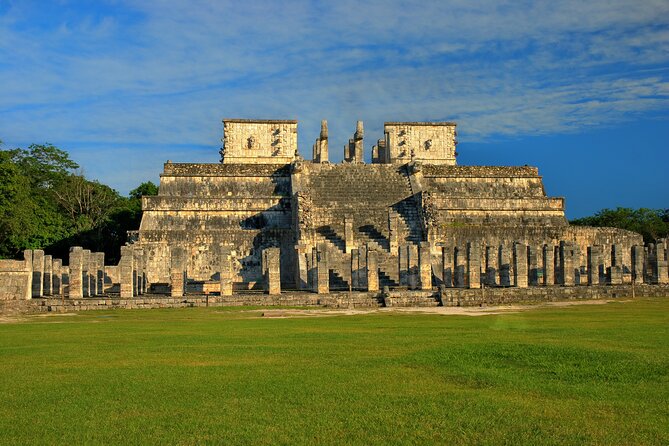
The Temple of the Warriors is one of the site’s most imposing complexes. Its broad stepped base supports a temple, and hundreds of columns nearby carry carvings of Toltec-style warriors.
The audio encourages you to view the columns as part of a larger ceremonial setting. Do not rush past them after photographing the main temple. Their repeated figures and scenes are part of what makes this area feel different from the more geometric presentation of El Castillo.
The Red House, also known as the House of Little Holes, is a smaller and quieter stop. Latticework near the top gives the building its nickname, while its Maya name, Chichanchob, may refer to those small openings.
This is the kind of structure that benefits from a suggested route. Without a guide or map, many visitors naturally focus on the huge monuments and overlook buildings such as this one.
La Iglesia and the final stretch
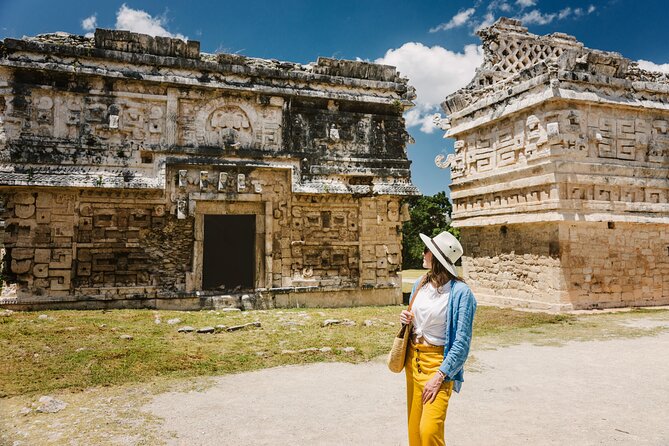
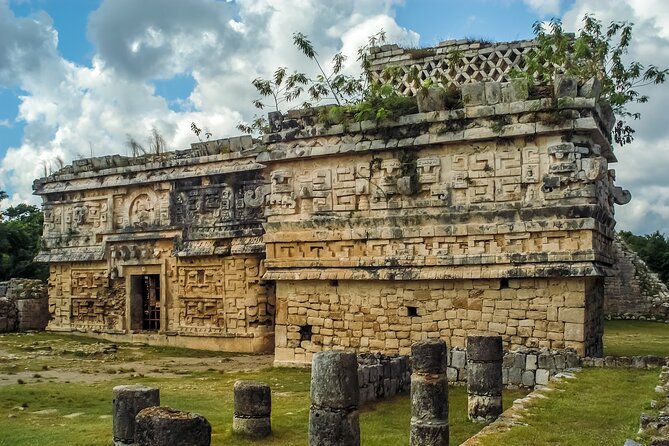
La Iglesia is one of the most photographed smaller buildings at Chichén Itzá. Its exterior is covered with decorative veneer, including masks of Chac, the Maya rain deity.
Look closely at the upper decoration. Among the Chac masks are figures resembling an armadillo, crab, snail, and tortoise. The stop is short, but it rewards patience and a closer look at the façade.
The route ends back at the starting point. In total, the walk covers the essential central and southern areas of the archaeological zone, with more than 37 audio stories. You can listen to every stop in roughly one to two hours, but the full visit takes longer once you add walking, photographs, heat, and breaks.
How well does the GPS route work?
The GPS feature is the tour’s strongest practical tool. When you approach a story point, the audio is designed to begin automatically, so you can keep your phone in your pocket and listen hands-free.
In practice, the map may trigger a story slightly before you reach the exact building. That is not necessarily a serious problem. You may hear the introduction while walking toward the structure, then arrive as the explanation reaches the details. If you prefer exact control, you can start a story manually or pause it.
The GPS also helps if you leave the route for souvenirs, photographs, or shade. You can return to the guide when you are ready instead of trying to remember which stop comes next. Still, take a quick look at the map at the start. Getting oriented early prevents confusion later.
The app includes audio, written information, images, and extra background material. The written option is useful if the narration moves too quickly, if you are sharing headphones, or if you want to review a point quietly.
The limits of an audio guide
The tour is clear and practical, but it is not a full academic course on Maya civilization. Some explanations are brief, which many people will appreciate in the heat. If you want detailed coverage of Maya customs, political changes, abandonment theories, or every scholarly debate, you may want a book or an additional source.
The narration quality appears to be a matter of personal preference. Many people find the voice pleasant and the explanations easy to follow. One critical response described the delivery as flat and the wording as difficult to understand, particularly in another language. Since this version is in English, check that your phone and app settings are correct, and use the written text if a sentence is unclear.
A live guide has advantages the app cannot match. A person can answer follow-up questions, adjust the pace, point out a detail based on your interests, and explain changes in the site as you walk. The app wins on privacy, price, and control. You will not be gathered around a guide in the sun, and you will not wait for a group to catch up.
Timing, heat, shade, and walking distance
The archaeological zone is open from 8:00 AM to 5:00 PM, Monday through Sunday, according to the supplied schedule. The tour itself does not require a fixed start time, so you can begin when you enter and pause whenever needed.
The route is more than 1.5 miles and can exceed two miles depending on how you move between points. If you want to cover all the structures, prepare for a good amount of walking. The site has refreshment stalls and a sitting area in the middle of the compound, which gives you a place to rest.
The ability to listen in the shade is a real benefit. You can pause beside a quieter area, finish a story, and continue when ready. That freedom is much more comfortable than trying to keep pace with a group.
Who should book this Chichén Itzá tour?
I would choose this tour if you:
- Want historical context without hiring a private guide
- Prefer exploring alone or with your own group
- Need English narration
- Like to stop for pictures and return to the route
- Are comfortable downloading an app and using GPS
- Want to keep the cost low
It is also a good fit for families, couples, and solo visitors who enjoy self-paced sightseeing. The written content and repeat function help if members of your group listen at different speeds.
I would think twice if you want a live conversation, detailed specialist history, or help with every technical step. The app is easy once installed, but it is not something to set up for the first time at the gate. It also requires enough battery and a working phone.
Should you book it?
For $9.99, I think this is a smart add-on to a Chichén Itzá visit. It gives you a clear route, useful explanations, and GPS guidance across a large site where basic signs may not provide enough detail. The best parts are the freedom to move at your own pace and the low price compared with a private guide.
Download and test everything before you arrive, bring headphones and a power bank, and keep your expectations realistic. You are buying a flexible audio companion, not a personal archaeologist. If that suits your style, book it. If you want a lively question-and-answer session and deep specialist detail, spend more on a live guide.
FAQ
Is admission to Chichén Itzá included?
No. The $9.99 price covers the self-guided audio tour only. Your entrance ticket and any attraction passes, reservations, or other entry costs are separate.
How long does the audio tour take?
The audio route takes about one to two hours if you listen to all the stories. Since the route covers more than 1.5 miles and includes time for photographs and breaks, allow two to three hours for the full visit.
Does the tour work without internet?
Yes. You must download the tour while connected to strong Wi-Fi or cellular service. After that, the app works offline using GPS, so data roaming is not required during the visit.
What app do I need?
You need to download the separate Action Tour Guide app. After booking, you receive setup instructions and a password by email and text message.
Where does the tour start and finish?
The stated starting point is 97751 Chichén Itzá, Yucatán, Mexico. The activity ends back at the meeting point.
Is the tour offered in languages besides English?
The supplied tour information lists English as the available language. A French user specifically noted that French was not available.
Do I need headphones?
Headphones or earbuds are recommended for the best experience. They allow you to hear the audio clearly and keep your hands free while walking.
Can I pause or repeat the tour?
Yes. You can pause the tour, replay explanations, skip stops, take side trips, and return to the route later. The tour information describes access as usable anytime, with no expiry, though some older provider messages referred to one year of access, so confirm the current terms when booking.
Just added around Merida
- Mérida: The E-bike tour with history and culture★ 4.9 · 36 reviews
- Private Tour in Chichen Itza Official History Guide★ 5.0 · 36 reviews
- Nature tour by boat in the Natural Reserve in Río Lagartos★ 5.0 · 37 reviews
- FROM VALLADOLID RIO LAGARTOS + LAS COLORADAS + CENOTE (COLECTIVO TOURISTIC)★ 4.7 · 37 reviews
- Santa Barbara with Tour in Izamal★ 5.0 · 38 reviews
- The secrets of Uxmal, Cenote and home made food★ 5.0 · 38 reviews
- Private Tulum Experience & Cenote★ 5.0 · 39 reviews
- Private Transportation to/from Merida International Airport★ 4.5 · 39 reviews
Chichen Itza Tours, compared.

Chichen Itza, Cenote & Valladolid Tour with Tequila and Lunch
Read our review →
Chichen Itza, Cenote & Valladolid Tour with Lunch
Read our review →
Early morning Chichen Itza Tour: Cenote and Tequila Tasting
Read our review →
Chichen Itza Early Access All Inclusive: Hotel Pick up & All Fees
Read our review →
Chichen Itza Gastronomic, Valladolid and Cenote Extremo
Read our review →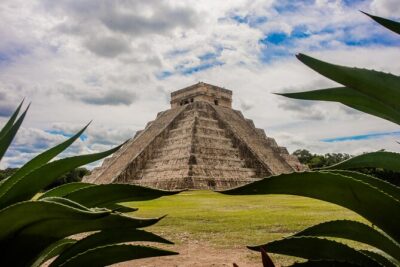
Chichen Itza, Cenote and Valladolid Small Group Day Trip
Read our review →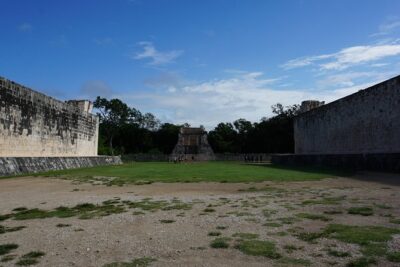
Browse the lists this tour appears in