
Reviewed · WHALE WATCHING
Cabo San Lucas: 2.5-Hour Whale Watching Tour
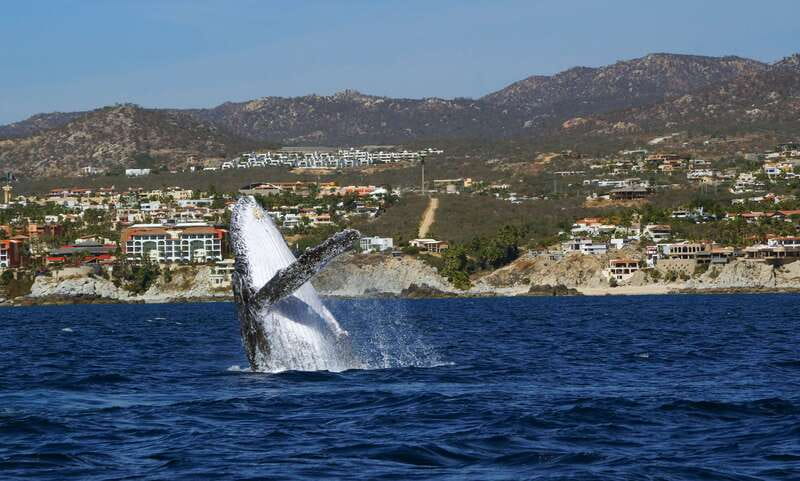
Whales turn a Cabo morning into theater. I like the hydrophones, which let you hear humpback calls beneath the boat, and the small groups capped at 10 people, which make it easier to hear the guide and move around. The marine biologist adds real substance, not just a quick boat ride and a hopeful search for fins.
The tour also includes Cabo’s famous Arch and a local sea lion colony, so you get more than whale sightings. The main drawback is that nature sets the schedule: even with skilled captains and guides, no tour can promise breaches or close encounters. The ride is also not recommended for pregnant women or people with back or heart problems.
In This Review
- Key points to know before booking
- Why Cabo is a strong whale-watching base
- Meeting at M-0 beside the Tequila Lighthouse
- A 2.5-hour search for humpbacks
- Hearing humpbacks through hydrophones
- Mothers, calves, and active groups
- The Arch and sea lions add variety
- What the $109 price really covers
- Who should book this tour
- Booking, cancellation, and practical details
- Should you book the Cabo whale-watching tour?
- FAQ
- How long is the Cabo whale-watching tour?
- How much does the tour cost?
- When is whale-watching season in Cabo?
- What departure times are available?
- Where do I meet the boat?
- Is hotel transportation included?
- What is included in the tour?
Key points to know before booking
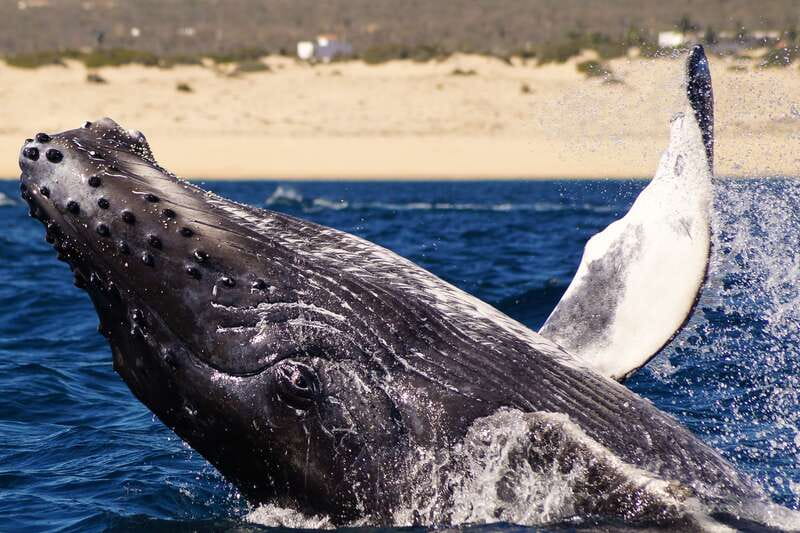
- More than 10,000 humpback whales pass Baja California Sur each year, mainly from mid-December through mid-April.
- Hydrophones bring whale songs into the boat, adding a sound-based side to the usual tail-and-spray show.
- Groups are limited to 10 people, a useful advantage when whales surface on different sides of the boat.
- A marine biologist leads the outing, explaining humpbacks, gray whales, dolphins, seals, and local sea life.
- The Arch of Cabo San Lucas and a sea lion colony are part of the route, giving you worthwhile sights even between whale encounters.
- The $109 price includes water, life jackets, and the specialist guide, but not transportation to or from your hotel.
Why Cabo is a strong whale-watching base
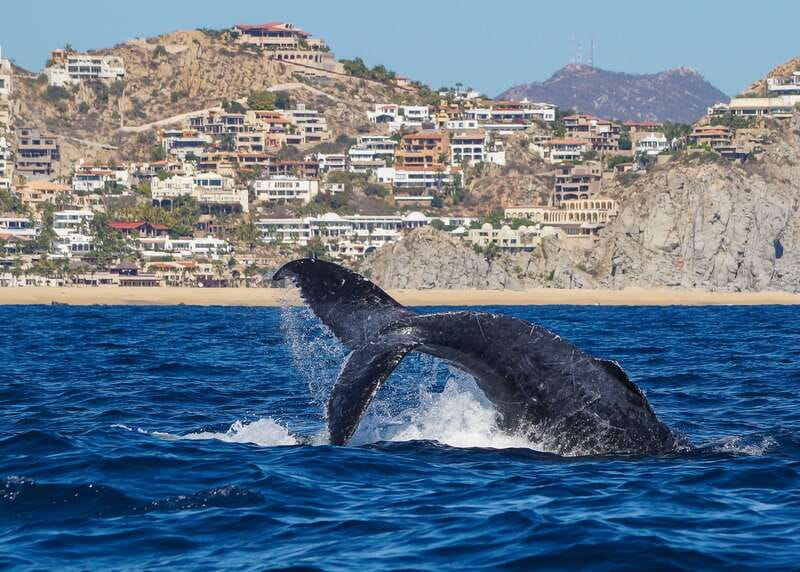
Cabo San Lucas sits at the meeting point of the Pacific Ocean and the Sea of Cortez. That position gives the area an appealing mix of open-water scenery, marine life, and famous coastal landmarks.
Every year, more than 10,000 humpback whales migrate through Baja California Sur. The main viewing period runs from mid-December to mid-April, when whales pass through these waters. January, February, and March are especially attractive times to consider because they fall squarely inside the stated season, though the exact action always depends on the animals.
I like that this trip treats whale watching as a natural-history outing rather than a simple sightseeing cruise. You are not just scanning the horizon. You are learning why whales are here, how they behave, and how their underwater calls fit into their lives.
Still, keep your expectations sensible. One day might bring a mother and calf, several active adults, dolphins, and seals. Another might offer more distant sightings. The tour can improve your chances with local skill, but it cannot direct the whales like actors in a marine show.
More Whale Watching in Los Cabos
- Whale Watching Cabo-Women crew-Sightings Guaranteed & Free Photos
★ 5.0 · 1,743 reviews - SMALL GROUP Whale Watch | Cabo San Lucas | Biologist | FREE Pics
★ 5.0 · 1,106 reviews - Humpback Whales in Cabo San Lucas
★ 5.0 · 1,005 reviews
Meeting at M-0 beside the Tequila Lighthouse
The meeting point is inside the Tesoro Hotel on Cabo’s marina, at Blvd. Paseo de la Marina 20. Look for the local partner’s office near dock M-0 and the landmark called the Tequila Lighthouse. It is behind Carlito’s Cantina.
This is a central marina meeting point, but give yourself enough time to find the office. The directions include several landmarks because the marina has plenty of docks, restaurants, and signs competing for your attention. If you are coming from a hotel elsewhere in Cabo, plan your own transportation because hotel pickup and drop-off are not included.
The three departure times are 8 AM, 11 AM, and 2:30 PM. The early trip gives you a useful start to the day, while the afternoon option may suit you better if you dislike early mornings. A February afternoon outing produced especially active whale behavior for one group, so I would not assume that the first departure is automatically best.
Bring sunglasses, a sun hat, comfortable clothing, and a jacket. The jacket matters even in sunny Cabo. Open water can feel cool, particularly when the boat is moving.
A 2.5-hour search for humpbacks
Once the boat leaves the marina, the main task is watching, listening, and moving with the whales. The boat captain works with the marine biologist to find activity, then positions the boat so people can see what is happening.
That teamwork matters. Whales can surface on either side, and a good captain can help the group get a clear view without turning the outing into a frantic scramble. Reports from this tour describe captains locating several groups, including mothers with calves and whales that surfaced close to the boat.
The small group size is a real advantage here. With no more than 10 participants, you have a better chance of hearing the guide’s explanation and shifting position when a whale appears. The boat is described as large enough to move around, which is useful because whale watching is not a sit-still activity. You may need to look left, then right, then behind you a moment later.
The tradeoff is simple: a small boat or small-group setup can feel more personal, but conditions on the water may feel more noticeable than they would on a large cruise vessel. Anyone prone to motion sickness should consider that before booking, although motion sickness is not specifically listed among the restrictions.
Hearing humpbacks through hydrophones
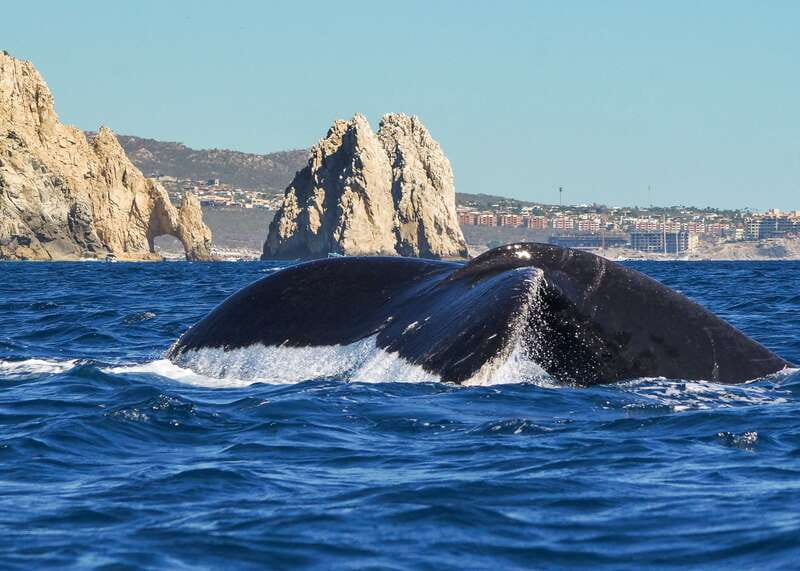
The hydrophones are one of the most unusual parts of the tour. They let you hear sounds from below the surface, giving you an extra connection to the whales even when you cannot see them.
That changes the rhythm of whale watching. You are not relying only on a breach, tail slap, or fin. You may hear the animals communicating while the surface looks calm. One account especially praised hearing the whales speaking, and another noted that the songs become longer each year.
The guide explains what you are hearing and how humpback behavior works. This is where the marine biologist makes a clear difference. The tour includes a specialist guide who can discuss humpback whales, gray whales, and other local sea life, rather than offering only broad facts.
Several guides have received especially warm praise. Angelica was described as enthusiastic, passionate, and well prepared. Vanuza, also spelled Venusia in one account, provided strong information about whale behavior and conservation. Andrea was praised for combining a friendly manner with solid instruction.
Guide assignments can change, so you should not book expecting a particular person. But those names show the level of interpretation you may receive. The best part of the trip may be the explanation that helps you understand an encounter, not simply the sight of a whale’s back.
More whale trips:
- ZODIAC Whale Watch Tour | Cabo San Lucas | Biologist | FREE Pics
★ 5.0 · 365 reviews - Los Cabos Whale Watching (Transportation and Pictures Included)
★ 5.0 · 290 reviews - Cabo: Whale-Whatching Boat Trip w/ All-Women Crew and Photos
★ 4.9 · 202 reviews - Cabo San Lucas Whale Watching Lunch Cruise
★ 5.0 · 197 reviews
Mothers, calves, and active groups
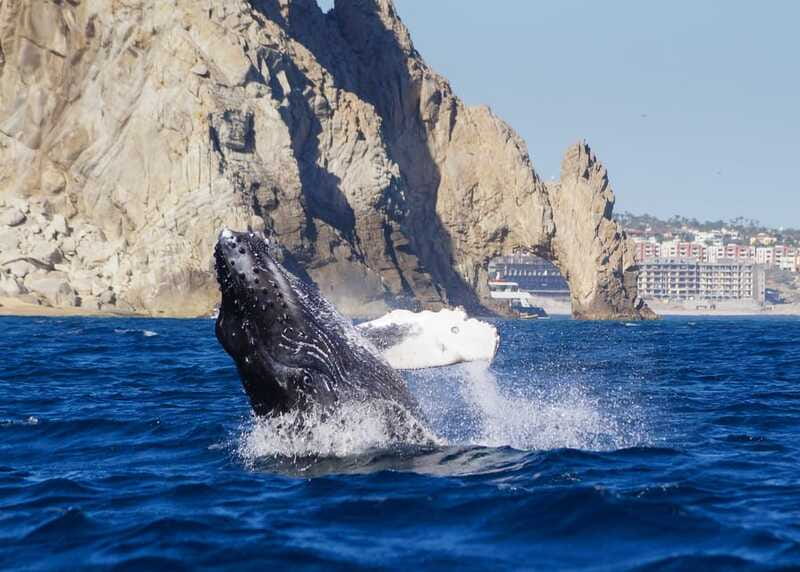
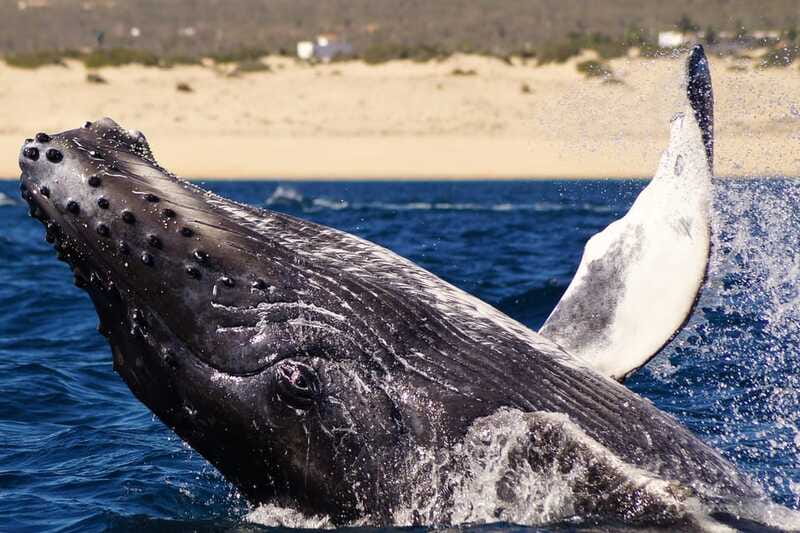
The most memorable encounters described on this outing involved humpback families and playful behavior. A mother and calf were seen together, with the young whale practicing what appeared to be a bridge-like movement. Other sightings included several adult males competing and playing.
Another outing produced about 20 separate whales. Groups slapped their tails and fins for around 20 minutes, with enough force that the movement could be felt on the boat. A whale even swam beneath the boat during one close encounter.
These moments sound wonderful, but they should be treated as fortunate possibilities, not promises. The tour’s value does not depend only on a whale breaching directly beside you. A distant blow, a pair of flukes, or a calf staying close to its mother can still be meaningful when the guide explains what you are seeing.
The crew also works with a conservation-minded approach. One guide shared information about respectful whale watching, and captains were praised for safe handling and for finding viewing opportunities without turning the boat ride into a chase.
You should also expect the whale behavior to vary by day and by time. The available accounts include strong sightings in the morning, late afternoon, January, February, and March. That suggests all three departure times can work, but it does not establish a guaranteed best slot.
The Arch and sea lions add variety
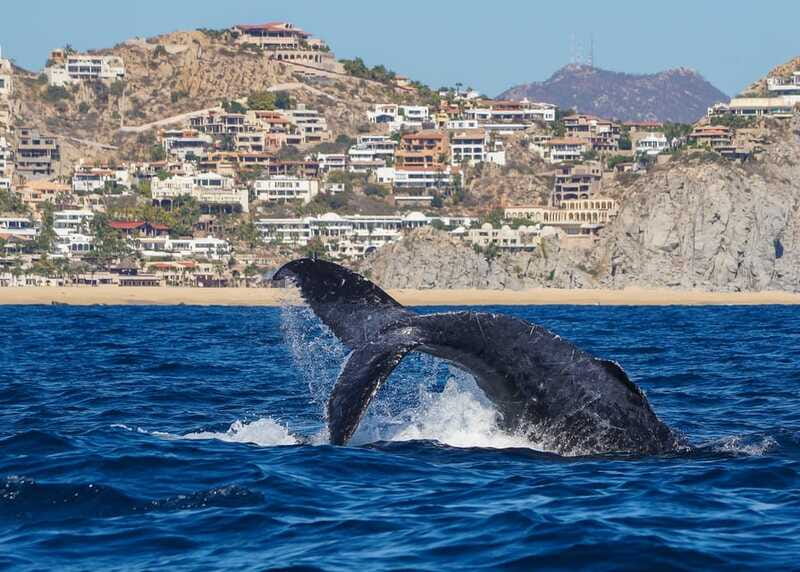
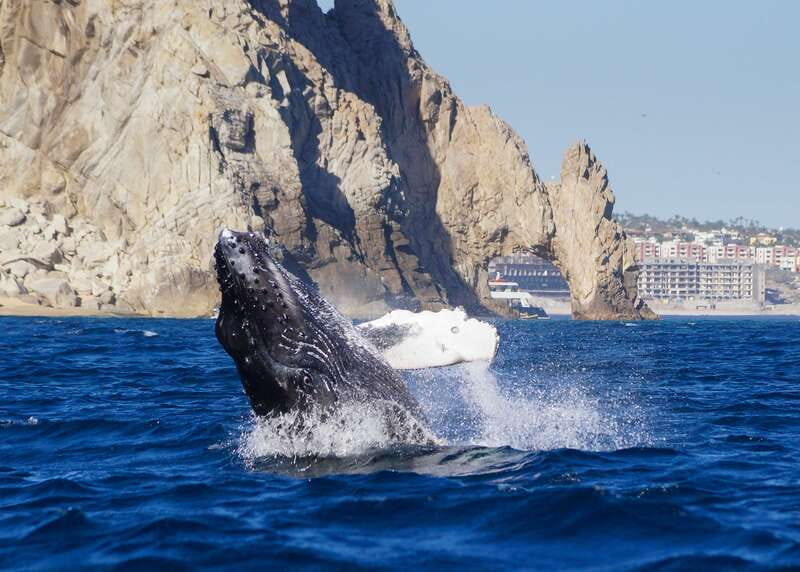
Whale watching is the main event, but the route also includes the Arch of Cabo San Lucas and a local sea lion colony. These sights give you something specific to see while the crew searches for whales or moves between encounters.
The Arch is Cabo’s most famous coastal landmark, a dramatic rock formation at the tip of the peninsula. Seeing it from the water provides a different angle than viewing it from town or a beach. The boat setting also helps you understand Cabo’s position at the end of the peninsula, where the Pacific and Sea of Cortez meet.
The sea lion colony adds another layer of marine life. You may see animals resting near the rocks or moving around the water. The exact behavior is not guaranteed, but the stop makes the tour more varied than a trip focused only on open-water scanning.
One guide also explained Cabo’s coastline and other landmarks during the outing. That is useful if this is your first visit, because you get a short orientation to the coast while looking for wildlife.
What the $109 price really covers
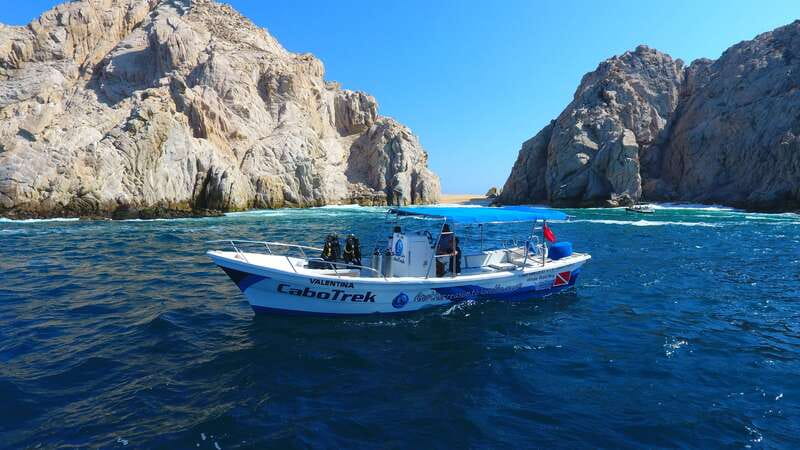
At $109 per person, this is not the cheapest way to get on the water. It is also not simply a sightseeing cruise. The price includes a 2.5-hour outing, life jackets, bottled water, a marine biologist guide, and a small group limited to 10 people.
I see the strongest value in the specialist guide and group size. If you only want a quick photograph of the Arch, a lower-cost boat trip may be enough. If you want whale behavior explained, whale songs played through hydrophones, and a better chance to ask questions, this tour makes a stronger case.
The crew’s role also affects the value. Several accounts praised the captains for finding whales and keeping the boat safe. That local skill is important because your time on the water is limited to two and a half hours.
The price does not include hotel transportation, so add that cost and planning to your budget. Bottled water is included, but bring your own sun protection and jacket. Photography is not listed as an inclusion, though one outing had a professional photographer present. Do not assume that photographer service is part of every departure.
Who should book this tour
I would choose this trip if you want a small, educational whale-watching outing rather than a large party boat. It fits people who care about marine life, want to understand whale behavior, and appreciate having an expert on board.
Families with older children may like the mix of visual excitement and clear explanations, though the supplied information does not give a minimum age. Couples and solo travelers can also benefit from the smaller group because it is easier to stay engaged with the guide.
The tour is wheelchair accessible, which is useful information when comparing Cabo activities. At the same time, it is not suitable for pregnant women or people with back or heart problems. The boat ride may be physically demanding enough that you should take those restrictions seriously.
You should also choose your departure with your own energy in mind. The 8 AM, 11 AM, and 2:30 PM options let you fit the outing around your Cabo plans. If you want to spend the rest of the day at the marina or exploring town, the early trip works well. If you prefer a slower morning, the later departures are more convenient.
Booking, cancellation, and practical details
You can reserve now and pay later, which helps if your Cabo schedule is still taking shape. Free cancellation is available up to 24 hours before the activity for a full refund.
Guiding is offered in English, Portuguese, and Spanish. Confirm the language you want when checking availability, especially if language support is an important part of the experience.
The tour operates daily at the three listed times, subject to availability. Meet at the partner office rather than heading straight to a random marina dock. The clearest landmarks are M-0, the Tequila Lighthouse, and Carlito’s Cantina.
A 4.9 rating from 35 verified bookings reflects very strong satisfaction, with repeated praise for the guides, captains, whale activity, and hydrophones. That is encouraging, but whale watching remains weather and wildlife dependent. Go for the full experience, not a guaranteed close-up photograph.
Should you book the Cabo whale-watching tour?
Book it if you want expert guidance, whale songs, and a small group, and you are visiting during the mid-December to mid-April season. The combination of humpbacks, hydrophones, the Arch, sea lions, and marine-life instruction gives the $109 price a solid purpose.
I would be less eager to book if your main goal is a guaranteed breach beside the boat or if you dislike open-water motion. Nature decides what appears. For everyone else, this is a thoughtful Cabo outing with enough wildlife, scenery, and useful explanation to make the 2.5 hours feel well spent.
FAQ
How long is the Cabo whale-watching tour?
The tour lasts 2.5 hours.
How much does the tour cost?
The listed price is $109 per person.
When is whale-watching season in Cabo?
More than 10,000 humpback whales pass through Baja California Sur each year from mid-December to mid-April.
What departure times are available?
The tour operates daily at 8 AM, 11 AM, and 2:30 PM, subject to availability.
Where do I meet the boat?
Meet at the local partner’s office inside the Tesoro Hotel at Blvd. Paseo de la Marina 20 in Cabo San Lucas. The office is near dock M-0, beside the Tequila Lighthouse and behind Carlito’s Cantina.
Is hotel transportation included?
No. Hotel pickup and drop-off are not included.
What is included in the tour?
The tour includes life jackets, bottled water, and a marine biologist guide. It is also wheelchair accessible, and groups are limited to 10 participants.
Just added around Cabo San Lucas
- New Attraction: Guinness World Record Sky Bike in Los Cabos★ 4.5 · 34 reviews
- Affordable VIP Private Transportation- “ELEVATE YOUR JOURNEY”★ 5.0 · 35 reviews
- Los Cabos: Kayak to The Arch & Snorkel + Transport & Photos★ 4.9 · 35 reviews
- Cabo Shuttle Transportation round tríp prívate shuttle 1 to up 5 people★ 5.0 · 35 reviews
- Private Glass bottom Kayak and snorkel at two Bays★ 5.0 · 35 reviews
- Luxury 42′ Yacht Tour in Cabo for Snorkeling and Sunset★ 5.0 · 35 reviews
- Taco Safari in Cabo San Lucas★ 5.0 · 36 reviews
- Private experience from Cabo San Lucas to La Paz: (Balandra beach)★ 4.8 · 37 reviews
Whale Watching, compared.

Luxury Catamaran Whale Watching Cabo San Lucas
Read our review →
Whale Watching Cabo-Women crew-Sightings Guaranteed & Free Photos
Read our review →
SMALL GROUP Whale Watch | Cabo San Lucas | Biologist | FREE Pics
Read our review →
La Paz Whale Shark Snorkeling Tour and Lunch From Los Cabos
Read our review →
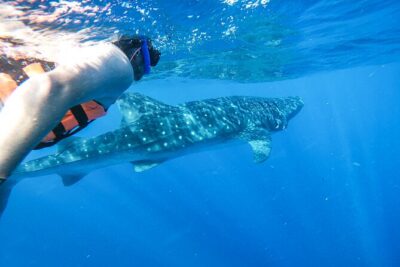
Whale Shark Adventure in Isla Mujeres and Cancun
Read our review →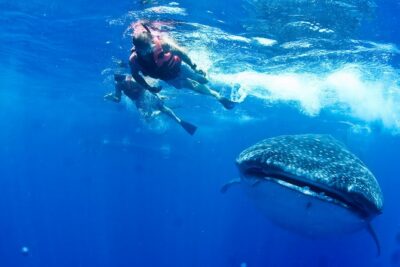
Whale Shark Tour from Cancun, Playa del Carmen, Tulum and Riviera Maya
Read our review →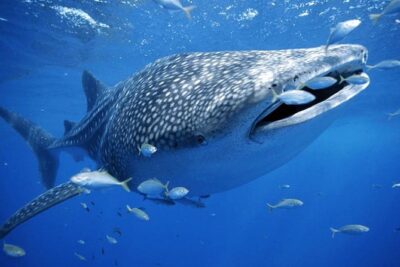
Whale Sharks Small-Group Tour in Cancun and Riviera Maya
Read our review →Browse the lists this tour appears in